


 EN
 ไทย


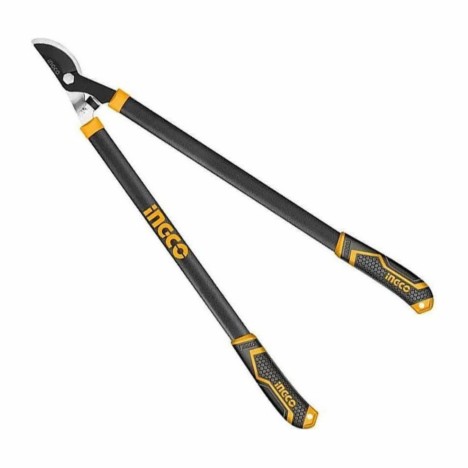
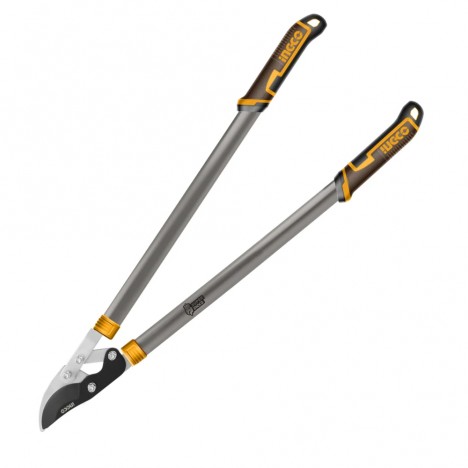
Customers Also Purchased



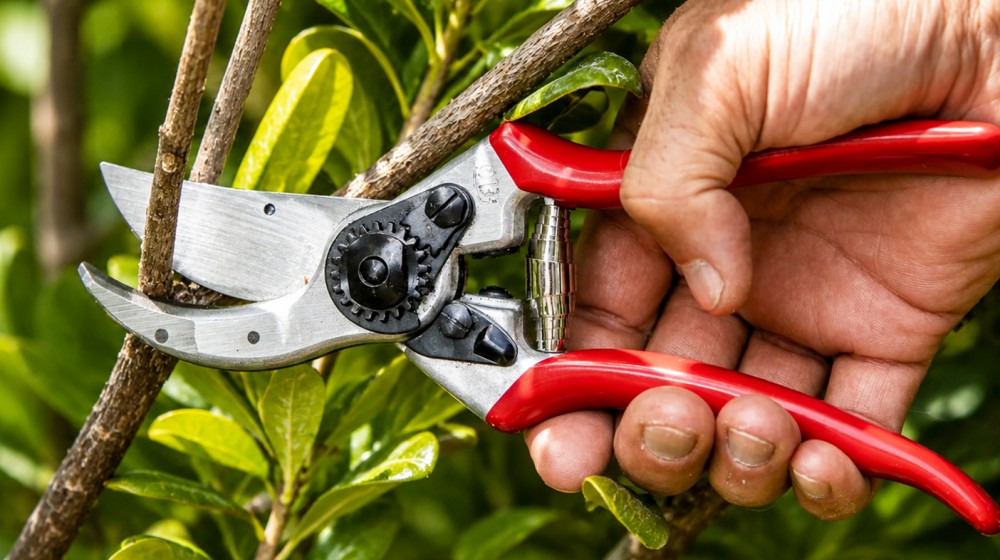
Pruning shears seem easy to use—just clamp a branch and squeeze, and it should cut through in a single pass. But after prolonged use, many people often encounter problems such as having to squeeze harder, the branch not cutting even when squeezing fully, branches jamming between the blades, or squeezing only crushing the branch and tearing the bark instead of making a clean cut.
Symptoms like these don't necessarily mean that Pruning Shears it is worn out to the point of needing a replacement. Most causes usually stem from minor issues you can fix yourself, such as dull blades, sap buildup, a loose center pivot bolt, or blades that don't align properly. However, forcing continued use without inspection can cause hand strain from overexertion, blade deformation, premature wear on bolts and shafts, as well as bruising or tearing cut surfaces on plants, slowing their recovery.
In this article, we'll go step-by-step through why pruning shears fail to cut the harder you squeeze, what to check first, and how to fix them so your shears operate smoothly again.
How should normal pruning shears cut branches?
Before troubleshooting the problem, let's understand how a normal pruning shear is supposed to work. When you squeeze the handles, the blades move toward each other, generating a shearing force on the branch. If the blade is sharp, the wood fibers are cleanly severed with only an appropriate amount of hand force matching the branch's size and hardness. Pruning shears commonly come in 2 types:
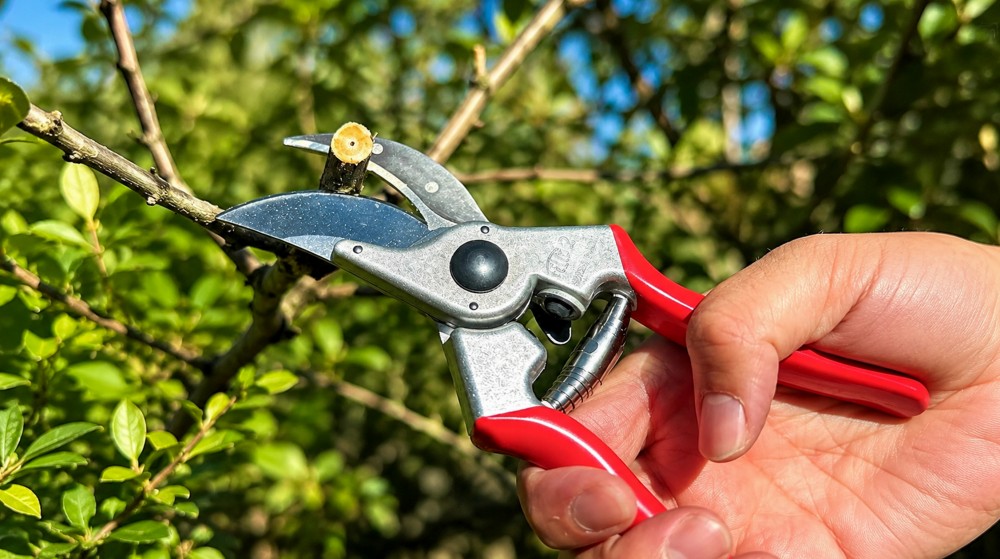
- Bypass: A sharp blade slides past a counter-blade, similar to regular scissors. The cutting point occurs where both blades closely pass each other. If sharp and properly aligned, cuts are smooth with minimal branch bruising.
- Anvil: The blade presses the branch down against a flat base, similar to a knife on a cutting board. It is suitable for dry or hard branches, but when used on green wood, it crushes branches more easily than bypass shears.
No matter which type of pruning shears you use, the key factors are sharp blades, smooth mechanical movement, and proper blade alignment. If any of these points are compromised, your hand force won't be fully transferred into cutting force, making it hard to squeeze and failing to cut through branches. Therefore, knowing techniques on how to maintain the pivot joints and springs of pruning shears for long-lasting use is a key factor that preserves your tools and reduces hand fatigue.
Why do pruning shears fail to cut the harder you squeeze?
When pruning shears have an issue, the force you apply doesn't disappear; it gets diverted into other things instead of cutting the branch—such as crushing the branch flat, forcing the blades apart, or overcoming friction at the pivot bolt.
- Dull blades: The cutting edge cannot penetrate the wood fibers, resulting in crushing the branch surface instead. The harder you squeeze, the flatter the branch becomes and the more the bark tears.
- If the pivot bolt is loose, the blade separates from the counter-blade when meeting resistance from the branch, causing the branch to wedge between them instead of being cleanly sliced.
- If the bolt is overly tight, energy is wasted fighting friction at the pivot, making the pruner feel stiff and requiring extra force even when cutting small branches.
Therefore, the problem of squeezing without cutting through isn't just about blade sharpness; you should inspect the blade, the pivot bolt, and the blade alignment clearance all together.
Cause 1: The blade is becoming dull
A sharp blade has a thin edge that easily penetrates branches. However, with prolonged use, the edge wears down and rounds from friction—especially when cutting dry, hard, or soil-covered branches. Once the cutting edge rounds off, its contact area with the branch widens, dispersing hand force rather than concentrating it on a sharp edge. This causes the blade to "crush" the branch rather than "slice" it.
Noticeable signs include: needing more force, branches flattening before severing, bark tearing or splintering, having to rock the shears while cutting, or uneven cuts. However, don't rush to conclude the blade is dull based on feel alone, as sap buildup or an improperly adjusted bolt can cause similar symptoms. Clean the tool and inspect the mechanism before deciding to sharpen.
Cause 2: Sap buildup on the blade
Many people overlook this point because the blade still looks sharp. However, when cutting fresh branches, sap and moisture cling to the blade surface, combining with dust and wood debris into a sticky layer. This affects performance in 3 ways: increasing friction to make opening and closing stiff, altering blade clearance, and causing branches to slip or the blade to get stuck halfway through. If your pruning shears used to cut well but start feeling stiff after cutting several fresh branches consecutively, try wiping off the residue first; the blade might not actually be dull.
Cause 3: The blade is chipped or has an uneven edge
Even a single tiny chip can prevent branches from cutting through cleanly. It is often caused by cutting hard materials like wire or nails, or dropping the shears on the ground. When the blade edge is nicked, parts of the branch are cut while some fibers remain attached. A prominent sign is when the branch does not detach even when squeezed fully, or bark/fibers snag repeatedly in the exact same spot.
Small nicks can be fixed by sharpening the surface, but if the gouge is deep or the blade is significantly deformed, replacing it with a new blade is recommended.
Cause 4: The pivot bolt is too loose
The bolt holds the blades in proper position and controls tension. If it is loose, the blade wobbles and gets pushed apart when encountering resistance, causing the branch to jam in the gap instead of being sheared cleanly.
Noticeable signs include: handles wobbling when shaken, clicking noises from the blades, branches jamming between the blades, crooked cuts, or needing to twist the shears to finish the cut. Bolts can loosen on their own from repetitive use or vibration. The fix is to tighten it just right—not fully tightened—just enough so the blade doesn't wobble while still opening and closing smoothly.
Cause 5: The pivot bolt is too tight
Opposite to cause 4, if tightened excessively, the blades grind against each other with heavy friction every time they open and close. This forces you to exert effort just to overcome stiffness before any force reaches the branch. Noticeable signs include: the pruning shears not opening fully or opening slowly, the spring unable to push the handles back open, stiffness even when dry-squeezing, grinding sounds, or an unusually warm pivot point.
Many overtighten the bolt as a precaution against loosening, but the key is finding the right balance. Properly adjusted pruning shears should open and close smoothly without play, with the spring still able to return the handles to an open position normally.
Cause 6: Improper blade clearance/alignment
For bypass pruning shears, the blades must pass each other closely enough to generate shearing force. If the gap is too wide, the branch gets pinched or torn. If the blades press too tightly together, the shears become stiff and the edges wear out quickly.
There are several causes for improper blade clearance, such as a loose bolt, worn washers, bent blades from cutting branches beyond capacity, or incorrectly assembled spare parts.
Basic check method: Close the shears slowly to see if the blades meet snugly along their entire length, or hold them up to the light to check if any gap lets light through.
Cause 7: Bent blade or frame of the pruning shears
If used to cut branches that are too large or too hard, the resistance can bend the blades or frame out of alignment. Even a slight bend alters the blade clearance—for example, touching only at the tip while separating at the base, or vice versa.
Unlike a loose bolt, the gap remains even after tightening the bolt. Do not hammer or bend them with pliers yourself, as this can cause worse cracking. Some models allow you to replace just the blade, but if the main frame is bent, the entire tool may need replacement.
Cause 8: Choosing pruning shears unsuitable for the branch type
Fresh, flexible branches are suitable for bypass shears, while dry and hard branches may be better suited for anvil shears or long-handled loppers that provide more leverage.
If small shears are used to cut branches near or beyond their limit, the blade will only penetrate partially before resistance spikes, forcing you to exert excessive pressure that crushes the branch or spreads the blades apart. The branch size specifications are only a guideline, as the hardness, freshness, and moisture content of the wood also affect the force required.
Cause 9: Misplacing the branch in the pruning shears' jaw
The area near the pivot provides greater cutting force than the blade tip due to mechanical leverage. Placing a thick branch near the tip requires much more effort and may cause the branch to slip out.
For branches near the maximum capacity limit, insert them as deeply as possible without hitting the pivot, and position them perpendicular to the blade. Cutting at an angle may cause the branch to be pinched rather than cut. Hold the branch firmly, especially if it is long or heavy, because movement during cutting can pull the shears and temporarily ruin blade alignment.
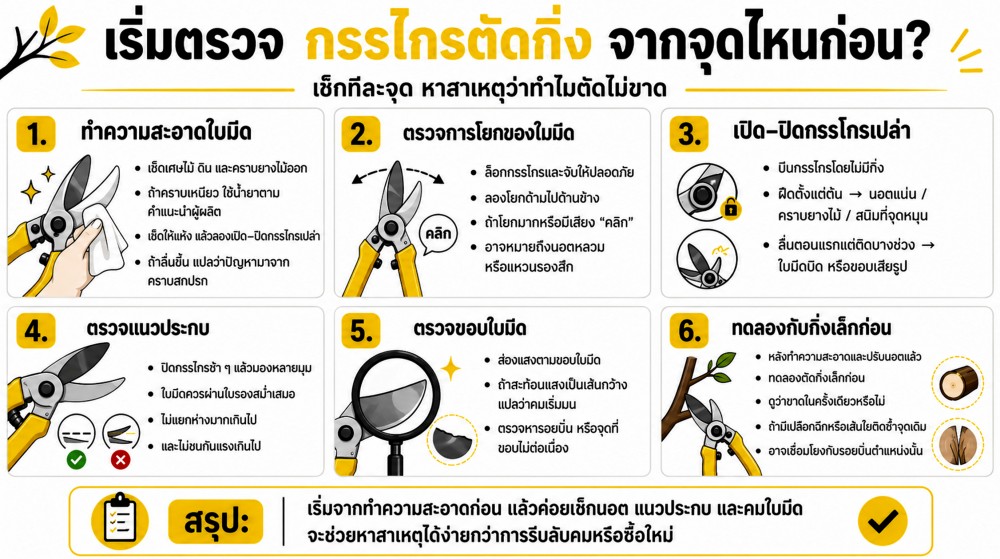
Precautions when inspecting and repairing pruning shears
Pruning shear blades can cut hands even when they appear dull; always wear suitable gloves and avoid running fingers along the cutting edge to test sharpness.
Before adjusting bolts or disassembling parts, place the shears on a stable surface and position the blades pointing away from you. For electric or cordless pruning shears, always remove the battery or power source before inspecting the blade. Never rely solely on the safety lock, as an accidental switch press can still move the blade.
Do not use shears with cracked blades, broken frames, loose handles, or malfunctioning lock mechanisms, as parts may detach or snap toward your hands during use.
Conclusion
The main causes are dull/chipped blades that crush branches instead of cutting, sap buildup that increases friction, bolts that are too loose or too tight, and improper blade clearance caused by bent blades or worn washers.
Check in this order: Clean → Open and close freely → Check for bolt wobble → Inspect blade contact alignment → Check the blade edge. Do not rush to sharpen the blade or overtighten the bolt before finding the actual cause.
Normal pruning shears should open and close smoothly, have no blade wobble, maintain consistent blade contact, and cut appropriate branch sizes effortlessly. If you need to use two hands or twist the shears to make a cut, that is a sign to inspect the tool or reconsider whether the branch is too thick. Taking a few minutes to inspect keeps the shears working well, reduces hand fatigue, prevents blade damage, and provides clean cuts that help plants heal better than forcing an unready tool.
Select Pruning Shears here