


 EN
 ไทย


Customers Also Purchased


Most high-pressure washer systems can connect to a garden hose at home, but not every hose is always suitable. Things to check before connecting are:
- Hose size and length – A hose that is too small or too long will result in insufficient water intake.
- Hose condition – Free of kinks, leaks, or internal sediment clogs.
- Fittings – Locked tightly with no air leaking into the system.
If the water intake is insufficient, no matter how high the pressure rating of the machine is, the output water pressure will not match specifications. Moreover, the machine may surge, make abnormal noises, and have a shortened lifespan. In summary, before connecting a home garden hose to a high-pressure washer, always verify the hose size, condition, and fittings beforehand.
Does a Garden Hose Generate Pressure for a High-Pressure Washer?
Many people misunderstand that the hose connected from the tap generates pressure for the Pressure Washer Parts and that a smaller hose diameter will produce stronger pressure. In reality, the inlet hose does not generate pressure at all; it merely delivers a continuous and sufficient water supply to the machine. The actual high pressure used for cleaning comes from the internal pump inside the unit, which draws in water and pressurizes it before delivering it through the spray nozzle. The water system is therefore divided into 2 main sections:
- Inlet hose – Connects from the tap to the machine; a standard garden hose can be used if the size and water volume are suitable.
- High-pressure hose – Connects from the machine to the spray gun handle; you must exclusively use the hose specifically designed by the manufacturer. Never substitute it with a standard garden hose.
Therefore, the phrase "a garden hose can be used" applies only to the water inlet side, not the high-pressure hose connected to the spray gun.
What Types of High-Pressure Washers Can Be Used with Garden Hoses?
High-pressure washers available on the market may have different water intake methods, so it is important to check the equipment type before connecting a hose.
- Tap-fed type: The most common type, featuring a water inlet for connecting a garden hose. A continuous flow of water must be running into the machine before turning it on. A garden hose can be used, but you must check that the hose size, water flow rate, and fittings match the manufacturer's recommendations.
- Self-priming tank type: Some models can draw water from a tank or an unpressurized water source on their own using a suction hose with a filter, without needing to connect a hose to a tap. But be careful! Not all models are self-priming. If a model is designed only for direct tap water supply, attempting to draw water directly from a tank may fail.
- Standard hose spray nozzle: Looks similar to a high-pressure spray gun, but has no motor or pump inside. It only adjusts the water pattern into a stream or mist, so the water pressure relies purely on the tap's pressure and cannot match a real machine with a pump.
"In conclusion, before purchasing, make sure to check clearly whether you are buying a genuine "high-pressure washer" or just a standard "hose spray nozzle." In addition, if you already have the machine, we also have 9 Accessories for High-Pressure Washer Guns That Help Boost Efficiency to recommend as well."
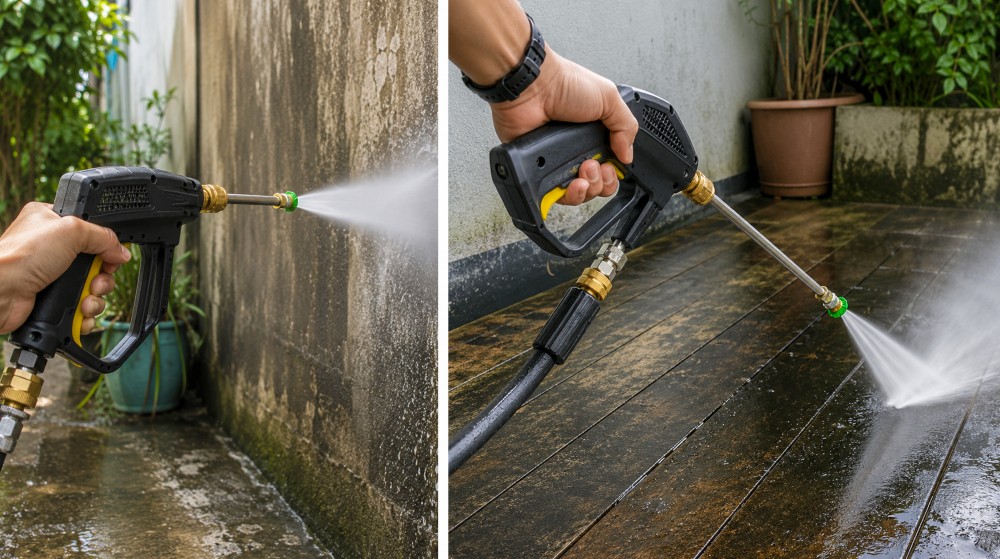
What types of standard garden hoses can be used with a high-pressure washer gun?
Although high-pressure washer guns can indeed be connected to standard garden hoses, the condition and specifications of the hose directly affect the water volume entering the system. You should check these 5 points:
The inner diameter must be sufficient
Look at the "inner diameter" size, not the external thickness. A small-diameter hose will restrict water flow, especially when running water over long distances.
- A 1/2-inch size works with many standard gun models if the tap pressure is good and the hose is not too long.
- If you need a high volume of water or need to run the hose a long distance, a larger size such as 5/8 or 3/4 inch should be used.
- You should check the machine's manual for the manufacturer's recommended hose size and minimum water flow rate; do not guess.
The hose should not be unnecessarily long
The longer the hose, the more resistance the water encounters, reducing the water flow at the end of the hose—especially in homes where tap pressure is not already high. There is no need to make the hose so short that it is inconvenient to use, but you should choose an appropriate length and avoid connecting multiple hoses together unnecessarily. If a long hose is necessary, opt for a larger inner diameter instead of a small hose.Must not be kinked or crushed
A hose that is tangled, kinked, or crushed by heavy objects will restrict water flow. The symptoms will mimic a malfunctioning machine, such as low water pressure or a surging motor, when in fact it is an issue with the hose. Make sure to uncoil the hose properly and check for any kinks before use.Must be free from accumulated algae or sediment
Hoses left outdoors for a long time may contain sand, algae, or debris inside. If these get inside, they can clog the filter or the pump. Before connecting the hose, turn on the water to flush out debris until the water runs clear, then connect it to the machine.Must have no leaks
Even small leaks can reduce water intake and cause inconsistent pressure. If the hose is cracked, the fittings are loose, or water is spraying out along the way, repair or replace the hose before use.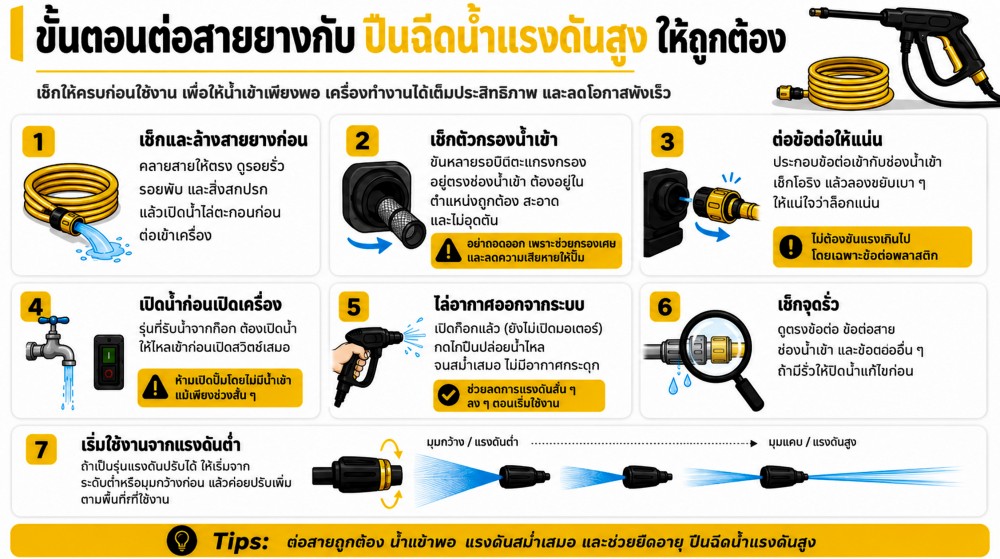
Conclusion
Most high-pressure washer guns can be used with standard garden hoses because the garden hose merely feeds water into the system; it does not directly withstand high pressure from the pump. What you need to check is not just whether the connectors fit, but also the inner diameter, length, water volume, hose condition, fittings, filter, and water source pressure. If the hose is too small, too long, kinked, leaking, or clogged, insufficient water will enter—causing spray pressure to drop, water to pulse, and the pump to overwork. Before use, flush debris out of the hose, tighten fittings securely, turn on the tap, and squeeze the trigger to purge air until the water flows steadily before turning on the pressure system.