


 EN
 ไทย


Customers Also Purchased

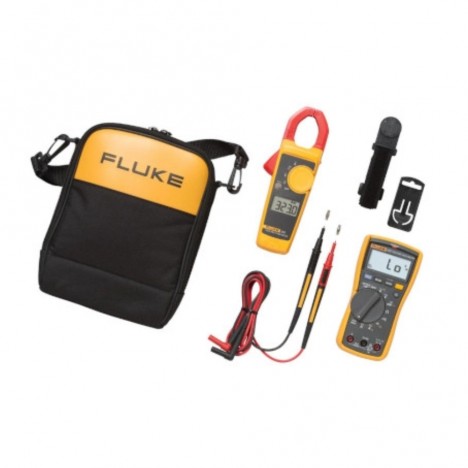

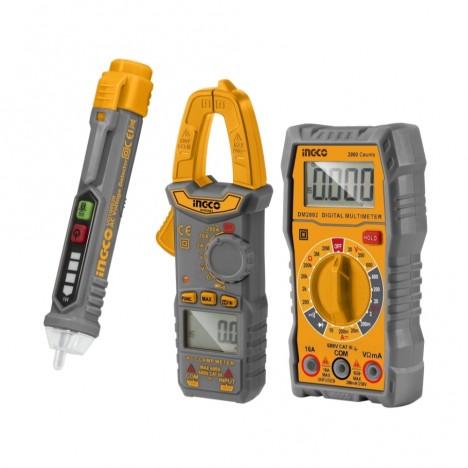

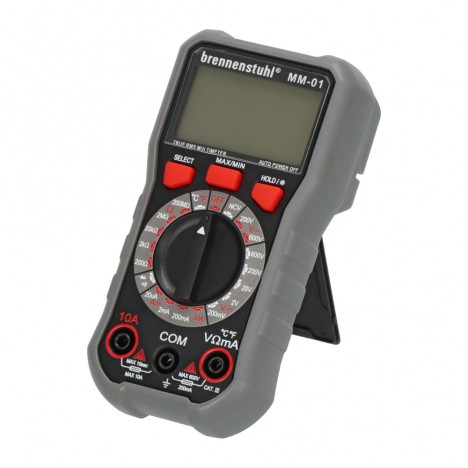
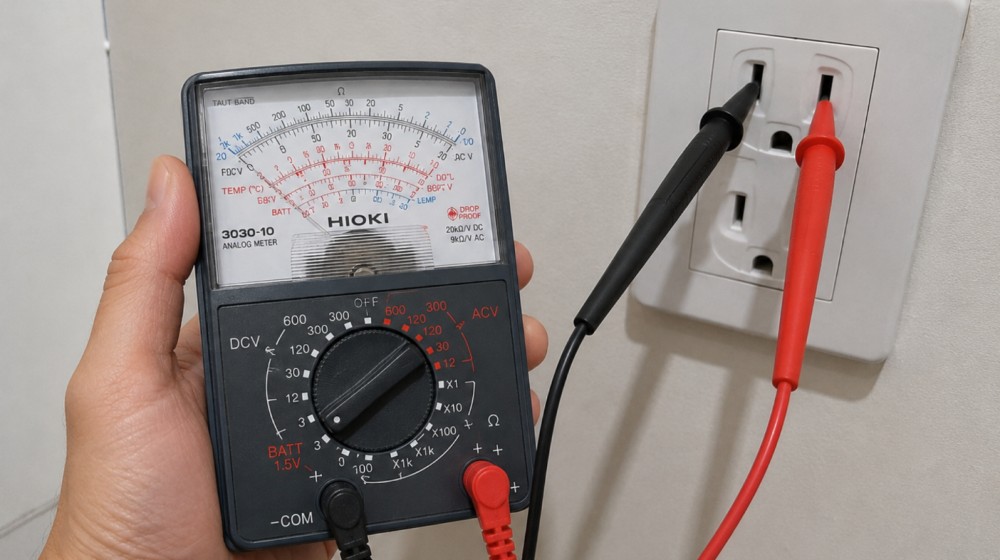
In early 2026, HIOKI, a Japanese electrical measuring instrument manufacturer, announced it would stop taking orders for certain analog pointer models and prepare to transfer production to Nishizawa Electric Meters Manufacturing in September 2026.
This news has prompted questions about whether this is a sign that Multimetersanalog meters are losing their relevance and may disappear from the market, especially now that digital multimeters have long become the primary choice for electricians, electronics technicians, and general users alike. However, looking at the details of the announcement, this is not yet the end of analog multimeters. HIOKI did not discontinue the technology without a successor; rather, it is discontinuing sales under its original brand and SKU before transferring production to another manufacturer.
What changes did HIOKI announce for 2026?
On January 9, 2026, HIOKI released an announcement regarding the transition of analog products, stating that it will stop taking orders for relevant products by June 2026, with production scheduled to transfer to Nishizawa Electric Meters Manufacturing in September of the same year. Following the transfer, customers requiring these product lines will need to contact and order directly from Nishizawa rather than purchasing through HIOKI as in the past.
Products included in the announcement are:
- Analog multimeter HiTESTER 3030-10
- Analog insulation tester 3490
- Analog insulation tester IR4000 Series (26 sub-models)
The point to distinguish is that not all products in the announcement are multimeters. Most are insulation resistance testers, commonly referred to by many technicians as megohmmeters, while the only analog multimeter directly involved is the HiTESTER 3030-10 model.
The discontinued products page on HIOKI Japan's website states the discontinuation date for the 3030-10 as June 25, 2026, and recommends the DT4256 digital multimeter as an alternative product.
However, as of July 14, 2026, the production transfer has not yet been fully completed because HIOKI's announced schedule is set for September 2026. Therefore, it is more accurate to say "preparing for production transfer" rather than stating that HIOKI has already transferred production.
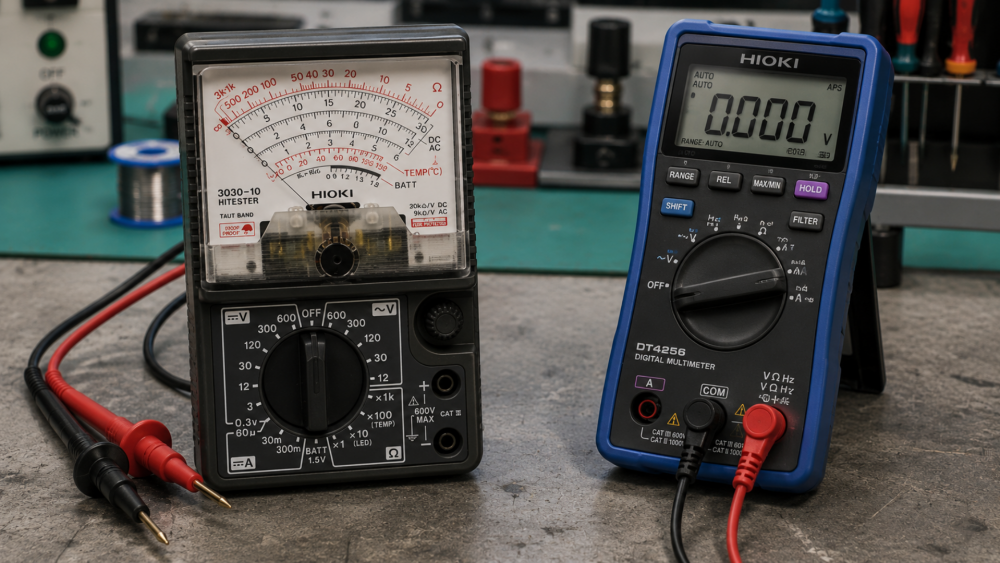
HIOKI discontinuing models does not mean the products will disappear
What makes this news different from typical product discontinuations is that HIOKI clearly specified the Nishizawa product codes that will take over in the announcement.
For example,
- HIOKI 3030-10 will become Nishizawa 3031-10
- HIOKI 3490 will become Nishizawa 5490
- HIOKI IR4011-10 will become Nishizawa 5011-10
- HIOKI IR4018-20 will become Nishizawa 5018-20
After September 2026, those interested in these products will need to check details, available models, and supported sales countries directly with Nishizawa, as distribution channels and SKUs may change. Therefore, the event that took place should be described as a transfer of production from HIOKI to another manufacturer, rather than saying that analog multimeters are being phased out due to a lack of market demand.
Importantly, HIOKI did not disclose in the announcement whether this decision was due to declining sales, higher manufacturing costs, or a shift in corporate strategy. Concluding from this event that analog multimeters can no longer sell is therefore not supported by sufficient data.
So, are analog multimeters really disappearing?
Considering only the HIOKI news alone, it cannot be concluded that analog multimeters are going to disappear from the market entirely. A clearer picture is that analog multimeters are shifting from once-common tools into more specialized products for specific applications and user groups, while many major manufacturers focus on digital multimeters, clamp meters, and instruments capable of logging or transmitting data to other systems.
Evidence that analog multimeters have not vanished from the market is that other test instrument manufacturers still carry this type of product. KYORITSU still features the KEW 1109S and MODEL 1110 analog multimeters in its current product lineup. The KEW 1109S features a mirrored scale to help eliminate parallax reading errors, while the MODEL 1110 specifies a DC voltage measurement sensitivity of 20 kΩ/V.
SANWA also continues to feature the Analog Multitesters category on its website and in its 2025–2026 measuring instrument catalog, which explains range selection principles, features, and applications of analog multimeters, even though some models are gradually discontinued based on their product lifecycle.
This data does not suggest that the analog multimeter market is growing, but it confirms that manufacturers and users for this technology still exist, and it has not been discontinued across the entire industry at once.
Why Digital Multimeters Became the Primary Choice
A key reason digital multimeters have replaced analog meters in many applications is their easier readability: users see measurement results directly as numbers, without needing to match the scale line to the selected range or worry about parallax errors from reading the dial at an angle.
Many digital multimeter models also feature functions that typical analog meters lack, such as:
- Auto-ranging
- Audible continuity check
- Diode testing
- Frequency and capacitance measurement
- Min/Max recording
- True RMS measurement
- Data transmission or logging to computers and applications
The input impedance of digital multimeters is also generally higher than that of analog meters, drawing less current from the circuit under test and reducing the loading effect on certain types of circuits. For example, HIOKI notes that the 3030-10 analog multimeter has an internal resistance of 20 kΩ/V across most ranges when measuring DC voltage, whereas digital multimeters typically have an input impedance of at least about 10 MΩ, though actual values vary by model and range. These features make digital multimeters suitable for a wider variety of applications, especially electronic circuits, inspection tasks requiring definitive numerical values, and work where data needs to be logged for subsequent comparison.
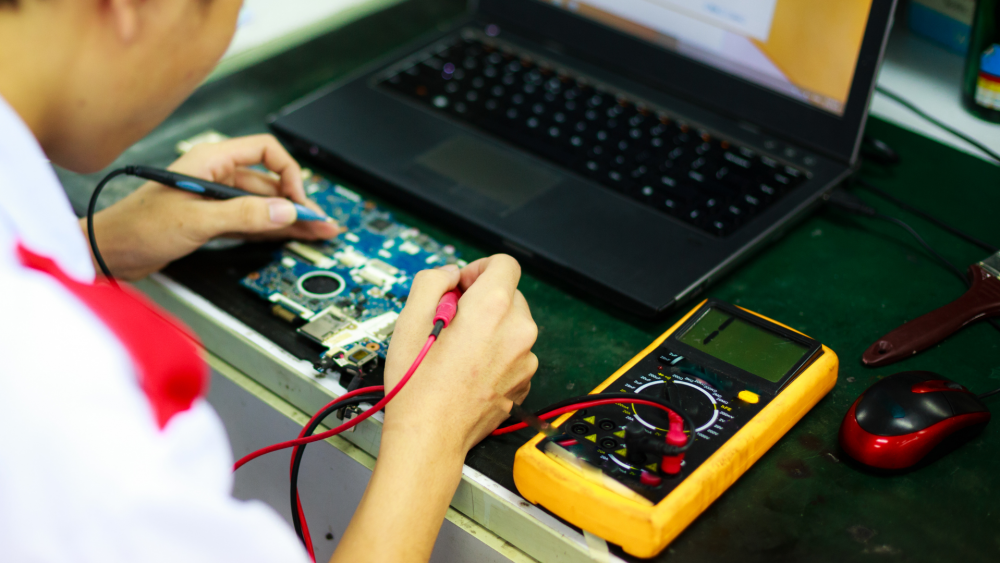
In What Applications Are Analog Multimeters Still Useful?
Although digital meters are more convenient in many respects, analog multimeters possess unique characteristics that lead certain user groups to continue using them. A standout advantage is that users can visually observe the trend of value changes through the movement of the pointer—such as seeing whether a reading is increasing, decreasing, or fluctuating within a range—without having to track rapidly shifting numbers.
HIOKI explains that analog meters allow users to observe value changes directly from pointer deflection on the dial, despite having limitations regarding internal loss and scale reading compared to digital meters.
Analog multimeters may therefore still be found in tasks such as:
- Observing whether values are changing or unstable
- Basic inspection tasks that do not require high precision
- Practicing scale reading and understanding the principles of measuring instruments
- Work by technicians who are familiar with the needle's response behavior
- Using older equipment with manuals or testing procedures that refer to analog meters
However, just because an analog meter is suitable for certain types of work does not mean it can replace a digital meter in every application, especially in high-impedance circuits, tasks requiring high resolution, or work requiring systematic data logging.
Can those who own a HIOKI 3030-10 continue using it?
Discontinuation of sales does not make existing multimeters immediately obsolete. If the unit still functions normally, the test leads and fuses are in good condition, and the meter's ratings match the circuit being measured, it can still continue to be used.
What should be considered is not just whether that model is still in production, but whether the tool is still suitable for the current job. If you need to measure high-impedance electronic circuits, require high resolution, need True RMS, or need to record data, a newer digital multimeter might be more suitable. On the other hand, if it is for basic tasks within the 3030-10's ratings and the user understands how to select modes, choose ranges, and read the scale correctly, there is no need to stop using it simply because the product has been discontinued.
However, for high-energy electrical work, an old instrument should not be used simply because it still turns on or the needle still moves; the voltage rating, Measurement Category, condition of the test leads, and internal protective devices must also be checked.
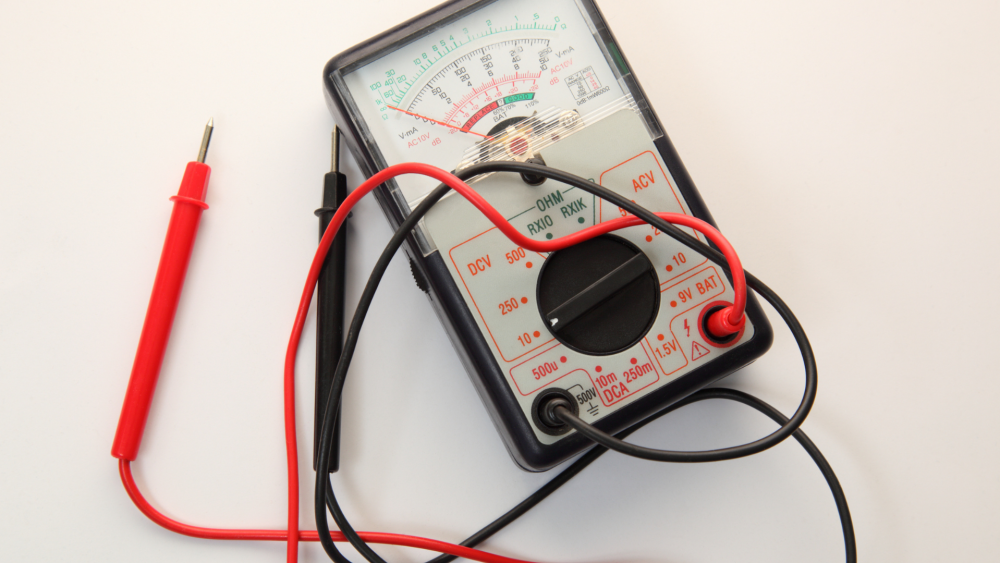
What does the HIOKI news say about the future of analog multimeters?
HIOKI's discontinuation of orders for analog products and the upcoming transfer of production to Nishizawa reflects that this product category may no longer be the core line HIOKI wishes to manufacture and distribute themselves. On the other hand, assigning successor part numbers and transferring production to another manufacturer shows that a certain level of demand still remains. If there were no remaining market, setting up new production lines and ordering channels would have been unnecessary.
The more likely direction is therefore not an abrupt disappearance, but rather analog multimeters gradually stepping back from the mainstream market and remaining within more specialized niches. Digital multimeters will likely remain the market's mainstream tool due to their ease of use, diverse functions, and suitability for data-driven workflows. Analog multimeters, while having fewer models and manufacturers, still hold a place for users who need to observe value changes through the movement of a needle.
Therefore, the news from HIOKI in 2026 is not yet the announcement of the end of Multimetersanalog multimeters, but rather a sign that the measuring instrument market is shifting its structure—from a ubiquitous product to a niche tool handled directly by specific manufacturers.