EN
 ไทย


Customers Also Purchased

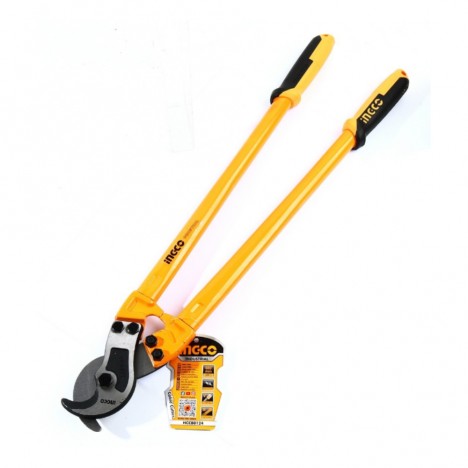


Wire cutters seem easy to choose because they all look quite similar, differing only in size, jaw shape, handle, and price. On the market, sizes range from 5–8 inches up to handles longer than 10 inches. The question is: if you want to buy a pair of wire cutters to keep at home, which size should you choose?
Many people might think the bigger the better, because longer handles provide more leverage and cut larger wires more easily. But oversized pliers also have downsides: they are heavy, harder to control, and inconvenient for working in tight spaces like junction boxes or electrical panels. Smaller pliers, on the other hand, fit comfortably in the hand, are lightweight, and easy to store, but when tackling thicker wires, they may require a lot of force, multiple squeezes, or twisting back and forth, which risks damaging the cutting edges and deforming the wire ends. Therefore, the answer isn't about getting the largest size, but rather about what kind of wires you will be cutting, what size they are, and how often you will use them.
The straightforward answer: what size wire cutters should you choose?
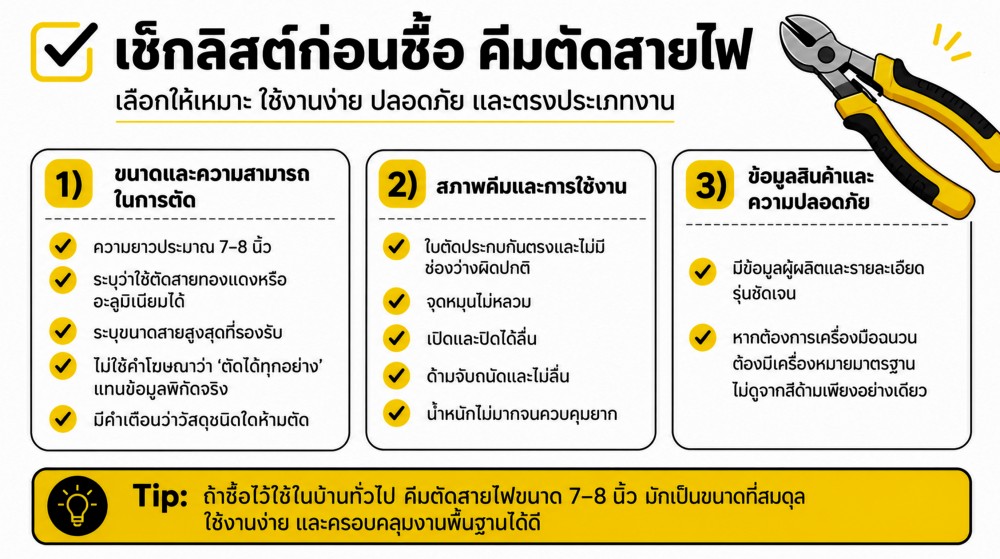
For Cable Cutters To keep at home without specific specialized tasks in mind, the most suitable size for most people is 7–8 inches (180–200 mm). This offers a balance between cutting force, weight, and maneuverability, handling general repairs, small electrical wires, speaker wires, certain automotive wires, and household DIY projects. You can easily choose based on the following:
- 7 inches is suitable if you focus on small jobs and want lightweight, ergonomic, and easy-to-carry pliers.
- 8 inches is suitable if you need extra cutting leverage, broader versatility, and occasionally encounter thicker wires.
You should not use pliers under 6 inches as your primary tool unless most of your work involves fine wires or electronics, and there is no need to buy sizes 9–10 inches or larger, as they are unnecessarily bulky and heavy for home use.
However, the size in inches is only a rough guideline because pliers of the same length may have different cutting capacities, depending on the pivot position, blade shape, and leverage system of each model. For example, some 160 mm pliers designed with stepped cutting edges can cut copper/aluminum cables up to 15 mm, while some 200 mm pliers can cut up to 20 mm. Therefore, do not judge by plier length alone; always check the cutting specifications of that particular model as well.
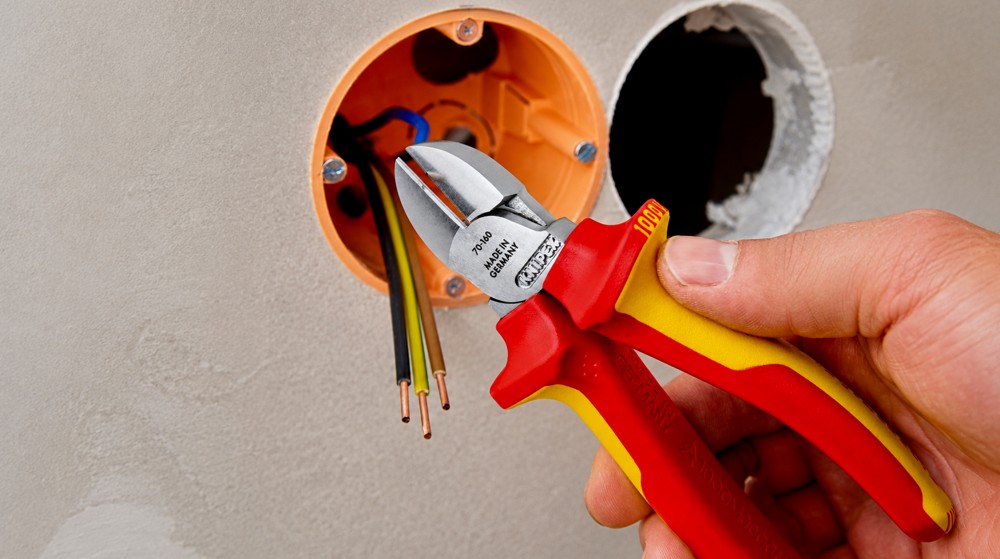
Before choosing a size, you must first understand that there are several types of wire cutters.
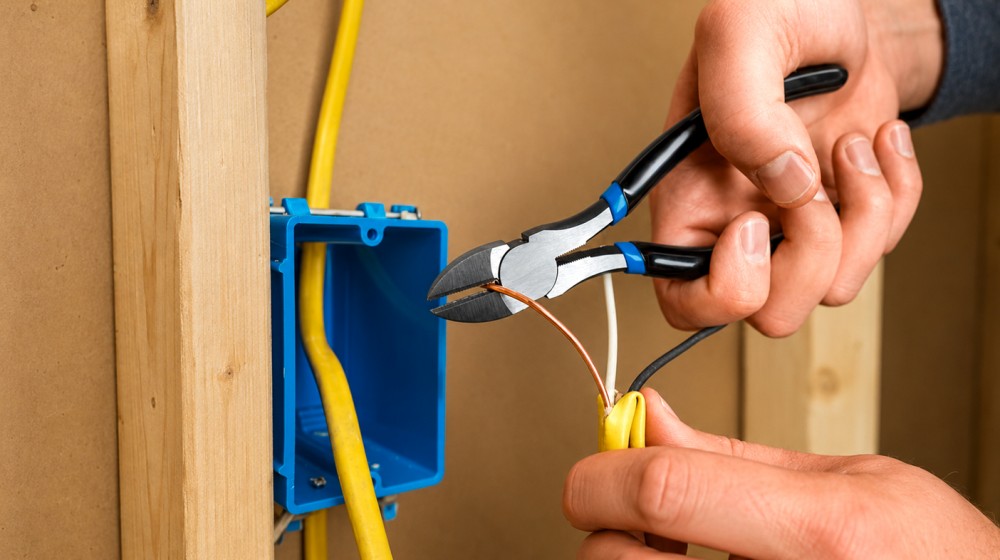
Diagonal Cutters
The most common type. The jaws have side-cutting edges that can cut small electrical wires, copper wire, certain types of steel wire, and cable ties. The advantage is that they are compact, nimble, and reach into tight spots well. However, when cutting larger wires, the ends may become flattened or the stranded copper may fray. They are best suited for general-purpose use cutting various materials, rather than specifically cutting large cables.
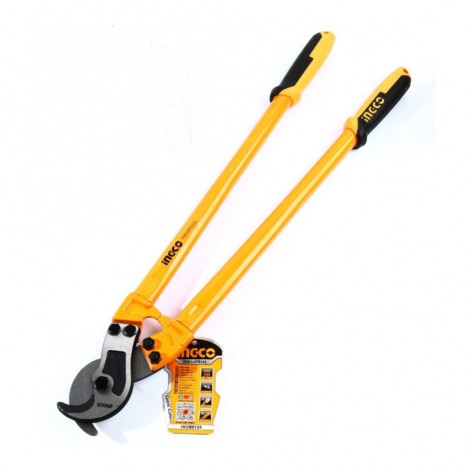
Cable Shears
Featuring curved, scissor-like cutting blades, the jaws wrap around the cable to prevent slipping, providing a cleaner cut without crushing the cable ends. They are ideal for copper/aluminum cables, especially stranded or multi-core cables. If your primary task is cutting electrical cables, this type is easier to use than diagonal cutters. However, a caution is that many models are not suitable for steel wire, wire ropes, or hard-drawn copper, as these can chip or damage the cutting blades.
Combination Wire Strippers and Cutters
Combines insulation stripping, cable cutting, and in some models, built-in crimping dies in a single tool. Ideal for small repairs and those who don't want to buy multiple tools, but cutting force and capacity are typically less than dedicated cable cutters. Not suitable for cutting large cables or heavy-duty use.
What size in inches is right for your use?
5–6 inches (125–165 mm): Small cable cutters
Lightweight, easy to control, and accesses tight spaces well. Suitable for electronic wires, wiring inside toys/small electrical devices, small speaker wires, stranded copper wire, circuit assembly, DIY projects, and small cable ties (check specs first). Best for tasks requiring precision rather than cutting force.
Pros: Comfortable to use, fits small hands, saves storage space.
Cons: Requires a lot of effort on larger wires, and many users tend to force the cut—such as squeezing with both hands, bending the wire, or using an extension pipe for extra leverage—which risks loosening the pivot joint or chipping the cutting edges.
Best as a secondary pair of pliers for precision work rather than a household's sole primary pair (except for certain high-leverage models that cut significantly better than standard pliers of the same size; check specific model specifications).
7 inches (175–180 mm) — The sweet spot for general users
Large enough to deliver better cutting force yet still easy to control. Suitable for a wide range of tasks, such as repairing appliance cords (unplugged), stranded copper wire, DIY projects, automotive wiring (power disconnected), speaker wire, small control wiring, prepping wire ends before stripping, and general installation/repair work. Squeezing power is noticeably better than 5–6 inch pliers, yet still portable. Ideal as the best starting point if you're not sure what wire sizes you'll encounter.
Caution: Different types of 7-inch pliers (diagonal cutters / cable cutters / high-leverage) vary greatly in capability. Always check the material specifications and maximum wire sizes specified by the manufacturer.
8 inches (200 mm) — Extra capacity for future needs
Longer handles provide greater leverage and require less hand effort. Suitable for those who:
- Want a single pair of pliers for versatile use
- Frequently cut multi-core cables
- Might work with moderately sized battery cables
- Have larger hands and find small pliers awkward to grip
- Have enough storage space and use them continuously
Some models can cut copper/aluminum cables up to 20 mm (though this is specific to certain models, not all). Cons: Slightly heavier and less convenient in tight spaces compared to smaller pliers, but overall the difference is minor.
Tip: If the price between 7-inch and 8-inch pliers is close and you don't focus heavily on precision work, choosing 8 inches will better accommodate future needs.
9–10 inches or larger (225–250 mm+) — Are they necessary for home use?
High cutting power, suitable for large cables and continuous work, but heavy and bulky, difficult to fit into tight spaces, and hard to control on small wires. For general households, it is usually unnecessarily large unless there are specific jobs such as battery systems, solar cells, large power cables, automotive/machinery repairs, or frequent electrical installations.
If you really need to cut large cables, choosing ratcheting/leverage cutters with clearly specified supported cable sizes is more suitable than ordinary long-handle pliers.