


 EN
 ไทย



Customers Also Purchased
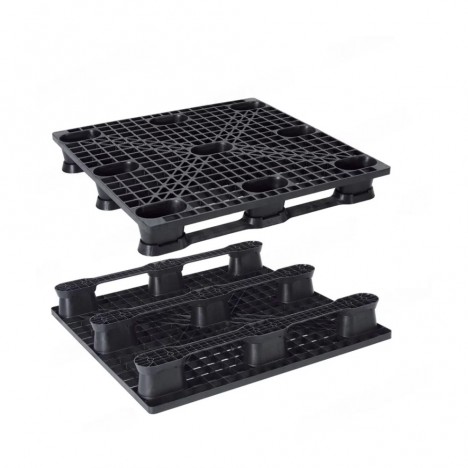
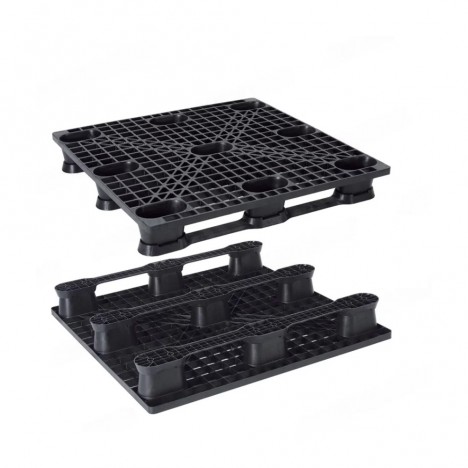
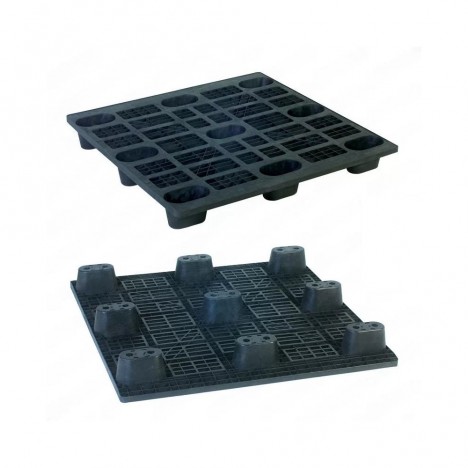
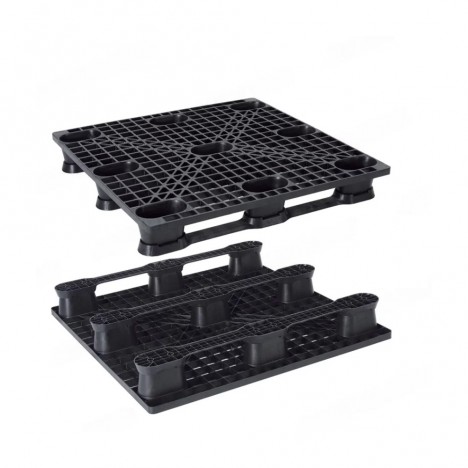
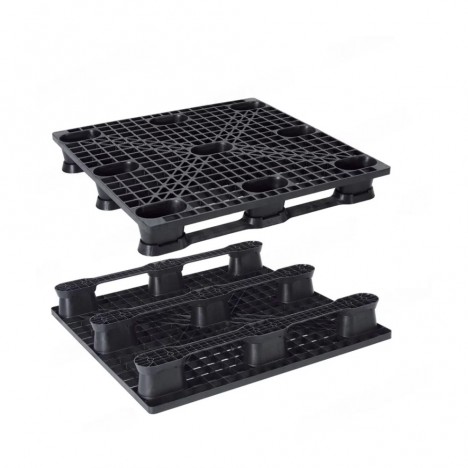
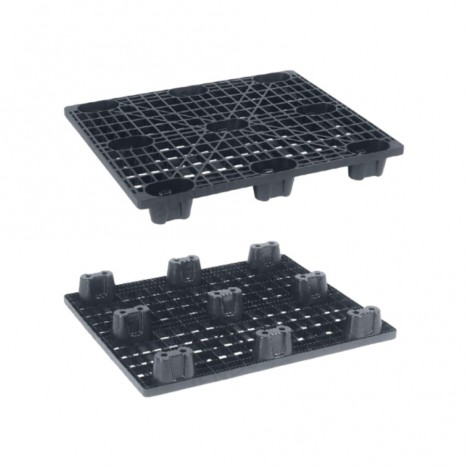
When choosing to buy PalletsWhen looking at plastic pallets, many people often ask first, "How many kilos can this hold?" But upon checking the product specifications, they find multiple values: Static Load, Dynamic Load, and Racking Load. Some models are rated to hold several thousand kilograms, but when used with forklifts or racking systems, the number drops to just around one or two thousand.
These numbers are not contradictory, but represent load capacities under different conditions. A pallet resting stationary on the floor, a pallet being lifted, and a pallet spanning across rack beams bear loads differently. Therefore, you cannot simply look at the highest number and apply it to every task.
What Is the Difference Between Static, Dynamic, and Racking Load?
These three values indicate the pallet's load-bearing capacity under different operating conditions.
| Load Capacity | When to Check | Support Condition |
| Static Load | Pallet stationary on the floor | Legs, base, or runners resting on a flat floor |
| Dynamic Load | Lifting and moving the pallet | Pallet resting on forklift forks |
| Racking Load | Placing the pallet on a storage rack | Pallet spanning across beams or support points |
The numbers specified in product documentation are usually based on testing under conditions determined by the manufacturer, such as load distribution patterns, temperature, support methods, and load duration. Therefore, you must read the accompanying details and not rely solely on the headline numbers.
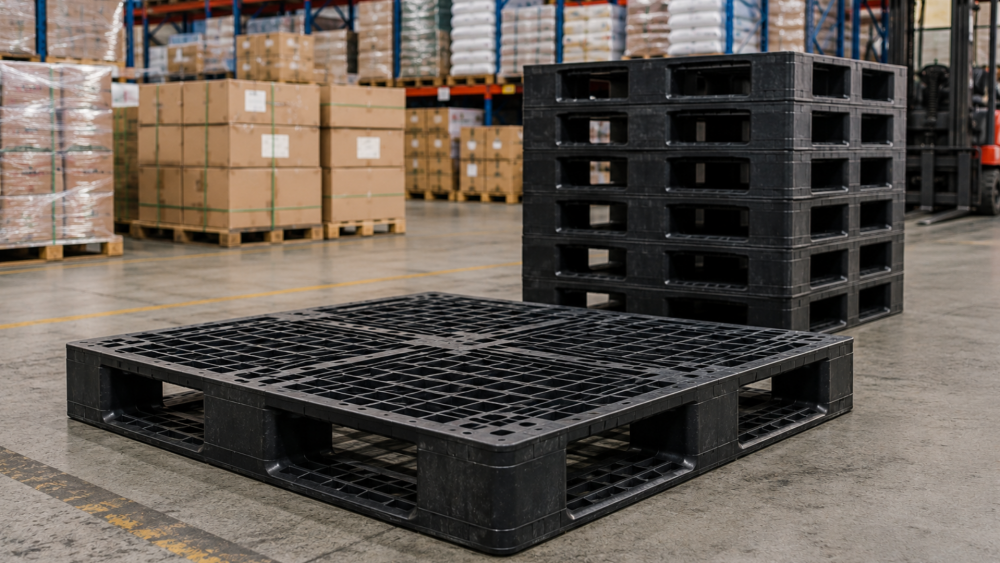
What Is Static Load?
Static Load It is the load capacity when the pallet rests stationary on a flat floor, with the pallet's legs, base, or runners supported as designed.
Examples of applications that fall under Static Load include:
- Placing pallets with goods on the warehouse floor
- Staging goods in inbound and outbound areas
- Keeping goods stationary in place without lifting or moving them
- Placing pallets on a flat, stable floor
The Static Load value is usually higher than other ratings because the pallet is supported by the floor along its legs, base, or bottom runners, rather than suspended across load points as when on forklift forks or racking. For example, the JBJ model CS1012 pallet has supplier specifications listing a Static Load of 3,000–4,000 kg, but a Dynamic Load of 1,000–1,500 kg and a Racking Load of approximately 300–500 kg, which also depends on the type of racking system.
This means the 3,000–4,000 kg figure applies only to stationary placement on the floor under specified conditions; it does not mean that goods of the same weight can be lifted with a forklift or placed onto a rack at that same weight capacity.
What is Dynamic Load?
Dynamic Load It is the load capacity when the pallet is on forklift forks and is being lifted or moved.
When a pallet is lifted off the ground, the weight of the goods transfers to the area supported by the forklift forks. The pallet therefore experiences different stresses than when sitting stationary on the floor. Dynamic Load is thus the figure to check whenever the pallet is used with forklifts or other material handling equipment.
Dynamic Load should be used for these types of tasks:
- Lifting goods with a forklift
- Moving goods within a warehouse
- Loading or unloading goods from transport vehicles
- Transferring pallets between production and storage areas
- Moving pallets into and out of receiving areas
For example, JBJ model MW1012-3 has a Static Load of 3,000–4,000 kg, but a Dynamic Load of 1,000–1,200 kg. Therefore, if it needs to be lifted and moved, you must refer to the 1,000–1,200 kg range, not the higher Static value.
If the goods have a total weight of 1,500 kg, even though it does not exceed this model's Static Load, it exceeds the Dynamic Load specified by the supplier. Therefore, goods of that weight should not be lifted based on the Static value alone.

What is Racking Load?
Racking Load It is the load capacity when a pallet is placed on a storage rack, where the pallet typically spans across beams or partial support points, rather than resting on a flat floor as in Static Load. When the product weight bears down, the center of the pallet is more prone to sagging. Therefore, a pallet with a high floor-load capacity does not necessarily mean it can always be placed on a rack.
Manufacturers may call this value by different names, such as:
- Racking Load
- Rack Load
- High-rack Load
- Edge Rack Capacity
- Supported Rack Capacity
If the product page does not specify a Racking Load value or states "Not for Racking", you should not assume that the pallet can be placed across rack beams. For example, the JBJ model MW1012-3 has a Static Load of 3,000–4,000 kg and a Dynamic Load of 1,000–1,200 kg, but the distributor specifies that it is not recommended for rack use. This case demonstrates that a pallet suitable for lifting and moving does not necessarily mean it can also be placed on racks.
High Static Load does not mean it is a heavy-duty pallet for all applications.
Some pallet models may have a high Static Load capacity, but can handle significantly less weight while being lifted and moved, or are not suitable for placement on racks at all.
Examples from JBJ brand plastic pallets:
| Pallet Example | Static Load | Dynamic Load | Racking Load |
| JBJ model CS1012 | 3 - 4 tons | 1 - 1.5 tons | 0.3 - 0.5 tons |
| JBJ model MW1012-3 | 3 - 4 tons | 1 - 1.2 tons | Not recommended for rack storage |
| JBJ model LS1012M2 | 2 tons | 0.8 - 1 ton | Cannot be placed on racks |
This table is merely an example from selected JBJ pallet models, not a standard rating applicable to every pallet. The key point is that a pallet capable of supporting several thousand kilograms while stationary on the floor may handle far less weight while being lifted and moved, and some models are not suitable for racking at all.
Therefore, before purchasing, you should thoroughly check whether the specified figures refer to Static, Dynamic, or Racking Load, and verify that the model number matches the actual product to be used.

Why is Racking Load much lower than Static Load?
When placed on the floor, the pallet's feet or base have support points as designed. However, when placed on a rack, the pallet usually rests on beams on only two sides or at just a few points, subjecting the center of the pallet to greater bending stress.
The design of the racking system therefore affects load capacity, such as:
- Distance between beams
- Pallet placement orientation
- Presence or absence of center support beams
- Presence of wire decking or pallet support panels
- Duration of product placement on the rack
- Storage area temperature
In the case of JBJ model CS1012, the distributor specifies a Racking Load of approximately 300–500 kg, subject to the condition of the racking type. Therefore, you should not assume the maximum figure of 500 kg without first inspecting the actual rack.
Load capacities usually assume evenly distributed loads
An often overlooked detail is that the load capacities in many product documents are based on uniformly distributed loads across the pallet under conditions specified by the manufacturer, rather than the entire weight pressing on a single concentrated point.
Examples of relatively distributed loads include:
- Similar-sized boxes arranged to cover the entire pallet area
- Sacks distributed evenly across both left and right sides
- Product crates placed in balance across the pallet surface
- Weight not piled up on just one side
Meanwhile, products requiring caution regarding concentrated point loads include:
- Machinery with small feet
- Drums or material rolls with narrow contact areas
- Heavy metal parts placed only in a single center point on the pallet
- Goods with heavy weight concentrated on only one side
- Goods with a narrow base rim or protruding sections that press into the pallet deck
If the characteristics of the goods do not match the conditions used to determine the load capacity ratings, do not directly apply the numbers in the specification. You should provide the weight, shape, and base dimensions of the goods to the distributor or manufacturer for verification.

Do temperature and storage duration have an effect?
They do affect selection and usage. One manufacturer notes that technical data may vary depending on load distribution methods, ambient temperatures, and the duration of cargo storage. Pallets used in cold storage, hot environments, or under continuous loads for long periods should therefore be checked against the specific specifications for that model; you should not immediately rely on figures tested under different conditions.
This is especially critical for rack placement, as pallets must continuously bridge and support the weight across the beams. If on-site conditions differ from those used by the manufacturer during testing, confirmation should be requested before actual deployment.
Can a cracked pallet still support its rated capacity?
Load capacities stated in product documentation are based on pallets in the condition and under the criteria specified by the manufacturer. If a pallet has cracks, broken runners, sagging decks, separated joints, or deformation from impact, it should not be assumed to retain its original load capacity.
- Before use, you should inspect the following:
- Whether there are cracks on the pallet deck
- All legs and runners are intact and unbroken
- The pallet is not sagging, warped, or deformed
- There are no sharp edges that could snag or damage goods
- No steel reinforcing rods are detached or protruding
- The pallet sits stably on the floor without abnormal wobbling
If damage is found and there is uncertainty about whether it affects structural strength, remove the pallet from service first. Do not attempt to load it based on guesswork.
How is the ISO 8611 standard relevant?
ISO 8611 is a series of standards covering the testing and performance evaluation of flat pallets. The current ISO standard catalog consists of ISO 8611-1:2025 on test methods, ISO 8611-2:2025 on performance requirements and selection of tests, and ISO 8611-3:2011 on maximum working loads.
However, stating compliance or testing according to standards does not mean that every pallet can bear the same weight. You still need to check test results, product models, load characteristics, and actual operating conditions.
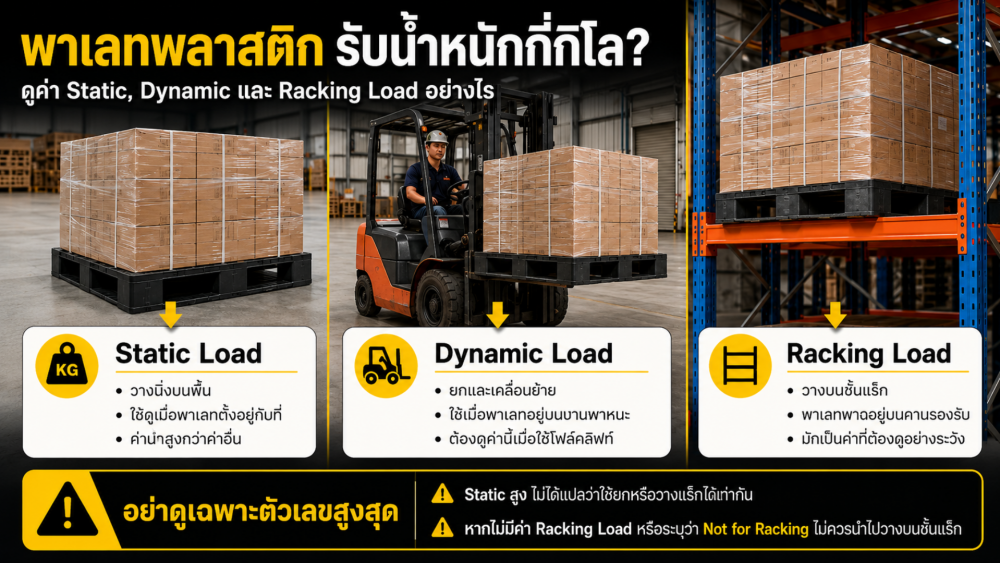
How to choose the right load capacity for your application
The simplest way to remember is:
- Stationary on the floor: look at Static Load
- Lifting and moving: look at Dynamic Load
- Placing on racks: look at Racking Load
However, before making a purchase decision, you also need to check whether the weight is evenly distributed across the pallet or concentrated on specific points, which type of forklift is used, what type of rack supports the pallet, and what the ambient temperature is. Before ordering, you should fully inform the supplier of how many kilograms the goods weigh, the size and shape of the base, what equipment is used for lifting, and whether it needs to be placed on racks. This information helps in selecting the model much more accurately than simply asking, “How many tons can this pallet hold?”
Those who are choosing Plastic pallet should compare the actual model's Static Load, Dynamic Load, and Racking Load, and review the manufacturer's specified conditions every time to ensure the pallet is suitable for the cargo weight, handling method, and storage system in use.