


 EN
 ไทย


Customers Also Purchased
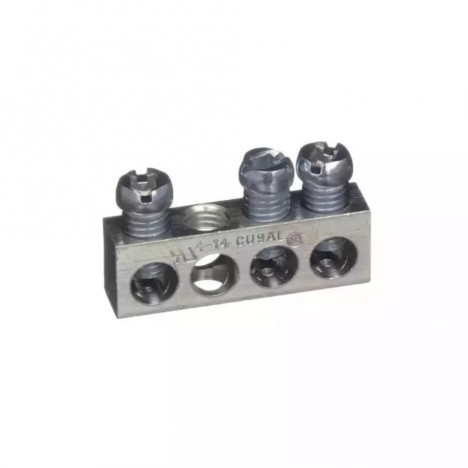
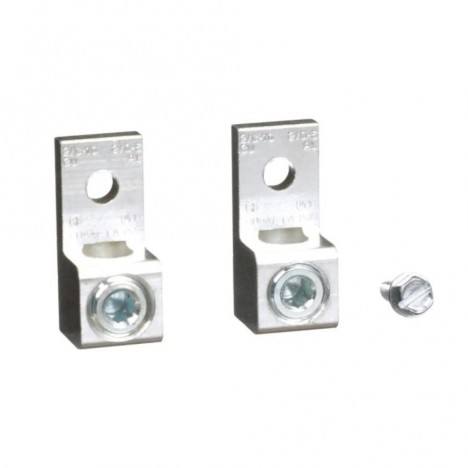
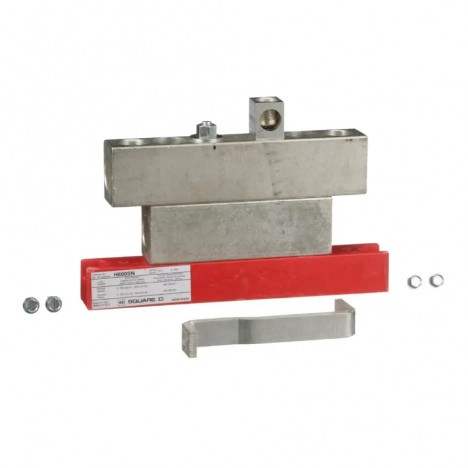


When servicing air conditioners, water pumps, motors, or machinery, it is crucial to be able to clearly disconnect the power supply from the equipment—not just pressing the stop button or turning it off with a remote, as parts of the circuit may still be live.
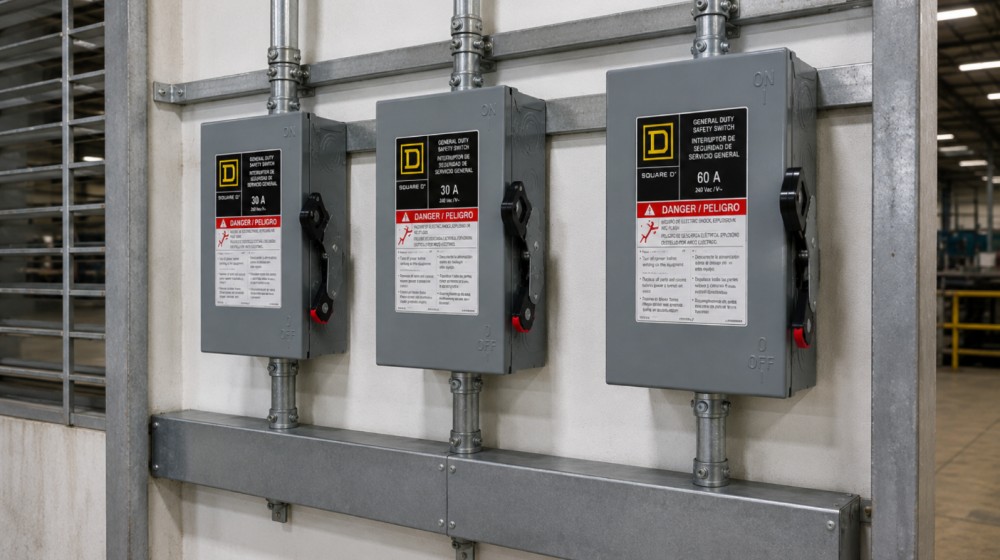
Therefore, it is common to install a “Safety Switch” near the equipment to serve as an ON-OFF and circuit disconnecting point. The device usually comes as an enclosure with an external lever, making the ON and OFF positions easily visible. Some models can lock the lever in the OFF position to prevent anyone from accidentally turning the power back on during maintenance.
Safety switches are available in both fused and non-fused models. Although both can be used to disconnect circuits, their capabilities in protecting against overcurrent and short circuits differ. Selecting the right one requires considering the load characteristics, upstream protection system, current rating, number of poles, and installation location, rather than choosing based solely on amperage rating or external appearance.
In this article, "safety switch" refers to an enclosed lever-operated disconnect switch (Safety Disconnect Switch), not an earth leakage circuit breaker or residual current protective device.
What is a safety switch?
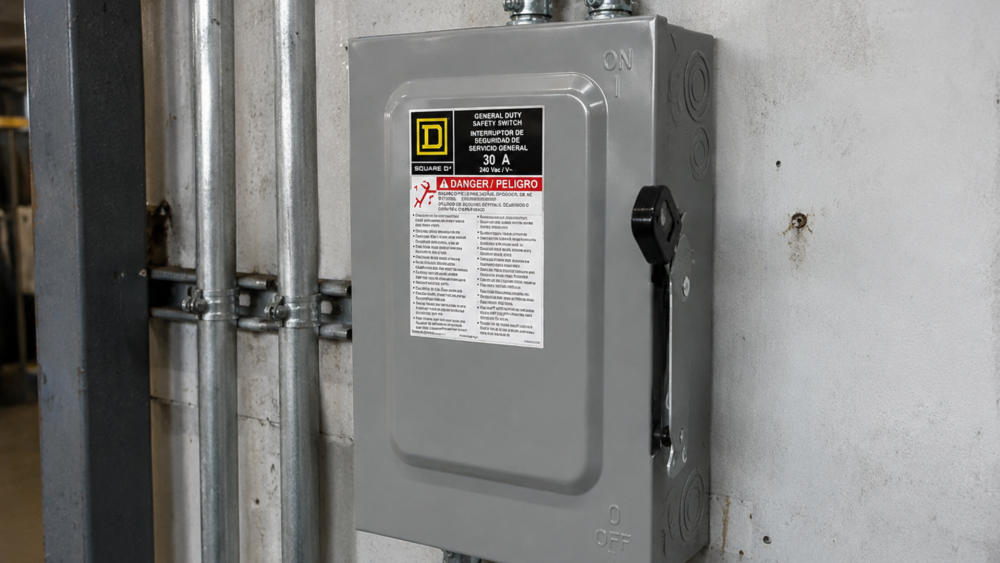
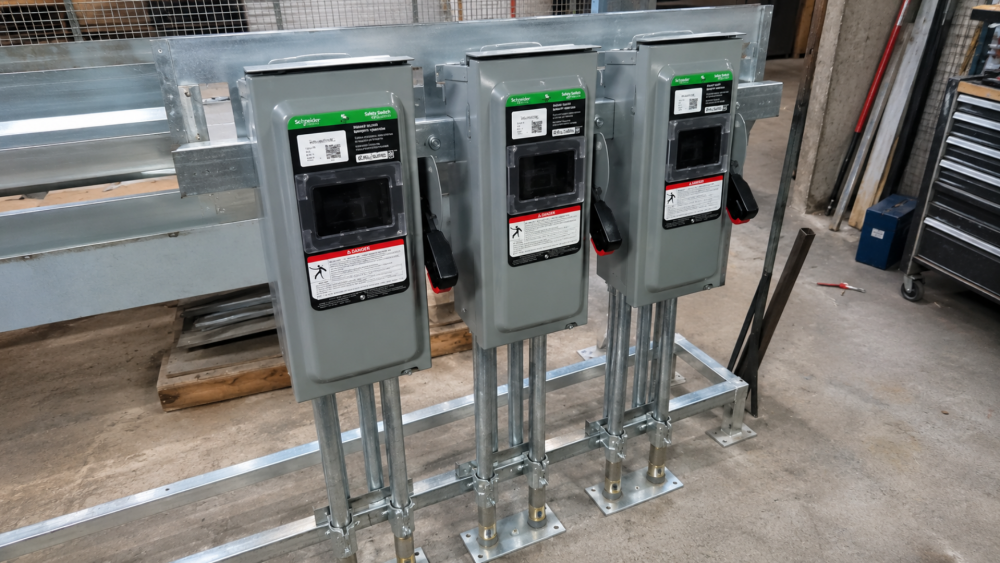
A safety switch is a device used to switch on/off and isolate the power source from an electrical circuit or end equipment. It is typically installed in an easily accessible location near electrical appliances or machinery requiring periodic inspection and maintenance, such as air conditioners, water pumps, motors, water heaters, or industrial machinery.
When the switch lever is moved to the OFF position, the internal contacts open, isolating the load side of the circuit from the power source. This allows technicians to conveniently disconnect power from the equipment before inspection or maintenance. However, even if the handle indicates the OFF position, operators should still verify the absence of voltage before touching any wiring or internal components, rather than relying solely on the handle's position.
Some safety switch models are rated to interrupt circuits under load according to the manufacturer's specifications, but this does not mean all models are suitable for frequent daily switching of machinery. For systems that regularly control motors or machinery, control devices such as magnetic contactors or motor starters are typically used in conjunction.
What is a Fusible Safety Switch?
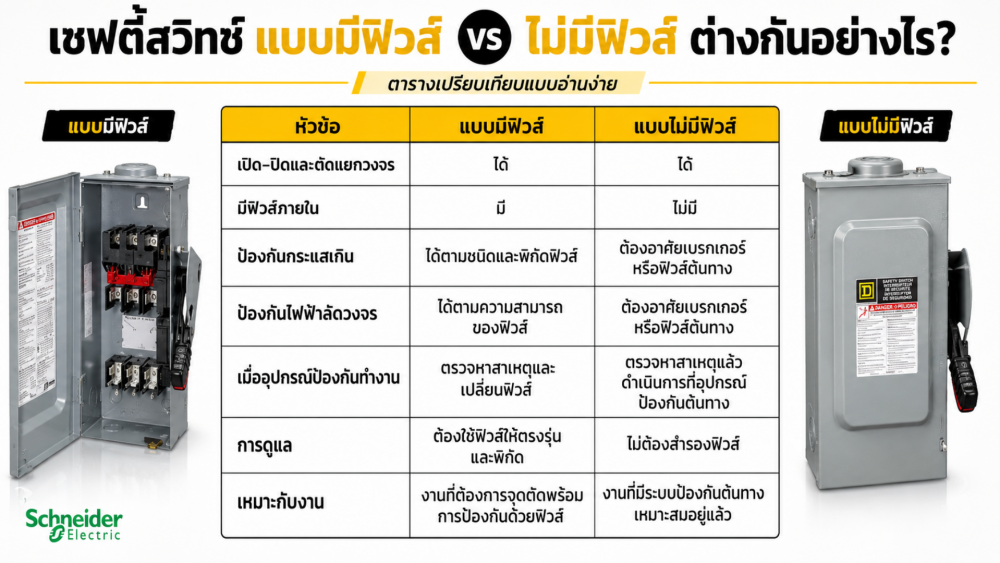
A fusible safety switch is a device that integrates a disconnect switch and fuse compartments within the same enclosure, serving both to isolate circuits and utilize fuses to protect against overcurrent and short circuits.
When current exceeds the fuse's designed rating, the internal fuse element melts and opens the circuit. Proper protection is achieved only when the fuse type, current rating, voltage rating, and interrupting capacity are properly matched with the wiring, load, and electrical system.
Advantages of Fusible Safety Switches
- Provides both a disconnection point and protective devices within a single enclosure
- Enables adding a protection point close to the end equipment
- Allows selecting fuses suitable for specific load characteristics and system designs
- Suitable for applications where equipment manuals or system designs specify the use of fuses
- Certain fuse types provide excellent short-circuit current limitation
Limitations of Fusible Safety Switches
When a fuse blows, it must be replaced with a new one; it cannot be immediately reset like a circuit breaker, and the replacement must match the specific type and rating supported by the enclosure.
If fuses blow frequently, do not resolve the issue by upsizing the fuse, using thicker wire, or bridging it with copper wire, as this can leave wiring and equipment improperly protected. Always troubleshoot the root cause first—whether it is an overload, short circuit, loose connection, or a faulty downstream device.
For motor circuits, fuses alone may not provide complete motor overload protection, as they must be sized to withstand high starting currents. Therefore, the system design may require additional overload relays, motor circuit breakers, or other motor protection devices.
What is a Non-Fusible Safety Switch?
A non-fusible safety switch functions primarily to switch on/off and isolate circuits, with no internal fuses provided for overcurrent or short-circuit protection.
Circuits utilizing a non-fusible safety switch must therefore have circuit breakers or fuses installed elsewhere in the system to protect wiring and loads, such as branch breakers in a consumer unit, load center, or machine control panel.
Advantages of Non-Fusible Type
- Simple structure
- No need to stock spare fuses
- Easier to maintain in many applications
- Suitable for circuits already properly protected by an upstream circuit breaker or fuse
- Can be used as a disconnect point near air conditioners, water pumps, motors, or machinery
Limitations of Non-Fusible Type
The safety switch itself has no built-in overcurrent protection. If the upstream circuit breaker or fuse is improperly sized, the wiring and downstream equipment may not be properly protected. Therefore, wire size, load current, safety switch rating, and upstream protective devices must all be considered together. Do not install a non-fusible safety switch assuming it can replace a circuit breaker.
How does a safety switch differ from a circuit breaker, and do you still need a circuit breaker?
Safety switches and circuit breakers can both be used to disconnect circuits to some extent, but their primary functions are different.
- Non-fusible safety switch Used for manual switching and circuit isolation, with no built-in overcurrent detection mechanism.
- Fusible safety switch Uses fuses to provide overcurrent and short-circuit protection; when a fuse blows, it must be replaced.
- Circuit Breakers Features an abnormal current detection mechanism and trips according to the circuit breaker's characteristics. Once the cause is resolved, most circuit breakers can simply be reset for continued use.
Therefore, having a safety switch does not mean you can eliminate circuit breakers from the system, especially for non-fusible types that strictly rely on an upstream circuit breaker or fuse.
For fusible types, although the internal fuses help protect the circuit, you must still consider protection for the upstream wiring and circuits, as well as coordination with the main breaker or other protective devices in the system.
Can a safety switch protect against electric shock?
The safety switches discussed in this article are not designed to detect residual/leakage current for electric shock protection. If the circuit requires residual current or electric shock protection, devices such as an RCD, RCCB, or RCBO must still be selected and installed properly for the circuit.
General overcurrent fuses and circuit breakers operate only when the current reaches a specified threshold, but leakage current that is hazardous to humans may be lower than the level required to trip a standard fuse or circuit breaker. Therefore, safety switches should not be used in place of residual current protection devices.
How to Choose the Right Safety Switch for Your Application
1. Check the Load Type and Operating Current
You should start by looking at what equipment the safety switch will be used with, because heaters, motors, water pumps, air conditioners, and machinery have different current consumption characteristics. Motor loads often draw high inrush currents during startup. Therefore, you must consider the normal operating current, starting current, horsepower rating, and the switch's duty category, rather than selecting based on amperage alone. The current rating of the safety switch must not be less than the operating current of the circuit, and it should be a model specified by the manufacturer as suitable for that type of load.
2. Check Voltage and Number of Poles
- The rated voltage of the safety switch must not be less than the system voltage, and you must verify whether the device supports alternating current (AC) or direct current (DC).
- A switch used for AC power does not necessarily mean it can be used for DC power at the same voltage; therefore, always check the manufacturer's specifications clearly.
- The number of poles must also match the circuit; for example, 2-pole is commonly found in 1-phase circuits, while 3-pole is typically used in 3-phase systems. Some systems may require 4-pole if it is necessary to disconnect the neutral line as well, which must be determined based on the circuit design and earthing system.
3. Choose Between Fusible or Non-Fusible
If the circuit already has an appropriate upstream breaker or fuse and only requires a local disconnect point near the equipment, a non-fusible type may be sufficient and easier to maintain. However, if the equipment manual or system design specifies the use of fuses, or if you want to add fuse protection close to the load, choose a fusible type along with the correct fuse type and rating.
4. Verify Compatible Fuses
Different models of fusible safety switches may accommodate different types and ratings of fuses. Before purchasing, verify:
- Rated Current
- Voltage rating
- Physical dimensions
- Fuse type or class
- Short-circuit interrupting capacity
- Suitability for the load
You should not install a fuse just because it fits the fuse slot if its specifications do not match those required by the manufacturer.
5. Choose an enclosure suitable for the location and check upstream protection systems
Models designed for general dry indoor installation should not be installed outdoors without protection, as water, dust, moisture, or chemical vapors can damage the contacts and terminals.
Before purchasing, check whether the installation point is indoors or outdoors, and if there is a risk of rain, water spray, dust, chemical vapors, or corrosion, then select an appropriate IP rating or enclosure type. At the same time, inspect the entire system, including upstream circuit breakers or fuses, wire sizes, downstream loads, residual current devices (RCDs), and motor protection devices for motor circuits.
Fusible vs. Non-Fusible: Which one should you choose?
If the circuit already has properly selected upstream circuit breakers or fuses and only requires a local disconnect point near an air conditioner, water pump, motor, or machinery, a non-fusible safety switch is usually sufficient, easy to maintain, and does not require spare fuses. However, if system schematics or equipment manuals specify fuses, if added protection close to the load is needed, or if fuse coordination with other equipment is required, choose a fusible safety switch and select the correct fuse type and rating for the job.
Whichever type you choose, thoroughly verify current ratings, voltage, number of poles, load type, enclosure protection level, wire size, and upstream protective devices. Especially for motor circuits, machinery, and high-power equipment, do not select based on ampere rating alone.
If you are currently choosing and purchasing a safety switch for an air conditioner, water pump, motor, or machinery, always verify equipment and electrical system specifications before selecting to ensure the right model for the job site, providing clear circuit isolation and proper coordination with the system's protective devices.