


 EN
 ไทย


Customers Also Purchased
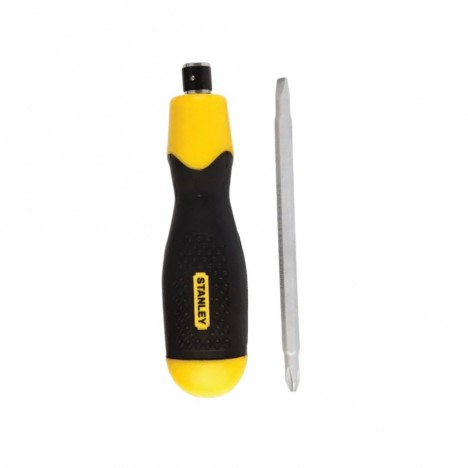



Many people think that a Phillips screwdriver is just a Phillips screwdriver—as long as it fits into the slot, it should turn the screw just the same. In reality, cross-head screwdrivers come in several types, especially PH and PZ, which look so similar that they are hard to tell apart with the naked eye. Using the wrong type can strip the screw head, cause the screwdriver to slip, chip the tip, fail to tighten properly, or make removal difficult.
This problem is common in home DIY, furniture assembly, woodworking, hinge installation, and general repairs. Especially when using a screwdriver or drill, choosing the wrong bit can ruin a screw head in seconds. Many misunderstand this as being caused by low-quality screws or excessive tool power, when the real cause is simply using a PH screwdriver on a PZ screw, or mismatching them from the start.
In this article, we'll explain in simple terms: Screwdrivers The difference between PH and PZ, how to identify each screw head type, why using the wrong tool easily strips screw heads, and how to choose the right screwdriver for your job.
What is a PH screwdriver?
A PH screwdriver, or standard Phillips screwdriver, comes from the name "Phillips." It is the most commonly found screwdriver head in general work. The screw recess has a 4-point cross shape, appearing as a plus sign from above, and the screwdriver tip is specifically designed to fit this recess.
The main strengths of PH are its ease of use, wide availability, and compatibility with many types of screws—ranging from household tasks, electrical appliances, and thin sheet metal to woodworking and general equipment. Therefore, it is a tool virtually every household should have, especially popular sizes like PH1 and PH2.
Another distinctive feature is that the cross slots have a tapered profile, and the screwdriver tip is designed to naturally slip out of the screw head when excessive torque is applied. This effect is known as "cam-out," partly engineered to reduce the risk of over-tightening. However, if not pressed straight, used in the wrong size, or applied with too much force, it can still cause the screw head to strip.
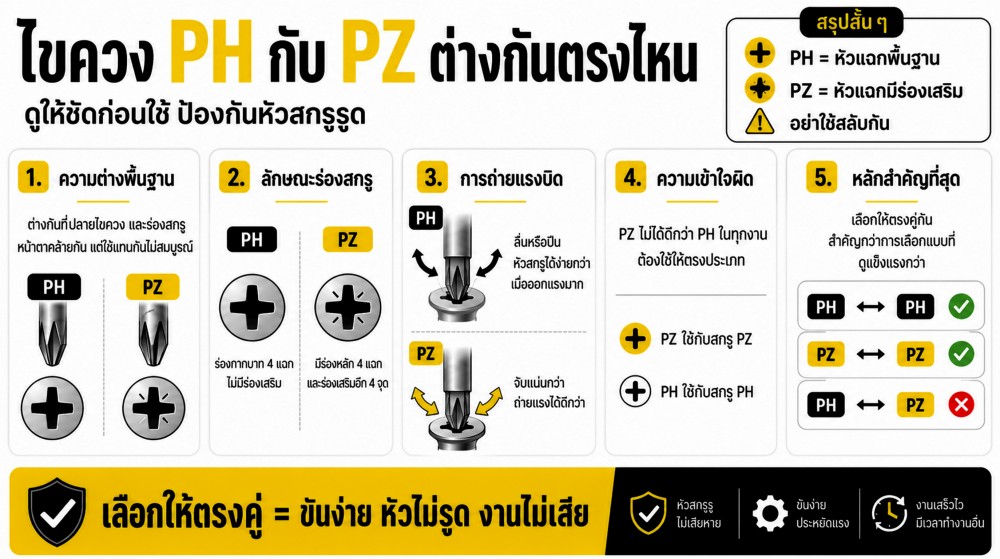
PH screwdrivers are suitable for general applications that do not require high torque, and should only be used with PH screw heads. If used on a similar-looking PZ screw head, even if it fits inside, the screwdriver tip will not make full contact with the screw face, causing it to slip and easily damage the screw head.
What is a PZ screwdriver?
A PZ screwdriver comes from the name "Pozidriv," developed as an evolution of the standard cross-head to transfer torque better and reduce slipping or cam-out from the screw head. It is ideal for tasks requiring tighter fastening, such as furniture assembly, woodworking, equipment installation, and high-volume screw driving.
Key visual indicator: A PZ screw head features a main cross recess similar to PH, but with additional small ribs/recesses positioned at 45 degrees between the main slots. These small tick marks are the easiest way to distinguish PZ from PH.
The PZ screwdriver tip is also designed differently from PH. It fits tighter into the PZ screw recess, provides more contact surface area, and slips less under driving force. This delivers a "tighter grip" feel, especially when used with electric screwdrivers or drill drivers where precise torque control is needed.
Caution: Although they look similar, PZ cannot always replace PH due to differences in tip geometry and contact angles. Using a PZ bit on a PH screw may cause the tip to not seat fully or make contact in the wrong position, leading to slipping and stripped screws. Beyond selecting the correct screwdriver head shape, another common question craftsmen often have when choosing tools is "What is the difference between S2 and CR-V steel in screwdrivers? And which one is more durable?", as both materials possess properties tailored for different applications.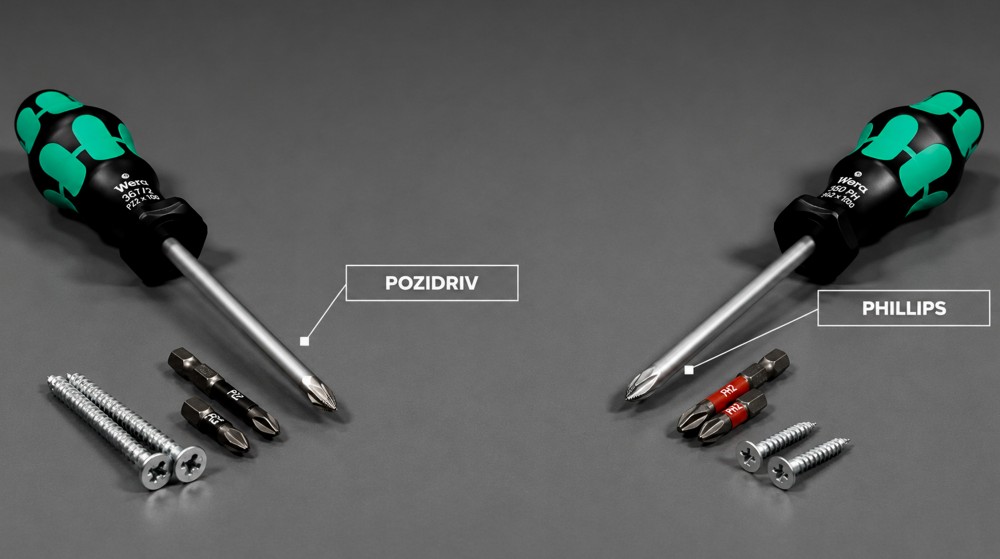
How to identify PH and PZ screw heads
The simplest identification method is looking at the screw head from above. If you see a standard cross recess with no additional small ribs, it is mostly a PH head. But if there is an extra set of small indented lines between the cross blades, it is very likely a PZ head.
However, in real-world work, screw heads can be very small, covered in dust, paint, or rust, or lighting may be poor, making visual differentiation difficult. A helpful method is to gently insert the screwdriver bit without turning. If it is the correct bit, the tip will seat firmly without wobbling or feeling loose.
- Inserting a PH bit into a PZ head → usually feels slightly loose, does not seat completely, and slips easily once the screw begins to tighten.
- Inserting a PZ bit into a PH head → the tip may not go as deep as it should or only contacts certain spots, causing it to bite into the screw head incorrectly when high force is applied.
Another very easy method is to check the label on the screw box. Good quality screws usually state clearly whether to use a PH or PZ bit and which size, such as PH2 or PZ2. Yet, many people overlook this, assuming that any cross-head bit works the same.
Why using the wrong screwdriver strips screw heads
A stripped screw head occurs when the screwdriver tip fails to achieve full surface contact with the screw recess. When turning force is applied, the tip slips instead of transferring torque to drive the screw. Repeated slipping rounds off, flares, or deforms the edges of the recess until the screwdriver can no longer grip the screw head at all.
When using mismatched PH and PZ screwdrivers, this problem occurs much more easily because their internal geometries do not align. Even though they look similar externally, the actual contact area is smaller than intended. Force that should be evenly distributed across the recess concentrates at localized points instead, overloading the edges and causing rapid deformation.
The more you use an electric screwdriver or impact driver, the faster damage occurs compared to hand tools due to high rotational speeds and torque. If the bit doesn't fit properly, the screw head can strip immediately or right as it nears full tightness. Warning signs include a "clicking" or grinding noise, tiny metal shavings, or the screw head beginning to form a rounded recess.
Applying pressure off-angle also easily causes screw heads to strip. Even if you choose the right bit type and size, driving at an angle prevents full contact across the face, concentrating force on one side and causing it to slip easily. Therefore, you must select the correct bit and keep it aligned straight while driving.
Can You Use a PH Screwdriver on a PZ Screw?
The answer is: sometimes it might turn the screw, but you should not use it regularly. A PH screwdriver is not designed to engage the supplementary ribs of a PZ head. When inserted, the tip only reaches the main cross recess without full surface contact, resulting in a loose grip that slips easily under heavy force.
For light-duty tasks, they might seem interchangeable, but in real-world applications—like driving into hardwood, long screws, or removing tight, old screws—there is a high chance of damaging the screw head. Worse yet, once a PZ head is stripped, even switching back to the correct PZ bit may not grip properly because the screw recess is already deformed. Therefore, always use PZ from the start if you identify a PZ head.
Can You Use a PZ Screwdriver on a PH Screw?
This is also not recommended. Even though a PZ screwdriver appears to have more contact area, its geometry does not always fit PH recesses properly. The tip may not seat completely or may only touch certain points, preventing downward force from distributing correctly. Under driving force, the PZ bit can bite into the edges of the PH recess in the wrong spots, causing it to flare out or strip—especially with screws made of soft materials, such as furniture screws, small-headed screws, or weathered screws.
Remember: "It fits in" does not mean "it works." Check that the bit seats fully in the head, doesn't wobble, and doesn't cam out when turned. If you have to push unusually hard to keep it from slipping, you may be using the wrong bit type or size.
What Should You Do If a Screw Head Starts to Strip?
If you begin to feel the screwdriver slip, the screw head deform, or the bit spin freely, the first thing to do is STOP immediately. Do not force it, as forcing will cause severe damage to the screw recess. Then check whether you are using the correct bit type—PH or PZ—and whether the size fits properly.
If you find that you're using the wrong one, switch to the correct bit, align it straight with firm downward pressure, and turn slowly. If the screw head still has enough recess left, you may still be able to remove or tighten it. But if the head is badly damaged, you may need to use extraction methods, such as placing a thin rubber band between the bit and screw head for extra friction, using pliers if the screw head protrudes, or using a screw extractor set if necessary.
However, fixing a stripped screw head always takes far more time than preventing it. Therefore, the key is not to wait until the head strips before fixing the problem. Choose the right bit from the start, apply appropriate force, and stop immediately as soon as you feel the bit begin to slip.
Conclusion
- Inspect the screw head before use: standard cross recess = PH; additional small tick marks/ribs = PZ.
- Match the bit in both type and size, e.g., PH2 for a PH2 screw.
- Test-fit before driving: only drive if it seats firmly without wobbling or slipping; if it doesn't fit properly, switch it immediately.
Don't assume all cross-head screwdrivers are interchangeable. The small differences between PH and PZ can lead to stripped screw heads, wasted time, and difficult screw removals. Choosing the right screwdriver from the start is a simple step that ensures neat, safe work while prolonging the life of your screws, screwdrivers, and workpieces.
Select Screwdrivers to suit the application