


 EN
 ไทย


Customers Also Purchased
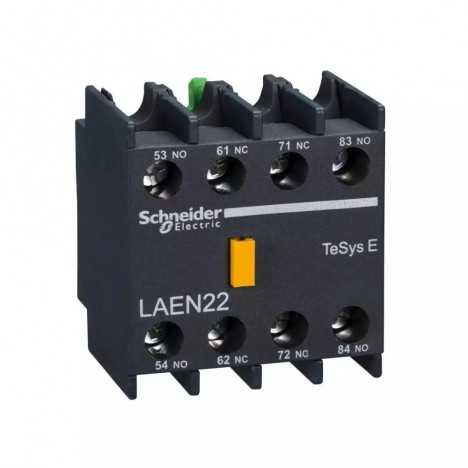
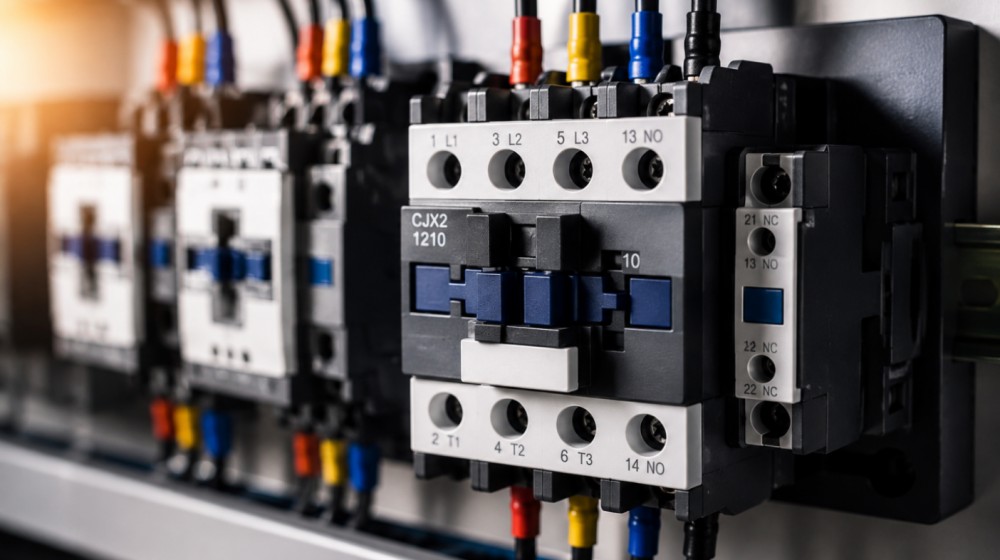
When choosing a Magnetic Contactors Many people start with the simple question, “How many amps do I need?” and then check the product unit. Seeing 18A, 25A, 32A, or 40A written on it, they assume that picking one with slightly higher amps than the load should be enough. In real applications, however, choosing a magnetic contactor doesn't end with the amp rating on the unit. The exact same contactor may handle different load capacities depending on its application. Using it with a heater is one thing; using it with a motor is another; and using it with capacitors requires an entirely different consideration.
This is why some people buy a contactor that seemingly has enough amps, but after running it for a short while, the contacts burn, terminals overheat, the contactor buzzes noisily, or the coil fails to hold. The problem isn't always poor product quality—it often starts with choosing a size that doesn't match the application.
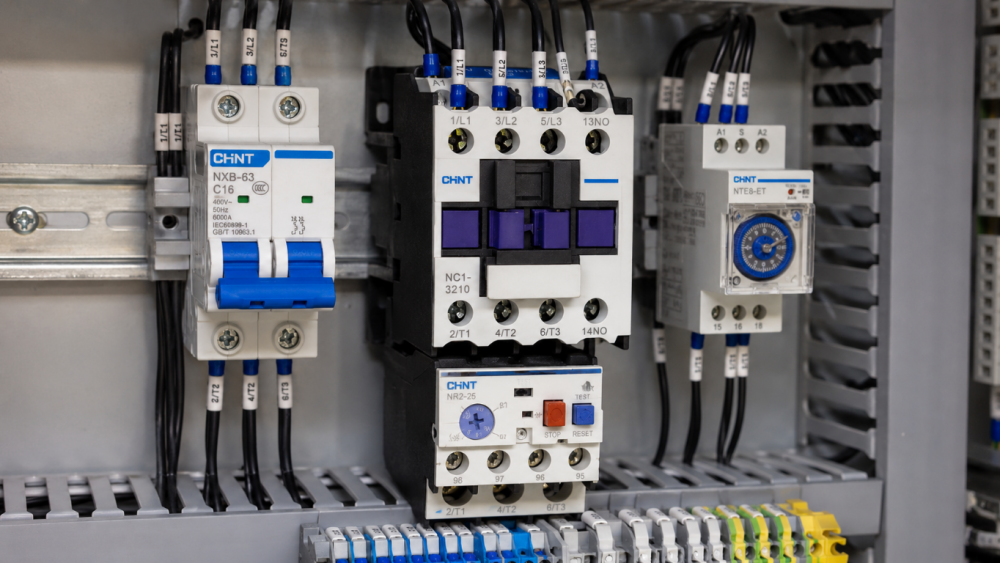 Before asking how many amps, you must know what you are controlling
The first point to consider is what kind of load you need to control, because different types of loads place varying amounts of stress on the contactor.
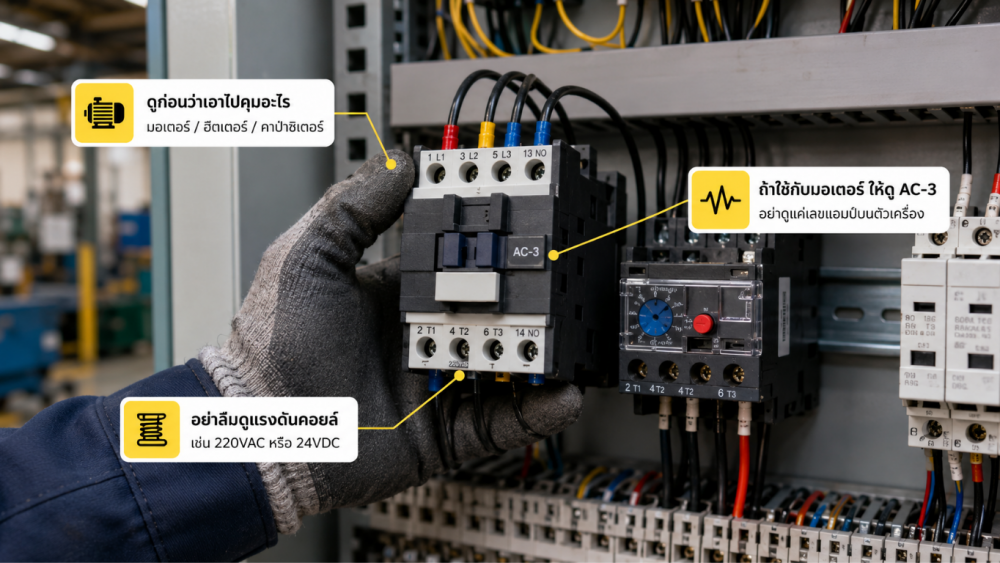
For heating loads such as heaters, ovens, or purely resistive loads, the operational stress upon startup is not like that of a motor. However, for water pumps, fans, blowers, compressors, or motor-driven machinery, these loads have an inrush starting current several times higher than during normal operation. Even though it is brief, it directly affects the contactor's contact points. Therefore, choosing a contactor should never start solely with "how many amps do I want?", but always with "what load am I going to control?".
The amp rating on the contactor does not mean it can be used for any application
The mistake many people make is seeing the amp rating on the contactor and assuming it applies equally to any type of load. In reality, contactor specifications are categorized by utilization categories, such as AC-1 and AC-3.
AC-1 is typically used for non-inductive or slightly inductive loads without heavy inrush currents, such as heating loads. Meanwhile, AC-3 applies to general motor applications, such as squirrel-cage motors with starting and switching off during normal running.
Therefore, the same contactor may be rated for a much higher current under AC-1, but significantly lower under AC-3. For example, a model might be rated for 32A under AC-1, but only 18A under AC-3. If you are controlling a motor, you must refer to the AC-3 rating, not immediately grab the 32A value.
This is extremely critical because motors do not draw a steady current like general heating loads. At startup, there is an inrush current, and the contacts endure a much heavier burden. Choosing based on the AC-1 rating for motor applications risks overloading the contactor beyond its specifications, causing it to fail prematurely.
For motor applications, start with the motor's nameplate
If the load you need to control is a motor, the proper approach is to check the motor's nameplate first, rather than guessing based purely on horsepower. The motor nameplate usually displays operating current values such as Rated Current or Full Load Current. This value is essential information for selecting a contactor. If the motor specifies an operating current of 7A, you should choose a contactor whose AC-3 rating is no less than 7A at that operating voltage.
Do not assume that “all 1 HP motors can use the same contactor model.” Motors with the same horsepower rating may draw different currents depending on the supply voltage, number of phases, efficiency, model, and application conditions. If the motor nameplate is missing, illegible, or you are unsure how much current it draws, you should consult the manual for that model or have a technician verify it before purchasing. Simply estimating based on the physical size of the motor can easily lead to inaccuracies.
Should you add a safety margin to the amperage?
Normally, you should size the contactor appropriately for the actual load and first check the utilization category correctly. If the motor current is too close to the contactor's rating, sizing up by one step is usually the safer choice—especially for applications with frequent starts, enclosures that are hot or poorly ventilated, or loads that might experience heavier-than-normal operation. For example, a 3-phase 380V water pump motor is specified to draw about 9A. If there are choices between an exact AC-3 9A contactor and an AC-3 12A contactor, in many applications choosing 12A is more suitable because it prevents running the equipment right at its limit.
However, bigger amperage is not always better. A larger contactor is more expensive, takes up more space inside the panel, and does not serve as a motor protector in place of an overload relay. Sizing margins should be applied reasonably, not excessively beyond what is necessary.
Contactors do not directly prevent motor burnout
Another point that should be clearly distinguished is that the primary function of a magnetic contactor is to switch the circuit on and off; it does not directly protect the motor from overloads.
For motor applications, an overload relay or appropriate motor protection device is typically required in combination. The overload relay disconnects the circuit when the motor draws excessive current due to heavy loading, motor stalling, or certain operational malfunctions. Therefore, even if you oversize the contactor's amperage rating, you still need to set the overload relay according to the actual motor current, not the contactor size. For example, if a motor draws 9A but a 12A contactor is chosen, it does not mean the overload relay must be set to 12A as well.
Coil voltage is just as important as the amperage rating
Many people choose the correct amp rating but get the coil voltage wrong, resulting in a contactor that cannot operate—or worse, a coil that burns out as soon as power is applied.
The coil is the part that receives power from the control circuit to pull the contacts closed and engage the contactor. Some panels use a 220VAC coil, some use 24VDC, and some systems use 110VAC or 380VAC, depending on the control panel's design. If the control circuit supplies 220V but a contactor with a 24V coil is used, the coil may burn out immediately. But if the control circuit only provides 24V and a 220V coil is purchased, the contactor will fail to pull in. When buying, you should not just ask for an "18A magnetic contactor"; you should fully specify the required coil voltage, such as 18A with a 220VAC coil or 18A with a 24VDC coil, to match the actual control circuit.
The number of poles must match the electrical system
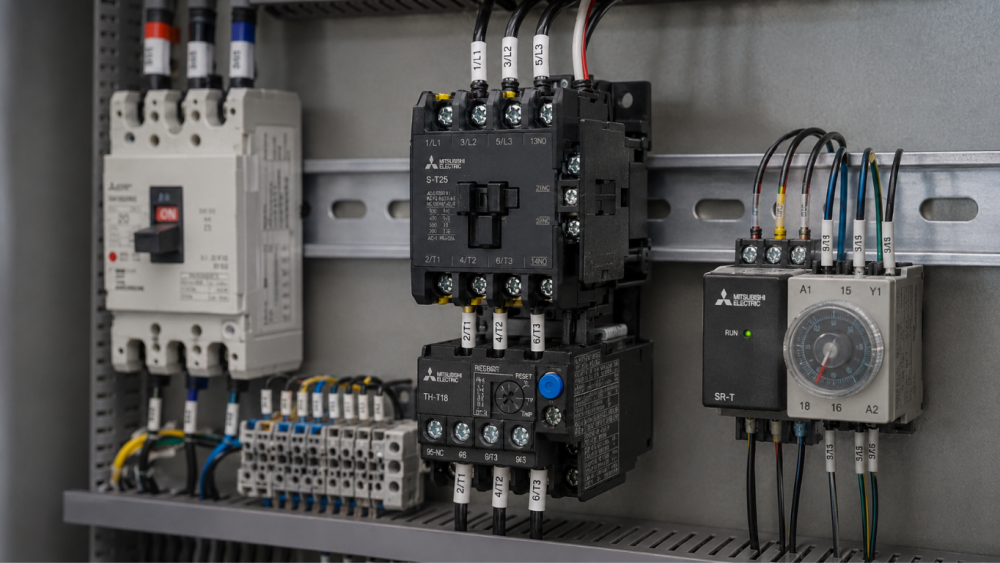
Besides amperage and coil voltage, the number of poles on the contactor must also be selected properly. Most 3-phase motor applications use a 3-pole contactor to connect and disconnect all three phases simultaneously. Some applications may use 2 poles or 4 poles depending on the electrical system and circuit design.
For 1-phase power, you still need to determine which lines the circuit needs to break. You shouldn't guess solely by counting the visible wires, as some systems have power circuits, control circuits, breakers, overloads, and other devices connected together.
Frequent switching applications require more care than continuous-run applications
A contactor used for a continuous-running motor versus one that switches on and off frequently throughout the day may not have the same service life, even if controlling similar load sizes.
Applications like water pumps that cycle frequently according to pressure switches or float switches, cyclic machinery, or automated systems that repeatedly stop and start motors will wear out contacts faster than continuous-duty applications that only stop a few times a day.
For this type of duty, in addition to checking the amperage rating, you should also consider operating frequency specifications, electrical life, and manufacturer recommendations. This is especially true for reversing, forward-reverse, braking, or frequent jogging/inching applications, which should never be selected based on rough estimates.
Capacitor banks require special attention
Capacitor banks are an application where general-purpose contactors should never be used without checking specifications. Because switching capacitors into the system creates higher inrush currents than standard applications, contactors designed specifically for capacitor duty should be used. Even though they look similar to general contactors, the load their contacts must handle is not the same. If you choose the wrong one, it can cause the contacts to wear out quickly or lead to issues in the electrical system.
How to Choose Without Mistakes
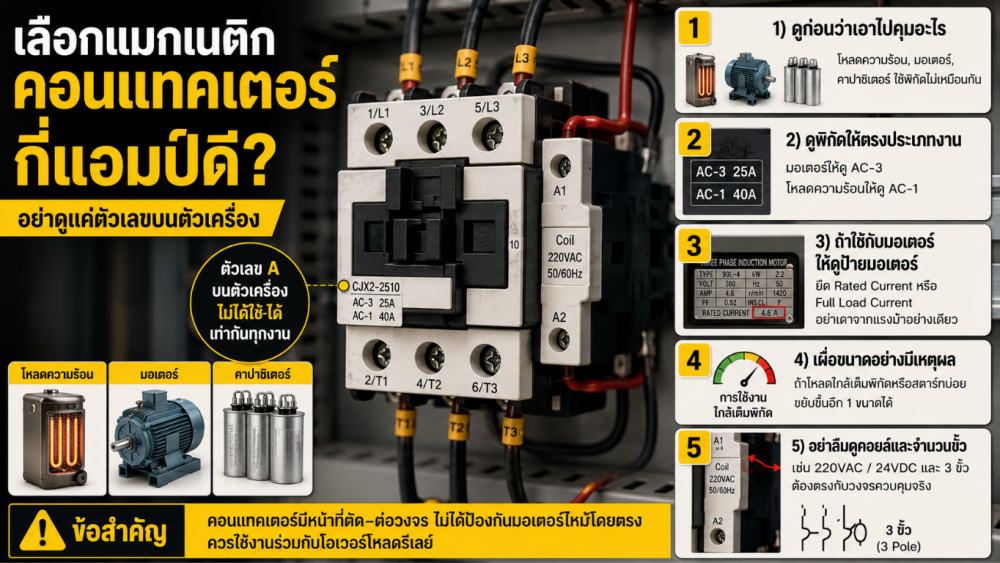
If you want to choose Magnetic Contactors correctly, you should start by checking the load—whether it is a motor, heating load, lighting, or a specialized load. Next, check the actual operating current of the load, the voltage, and the utilization category, such as AC-1 or AC-3, before selecting the appropriate contactor size.
If used with a motor, base your decision on the rated current on the motor nameplate and primarily look at the AC-3 rating. If used with a heater or resistive load, check the rating suitable for AC-1. If the application involves frequent starting or heavier-than-normal duty cycles, you may need to upsize or check additional specifications.
Most importantly, do not forget to check the coil voltage, the number of poles, and matching protective devices, because a contactor does not work alone in a real electrical system. Choosing correctly from the start will help reduce issues like burnt contactors, hot terminals, contact chatter, or premature failure much better than selecting based solely on the amp rating on the unit.