


 EN
 ไทย


Customers Also Purchased

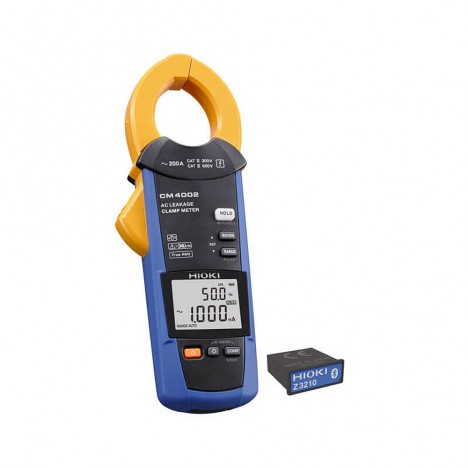


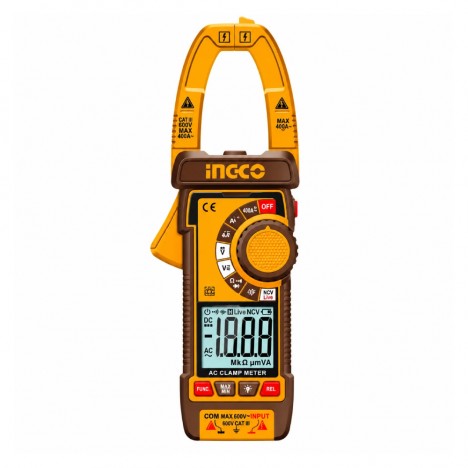

When choosing to buy Clamp Meters Many people usually start by checking how many amps it can measure, whether it measures voltage, if the jaw opening is large enough, whether the display is easy to read, or what extra functions it has. But as they keep reading the specs, they often see the term "True RMS" on the meter or the box.
This term makes many people hesitate because clamp meters with True RMS are typically more expensive than standard models. This raises questions: Is it necessary? Or is a non-True RMS model sufficient for general use?
What is True RMS?
True RMS It is an alternating current (AC) measurement method that allows the measuring instrument to calculate RMS values more accurately based on the actual signal, especially when the AC waveform is not a standard sine wave.
RMS Stands for Root Mean Square It is a value used to indicate the practical effect of alternating current in actual operation, such as heating effects in a load, current drawn by the load, or values used to assess electrical system performance.
Alternating current does not stay at a steady value like DC; it fluctuates over time. The RMS value is therefore used as a standard value to indicate usable electrical levels. For example, residential electricity commonly referred to as 220V or 230V generally refers to the RMS value, not the peak value of the waveform.
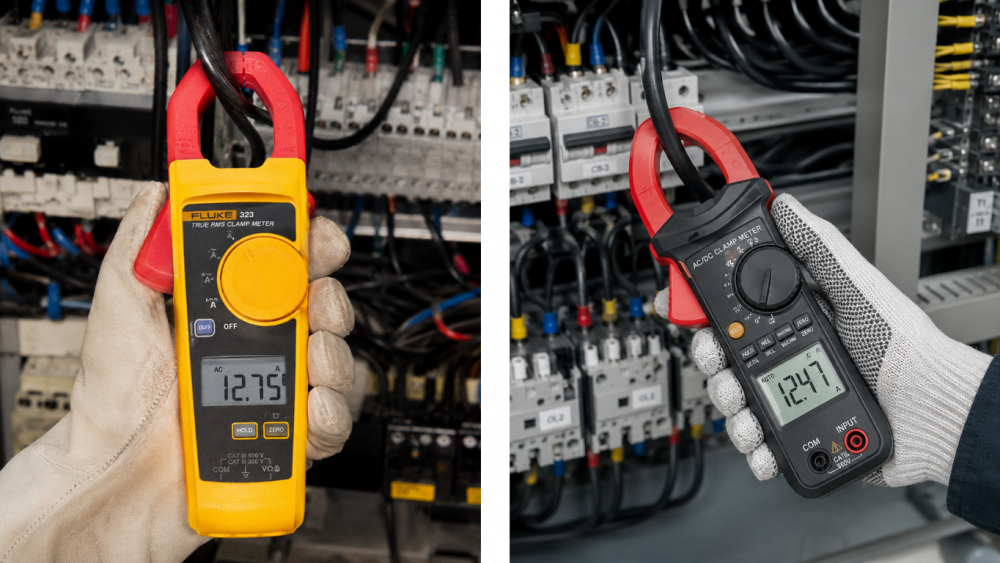
How do standard clamp meters differ from True RMS clamp meters?
Many non-True RMS clamp meters use an average-sensing method and convert the result to display as an RMS value based on the assumption that the measured waveform is a standard sine wave. This method works reasonably well when the signal is a smooth sine wave without much distortion.
Problems become apparent when measuring loads that cause the current waveform to deviate from a regular sine wave, such as loads with harmonics, pulsating loads, or loads with internal power control circuits. In these cases, average-sensing clamp meters may give readings that deviate from the actual RMS value.
True RMS clamp meters are therefore better suited for these tasks because they are designed to calculate RMS values closer to real-world performance when the AC signal has an imperfect waveform. However, accuracy also depends on the instrument's specifications, such as measurement range, supported frequencies, rated accuracy, and manufacturer-defined limitations.
Why aren't electrical waveforms always smooth?
In electrical textbooks, we often see AC electricity depicted as smooth sine waves. In reality, the current waveforms of many devices might not always be that smooth, especially modern equipment involving electronic circuits or power control circuits.
Common examples include inverters, motor drives, power supplies, chargers, UPS units, certain types of machinery, or equipment with internal power conversion and regulation. These loads may draw current unevenly in some cases, causing current waveform distortion or introducing harmonics.
When measuring such loads with standard sine-wave-based clamp meters, the displayed reading can be higher or lower than the actual value, depending on the waveform and the load characteristics. Even if the numbers appear steady, it does not necessarily mean they are accurate if the instrument is not suitable for the signal type.
What types of applications require a True RMS clamp meter?
True RMS clamp meters are suitable for tasks requiring measurements across varied loads or where non-sinusoidal current waveforms are likely encountered—especially in electrical work, maintenance, building facilities, factories, and control systems.
Applications where True RMS should be considered include inspecting electrical panels with mixed loads, motor work, inverter air conditioners, water pumps, machinery, UPS systems, power supplies, inverters, motor drives, and tasks involving power electronics.
In these applications, the measured current reading affects troubleshooting and analysis—such as whether a load is drawing an abnormally high current, whether a motor is overloaded, whether equipment is behaving abnormally, or whether the electrical system can adequately support the load. If the measurement tool gives inaccurate readings, the diagnosis can be completely misleading.
For anyone who uses a clamp meter as a regular working tool rather than just occasionally, True RMS is an essential feature because it provides more reliable AC measurements on non-sinusoidal waveforms.
Is It Necessary for General Household Electricity?
For general household use, such as measuring basic loads, rough checks on appliances, or as an occasional backup tool, a non-True RMS clamp meter may be sufficient—especially if most measurements involve simple loads that do not require high diagnostic accuracy.
However, if you need to measure equipment with more electronic circuitry—such as inverter air conditioners, UPS units, chargers, variable-speed water pumps, or devices with internal power supplies—a True RMS model is a better choice because it covers a broader range of real-world scenarios.
The decision ultimately depends on your usage. If you use it infrequently for basic tasks and want to save money, a standard model will still work. But if you work as a technician, handle various types of loads, or want a tool that can handle future jobs, True RMS is more worthwhile in the long run.
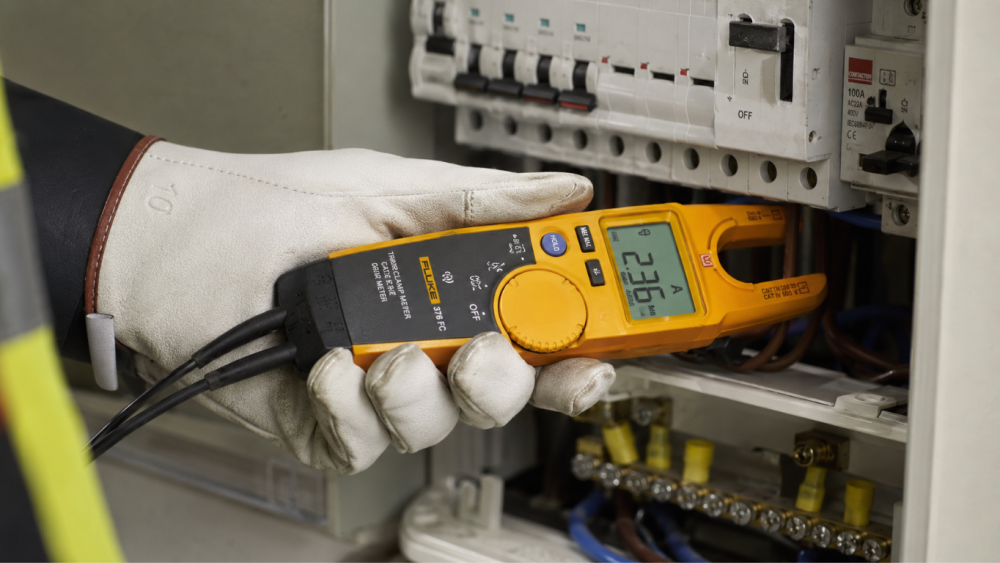
True RMS Does Not Mean It Can Measure DC
This is a crucial point because many people see "True RMS" and assume the clamp meter can measure everything, both AC and DC, which is not always the case.
True RMS relates to the method of measuring alternating current, specifically for accurate AC readings on distorted waveforms. It does not automatically mean the tool can measure DC current through the clamp jaw. If you need it for batteries, solar panels, automotive applications, DC systems, or direct current tasks, you must check the specifications carefully to see if the model is an AC/DC Clamp Meter and clearly states that it measures DC current via the clamp.
Some clamp meters feature True RMS but can only measure AC current through the clamp. Others can measure DC voltage, but cannot measure DC current via the clamp jaw. Only certain models measure both AC and DC fully as needed. Before purchasing, always review the specifications thoroughly instead of just looking at the True RMS label on the body.
What to Consider Before Buying a True RMS Clamp Meter
Having True RMS is an advantage, but it's not the only factor in choosing a clamp meter. To find the right model for your work, consider several aspects together.
- Current Measurement Range Check how many amps your actual work typically involves. If used for household electricity or general loads, you may not always need an extremely high-range model. However, for electrical panels, buildings, motors, or industrial machinery, choose a measurement range that matches your actual work.
- Measurement Range Resolution Some models can measure very high currents but lack fine resolution at low current ranges. If you regularly measure small loads, check whether the meter's resolution is suitable for your work.
- AC Only or AC/DC Measurement If your work is primarily household wiring and AC applications, an AC model may suffice. But if there is any chance you will work with batteries, solar panels, or DC systems, it is better to choose an AC/DC model from the start.
- Jaw Size If the jaw is too small, it may not clamp around main cables or large-gauge wires, but if it is too large, the tool may be bulky when taking measurements in tight electrical panels.
- Safety Standard Such as the CAT rating to suit the application point, because a clamp meter is a tool used close to live electrical systems. Choosing a tool should not be based on price alone.
Even with True RMS, you still need to measure correctly.
Even when using a True RMS clamp meter, if the measurement method is incorrect, the resulting value can still be wrong. A common mistake is clamping multiple conductors simultaneously, such as clamping around an entire cable that has both L and N conductors in the same jacket, or clamping both the feed and return wires at the same time.
Measuring load current with a clamp meter requires clamping around only a single conductor, such as a single phase wire or the specific circuit wire you actually want to measure. If you clamp multiple conductors together, the magnetic fields from the currents may cancel each other out, causing the meter to give an incorrect reading. In addition, you must select the mode appropriate for the job: choose AC mode for AC measurements, use a model that supports DC current and set the correct mode for DC measurements. Some DC-capable models also require pressing Zero before measuring to calibrate the tool's baseline.
True RMS helps make AC readings more reliable when the waveform is distorted, but it does not fix errors from incorrect clamping, selecting the wrong mode, using the wrong measurement range, or exceeding the manufacturer's specified limits.
So, is True RMS necessary?
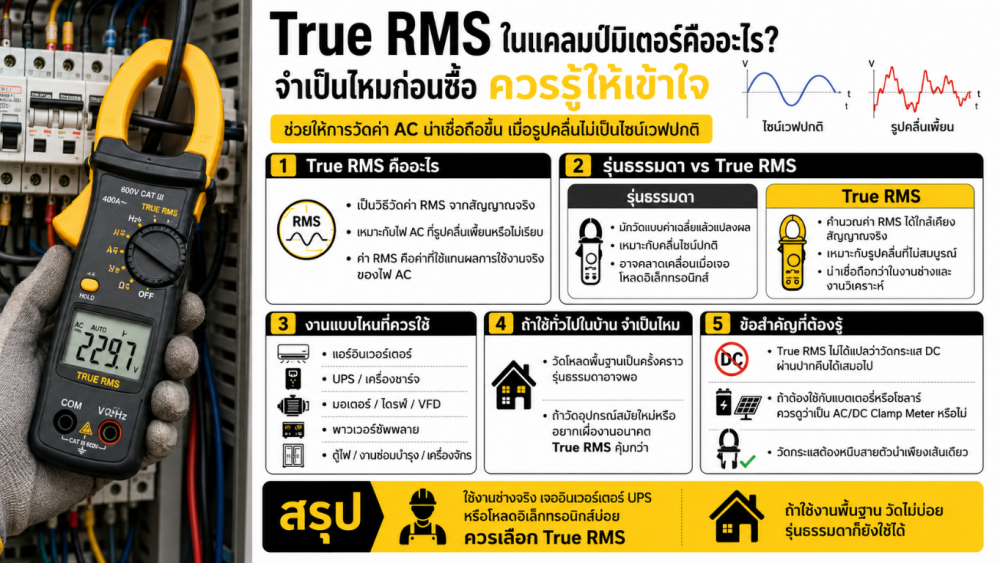
True RMS is essential for those who need reliable measurement values, especially when working with loads that cause AC waveforms to be non-sinusoidal, such as inverters, motor drives, UPS systems, power supplies, machinery, or certain control systems.
For electricians, maintenance technicians, or anyone who uses a clamp meter as a primary work tool, a True RMS model is a worthwhile investment because it reduces the chance of measurement errors from distorted waveforms and gives you greater confidence in troubleshooting. However, for general use, measuring basic loads, infrequent use, and when high analytical precision is not required, a standard clamp meter is still sufficient—provided you understand its limitations.
Choosing Clamp Meters Therefore, you should not just consider whether it has True RMS or not, but look at your actual application: whether you need to measure AC or DC, the current range, the level of resolution required, whether the jaw size fits the wires, and whether the tool meets safety standards adequate for the work environment.
If you want to purchase a tool for a broader range of applications, True RMS is a recommended feature. But if your work is limited to basic tasks, a standard model may be sufficient and more economical.