


 EN
 ไทย


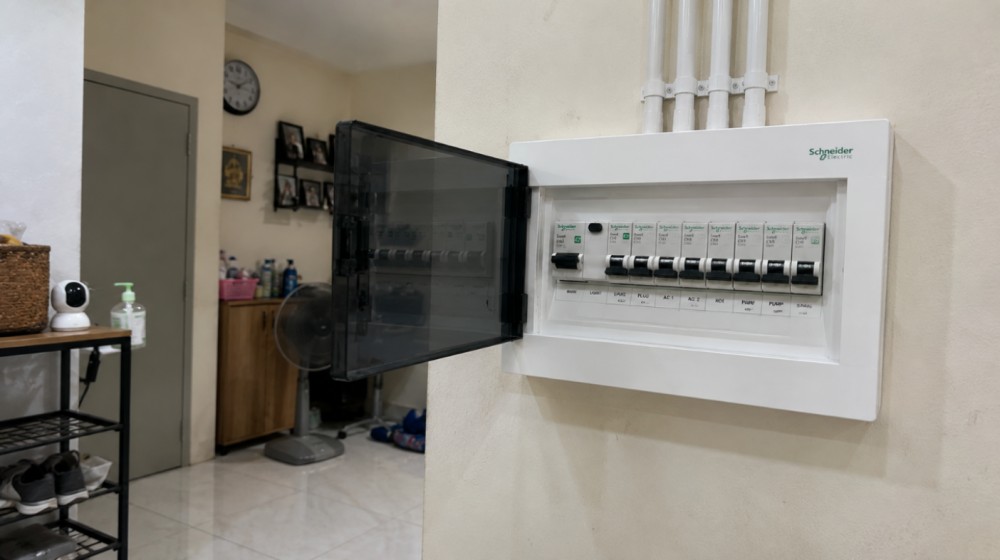
Customers Also Purchased


When buying Consumer Units into the house, many people often get stuck on the question, "How many ways should I buy?" Some see a 6-way unit and feel it should be enough because the house isn't very large. Others see 12 ways and wonder if it's too big or an unnecessary expense. But when asking another electrician, they advise leaving extra space so that when adding air conditioners, power outlets, or remodeling the kitchen in the future, you won't have to replace the entire unit.
It may sound like a minor detail—just picking the number of ways (modules) in an electrical panel. However, the number of ways in a consumer unit affects the organization of your home's electrical system, troubleshooting convenience, and long-term safety far more than you might think. A consumer unit isn't just meant to "combine breakers in one box"; it serves as the central hub that clearly divides your home's electrical circuits. When a circuit malfunctions, it is easy to inspect and isolate locally without cutting off power to the entire house.
Crucially, the number of ways isn't determined by house size alone. A small home may require many ways if it has multiple high-power appliances, such as air conditioners, water heaters, electric stoves, water pumps, or future plans for an EV charger. Conversely, a relatively spacious house with straightforward electrical needs may not necessarily require an oversized unit.
What are "Ways" (Modules) in a Consumer Unit?
The term "ways" (or modules) in a consumer unit refers to the physical slots available for installing internal components, such as miniature circuit breakers (MCBs) or specialized protective devices. It does not refer to the number of rooms in the house, nor does having more ways automatically increase your home's electrical capacity.
Think of the ways in a consumer unit as space for organizing your home's electrical circuits. If a home has multiple circuits, it needs adequate space to isolate them properly—such as lighting circuits, general outlet circuits, AC circuits, water heater circuits, kitchen circuits, or water pump circuits.
A common misconception is assuming an 8-way consumer unit can always accommodate 8 individual breakers. In practice, you must consider the type of device installed and how many modules it occupies. Some devices occupy more than 1 module, especially residual current protective devices (RCDs/RCBOs) or specific types of equipment. Therefore, when calculating the required number of ways, do not simply count the number of breakers you want—consult an electrician to assess the actual equipment configuration.
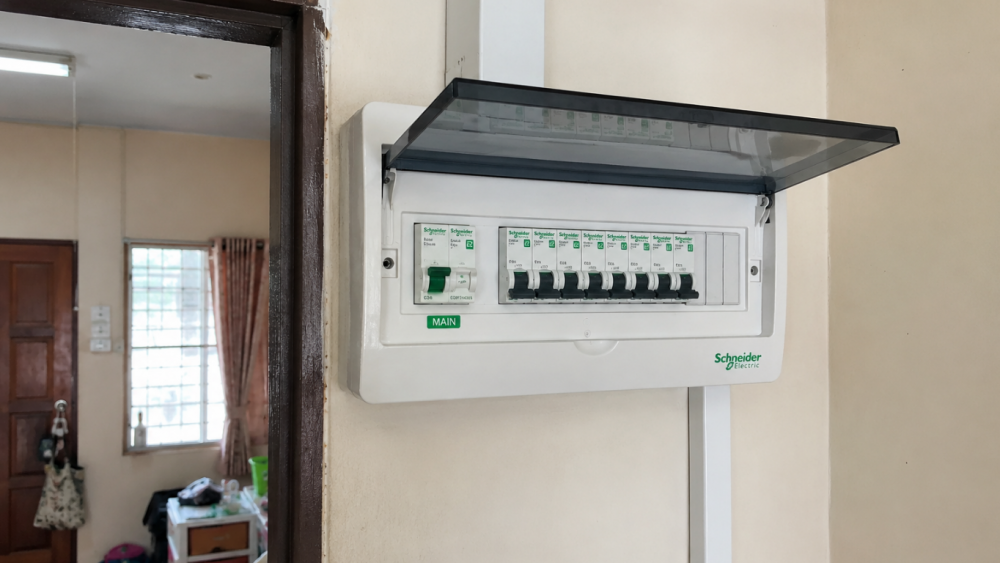
Why the Number of Ways Matters More Than You Think
A consumer unit with too few ways may force multiple circuits to be grouped together—such as outlets across multiple rooms sharing a single breaker, or dedicated appliances being tied into other circuits. When power outages, electrical leakage, or breaker trips occur, tracing the root cause becomes significantly more difficult.
Imagine a home where the kitchen, living room, and laundry area share the same circuit. If the breaker trips while running the microwave and washing machine at the same time, you won't immediately know the cause and will have to unplug devices one by one. Furthermore, if you need to service just a few outlets, you might have to shut off power to a much broader area than necessary.
Conversely, properly separated circuits make daily use much more convenient. For example, bedroom ACs have their own breakers, water heaters have dedicated circuits, and the kitchen and water pump have independent circuits. When an issue arises, you can isolate just that specific point without affecting the rest of the house. However, this does not mean you should simply buy the largest unit available. Oversizing without a realistic usage plan wastes both wall space and budget. The ideal balance is "sufficient for current circuits, with a reasonable allowance of spare ways for the future."
How Many Ways Does a Small House Need?
Small houses, single-story homes, rental properties, or certain condo layouts with simple electrical needs can generally start by considering a 6–8 way unit. However, the word "can" is key here, as it strictly depends on the actual appliances present in the home.
A small house with only lighting, general outlets, and 1 air conditioner may not need many ways (slots). However, if that small house has multiple air conditioners, a water heater, a water pump, a washing machine, or a kitchen with heavy electrical appliances, the number of circuits will increase immediately.
Before choosing a consumer unit, ask yourself what appliances require dedicated circuits, rather than just looking at the floor area. Some compact homes consume significant power—especially those with daily home cooking using electric ovens, air fryers, microwaves, electric kettles, washing machines, and multi-room air conditioning. In such cases, an undersized unit will not meet long-term needs. For small homes where future appliance additions are uncertain, choosing a unit with a few spare ways provides peace of mind. If you decide to add another air conditioner or a dedicated water heater circuit down the road, you won't have to start by replacing the entire consumer unit.
How many ways (slots) should a standard or 2-story house use?
For a standard or 2-story house, the number of circuits is usually higher than for a small house because there are multiple usable zones, such as downstairs, upstairs, bedrooms, kitchen, bathrooms, laundry area, or outdoor spaces. Therefore, you often need to consider a panel with more ways, such as around 10–14 ways or more, depending on the actual circuit design.
Homes of this type often start with Schneider consumer units sized at 14 ways, 18 ways, or larger, providing the flexibility to isolate circuits for ACs, water heaters, kitchens, and water pumps, while leaving room for future expansions. For homeowners seeking a sleeker design or higher circuit density, the Schneider Resi9 MP series offers various sizes ranging from compact models to multi-row enclosures, ideal for creating a neat and organized electrical installation.
As a simple, easy-to-understand example, a 2-story house might have main circuits roughly like this:
- Ground floor lighting: 1 circuit
- Upper floor lighting: 1 circuit
- Ground floor outlets: 1 circuit
- Upper floor outlets: 1 circuit
- Bedroom air conditioners: 2–3 circuits
- Water heaters: 1–2 circuits
- Kitchen: 1 circuit
- Water pump: 1 circuit
- Washing machine or laundry area: 1 circuit
Just a rough count shows that 6 ways may not be enough for a home with practical multi-zone use. Especially if residual current devices (RCD/RCBO) are required or if you want to leave spare ways for the future, a larger unit would be more suitable.
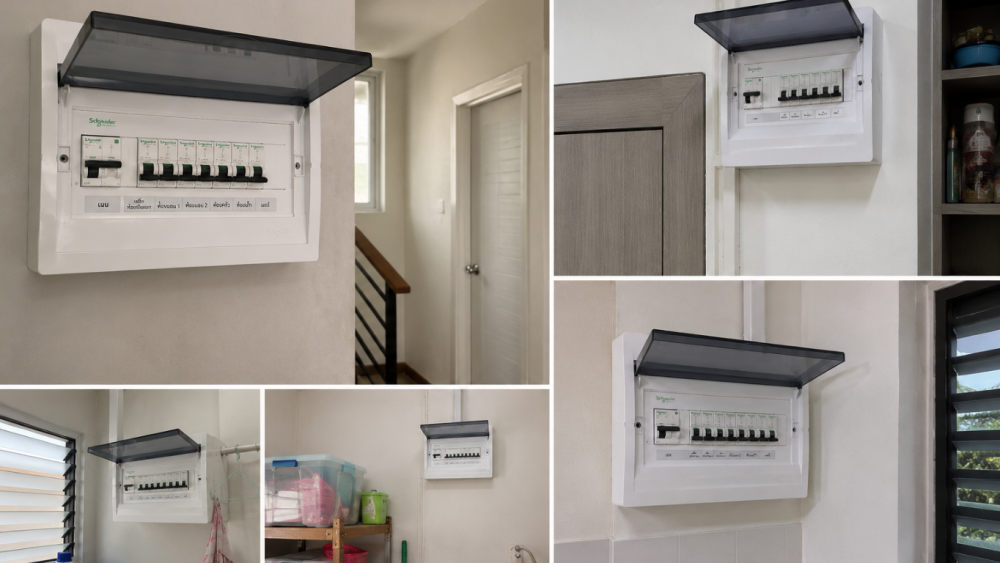
Large homes, extensions, or high-power-use homes require thinking beyond just the number of ways
Large homes require looking not just at the number of ways, but at the entire electrical system—such as main breaker rating, total load, wire sizes, wiring layout, and high-power appliances. For homes with multiple air conditioners, multiple water heaters, electric kitchens, multiple water pumps, or an EV charger, it might not be as simple as just "adding more ways to the unit."
In some cases, it may be necessary to consider whether a standard consumer unit is still adequate, or whether to step up to a load center that supports more circuits and higher loads. This point shouldn't be guessed from product photos or chosen simply by the largest number of ways; instead, an electrician should inspect the site and calculate the actual load. Especially for homes undergoing renovation or extensions—such as adding a new kitchen, adding rental rooms, adding air conditioners, adding outdoor outlets, or preparing an EV charging station—always check the existing consumer unit first. In some homes, the existing unit may already be full, or the existing system may not have the capacity reserved for new usage.
Which circuits should be separated and not carelessly combined
To choose a realistic number of ways, start by looking at what circuits exist in the home and which circuits should be separated—especially high-power circuits or those in high-risk areas, such as damp locations.
Circuits typically recommended for separation include: lighting circuits, general outlet circuits, air conditioner circuits, water heater circuits, kitchen circuits, water pump circuits, washing machine circuits, outdoor circuits, and circuits for specific dedicated equipment. Reasons for separating circuits It's not about making the panel look bigger or more sophisticated, but because each area has different electrical characteristics. Air conditioners and lighting fixtures don't draw the same load; water heaters and living room outlets carry different risks; and kitchens and laundry areas often involve both high loads and moisture.
A home with well-separated circuits is much easier to maintain. For example, if an air conditioner has an issue, you can shut off its circuit without turning off power to the entire floor; if the water pump malfunctions, it can be inspected independently; if a kitchen outlet trips, it won't affect the bedroom lights. In real-life situations, this makes troubleshooting vastly easier for both homeowners and electricians.
Should You Leave Spare Slots?
The answer is You should leave spares, but not without reason.
Our homes don't use the same amount of electricity forever. Today you might have 1 air conditioner, but next year you might add another room. Today you might not have a water heater, but in the future you might want one. Today you might still use a gas stove, but one day you might partially switch to an electric stove, or perhaps add CCTV cameras, an electric gate, a water pump, a washing machine, or other appliances.
If the unit is full from day one, adding new circuits will be quite troublesome. Sometimes you have to replace the whole unit or do far more rework than necessary. Therefore, having a few spare slots can save you a lot of hassle in the future. However, there is no need to leave an unrealistic amount of spares. For example, for a small house with low power usage, no expansion plans, and no particularly heavy loads, choosing an oversized unit just thinking "bigger is always better" may not always be cost-effective. The sweet spot is to have an electrician evaluate your current number of circuits and leave spare slots for what you are genuinely likely to add in the future.
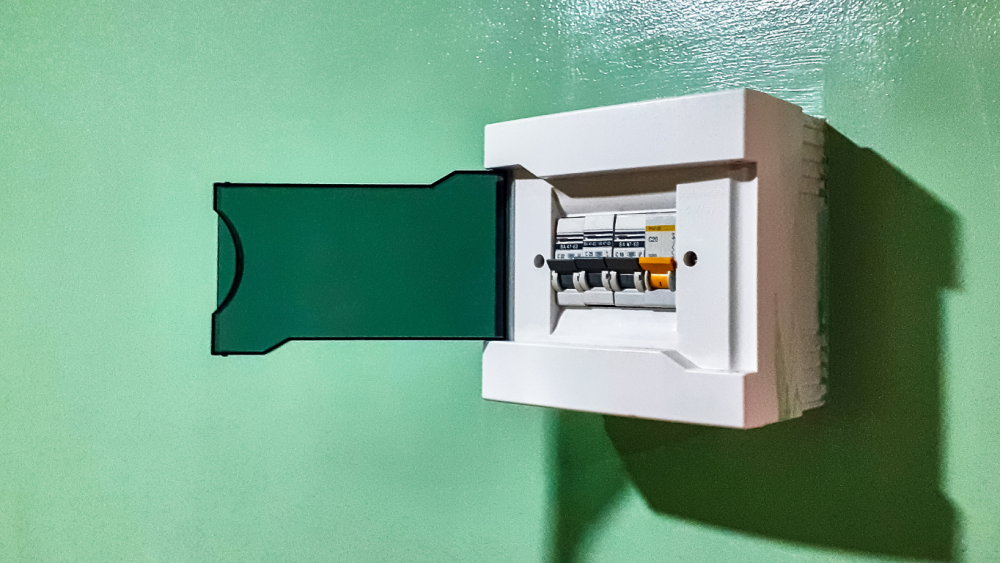
A Simple Approach Before Choosing a Consumer Unit
Before deciding to buy a consumer unit, try listing your electrical appliances and living areas in the house first. This method gives you a much clearer picture than merely guessing based on house size alone.
Start by asking yourself: How many air conditioners does the house have? Is there a water heater? Is there a water pump? How many appliances are used in the kitchen? Where is the washing machine? Are there outdoor outlets? Are there plans for future extensions or additions?
Then, group them into circuits, such as lighting, general outlets, air conditioners, water heaters, kitchen, water pump, laundry area, and dedicated equipment. Once you have a rough idea of the number of circuits, you can start answering whether a 6-way unit is enough, an 8-way is too cramped, or if you should step up to 12 ways or more. However, the final step should be having an electrician inspect and design the actual system. Choosing a unit doesn't just depend on the number of ways; you also need to consider the main breaker rating, wire sizes, electrical loads, grounding installation, residual current devices (RCDs), and installation standards.
Choosing a Consumer Unit: Don't Just Look at the Number of Ways
The number of ways is important, but it is not the only thing to consider. A good consumer unit should have a sturdy structure, a tight-fitting cover, be easy to open, have enough internal space for wiring and inspections, use standardized internal components, and be suitable for your home's electrical system.
In this regard, Schneider consumer units are an example that offers multiple options to suit different house types, including empty enclosure models to configure components according to the electrician's design, and models that come with some protective devices pre-installed, such as units with an RCBO/RCCB main breaker or built-in busbars. These are ideal for those who want a neat panel arrangement and components tailored to the job. However, before purchasing, you should always have an electrician inspect the site first to determine which model, how many ways, and what type of protective devices your home requires.
In addition, circuits should be clearly labeled, such as Bedroom A/C, Ground Floor Outlets, Kitchen, Water Pump, and Water Heater. In actual use, these small labels help immensely when you need to shut off power to a specific point or have a technician inspect the system, avoiding the need to guess and toggle breakers one by one.

So, How Many Ways in a Consumer Unit Are Enough?
To put it realistically: Consumer Units How many ways are enough? The answer is "enough" when the number of ways supports the electrical circuits currently in use, while still leaving a reasonable amount of spare space for future needs.
- Small homes with simple electrical usage can start by considering around 6–8 ways.
- A standard or 2-story house usually needs to look at around 10–14 ways or more, depending on the number of circuits.
- Large homes, renovated houses, properties with heavy electrical loads, or those planning to install high-power appliances should have an electrician evaluate the site before selecting a unit.
Don't choose a small consumer unit just because it's cheaper, and don't choose a large one just thinking bigger is always better. What you should do is look at the actual circuits in your home, consider your electrical appliances, evaluate future usage plans, and have an electrician help design the right fit for your system. Because in the end, the best consumer unit is not the one with the most ways or the cheapest one, but the one that makes your home's electrical system orderly, safe, easy to inspect, and perfectly tailored to the household's usage.