EN
 ไทย


Customers Also Purchased





When talking about Car Battery Charger We might just think, "Isn't it just a charger?" Yes, it simply sends electric current into the car battery—nothing complicated. But for anyone looking to buy one, you'll find that battery chargers, especially for cars, come in many forms: compact portable models, automatic models, digital display units, versatile multi-battery types, up to large floor-standing battery chargers seen in service centers.
The question is: what is the difference between portable and floor-standing car battery chargers, and which one is better suited for your needs?
Put simply, both types of battery chargers share the same core function: recharging car batteries. However, they differ in charging power, continuous duty cycle, portability, auxiliary functions, durability, and target user groups.
What is a car battery charger and why should you have one?
When a battery dies, many people might choose to jump-start it from another vehicle or call a battery shop for an on-site replacement. Nowadays, car battery chargers are more accessible, easier to use, and feature more safety protections, enabling regular car owners to maintain their batteries themselves to a certain degree.
For those with vehicles parked for long periods, rarely driven, classic cars, or commercial pickup fleets, allowing the battery to undergo deep discharge causes battery cells to degrade prematurely. Having a standardized battery charger helps prevent emergency non-start issues, extends battery life, and keeps work running smoothly (reducing downtime).
Having a car battery charger at home helps prevent unexpected dead batteries and extends the lifespan of your car battery, provided it is used correctly and you choose a charger suitable for your battery type.
- Charging mistakes change everything! Common errors to avoid when using a battery charger
What is a portable car battery charger?
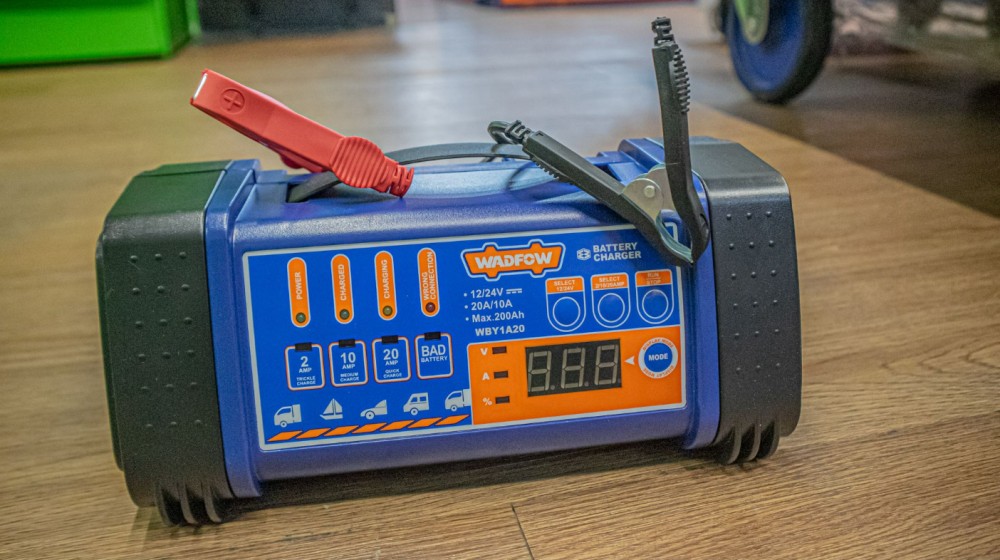
A portable car battery charger is designed to be small, lightweight, and easy to move. The unit usually features a compact design, making it convenient to store in your home, garage, or on a tool shelf.
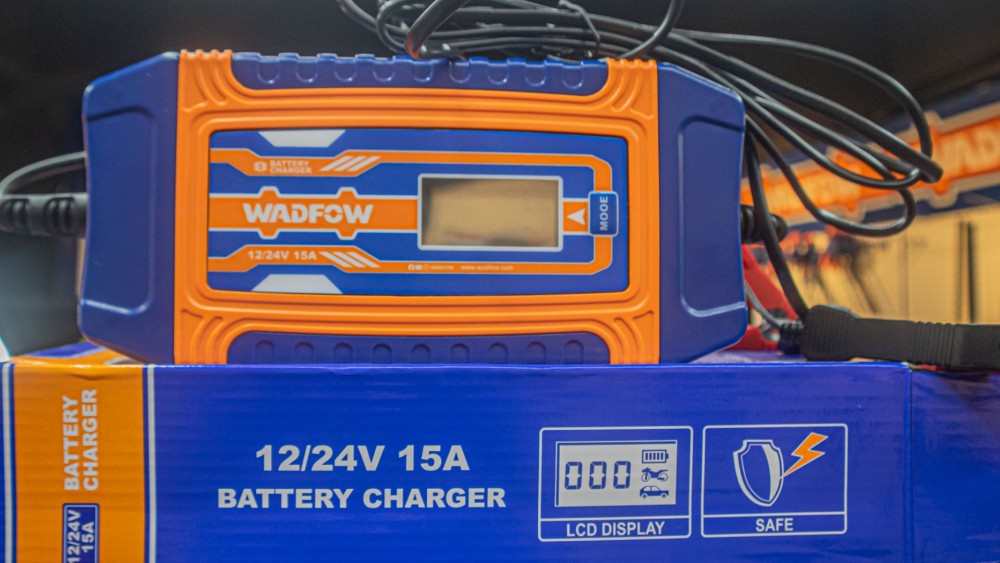
The highlight of a portable battery charger is convenience and flexibility. It is suitable for those who don't use it every day but want to have a tool to troubleshoot or maintain batteries occasionally. Moreover, newer models are typically automatic chargers or Smart Battery Chargers.
In addition, modern portable chargers support multiple battery types, such as flooded, sealed, semi-sealed, AGM, GEL, or EFB batteries. However, you should check the specifications of each model carefully.
Highlights
- Designed to be easy for anyone to understand
- Equipped with indicator lights or a display screen showing charging levels
- Indicates reverse polarity status or alerts when the battery has an issue
- Some models can enter Maintenance or Float Charge mode to prevent overcharging from damaging the battery
Another advantage is that the overall price is generally more accessible than floor-standing models. Although there are various price levels, portable chargers for general passenger cars are reasonably priced compared to the convenience they offer, making them ideal for home use rather than commercial applications.
Limitations of portable car battery chargers
Portable chargers have limitations that should be understood before purchasing, primarily regarding charging power and charging speed. Smaller models may have a relatively low charging current. If the battery is large, deeply discharged, or belongs to a pickup truck, van, or light commercial truck, it may take a very long time to charge, or some models may not be suitable for large batteries at all.
Another point to watch out for is that the word "portable" can cause confusion between battery chargers and jump starters. A battery charger is designed to replenish electrical energy back into the battery, which takes time. A jump starter, on the other hand, delivers a high surge of current momentarily to start a vehicle in an emergency. Some models combine both functions, while others can only do one or the other.
What is a floor-standing car battery charger?
A floor-standing car battery charger is a large, heavy-duty charger that is heavier than portable models. Some models feature wheels, handles, large dials or control panels, and may have thick, long charging cables suitable for use in auto repair shops or service centers.
Floor-standing chargers are not designed to be kept in a car or moved around frequently; rather, they are designed to be placed in a dedicated spot, used repeatedly and frequently, and handle more demanding, heavy-duty tasks. Many models can charge large batteries effectively and include an engine start assist or Boost Start function to deliver high current in short bursts, making them more suitable for users who have a better understanding of batteries and automotive electrical systems than general portable models.
Highlights of floor-standing models
The primary advantage of a floor-standing battery charger is its capability for heavy-duty, continuous operation. If you need to charge multiple batteries a day or service various types of vehicles, this type of machine is a better fit because:
- Usually features a better cooling system
- More durable construction
- Sturdier clamp cables
- Supports higher charging currents
Floor-standing car battery chargers are therefore suitable for applications that require speed and all-day readiness, such as battery shops that need to test and charge batteries for multiple customers, garages servicing multiple vehicles, or fleets that need to keep vehicles ready for service at all times.
In addition, many floor-standing models offer more diverse operating modes, allowing for broader applications than small portable units. However, this comes at the expense of size, weight, price, and adequate operating space; it is not equipment that you can simply buy and store easily in a drawer or vehicle trunk like smaller models.
Limitations of Floor-Standing Car Battery Chargers
For general household use or in limited spaces, a floor-standing car battery charger can be bulky and unnecessary. Especially if used only a few times a year, investing in a large unit may not be as worthwhile as a portable charger, which is easier to use and more convenient to store.
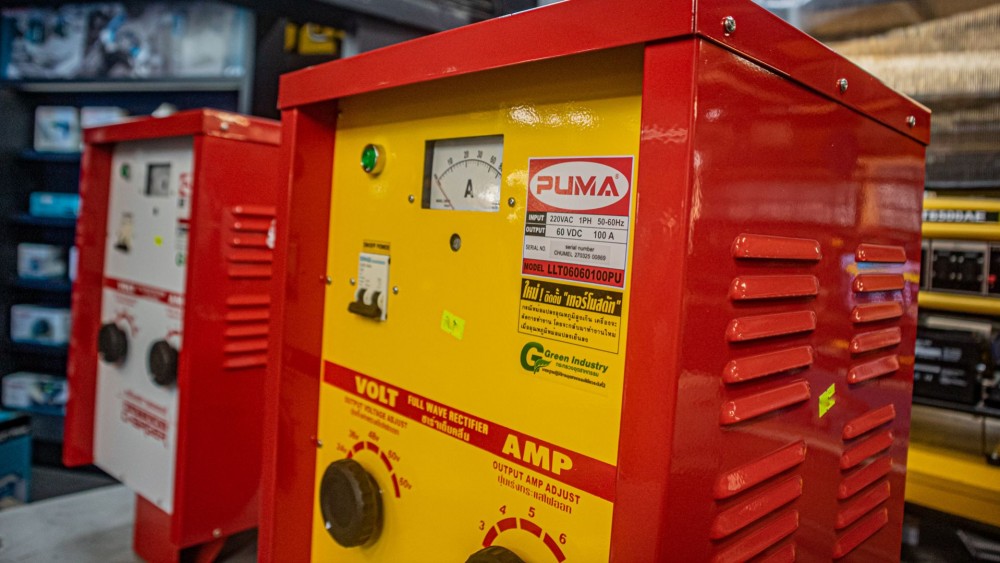
Another limitation is that users should understand how to select modes, check battery voltage, and connect cables properly. Because floor-standing units deliver high power, incorrect settings or using them on an unsuitable battery can cause the battery to overheat, degrade prematurely, or damage the vehicle's electrical system. Therefore, this type of machine is better suited for regular users, those with fundamental knowledge, or operations in a technician-supervised environment, rather than typical car owners primarily seeking convenience.
Differences in Size and Portability
The most obvious difference between these two types of car battery chargers is size and portability. Portable battery chargers, as mentioned earlier, are designed for easy handling, high mobility, and can be used at home or kept in the car for certain situations. Their size is ideal for general users without a dedicated workshop space.
Floor-standing chargers are larger, heavier, and require a dedicated working space, such as a battery charging corner in a garage or workshop. The unit may have wheels for rolling around, but it is still not suitable for lifting into a vehicle or taking on frequent off-site jobs. From this perspective, the portable type wins on convenience, while the floor-standing type wins on readiness for routine and heavy-duty tasks.
Differences in Charging Power and Speed
Portable chargers provide low to moderate charging currents, making them suitable for gradual charging of typical car batteries. This is beneficial for battery maintenance because it avoids fast charging and helps reduce heat buildup. The downside is that it takes longer, especially when the battery has a high capacity or is deeply discharged. Therefore, if very fast charging is required, small portable units may not meet your needs.
Floor-standing chargers are suitable for jobs requiring charging large batteries or multiple units. However, faster speeds come with greater responsibility, as not every battery is suited for fast charging, and selecting too high a charging current can cause the battery to degrade quickly. Thus, even though floor-standing models work faster in many situations, they must always be configured to match the battery size and type.
Differences in Functions and Protection Systems
Modern battery chargers, whether portable or floor-standing, typically feature basic protection systems, such as:
- Reverse polarity protection
- Overcurrent/overvoltage protection
- Overheat protection
- Automatic shut-off when fully charged
However, specific details can vary greatly between models. Portable units usually emphasize easy-to-use systems without the risk of incorrect settings, while floor-standing units may offer more setting options and support multiple charging modes.
The key is not to look only at size or price, but to consider what types of batteries the charger supports, whether it supports 12V or 24V voltage, its charging current, whether it features a maintenance mode, error alert systems, and whether it suits the actual battery capacity you use.
A car battery charger doesn't always need to be the most powerful, but rather one that delivers power properly, safely, and fits your specific application.
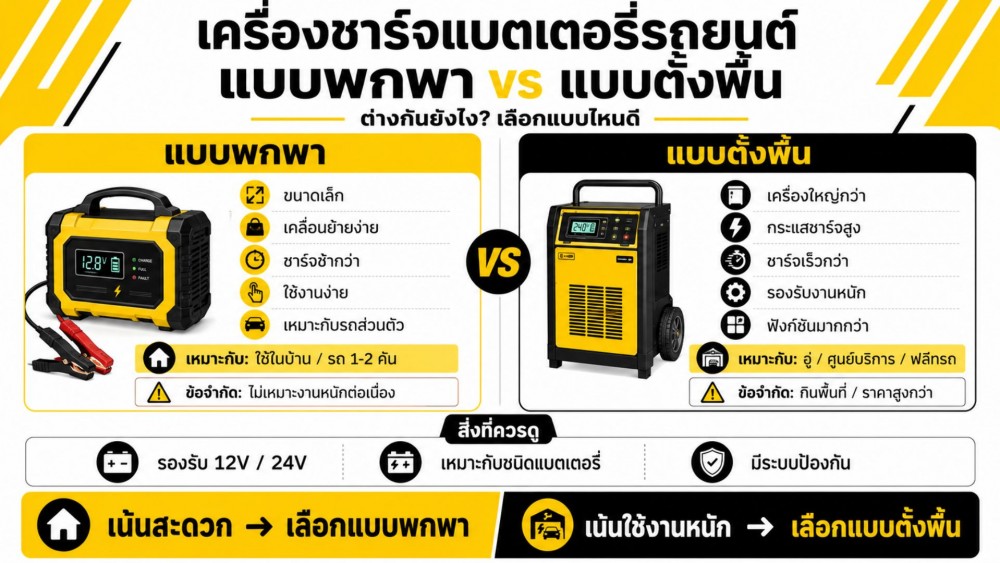
Conclusion: Portable vs. Floor-Standing Car Battery Charger — Which One to Choose?
If used at home for personal vehicles, with one or two cars, infrequent use, and a need for convenience, a portable car battery charger is an option well worth considering. It is compact, easy to use, convenient to store, and sufficient for general tasks—especially appealing if equipped with protection systems and a battery maintenance mode.
However, for use in garages, battery shops, service centers, or maintaining multiple vehicles on a regular basis, a floor-standing car battery charger is a better fit. It handles heavy-duty tasks well, charges large batteries with greater reliability, and is engineered for continuous use.
If chosen correctly for your system and actual use, Car Battery Charger it becomes a tool that simplifies vehicle maintenance, reduces sudden dead battery issues, and keeps vehicles ready for use even after being parked for long periods.