


 EN
 ไทย


Customers Also Purchased


Chain hoists is one of the essential tools for heavy lifting tasks, whether in mechanical work, factories, installation, maintenance, or garages. It allows us to lift very heavy workpieces like motors, water pumps, machinery, or steel structures without relying purely on manpower. However, even though designed specifically for lifting, chain hoists are not always safe—especially when abnormal symptoms begin to appear, such as the load gradually slipping down on its own after being lifted, or failing to hold in place when you stop pulling the chain.
Symptoms like this are no small matter, and you shouldn't assume "it's fine as long as it still pulls." For lifting equipment, suspended loads must be under control at all times. If the hoist cannot hold the load normally, it means some part of the system is failing, which could lead to an accident at any moment.
What Does a Chain Hoist Slipping Down on Its Own Look Like?
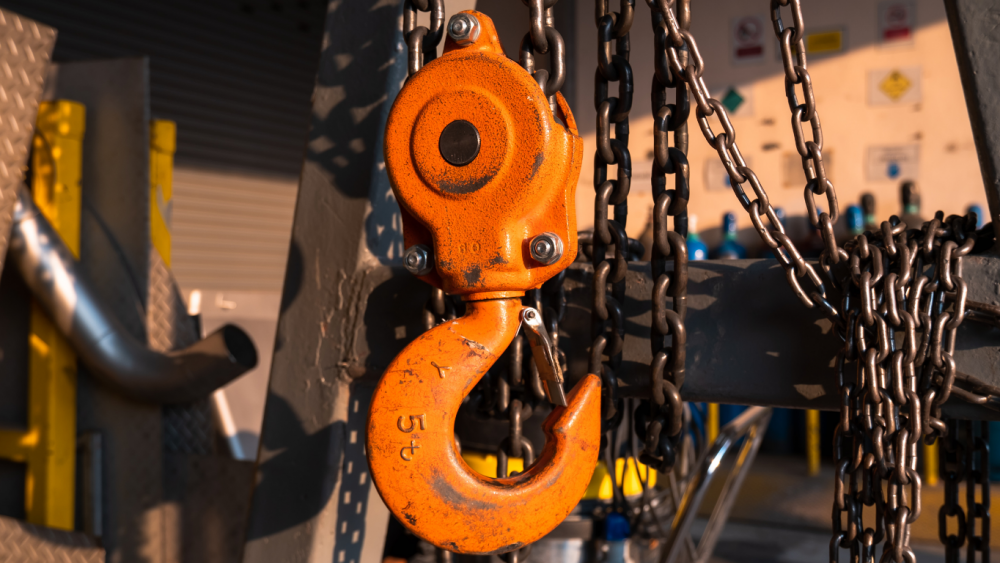
Simply put, after lifting the load and stopping the chain pull, the suspended object doesn't stay stationary; instead, it slowly lowers on its own, sometimes slipping in jerks, as if the hoist cannot hold the load.
Commonly encountered symptoms include:
- The load gradually slips down as soon as you let go after lifting.
- The load holds only briefly before starting to lower on its own.
- Strange noises come from the hoist while lifting or holding a load.
- The chain stumbles, jerks, or does not run as smoothly as before.
- More pulling effort is required than usual, yet it fails to hold the load properly once you stop pulling.
- A hoist that previously operated normally has recently started slipping or failing to hold the load.
Note: If it is just a slight movement when starting to lift, such as the sling settling, the load balancing, or the rigging tensioning, this kind of symptom can still occur during the initial load-bearing phase. However, if you stop pulling the chain and the load continues to lower, this is not normal behavior for a chain hoist and you should not continue using it.
Should a normal chain hoist be able to hold a load?
Yes. A good manual chain hoist is designed to lift, lower, and hold loads within its rated capacity. When used correctly, within its rated load, with the chain in good condition, and with internal mechanisms functioning normally, the load must stay in place and not slip down on its own once you stop pulling the chain. The component responsible for holding the load is the internal load-holding mechanism, which involves the braking system, friction discs, gears, pawl/ratchet mechanism, and chain travel. If any of these parts malfunction, the hoist might still be able to lift, but it will fail to hold the load or hold it unsteadily.
Therefore, if it can lift but the load slips down on its own, do not jump to the conclusion that it is simply a "broken brake." This symptom can stem from multiple components, ranging from the brake system, load chain, and internal assembly, to overloading and pulling off-center.
Why is it dangerous?
The primary issue is that the load may descend uncontrollably. Even if it slips down slowly, it is still hazardous because items lifted with a chain hoist are usually heavy. If anyone is underneath or equipment is in the fall path of the load, damage or injury can happen instantly.
In addition, a self-slipping load can easily cause the workpiece to lose balance, especially if it is not lifted vertically or the suspension point is not directly above the center of gravity. The load may swing, tilt, or strike surrounding structures.
Moreover, forcing continued use will cause progressively deeper internal damage. What might start as just a dirty brake surface or slight chain wear could escalate into complete brake failure, chain skipping, or the load dropping rapidly. A simple rule for heavy lifting is: if the equipment starts malfunctioning, stop immediately—do not wait for an accident to occur.
Causes of a chain hoist slipping down on its own after lifting
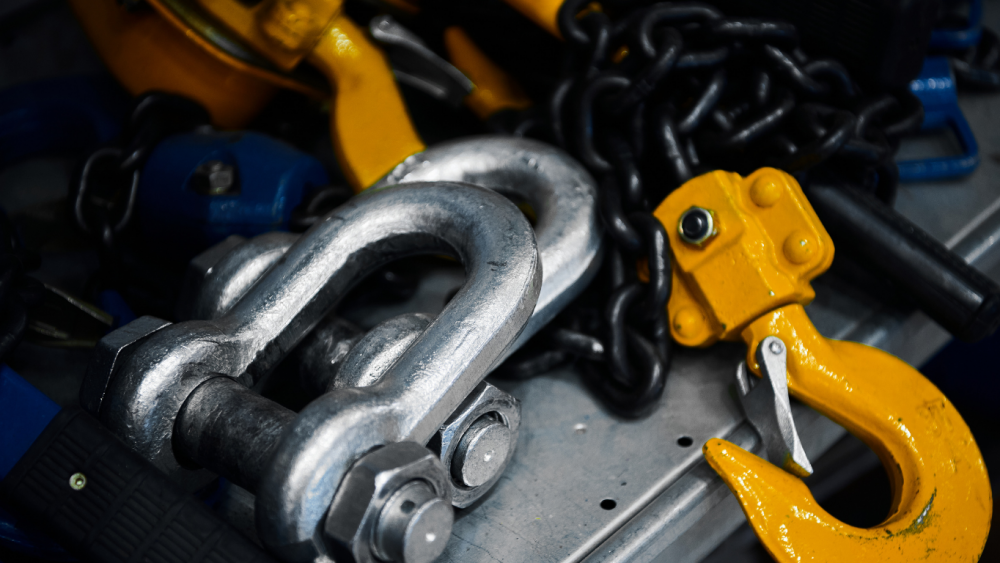
1. Brake system or load-holding mechanism failure
The most common cause is that the component responsible for holding the load fails to operate, such as worn friction discs, a slipping brake mechanism, damaged internal parts, or improper assembly. The hoist may still be able to lift, but as soon as you stop pulling, the load slips down on its own.
This symptom is considered extremely dangerous because the load-holding system is the core of safety. You should not force continued use or attempt to disassemble and repair it yourself without specialized knowledge.
2. Oil, grease, or dirt getting onto the brake surface
Certain points on a chain hoist require lubrication, such as the load chain or specific pivot points, but not every part should come into contact with oil. In particular, on brake surfaces or friction discs, if oil, grease, dust, or dirt enters, friction decreases and the brake can no longer hold the load.
This problem often arises from improper maintenance, such as spraying oil all over the hoist body under the assumption that it will make pulling smoother. In reality, letting oil reach certain spots makes the hoist far more dangerous. Lubrication should only be performed according to that specific model's manual, never guessed.
3. Exceeding the rated load capacity
Every chain hoist has a clear load capacity specified by the manufacturer, whether it is 0.5 ton, 1 ton, or 2 tons. This rating is not a number that should ever be pushed or exceeded. If lifting loads beyond the rated capacity, internal components will bear forces higher than designed, leading to wear and damage to the brake, gears, chain, hook, or hoist frame. Sometimes it might not break down immediately on the first attempt, but accumulated damage can manifest as self-slipping under load in subsequent operations.
Before every lift, you should know the approximate weight of the workpiece and the hoist's load capacity, while other equipment in the system such as wire ropes, shackles, beams, and suspension points must also have appropriate ratings.
4. Load chain is worn, stretched, twisted, rusted, or running roughly
The load chain is the part directly bearing the weight. If it has wear marks, bending, abnormal stretching, heavy rust, cracks, or jammed links, the chain may not pass smoothly through the gears and sprockets, causing the hoist to operate jerkily, stutter, or transmit abnormal forces to the internal mechanisms.
Some people see that the chain is not yet broken and continue to use it, but in heavy lifting operations, you should not wait for the chain to break before replacing it. A deformed or heavily worn chain is a sign that the equipment is no longer safe to use. If the chain starts acting abnormally, stop and inspect immediately; do not attempt to bend, hammer, or fix it temporarily on your own.
5. Chain installed backwards or hoist assembled incorrectly
After replacing the chain, repairing the hoist, or disassembling and reassembling it, parts may be installed in the wrong positions, the chain inserted backwards, or the chain alignment misarranged. If the chain does not run as designed, the hoist may lift unevenly, the chain could jam or jump, or it may fail to hold the load. If the self-slipping symptom only started occurring after repairs, replacing spare parts, or disassembling the hoist, suspect incorrect assembly first, and have a knowledgeable professional inspect it before putting it back into service.
6. Using the chain hoist off-angle, such as side pulling or off-center lifting
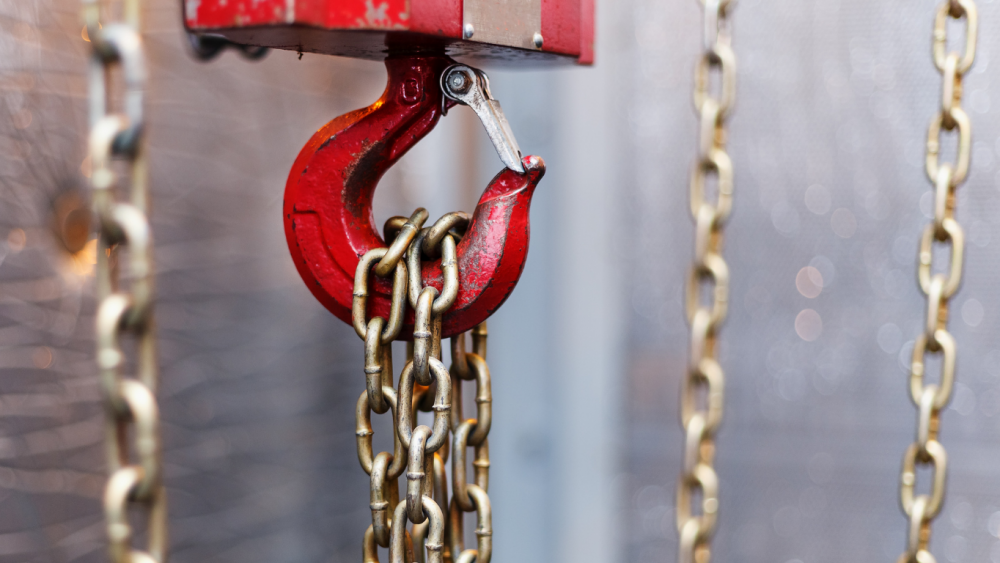
Manual chain hoists are suitable for vertical lifting; the suspension point should be directly above the load, and the load must be in line with the hook. If used for diagonal pulling, side pulling, or used in place of a lever hoist for horizontal pulling, the chain will rub against the pocket sides, the gears will receive off-axis forces, the hook will bear loads in the wrong orientation, and the load may swing. Side pulling might not cause self-slipping immediately, but it is a practice that accelerates hoist wear and significantly increases lifting hazards, especially if the workpiece is heavy or surrounding space is limited.
7. Hook, suspension point, or rigging hardware loaded incorrectly
Safety in lifting operations does not rely solely on the hoist itself; the entire system must be considered—from beams, suspension points, hooks, wire ropes, shackles, down to the load connection points. The hook should bear load in the bowl of the hook, not at the tip, and the load must not press directly against the safety latch. If the hook is opened up, twisted, cracked, or the safety latch is damaged, stop using it immediately. Although hook problems may not directly cause brake slippage, if the load bears force improperly, the overall lifting operation will be unsafe, and the load may shift unpredictably.
What to do first if the hoist is lifting a load and begins to slip
The first thing to do immediately is to clear all personnel from the area beneath the load and the path where it might fall or swing. Never allow anyone to stand under a suspended load, and never use hands to steady or support a heavy load from below under any circumstances.
If the situation is still under control, slowly lower the load to the ground or a stable support following standard hoist operation procedures. Do not jerk the chain violently, do not use human strength to help bear the weight, and do not place improvised support materials under it in a risky manner. Once the load has been lowered, stop using that hoist immediately. Isolate it from the work area or tag it with a warning sign to prevent others from using it unknowingly.
If the load is suspended in a hazardous position and cannot be lowered safely, call in a technician or qualified lifting specialist to manage it. Do not attempt an improvised emergency fix, as it could cause the load to drop or swing, leading to an accident.
Pre-Operation Chain Hoist Inspection: What to Check
Every time before using a chain hoist, especially for heavy lifting jobs or with hoists that have been in service for a long time, you should inspect it as follows:
- Start by checking whether the rated load capacity plate is clearly legible and that the workpiece weight does not exceed the hoist's capacity. Then, inspect the load chain for cracks, twists, bends, elongation, wear, rust, or stiff chain links. The chain should run smoothly without jumping, binding, or twisting.
- Next, inspect the top and bottom hooks for cracks, throat opening stretch, twists/bends, or damaged safety latches. The load should seat properly in the saddle of the hook, not on the hook tip, and there should be no direct force applied to the safety latch.
- Finally, perform an initial functional test by lifting the load slightly off the ground in a clear area with no bystanders, then stop pulling the hand chain to see if the hoist holds the load, whether the load is balanced, and if there are any abnormal sounds.
If you find that the load slips down on its own, the chain jerks, there are strange noises, or the load hold is unstable, stop using it immediately.
Can You Repair a Slipping Chain Hoist Yourself?
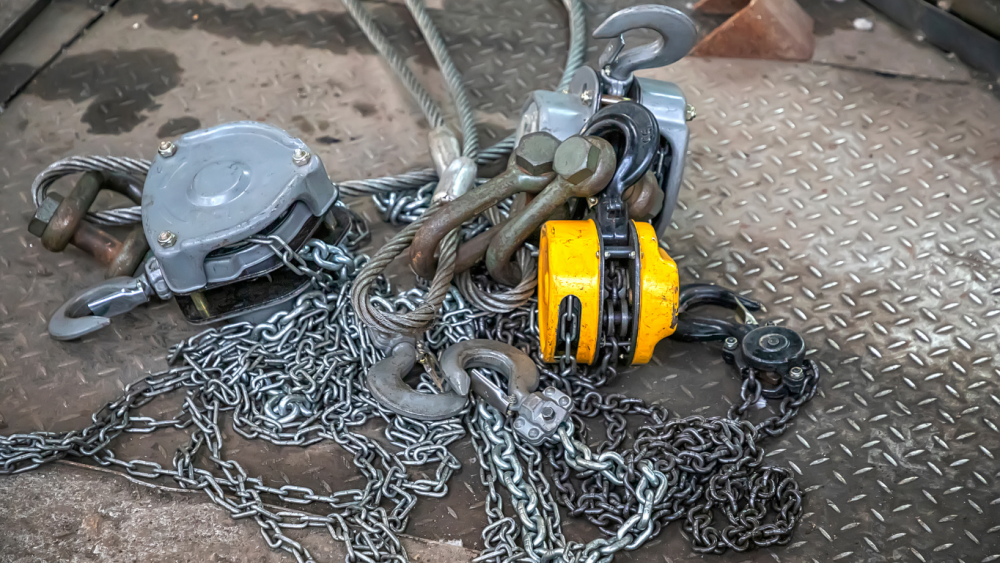
If it is just external cleaning or lubricating the chain at the points specified in the manual, an experienced user may be able to do it themselves. However, if the issue involves the load slipping down on its own, brake failure, chain jumping, or the hoist failing to hold the load, you should not disassemble and repair it yourself without the proper knowledge and tools.
The reason is that the brake system and load-holding mechanism are directly related to safety. If disassembled incorrectly, reassembled improperly, fitted with non-genuine spare parts, or adjusted inaccurately, the hoist may seem to work normally during light testing but fail catastrophically under an actual load. The safest route is to have a qualified technician inspect it according to the specific model's manual and replace it with the correct spare parts. Never weld, bend, grind, or modify load-bearing components yourself under any circumstances.
What Symptoms Mean You Should Stop Using a Chain Hoist Immediately?
You should stop operation immediately upon encountering any of these symptoms:
- Load slips down on its own after lifting
- Brake or load-holding mechanism fails to hold
- Load chain is worn, twisted, elongated, heavily rusted, or cracked
- Chain binds, jumps, or does not seat properly in the sheaves
- Hook throat is stretched, twisted, cracked, or the safety latch is damaged
- Hoist housing is cracked, dented, or has suffered a severe impact/drop
- Rated load capacity plate is missing or illegible
- Abnormal noises occur while raising or lowering the load
- Has been overloaded before, or suspected of experiencing severe shock loads
- Recently repaired or disassembled, but unsure if reassembled correctly
Lifting equipment should never be used on a "still good enough" basis, because minor damage can turn into a major accident if it occurs while a load is suspended.
How to prevent it
Start with the basics: use the right type of hoist with the correct rating, do not exceed the specified weight limit, and never use a chain hoist for unsuitable tasks, such as diagonal pulling, side pulling, or using it in place of a lever hoist.
After use, clean and store the hoist in a dry place without letting it get wet or damp to prevent rust. Lubricate only the appropriate points according to the manufacturer's instructions, and be careful not to let oil or grease enter brake-related components.
For regularly used hoists, establish a clear inspection schedule rather than waiting for symptoms to appear before checking. Many problems—whether worn chains, slipping brakes, or deteriorating internal parts—almost always give warning signs first. Catching these signs early allows for repairs before they turn into major hazards.
Is it dangerous if a chain hoist slips down on its own after lifting?
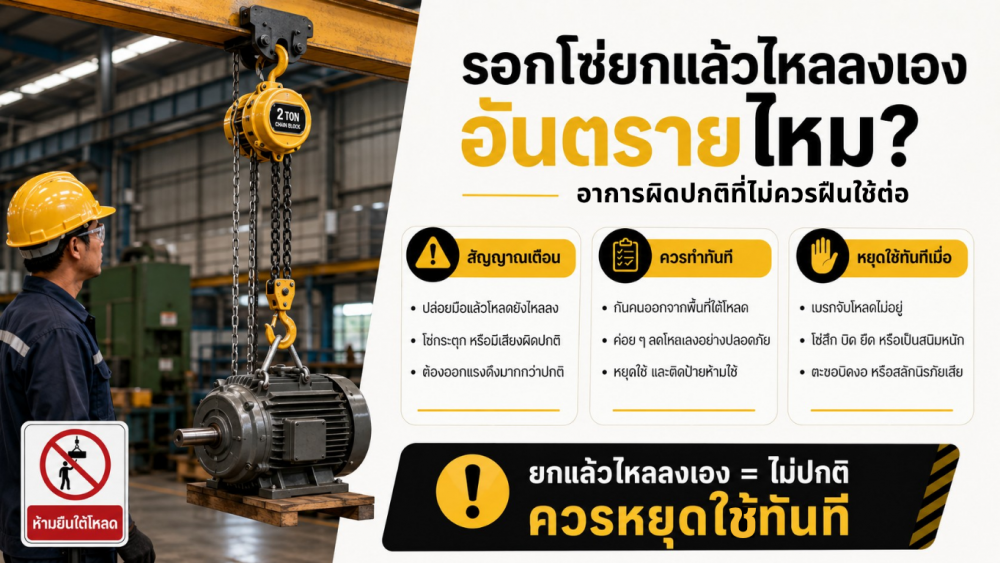
It is dangerous and should never be used further, as this symptom indicates that the hoist may have issues with the braking system, load control mechanism, load chain, internal assembly, overloading, or misaligned operation. If you encounter this symptom, stop work immediately, clear people from the area, safely lower the load if possible, take the hoist out of service, and have a qualified professional inspect it before returning it to use.
Chain hoists makes heavy lifting tasks much easier, but safety does not come from the hoist alone. It comes from choosing the right capacity, conducting thorough inspections, using it correctly, and not ignoring abnormal symptoms—especially "slipping down on its own." No matter how slowly it slips, it is never worth the risk.