


 EN
 ไทย


Customers Also Purchased
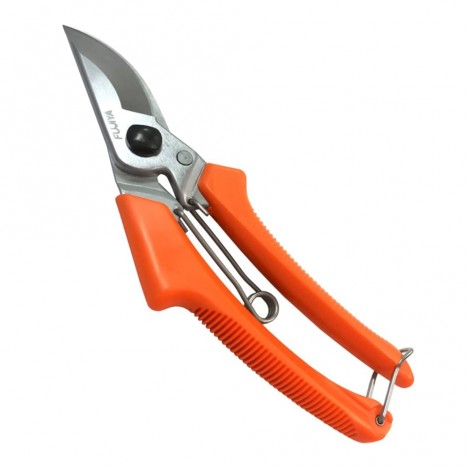

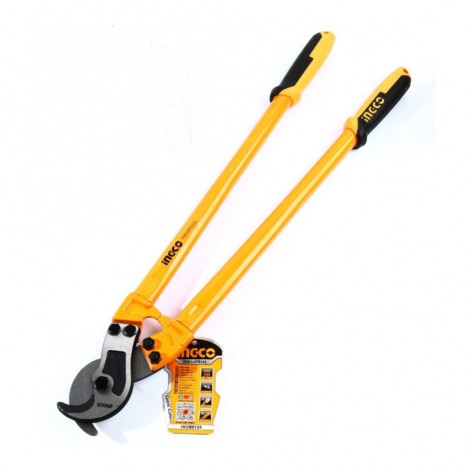
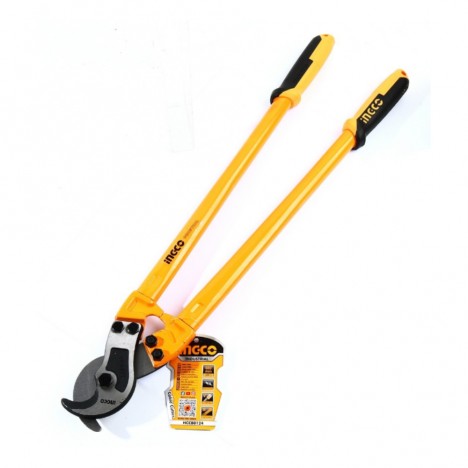


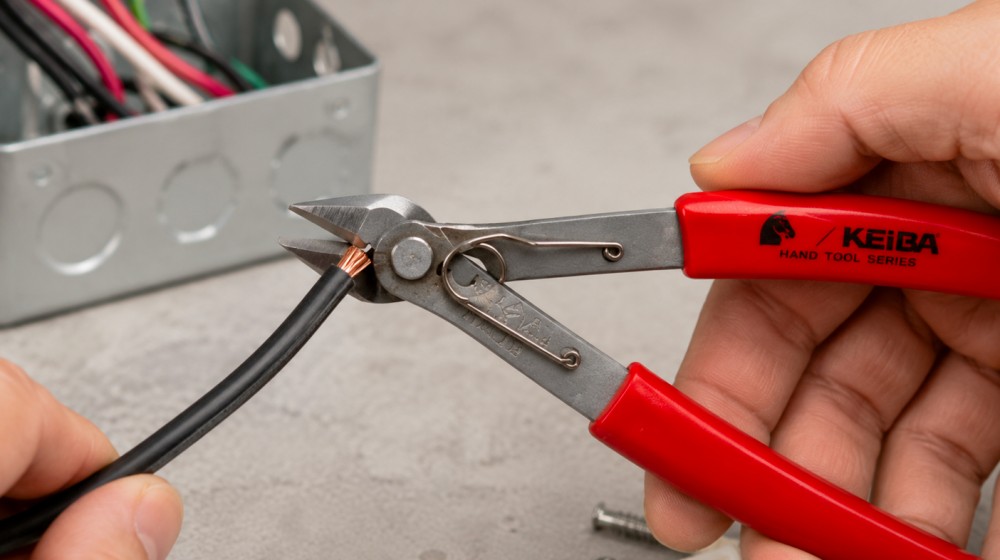
Have you ever thought that just choosing a wire cutter with a comfortable grip, an affordable price, or a familiar brand was enough? But when looking at the actual products, you find that wire cutters come in various sizes—especially 6-inch, 7-inch, and 8-inch—leading many to wonder: How does each size differ? Is a larger size always better?
The short answer is that the size of the pliers affects cutting force, maneuverability, weight, and suitability for the job. Smaller pliers aren't worse, and larger pliers aren't always the best. Choosing the right one makes the job easier, delivers clean cuts, requires less effort, and lasts longer. But picking the wrong one might leave wires uncut, crush the cable ends, or cause unnecessary hand fatigue.
In this article, we'll explain in an easy-to-understand way: Cable Cutters How each size differs, who it's suitable for, and how to choose the right one for your actual work.
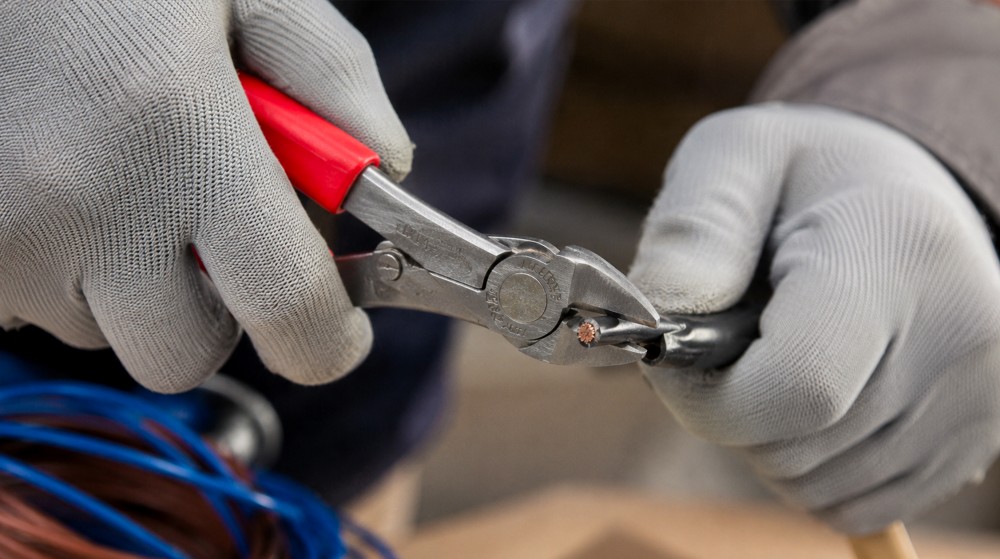
What do the 6-inch, 7-inch, and 8-inch sizes of wire cutters actually mean?
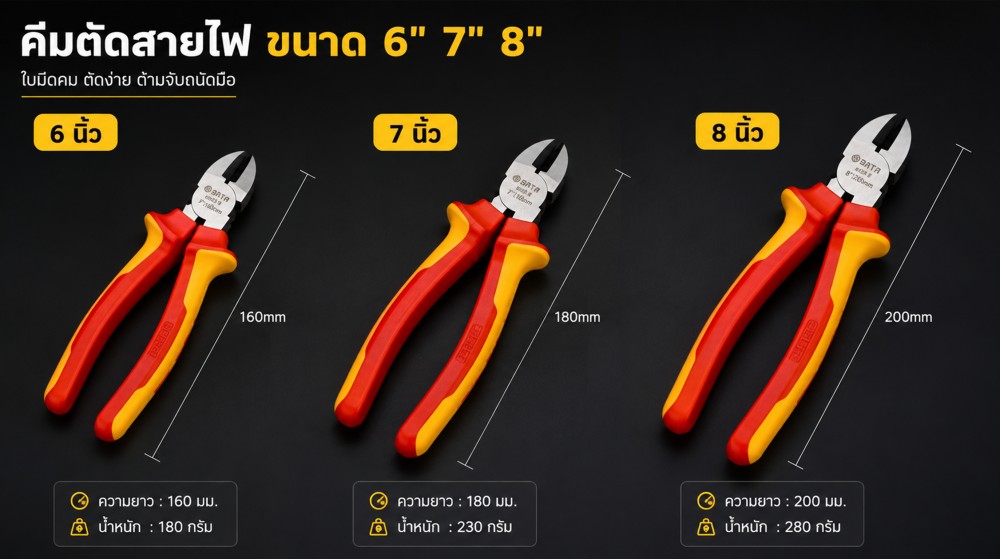
The numbers 6, 7, and 8 inches refer to the overall length of the wire cutters from the tip of the jaws to the end of the handles, not just the blade length. Furthermore, pliers marked with the same size do not always provide the same cutting force, as it also depends on the material, cutting edge, pivot point, and manufacturing quality. In general, longer pliers = greater cutting force because the longer handles provide more leverage, making it easier to cut larger or harder wires. However, this comes at the cost of heavier weight and reduced maneuverability.
- 6-inch wire cutters: Lightweight, easy to grip, ideal for precision work. However, cutting wires that are too thick may require excessive force or quickly damage the cutting edge.
- 7-inch wire cutters: Medium size, balanced between cutting force and maneuverability, ideal for household tasks and general maintenance work.
- 8-inch wire cutters: High cutting force, ideal for large or hard wires, but bulkier and not suitable for tight spaces.
In conclusion, there is no single best size. It all depends on the wire size you are cutting, how frequently you use them, and the type of workspace you have.
What kind of work are 6-inch wire cutters suitable for?
6-inch wire cutters are the smallest and most maneuverable size. Easy to hold and lightweight, they are ideal for precision work or tight spaces—such as cutting small wires, signal cables, electronics work, or areas like behind power outlets and small control boxes. People with smaller hands or those unfamiliar with hand tools will find them very comfortable to use. However, because the handles are shorter, the cutting force is lower. Using them on thick or hard wires may require significant effort, fail to cut through in a single squeeze, or crush the wire ends and wear down the cutting edges quickly.
Suitable for: Light household tasks, DIY projects, minor repairs, and jobs that prioritize maneuverability over cutting force.
7-inch wire cutters: Why are they the popular medium size for many people?
7-inch wire cutters offer a balanced size—neither too small to lack cutting power nor too large to feel bulky. They deliver more cutting force than 6-inch pliers while remaining easier to control than 8-inch ones. They can be used for a wide range of tasks, including replacing wall outlets, installing light fixtures, repairing electrical appliances, and general technical work.
Most users find they fit comfortably in the hand without causing fatigue during continuous use, making them suitable for both beginners and those with some handyman experience. If you only plan to buy one pair of pliers for your home, 7 inches is the ideal choice. The limitation is that if you need to cut thick cables or very large electrical wires, the cutting force may not be enough, and you should use 8-inch pliers or dedicated cable cutters instead.
Suitable for: General household use, technical jobs, and DIY projects involving various wire sizes.
8-inch wire cutters: Ideal for those who need more cutting power
8-inch wire cutters provide the highest cutting force among the three sizes because the longer handles increase leverage, making it easier to cut through large or hard wires and reducing hand fatigue during frequent cutting. They are well-suited for wiring work, electrical system installations, or professional trades that encounter multiple wire sizes.
The drawback is that they are heavier, harder to carry around, and less agile in tight spaces. Cutting small wires with them can feel clumsy and imprecise, and users with smaller hands may find the grip uncomfortable.
Suitable for: Daily trade work, heavy-duty applications, and frequent cutting of medium to large wires. Not ideal if only used for occasional cutting of thin household wires.
Does choosing the wrong size matter? It matters more than many think
Wire cutters rely on hand strength and leverage mechanics. If the size is mismatched to the task, both the user and the tool will bear unnecessary strain. Here are the 4 common consequences:
- Requiring excessive effort: Using small pliers to cut large cables forces you to squeeze hard, make multiple cuts, or twist back and forth to sever the wire, causing hand fatigue and rapid cutting edge wear.
- Crushed and uneven wire ends: Pliers with insufficient cutting force crush the wire flat instead of shearing it cleanly. Deformed wire ends make stripping, crimping cable lugs, or wiring into electrical terminals much harder.
- Premature tool failure: Using pliers on materials harder than their rated capacity, such as hard wire or steel cable, can instantly chip the cutting edges. Even expensive pliers won't survive improper use.
- Difficult to control: Oversized pliers also create issues, especially in tight spaces, leading to inaccurate cuts or accidentally nicking adjacent wires and components.
Choosing the right plier size for the job directly affects convenience, cut neatness, tool lifespan, and safety.
Conclusion
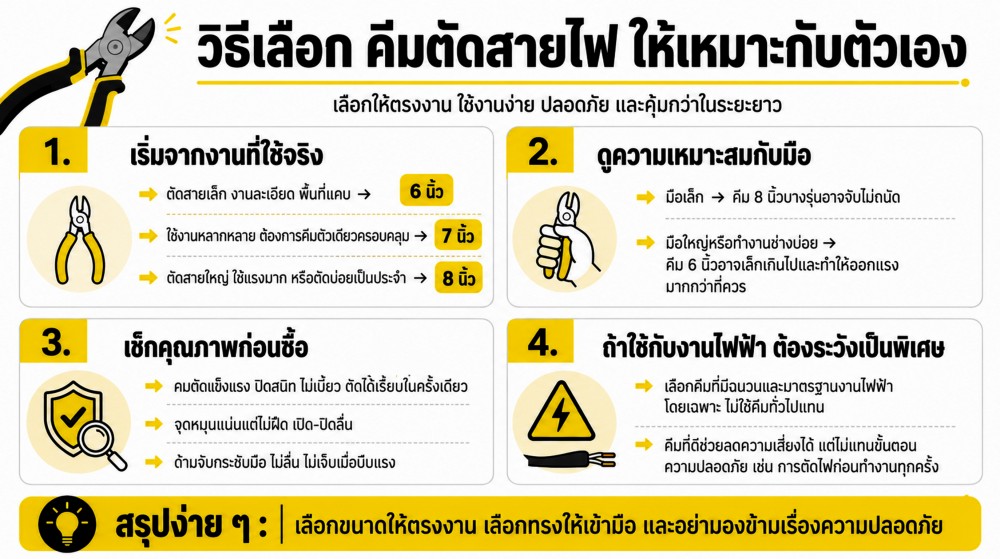
Choosing the wrong size definitely has consequences: too small leads to excessive effort, incomplete cuts, and quickly chipped edges; too large results in clumsy handling, poor control, and unsuitability for precision work. Don't choose based on "biggest is best" or "smallest is easiest to use"—choose based on the work you actually do most often.
Still not sure? Choose 7 inches first. For very light work focusing on maneuverability, 6 inches is enough. For professional or frequent cable cutting, 8 inches is more comfortable. Good wire-cutting pliers aren't just the right size; they must also offer a comfortable grip, sharp cutting edges, and safety. Choosing right from the start makes work easier, saves effort, and significantly reduces on-site issues.
Select Cable Cutters to suit the application