


 EN
 ไทย


Customers Also Purchased



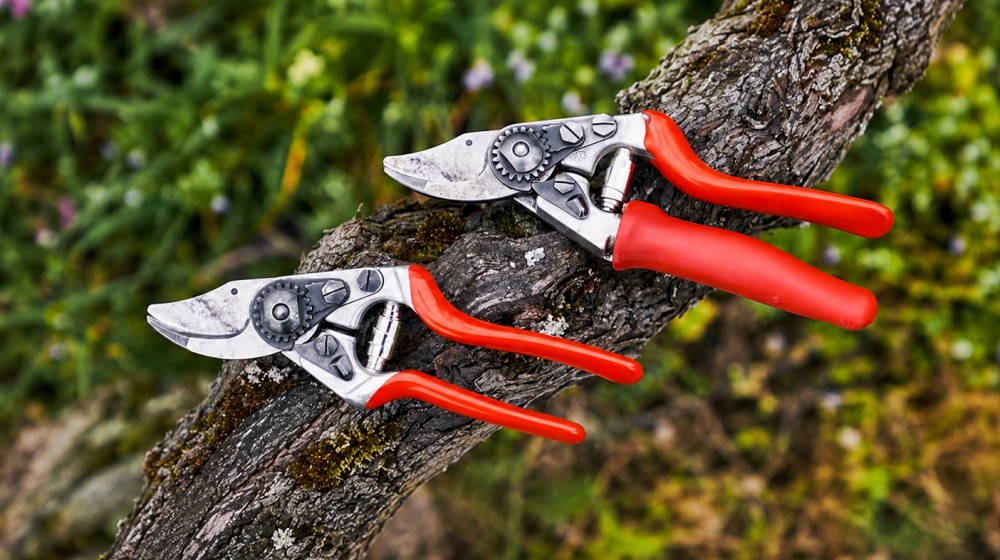
When pruning trees, many people have likely encountered this problem: after making a cut, the branch splits, the bark tears, or the cut wound looks bruised and not as clean as expected. Then you wonder whether it's due to improper cutting force or a dull blade. In reality, it can be both, but there are other factors involved as well, such as the type of pruning shears, branch thickness, whether the branch is green or dry, the cutting angle, and the condition of the shears themselves. Sometimes the blade is still sharp, but the branch is too thick; or your technique is correct, but the shears are stiff or coated with sap—the cut still won't be clean.
In this article, we'll explore why branches split after using Pruning Shears which symptoms stem from hand force, which from the blade, and how to fix them so you get cleaner cuts and your trees can heal better.
Why branches split when using pruning shears, and why you shouldn't overlook it
Many people might think a slightly split branch is no big deal, but in reality, pruning wounds affect trees more than you think. If the cut is clean and smooth, the tree will heal quickly. But if the wound is split or torn, that area can easily become a harbor for moisture and fungi.
A simple comparison is cutting paper with sharp scissors versus dull scissors: sharp ones cut smoothly, while dull ones require more pressure, repeated passes, and end up crumpling or tearing the paper beyond the line. Branches are the same, just more complex because they contain bark, wood, and fibers.
Using pruning shears properly not only makes your work easier, but also minimizes damage to your plants, especially for fruit trees or plants that require regular shaping.
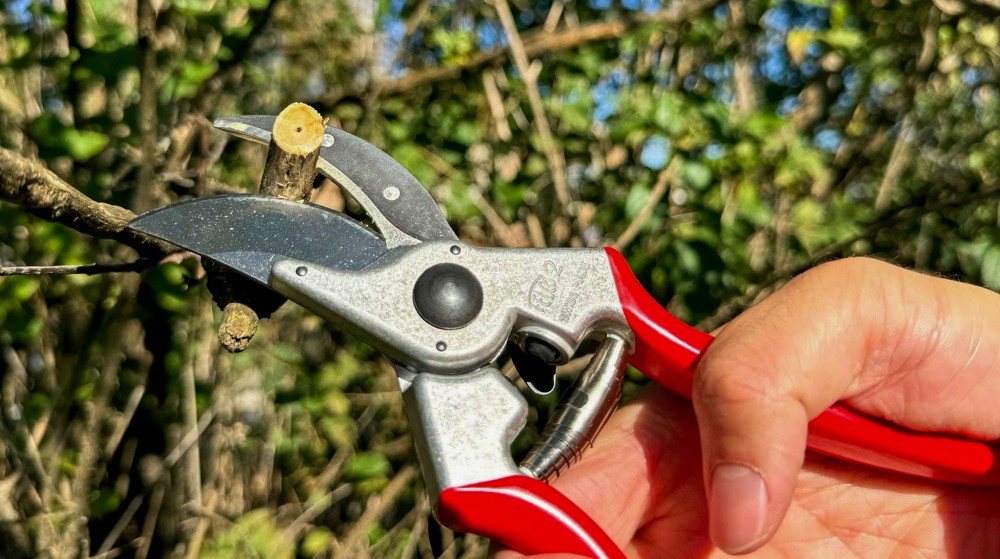
Can split branches after cutting be caused by hand force?
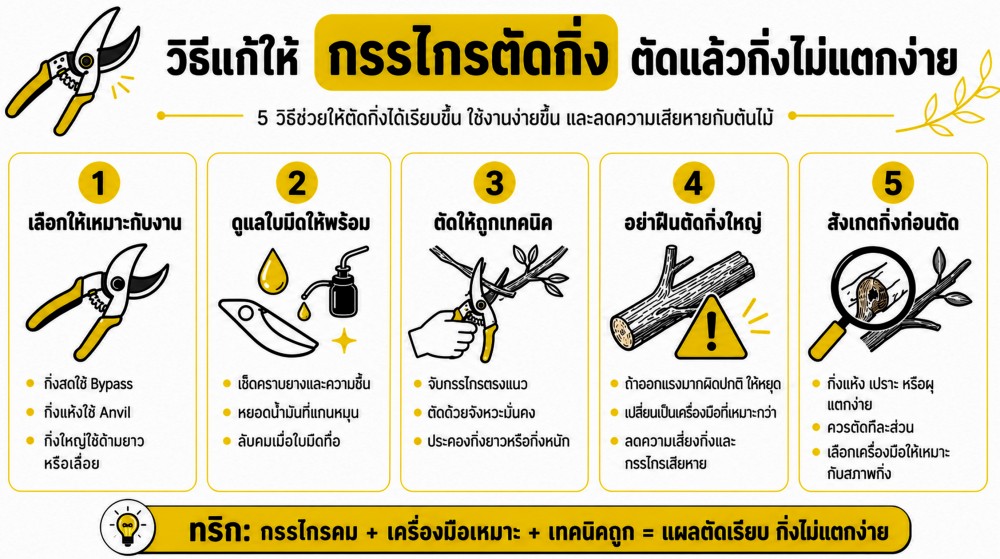
Yes, they can, and it's a common cause—especially for beginners or those who unknowingly use improper rhythm. The issue isn't always about applying too much or too little force; rather, it often stems from inconsistent pressure or off-axis squeezing. For example, hesitating midway through a squeeze, twisting your wrist while cutting, or rocking the shears to force the branch off faster. These habits turn the tool into a crusher, twister, or tearer rather than making a clean slice.
Pruning shears are meant to "cut," not "pry." If the branch doesn't sever when squeezed, don't rock the shears, as this can tear the bark lengthwise or split the wood, especially on fresh branches with tough bark. Another commonly overlooked factor is not holding the branch firmly: if the branch sways while cutting, the force won't be applied cleanly, and if it's a long branch or heavy at the tip, its own weight will tear it before the blade completes the cut. In summary, hand force can be the root cause, but what matters even more than raw strength is rhythm, direction, and stability while cutting.
So how much does the blade affect splintered branches?
The blade has a huge impact, and in many cases, it is the main cause. When the blade is dull, the squeezing force shifts from cutting to crushing. As a result, the branch gets crushed before it breaks, the bark tears, and the cut wound is uneven. Warning signs to look out for are feeling resistance even when cutting small twigs, hearing a grinding sound, or having to squeeze repeatedly. In this case, the blade might be dull, coated with sticky sap, or misaligned with the lower jaw.
Beyond being dull, blades can also suffer from chipping, bending, or a loose pivot bolt, preventing the blades from closing properly along their original line. When squeezed, the branch is not cut in a single plane, but rather crushed or splintered outward sideways instead.
Many people feel their pruning shears are still usable because they can still somewhat cut, but in reality, they are exerting more and more effort unconsciously—and that is exactly what causes branches to splinter more frequently. Try replacing the blade or getting a new pair of pruning shears, and you will immediately notice that cutting becomes easier, wounds are cleaner, and you feel less fatigued.
Using the wrong type of pruning shears can also cause branches to splinter
Another common cause is using the wrong type of pruning shears. There are several types of pruning shears, and each is suited for different tasks.
- Bypass Pruning Shears: The two blades slide past each other just like regular scissors. They are suitable for fresh, green branches and tasks that require clean cuts, making them the most ideal type for home tree pruning.
- Anvil Pruning Shears: The blade cuts down onto a flat surface, similar to a knife pressing onto a cutting board. They are suitable for dry or hard branches. If used on live, green branches, the stems can easily be crushed or bruised, especially if the blade is not sharp enough.
- Ratchet Pruning Shears: They cut in stages to reduce cutting effort, making them suitable for branches that require heavy cutting power. However, if you rush or twist the shears, the branch can still splinter.
If branches splinter often, ask yourself first whether you are using the right type of shears. For live branches requiring clean cuts, use Bypass shears; for hard, dry wood, use Anvil shears or more powerful cutting tools.
Dry branches, green branches, and brittle branches differ more than you think
- Live branches have a high moisture content and flexibility. If you use a sharp blade and correct technique, the cuts will be clean and smooth. But if the blade is dull, the bark easily tears because it remains tough and tightly bound to the wood.
- Dry branches are harder and more brittle; they can easily splinter if squeezed too quickly or if improper shears are used. You should use tools capable of handling dry wood, and do not expect the cuts to be as clean as those on live branches.
- Brittle or weakened branches—such as those exposed to intense sunlight, semi-dead branches, or diseased branches—can splinter even with sharp shears because their internal structure is already compromised. Cut slowly and steadily, and avoid twisting the branch while cutting.
If you prune several kinds of plants and find that some cut cleanly while others splinter easily, don't rush to blame the shears; the wood grain and branch condition of each plant also differ.
- What kind of lubricant should be used on pruning shears? Where to apply it for the best results!
How should you inspect pruning shears before use?
Always open and close your pruning shears two or three times before use. If they feel stiff or the blades do not meet properly, check them before cutting by inspecting 4 key points:
- Residue on the blade: If there is tree sap buildup, wipe it off first, as it prevents clean cuts.
- Cutting edge: If it is chipped or heavily worn, sharpening may not be enough; the blade or shears should be replaced.
- Pivot bolt: A loose pivot allows the blades to wobble during cutting, while an overly tight pivot causes stiffness; both affect the quality of the cut.
- Spring and lock: The spring should rebound well, and the safety lock should function normally.
How to care for pruning shears after use to keep them sharp and cutting smoothly
- Wipe the blades every time: Use a dry cloth to wipe away sap and moisture. If heavily stained, use a damp cloth first and then wipe dry.
- Apply oil to the pivot point: Helps prevent rust and ensures smoother opening and closing.
- Clean before moving to another plant: If pruning diseased plants, wipe the blades before using them on other plants to prevent the spread of pathogens.
- Store in a dry place and lock the blades: Do not leave them exposed to rain or lying in dirt, and always lock them after use for safety.
Conclusion
Branches splitting after cutting is often caused by a combination of factors, including dull or stiff blades, branches that are too large, an unsteady grip on the branch, or twisting during the cut. If the cut is crushed, uneven, and requires more effort, check the blade first. However, if the shears are still sharp but splitting occurs only on large branches or at awkward angles, focus instead on your cutting technique and tool selection.
It really isn't complicated: simply choose the right pruning shears for the job, cut with a steady motion without twisting or prying, and keep the blade sharp to greatly reduce branch splitting. View pruning shears as a tree care tool rather than just something to cut through branches. Using them properly results in less damage to the plant, cleaner cuts, and longer-lasting shears.
Select Pruning Shears to suit the application