


 EN
 ไทย


Customers Also Purchased
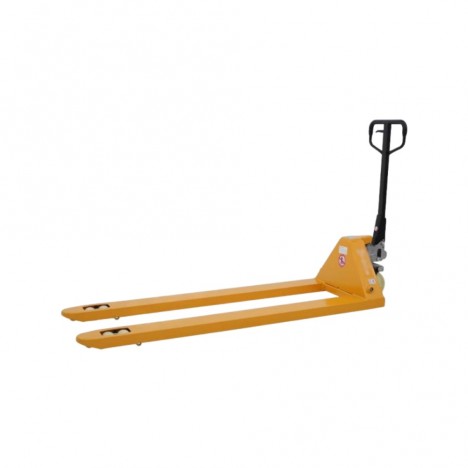
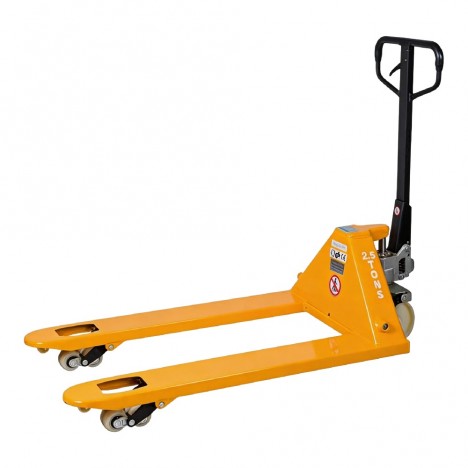
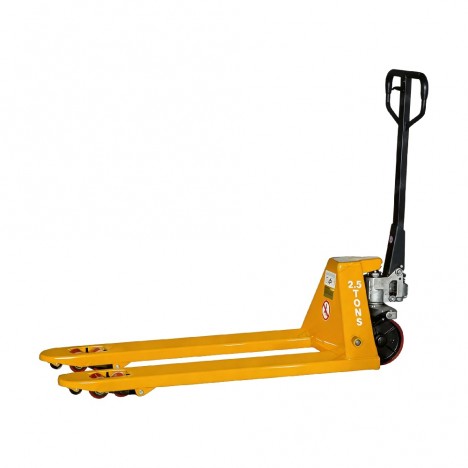
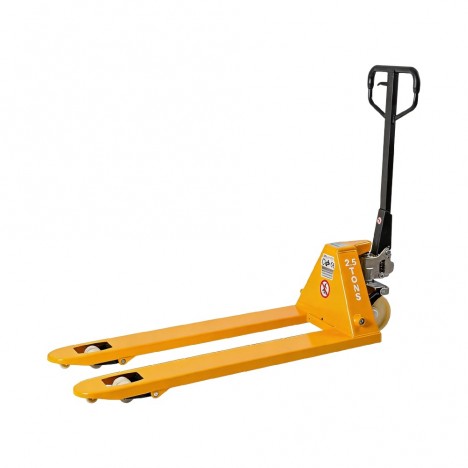
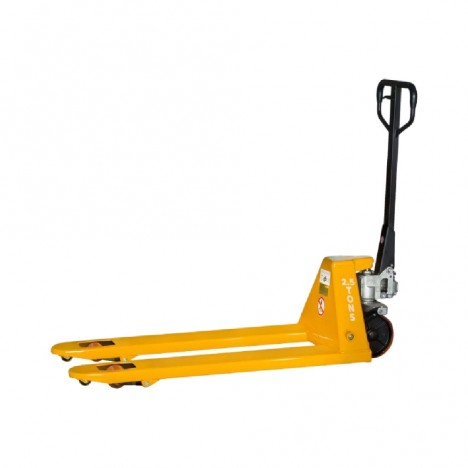
Hand Lift Truck Also known as a pallet jack, it is a piece of equipment regularly used in warehouses, retail stores, factories, and fulfillment centers because it makes lifting and moving palletized goods much more convenient without requiring direct manual lifting of heavy loads. However, after prolonged use, many people may encounter abnormalities such as difficulty lifting when pumping the handle, failure to hold a load, or the hand pallet truck slowly descending on its own.
A hand pallet truck slowly dropping after lifting is a problem that should not be ignored, especially when lifting heavy loads. It often involves the hydraulic system failing to maintain pressure properly, such as a valve not sealing fully, worn seals or O-rings, low hydraulic fluid, air trapped in the system, or worn internal pump components.
However, not every case of the forks lowering slightly immediately means the hand pallet truck is broken, because hand pallet trucks are not designed to keep loads suspended for extended periods. If left elevated for a very long time, some models may slowly lower. But if the forks drop unusually fast, noticeably sink when lifting a load, or cannot hold the weight even shortly after being raised, this is considered a symptom that should be checked immediately. This article will guide you through why a hand pallet truck slowly drops on its own, how dangerous it is, basic inspection steps, and when you should stop using it for safety.
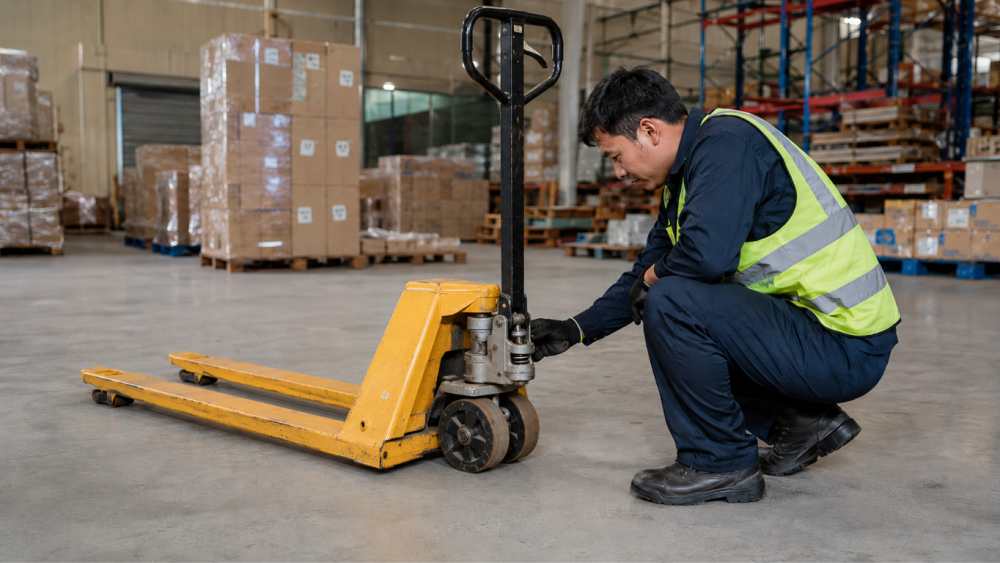
What Does a Hand Pallet Truck Slowly Dropping Look Like?
The symptom of a hand pallet truck slowly dropping occurs when the operator pumps the handle to raise the forks, but the forks or pallet cannot hold their position and instead gradually lower on their own, even without pressing the release lever.
Some units may drop very slowly, requiring observation over time to notice the change. Others lower shortly after being raised. Some may still hold light loads, but drop much faster when lifting heavy loads. These signs usually indicate that the lifting system is no longer operating at full efficiency.
In terms of operating principle, manual hand pallet trucks use a hydraulic system to lift loads. When pumping the handle, the hydraulic pump generates pressure to raise the forks, and internal valves retain this pressure to keep the forks at the desired height. If a valve does not seal completely, seals leak, the oil has issues, or pressure bleeds back, the forks may gradually lower on their own.
Simply put, this symptom is usually related to the hydraulic system "failing to hold pressure," which should be clearly inspected before using it with heavy loads.
Hand Pallet Truck Dropping on Its Own: What Is Normal vs. Abnormal?
This distinction should be clear, as many people may worry immediately upon seeing the forks drop slightly, even though in some cases it may simply be caused by leaving them raised for too long.
If a hand pallet truck is left with empty forks or holding a load for an extended period and the forks slowly lower slightly, it might not necessarily be a severe malfunction. The hydraulic system of a hand pallet truck is not designed to support sustained loads over long periods like some other lifting equipment; its main function is to lift pallets off the ground for transport over a certain distance and then lower them once at the destination.
However, if the hand pallet truck exhibits any of the following symptoms, it should be regarded as an abnormality requiring inspection:
- Forks drop on their own shortly after lifting a load
- Cannot hold weight after being raised
- Drops noticeably faster when lifting heavy loads
- Requires an unusually high number of pump strokes to raise the forks
- Forks do not raise completely, or slowly lower after being lifted
- Oil stains around the pump unit or hydraulic cylinder
- Pallet tilts or becomes unstable while lifting
If it falls into this category, do not force it to handle heavy loads, as it can risk product damage and workplace accidents.
Is a Hand Pallet Truck Slowly Dropping Dangerous?
It can be dangerous, especially when handling heavy loads or operating in areas with pedestrians, carts, or other equipment nearby.
Standard hand pallet trucks are typically used to lift palletized goods weighing from several hundred kilograms up to several tons. If the forks slowly drop on their own during use, the load may lose balance, the pallet may hit the floor, or stacked items could shift and topple over.
Potential risks include damaged goods from falling, pallets crushing feet, forks scraping the floor while towing, reduced maneuverability of the pallet truck, or accidents involving nearby workers—especially in warehouses with narrow aisles, uneven floors, or continuous material handling.
Therefore, if a hand pallet truck visibly drops on its own, it should not be considered "good enough" for heavy tasks. You should temporarily take it out of service, diagnose the cause, and properly repair it before putting it back into operation.
Cause 1: The release valve does not close completely
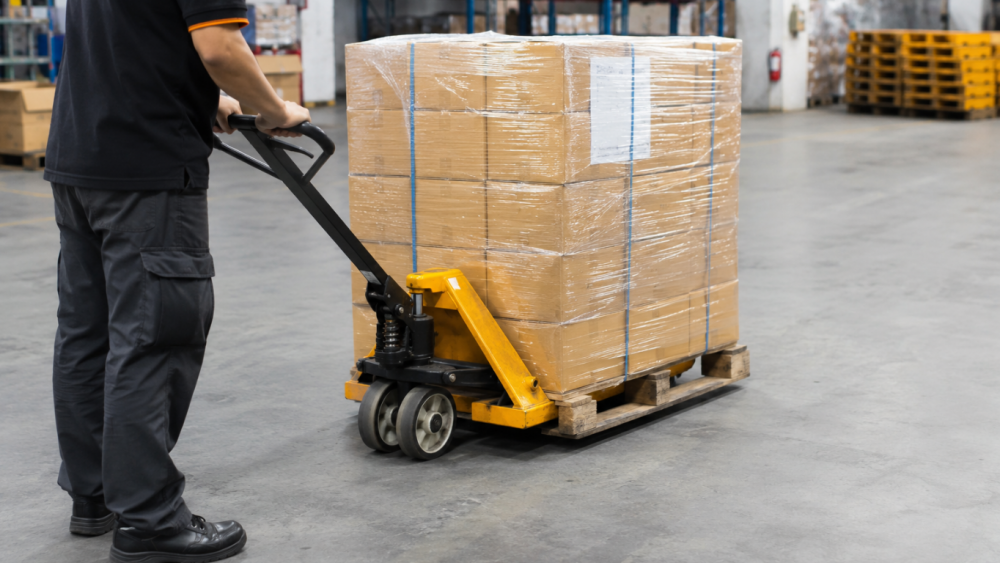
A common cause of a hand pallet truck slowly dropping after being lifted is that the lowering control valve does not close completely.
In the pallet truck's hydraulic system, a valve controls the direction of oil flow. When the operator wants to lower the forks, they squeeze or press the lever to open the valve and allow oil to return. However, if the valve does not seal completely, oil may slowly leak back even without pressing the release lever, causing the forks to gradually drop on their own.
Incomplete valve closure can be caused by dirt, old oil sludge, small metal shavings, or internal component wear. When weight presses down on the forks, system pressure increases; if the valve isn't sealed tightly enough, the forks may slowly sink.
Commonly associated symptoms include the pallet truck still being able to lift, but unable to hold the load for long—dropping faster with heavier loads—or feeling less firm than usual after lifting.
Cause 2: Deteriorated seals or O-rings in the hydraulic system
Seals and O-rings are small parts that play a vital role in hydraulic systems by preventing oil leaks and maintaining pressure inside the pump unit. If the seals become stiff, degraded, torn, cracked, or worn from normal use, the system may no longer hold pressure properly.
When pressure leaks past the seals, the forks may slowly sink on their own, even if no oil leaks externally. In many cases, it is an internal bypass leak rather than an external leak.
This often confuses users because externally, everything appears normal—no oil stains, no cracks, and no unusual noises—yet the forks drop when lifting a load. If the hand pallet truck has been in service for a long time, frequently handles heavy loads, or the pump unit has never been serviced, worn seals or O-rings are a primary suspect.
Cause 3: Low or deteriorated hydraulic oil
Hydraulic oil serves as the medium that transmits power in the lifting system. If the oil level is insufficient, contaminated, filled with air bubbles, or degraded from long-term use, the pallet truck may fail to lift to full height, pump inefficiently, lift slowly, or slowly sink after lifting.
Low oil levels can result from minor leaks around the hydraulic cylinder, fittings, seals, or pump unit. Oil degradation, on the other hand, can stem from continuous prolonged use, contamination, or failure to change the oil at appropriate intervals.
Related symptoms may include needing to pump multiple times before the forks rise, not reaching full height, dropping after being lifted, or erratic lifting performance. If the oil is found to be cloudy, dirty, sludgy, or heavily aerated, have a technician inspect the system before refilling or replacing the fluid.
What you should avoid doing is continually topping off the oil without diagnosing the root cause. If the actual problem stems from leaking seals, an incompletely seated valve, or worn internal parts, adding oil will only offer temporary relief without resolving the core issue.
Cause 4: Air trapped in the hydraulic system
Air in the hydraulic system prevents solid pressure build-up because air is compressible. When air is trapped inside the system, the pallet truck may lack full lifting power, feel spongy during pumping, or fail to hold loads properly.
This symptom may occur after the pallet jack has been laid flat, moved improperly, freshly refilled with oil, or after the hydraulic system was disassembled for repair without being fully bled of air.
In some cases, this can be initially resolved by bleeding the air according to the proper procedure for each model, such as pumping the control lever several times in the lowering position without any load. However, if there is no improvement or the forks still noticeably lower on their own after lifting, a technician should inspect the valve system, seals, and oil as well.
Cause 5: Internal pump components are worn out or improperly seated
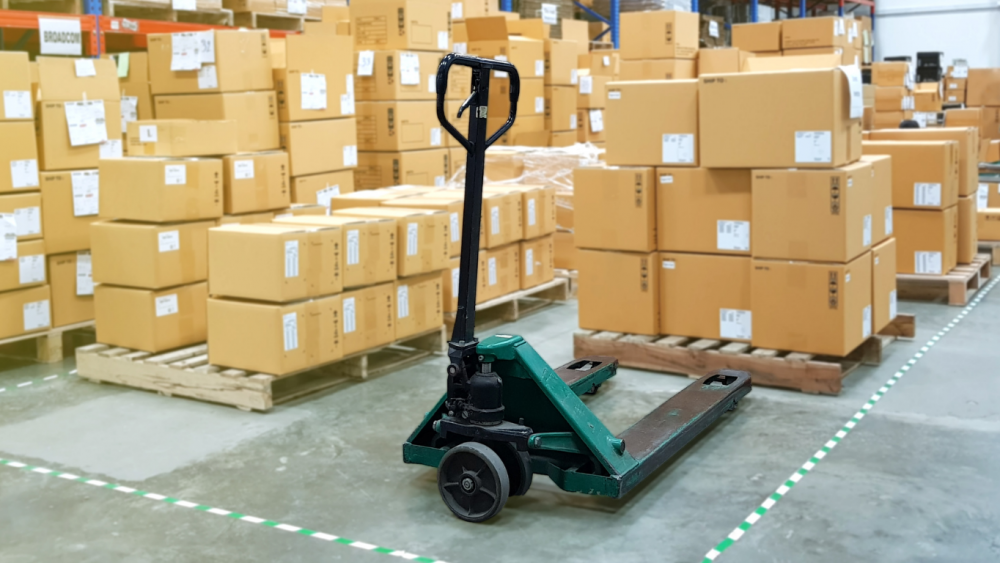
Inside the hydraulic pump unit of a pallet jack, there are several components that help regulate pressure, such as steel ball bearings, springs, valves, and oil passages. If these components are dirty, worn, scratched, or not seating properly, the oil may leak backward.
As a result, the pallet jack can still barely lift, but once a load presses down, the system cannot hold the pressure tightly enough, causing the forks to gradually drop on their own.
This type of issue usually requires a technician to disassemble and inspect, as they are internal components. You should not dismantle them at random without proper knowledge and correct spare parts, because assembling them back in the wrong position could render the pallet jack completely unable to lift or cause even more severe malfunctions.
Cause 6: Overloading or unbalanced weight distribution
Each model of pallet jack has a clearly specified load capacity, such as 2 tons, 2.5 tons, or 3 tons. However, in actual operations, users may unintentionally exceed the capacity or place goods unevenly on the pallet, resulting in unequal pressure applied to the forks.
Regular overloading puts a heavier strain on the hydraulic system, seals, valves, wheels, and frame than they were designed for. It may still function initially, but continuous use can accelerate component wear and subsequently cause the pallet jack to lift and then slowly drop.
If the pallet jack works normally with light loads but drops faster when lifting heavy items, check the total weight of the goods including the pallet, the placement of the goods, and the load capacity of the pallet jack before continuing use.
How to perform an initial check if the pallet jack lifts and then drops on its own
If you find that the pallet jack lifts and gradually drops, do not rush to use it with heavy loads immediately. You should conduct a preliminary inspection in a safe area first.
- Start by raising the empty forks to the maximum height, then observe whether the forks lower on their own at an abnormally fast rate. Next, test with a light load on a level surface; if the dropping symptom becomes more pronounced with weight, it indicates that the system may not be holding pressure.
- Next, inspect for oil stains around the hydraulic cylinder, pump unit, fittings, and the floor beneath the pallet jack. If there are wet oil stains or accumulated clusters of dust around the pump unit, there may be a leak.
- Another point to check is the release lever and its related mechanisms. Check whether the lever is in the normal position and if any chain, mechanism, or component is stuck. If the mechanism slightly pulls the release valve open, the forks may gradually drop on their own.
- If an external inspection reveals no cause but the symptom persists, do not disassemble the pump unit or adjust the valves randomly by guessing. Have a technician inspect the internal hydraulic system to accurately diagnose the root cause.
What symptoms indicate you should stop using it immediately?
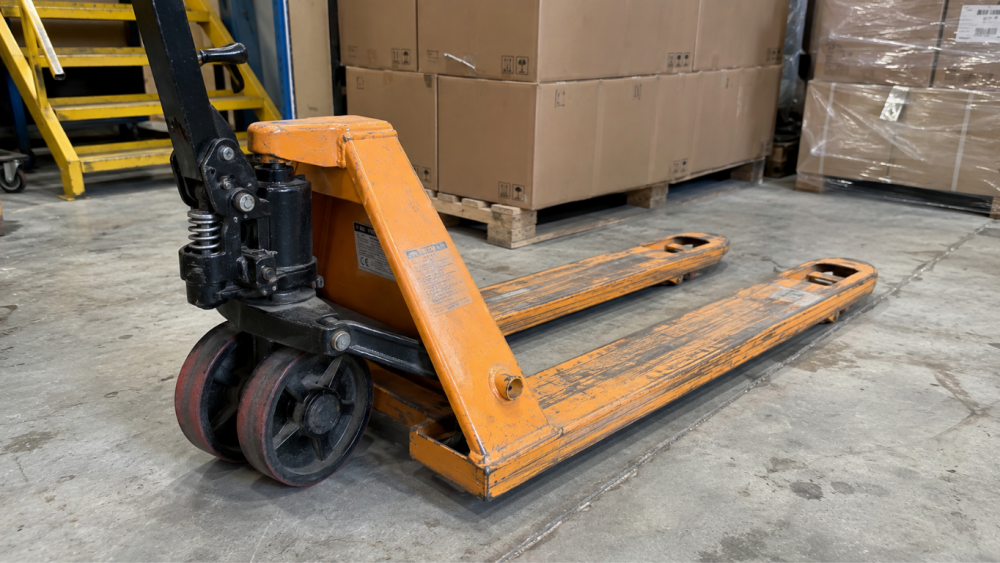
If the pallet jack only exhibits very slow lowering after being held raised for a long time without carrying heavy loads, you can start with an external check, cleaning, inspecting the lever, and bleeding the air according to the manual. However, if the following symptoms occur, you should immediately stop using it with heavy loads and send it for inspection or repair before further use:
- The forks noticeably drop on their own after lifting a load
- Forks drop abnormally fast
- Cannot hold weight after lifting
- Hydraulic oil leak stains are present
- Drops increasingly faster after lifting
- Pallet tilts or is unstable
- Requires multiple pumps before the forks rise
- Feels difficult to control or unsafe during operation
These symptoms are signs that the lifting system may be unstable. You should not force its continued use in actual operations, because if the forks drop while moving goods, it could lead to damage or accidents.
What needs to be repaired when a hand pallet truck drops after lifting?
Repairs depend on the actual cause identified after inspection. In some cases, it can be resolved by cleaning the valves, bleeding air, or topping up or changing the hydraulic oil. However, if the seals or O-rings have deteriorated, a new seal kit may need to be replaced.
If the issue stems from worn valves, steel ball bearings, springs, or internal pump components, specific parts may need to be disassembled, inspected, and replaced with spare parts. You should not adjust valves or dismantle the system yourself without expertise, as the hydraulic system directly impacts load bearing and safety.
If the hand pallet truck is used heavily on a regular basis—such as in warehouses, factories, or logistics centers where goods are moved every day—targeted repairs are more cost-effective than forcing continued use. This helps reduce the risk of product damage, minimizes downtime, and better extends the service life of the pallet truck.
How to maintain a hand pallet truck so it doesn't easily drop after lifting
Maintaining a hand pallet truck does not have to be complicated, but it should be done consistently, especially for equipment used daily.
It should be operated within its rated load capacity without overloading. Balance goods evenly on pallets, avoid forcefully bumping forks against uneven floor thresholds, and do not unnecessarily drag the pallet truck across rough surfaces, as accumulated shock impact can affect the wheels, frame, and hydraulic system.
In addition, periodically inspect for oil leaks, clean around the wheels, forks, and pump assembly, and do not allow dust, rope debris, or dirt to build up. If you notice it lifts slowly, fails to lift completely, feels loose when pumping, or holds weight poorly, inspect it promptly before the problem worsens.
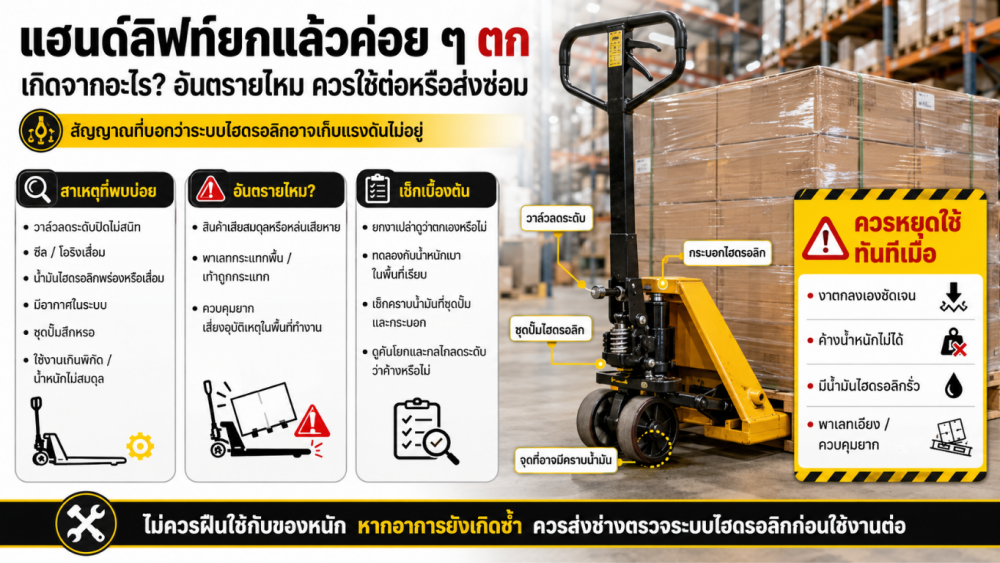
Hand pallet truck slowly drops after lifting: inspect before forcing continued use
Hand Lift Truck Slow dropping after lifting can stem from various causes, ranging from release valves not closing tightly, deteriorated seals or O-rings, low hydraulic fluid, contaminated oil, and trapped air in the system, to worn internal pump components or routine overloading.
Although a slight drop after holding a load for a long period does not necessarily mean the hand pallet truck is broken, if the forks drop abnormally fast, drop under load, cannot hold weight, or show oil leak stains, you should not force its continued use with heavy loads.
It is best to temporarily suspend operation, perform basic checks, and have a technician inspect the hydraulic system if the symptoms persist. This ensures the hand pallet truck returns to safe operation, reduces the risk of product damage, and helps extend the equipment's lifespan over the long run.