


 EN
 ไทย


Customers Also Purchased


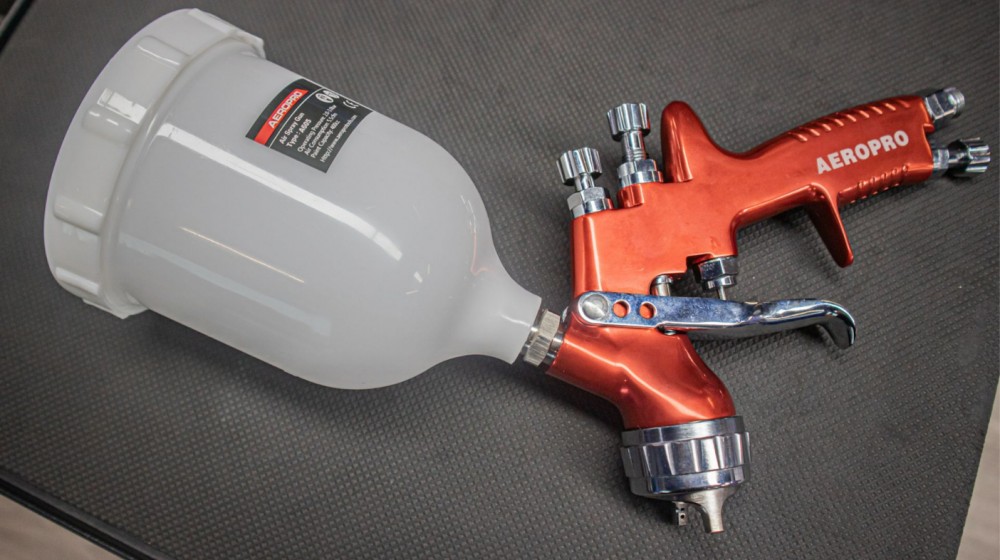
The term HVLP For Spray gun is not a model name; it is an acronym, which stands for High Volume Low Pressure or simply translated as “High Volume, Low Pressure” The highlight is reducing overspray, providing better control over the paint mist, and ensuring more paint adheres to the workpiece rather than drifting away into the air.
However, the problem many people encounter after buying and actually using it is: “Why does an HVLP spray gun consume so much air?” If used with a small air compressor, many may find that:
- After spraying for a short time, air pressure drops, paint finish is not smooth, and droplet atomization is coarse
- Inconsistent spraying rhythm and pattern
- The air compressor runs almost non-stop
The phrase "low pressure" might lead us to interpret it as "using little air." In reality, HVLP spray guns are not primarily designed to save air; rather, they are designed to use a large volume of air at a lower pressure to help atomize the paint into fine droplets, control overspray, and increase transfer efficiency onto the surface.
Therefore, to use this type of equipment effectively, air volume or CFM matters much more than many people think.
What is an HVLP spray gun?
HVLP (High Volume Low Pressure) operates on the principle of releasing a large volume of air through the nozzle while maintaining the air pressure exiting the nozzle lower than other spray systems. The objective is to achieve good paint atomization without requiring excessively high pressure. Since the air does not blast out with high velocity, the paint does not bounce back off the workpiece as much, significantly reducing airborne overspray.
The operating system of an HVLP spray gun does not demand high pressure, but rather high air volume. This requires the air compressor to supply enough air continuously while the trigger is pulled. If the air compressor is too small or cannot keep up with air delivery, even with the correct pressure setting, the spray gun itself may still not perform at full efficiency.
Where does an HVLP spray gun consume air?
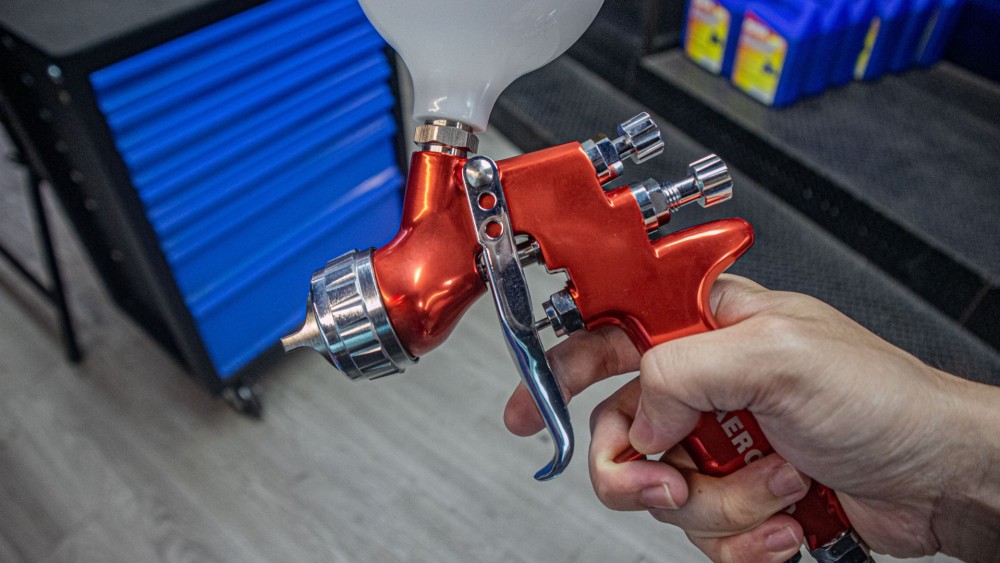
- Atomizing paint into fine droplets and distributing it evenly across the workpiece is not achieved through very high pressure like some other spray systems, but by utilizing a large volume of air to carry and disperse the paint out of the nozzle.
- Many models are designed with a wide spray pattern for faster work and a smoother finish. As the spray pattern widens, more air is required to disperse the paint evenly across the spray fan.
- If you hold the trigger continuously, air flows through the nozzle the entire time. Pulling the trigger further draws out more paint along with the air. For large surface areas, you may need to hold the trigger down for several seconds per pass and repeat this across the entire workpiece.
CFM Is More Important Than You Think When Using an HVLP Spray Gun
Do paint spray guns really consume a lot of air? How do you choose one to avoid overworking the air compressor? When choosing an air compressor for a spray gun, some people might focus primarily on pressure or PSI. For example, seeing a compressor rated at 8 bar or 115 PSI leads them to assume it will definitely work with a spray gun. But for spraying—especially with an HVLP spray gun—an equally critical factor to consider is CFM, or the volume of air the compressor can deliver per minute.
Importantly, high pressure does not always equal high air volume. Many small air compressors can build up high pressure, but have a low continuous air delivery rate. When used with an HVLP spray gun, the initial pressure might be fine, but once you start spraying continuously, the pressure drops rapidly. This leads to unstable spraying, uneven paint output, and a finish that isn't as smooth as it should be.
When selecting equipment, check the spray gun's specifications for its required air volume, then choose a compressor that delivers well above that figure. You shouldn't pick one that just matches the exact requirement, because air hoses, fittings, air filters, regulators, hose length, and the condition of the compressor itself can cause the actual air delivery to fall below the rated specs during continuous use.
A Large Compressor Tank Doesn't Always Mean Good HVLP Performance
What is the difference between a large and small air compressor tank besides storage capacity? An air tank is merely an air storage space, not the component that produces air. A large tank provides a bigger air reserve, slowing down the initial pressure drop. However, if the pump head or motor cannot generate air fast enough to match the volume consumed by the spray gun, the air pressure will still drop—it will just drop more slowly than with a small tank.
A simple example is when the spray gun consumes a high volume of air continuously, but the compressor refills the tank at a slower rate than the gun uses it. The air in the tank will gradually decrease until the pressure drops. Once the pressure drops, the spray gun begins to malfunction. No matter how large the tank is, if it cannot generate air fast enough, it cannot maintain consistent spray quality throughout the job.
Therefore, when choosing an air compressor for an HVLP spray gun, you should consider the tank size, motor power, and actual air delivery rate together. A large tank allows you to spray longer and keeps pressure relatively stable, but the deciding factor for whether it can keep up is the continuous air volume generated by the pump.
Signs That Your Air Compressor Is Too Small for an HVLP Spray Gun
- When you first start spraying, the tank is full, pressure is stable, and the paint looks great. But after continuous spraying for a while, the compressor fails to keep up, and the paint atomization turns from fine to coarse.
- Spraying for only a short time causes the compressor to run continuously, or stop briefly and kick right back on. If the compressor cycles on and off too frequently, air pressure may fluctuate, moisture in the system can increase, and there is a higher chance of water ending up in the air hose.
- Adjusting the spray pattern results in a poor fan shape—heavy in the center, thin on the edges, or looking as though the air isn't dispersing fully across the fan.
What Does an HVLP Spray Gun Save If Not Air?
The answer is HVLP spray guns are designed to save paint and reduce overspray rather than save air. The key advantage of HVLP is getting more paint to adhere to the workpiece without drifting away in overspray, giving you better control over the paint job compared to very high-pressure systems.
From a cost perspective, an HVLP spray gun may require a relatively powerful air compressor, but for jobs demanding high surface quality and minimal paint waste, besides How Far Should You Hold a Spray Gun to Avoid Waste and Mess? that, this system remains very compelling, especially for jobs using expensive coatings.
HVLP may not reduce the load on your air compressor, but it makes paint application much more efficient. If you choose the right air compressor, set it up properly, and use the correct spraying technique, the resulting finish will be smooth, easy to control, and waste less paint. This is why HVLP spray guns remain widely popular for quality paint jobs.
What Type of Air Compressor Should You Choose for an HVLP Spray Gun?
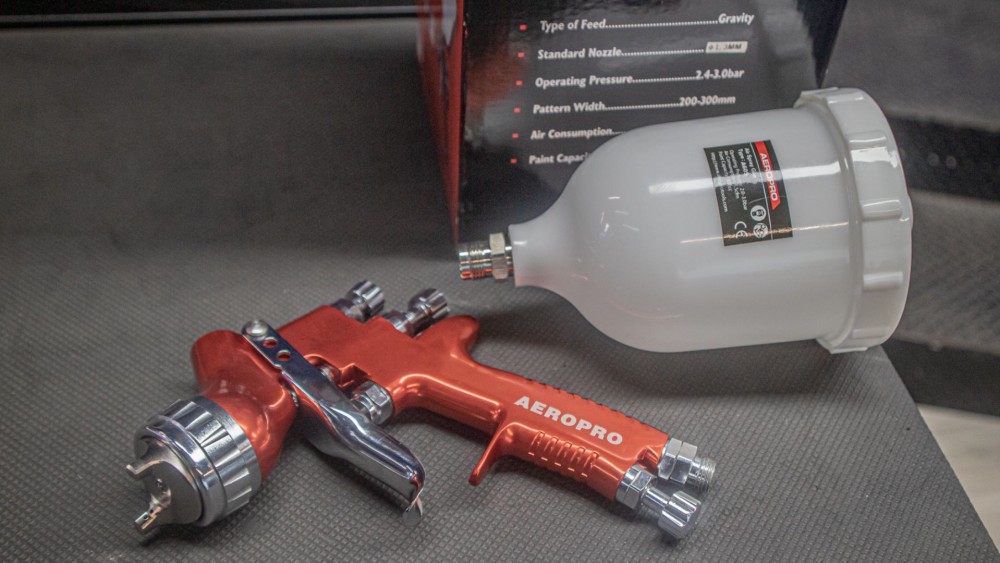
For anyone planning to buy an HVLP spray gun or already owning one but unsure if their air compressor is sufficient, the simple rule of thumb is not to look merely at the maximum pressure, but at whether the air compressor can deliver enough continuous air volume to meet the gun's specifications. If the spray gun requires a certain CFM/air delivery rate, choose an air compressor with higher output to account for system pressure drops and real-world usage.
For small jobs, a medium-sized air compressor such as 50 liters is manageable, but you have to accept waiting for the tank to rebuild pressure occasionally. For jobs requiring a fine finish, continuous spraying, or large workpieces, you should use an air compressor with a high air delivery capacity and an air tank that helps maintain a stable pressure.
Don't Want to Use a Lot of Air? Are There Alternatives?
If you need a spraying system that consumes less air, you might consider other spray gun systems, such as LVLP, which are designed to use lower air volume and are suitable for users with smaller air compressors. However, you need to check the details on a model-by-model basis, as finish quality, atomization pattern, spraying speed, and paint compatibility will vary.
However, this does not mean that LVLP is always better than HVLP or that HVLP is suitable for everyone. Choosing a spray gun should be based on:
- Primary type of work performed
- Existing air compressor
- Workplace environment
- Finish quality requirements
- Total system budget
If you have an air compressor with good air delivery and want fine control over the spray mist, HVLP remains an excellent choice. But if you have a small air compressor and primarily do light-duty work, you may need to consider a system that consumes less air instead.
To Get the Most Out of an HVLP Spray Gun, Proper Setup and a Complete System Check Are Essential
Getting great results with an HVLP spray gun is not just about buying a quality gun. You must consider the entire system, hand movement speed, and spray overlap. When everything is well-coordinated, the finish will be much smoother and easier to control.
What to remember is that HVLP requires "sufficient and stable" air rather than just high pressure. If the airflow is inconsistent, even an expensive spray gun may not deliver the expected results. Conversely, if you choose the right air compressor, set it up correctly, and practice proper hand rhythm, an HVLP spray gun can produce a beautiful finish with excellent overspray control, giving your work a truly professional look.
Lastly, another aspect that should not be overlooked is cleanliness. After use, always thoroughly clean the air cap, nozzle, fluid needle, and paint passages, because dried paint clogs will ruin the spray pattern even if there is plenty of air.
Distorted spray patterns, uneven paint discharge, or sputtering are frequently caused by a combination of insufficient air and an unclean spray gun tip.
Conclusion: HVLP Spray Guns Consume Air Because They Use "High Volume" to Achieve a Great Finish
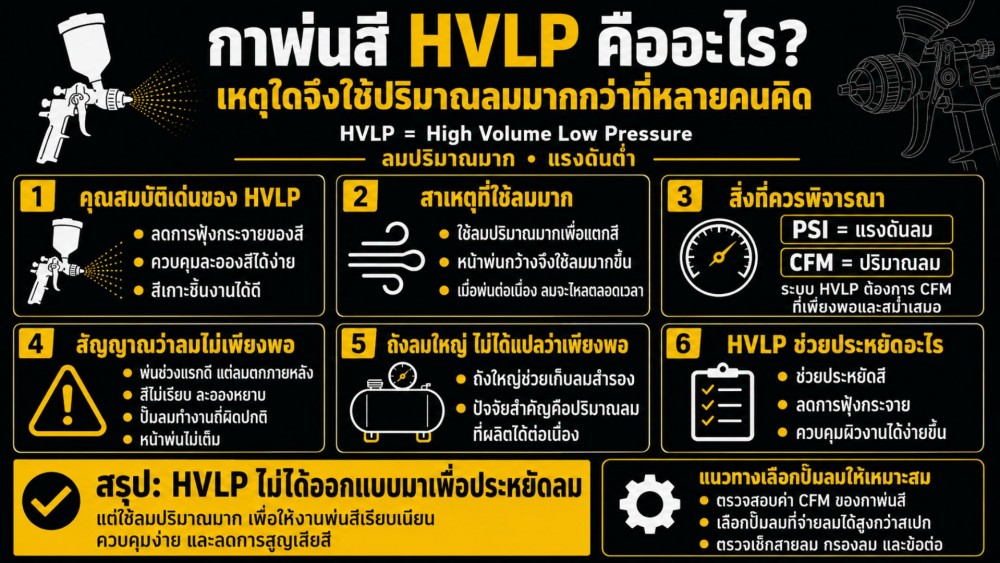
HVLP spray guns consume more air than many people realize because the system relies on a high air volume to compensate for the lower operating pressure. The term "Low Pressure" refers to lower pressure at the nozzle, while "High Volume" is the answer to why an air compressor with sufficient airflow is required.
If an HVLP spray gun is used with a compressor that is too small, common symptoms include pressure drops, uneven coating, coarse spray, incomplete fan patterns, frequent compressor cycling, and inconsistent finish quality. Therefore, before purchasing or operating it,
- Check the air consumption specifications of the spray gun
- Check the capacity of the air compressor
- Inspect the entire air system, not just the maximum pressure alone
Ultimately, HVLP is not equipment designed to save air, but rather built to improve paint transfer efficiency, reduce overspray, and offer better finish control. Understanding this point makes choosing and using Spray gun easier and prevents disappointment when discovering it consumes more air than expected, as that is the nature of this system.