


 EN
 ไทย


Customers Also Purchased
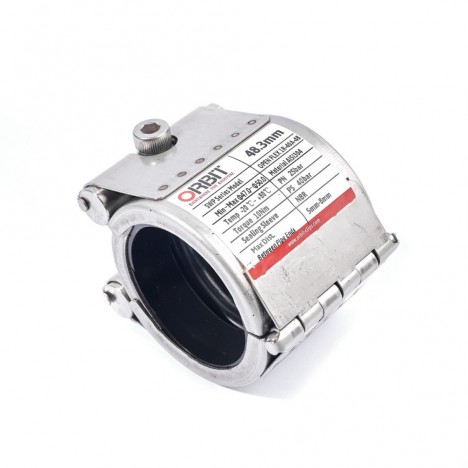
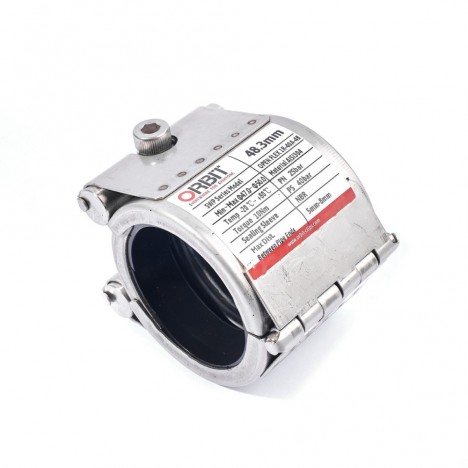
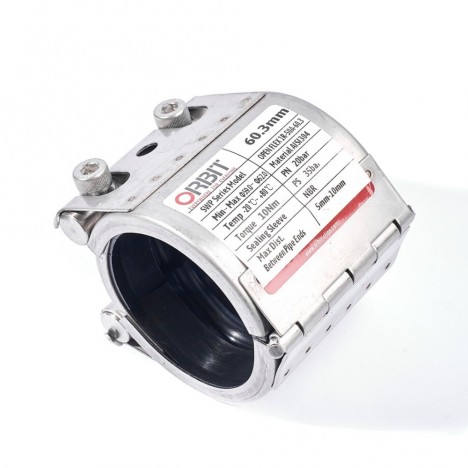
A leaking pipe is a problem nobody wants to encounter, yet it is a constant occurrence on any job site—whether in indoor plumbing, factory water delivery pipes, residential water systems, or industrial networks. In most cases, the damage isn't severe enough to rupture the entire pipe line; it's often just a localized leak, pinhole, seepage, spray, or surface crack that looks minor but cannot be ignored.
The issue is that if every leak requires cutting the pipe, replacing it, or shutting down the entire system, the resulting cost is not just for materials, but also wasted time, escalating labor costs, and disruption to operations in that area—especially in factories, office buildings, warehouses, or municipal water supplies that cannot tolerate prolonged downtime.
This is why many job sites turn to Pipe Repair Clamps or pipe repair clamps, because they can be installed quickly, eliminate the need to cut and rejoin pipes in many cases, and genuinely minimize system downtime. They are a targeted solution that solves the issue right at the source without having to tear down the entire system.
What is a repair clamp?
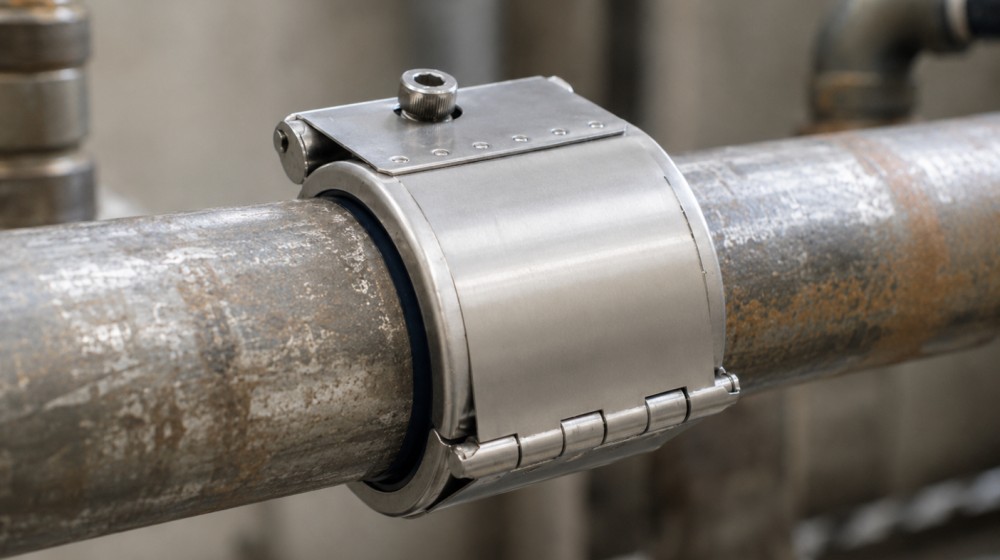
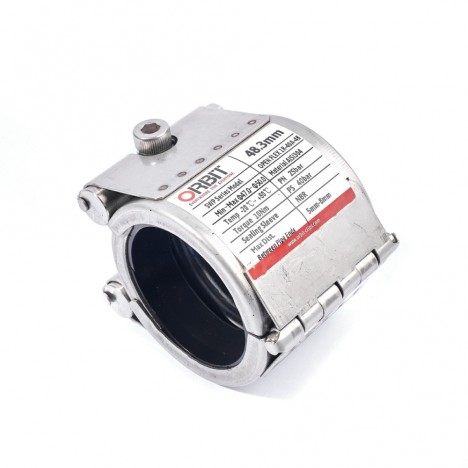
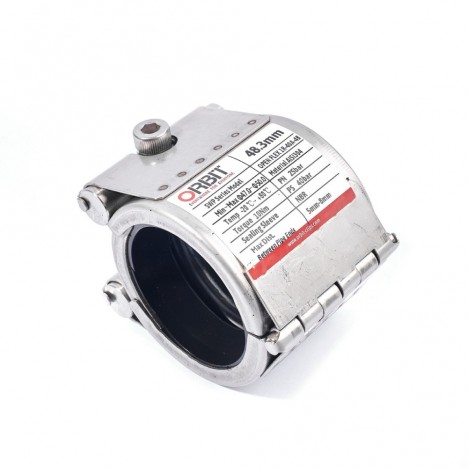
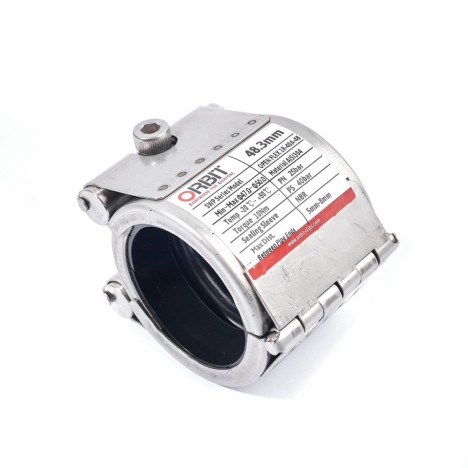
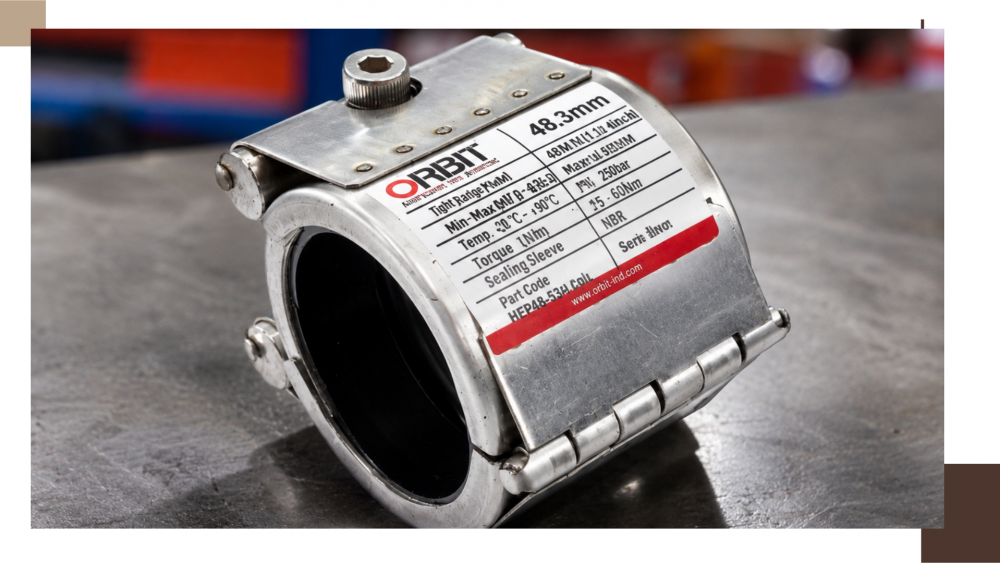
Pipe Repair Clamps or Repair Clamp It is a device designed for localized pipe leak repairs, functioning by clamping over the leaking or cracked area so that the inner rubber gasket presses firmly against the pipe surface, tightly sealing the leak.
To visualize it easily, think of it as a "pipe repair sleeve" wrapped around the problem area. Once the bolts are tightened, the clamp compresses the inner rubber seal flush against the pipe surface, preventing water from leaking out anymore—all without having to cut the pipe or replace the entire section.
Generally, a repair clamp consists of a metal clamp body, an inner rubber sealing gasket, and a set of bolts and nuts for tightening. Some models are made of stainless steel to handle water systems requiring high durability and rust resistance. Clamp sizes vary according to the pipe's outer diameter, such as 84 mm, 100 mm, 114 mm, or 159 mm, which must be selected to match the pipe being repaired so the rubber seal can perform with maximum efficiency.
How does a repair clamp work?
The operating principle of a repair clamp is simple to understand, but the installation details impact performance more than you might think.
Once the leak is located, place the repair clamp over the leaking area so that the inner rubber gasket aligns directly over the leak point. Then, tighten the bolts or screws securely. The resulting clamping force compresses the rubber seal against the pipe surface, sealing off the leak. That’s all it takes—no pipe cutting or system dismantling required.
One precaution is that the pipe surface around the installation area must be relatively smooth and clean to ensure the rubber seal seats tightly. If the area has heavy rust scale, soil debris, a rough surface, or pipe deformation preventing the clamp from tightening flush, the rubber seal may not seat fully, resulting in an inadequate seal.
Because it operates on the principle of localized clamping, a repair clamp is best suited for well-defined, localized leaks rather than pipes with extensive longitudinal damage or severe structural decay. In such cases, pipe replacement may be a better solution.
What types of pipe leaks can repair clamps fix?
A repair clamp isn't suitable for every situation, but for localized pipe leak repairs where the overall pipe remains in good condition, this tool offers an excellent solution in many scenarios.
Small pinholes or punctures in pipes
Small pinholes caused by corrosion, impact, or localized damage are where repair clamps perform best. They install quickly, seal the leak immediately, and require no prior pipe cutting—making them ideal for urgent leak repairs.
Localized pipe cracks
If the crack is not too long and falls within the clamp's coverage width, a repair clamp can seal the leak and reinforce the damaged area. However, if the crack extends beyond the width of the clamp, a wider model or alternative repair methods should be considered.
Plumbing and water supply pipe leaks
Plumbing systems are among the most common applications for repair clamps, whether in indoor piping, main water distribution lines, outdoor pipes, or municipal and industrial water networks. They significantly reduce water shutdown times and allow much faster repairs compared to cutting the pipe or replacing entire fittings.
Steel or metal pipe leaks
For steel pipes that have aged, rusted, or developed localized corrosion holes, repair clamps can help in many cases. However, the condition of the pipe wall must be evaluated: if the pipe is heavily corroded, has widespread rust, or has thinned to the point of easy deformation, clamping may not provide a durable long-term fix, making pipe replacement the safer option.
PVC or plastic pipe leaks
Certain repair clamp models can be used on PVC pipes, but caution is required regarding tightening torque. Over-tightening can deform or further crack the pipe, especially if it has become brittle from age or prolonged sun exposure. If the pipe has extensive cracking, cracks at fittings, or brittleness throughout, pipe replacement is usually the safer and more cost-effective option.
Pipes in certain industrial applications
In factories and industrial facilities, repair clamps can be used on pipes carrying water, coolant, or certain process fluids. However, you must verify that the clamp and gasket materials can withstand the system's operating pressure, temperature, and specific fluid. For applications involving chemicals, oil, steam, or high pressure, always check the product specifications and consult a specialist before use.
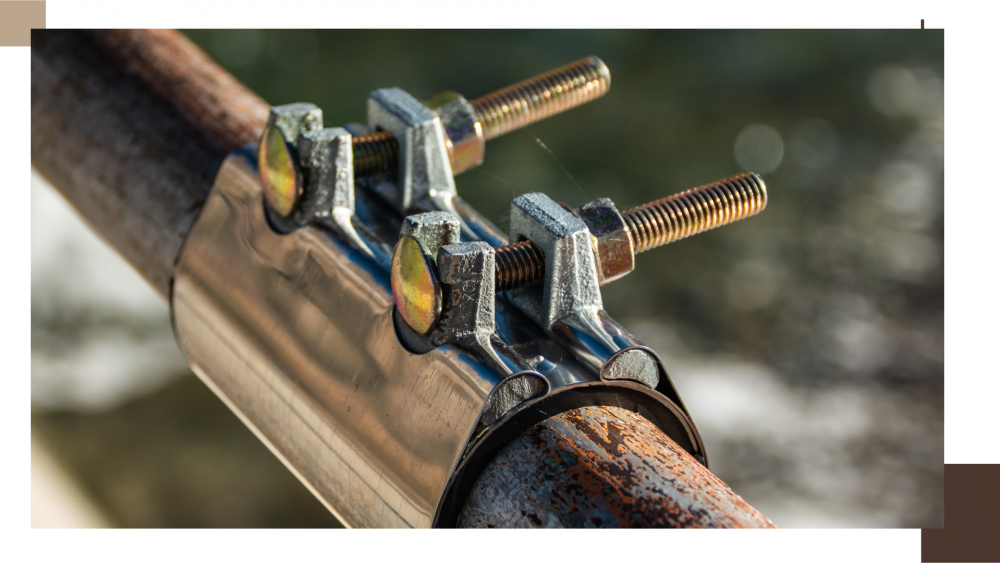
When is a repair clamp best suited for use?
In brief, repair clamps are best suited for localized pipe leaks that require a quick fix, where the pipe remains structurally sound overall, and where immediate dismantling or replacing an entire section is impractical.
Picture these scenarios: a leaking indoor water pipe requiring an immediate shutoff, an industrial water line developing a pinhole during an active production shift, a steel pipe starting to rust and leaking at a specific spot, or an outdoor pipe struck and seeping water. These are real-world situations where a repair clamp delivers real value—without dismantling the system or causing unnecessary downtime.
The main condition for a repair clamp to work effectively is that the leak must be localized, not longer than the width of the clamp, and located where the clamp can fit tightly. If these conditions are met, a repair clamp is a faster and more cost-effective option than other repair methods on many jobsites.
When should you not use a repair clamp?
Repair clamps are very helpful in many situations, but there are cases where using them might not yield the expected results, or worse, could unintentionally complicate the problem. Knowing their limitations beforehand is just as important as knowing when to use them.
Extensively corroded pipes
If the pipe is heavily corroded, deeply rusted, or thinned to the point of losing structural integrity in multiple areas, clamping may only seal a single spot, while new leaks could appear nearby. In such cases, replacing the entire pipe section is usually a more direct and sustainable solution.
Pipes with cracks longer than the clamp size
If the crack is longer than the clamp's width, water can still leak out from the ends of the crack. You must choose a clamp with a width suitable for the damaged area, or consider other repair methods that better fit the jobsite conditions.
Deformed or distorted pipes
A repair clamp works properly only when the rubber gasket seals tightly against the pipe surface. If the pipe is dented, flattened, twisted, or severely deformed, the gasket cannot seal fully, and the leak will not be sealed as securely as needed.
Leaks near joints or on uneven surfaces
Clamps are designed to tighten around straight, smooth pipe sections. If the leak is near a fitting, flange, valve, or on an area with ridges or irregular shapes, the clamp may not seat completely and will fail to achieve a full seal.
Systems exceeding pressure or temperature specifications
Each repair clamp model has clear limits regarding pressure, temperature, and fluid compatibility. Using it on a system that exceeds its specifications risks not only recurring leaks but could also compromise the safety of personnel in the area. Especially with high-pressure, chemical, or hot liquid systems, always check product specifications and consult a specialist beforehand.
How to choose the right repair clamp for your pipe
Choosing a repair clamp is not complicated, but selecting the wrong size or model can yield results no better than not repairing it at all. There are five main factors to consider before making a purchase decision.
Accurately measure the pipe's outer diameter
This is the most crucial first step, and it must be based on the "outer diameter" (OD), not the nominal pipe size. Different types of pipes can have different outer diameters even if their nominal sizes are similar. If the clamp is too small, it won't fit around the pipe; if it's too large, it won't clamp tightly and won't seal the leak properly.
Check that the clamp width completely covers the leak
The clamp width must be sufficient to cover the entire leak, with adequate margin on both the left and right sides so the rubber gasket can press down and seal completely. Especially for longitudinal cracks, choosing the right width is essential—do not just grab an existing clamp without measuring first.
Choose the clamp body material suited for the environment
For outdoor use, areas exposed to moisture, or general water systems, stainless steel clamps are usually the most suitable choice because they are rust-resistant and handle water well over the long term. Meanwhile, certain types of jobs may require specific materials based on the actual on-site conditions.
Check the Type of Rubber Seal
The rubber seal is the part that comes into direct contact with the pipe surface and serves as the primary component for sealing leaks. For general water applications, it may not be very complicated; however, if the system involves chemicals, oil, or special fluids, you must ensure that the rubber type can truly withstand the fluid properties and temperature in that system.
Always Check the Piping System's Pressure First
Piping systems have different pressure levels at various points, and each model of repair clamp also supports different pressure ratings. Especially for main pipes, high-pressure water supply pipes, or industrial systems, you should verify that the clamp's specifications match the actual pressure at the job site before every installation.
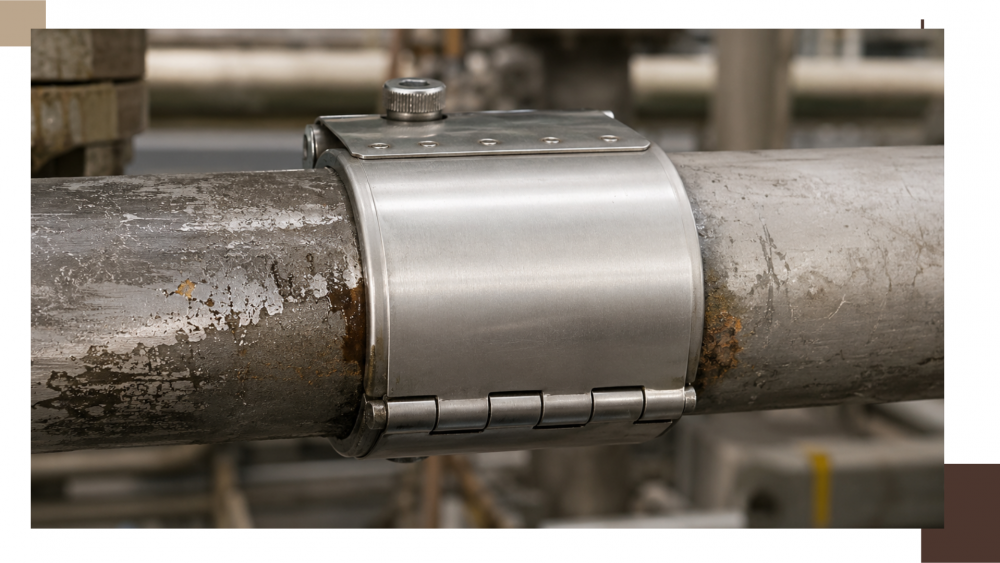
Advantages of Repair Clamps
What makes repair clamps popular in pipe repair work is not just the price, but because they solve problems directly in situations where many other methods are much more difficult.
The most evident advantage is that in many cases, repairs can be made without having to cut and join new pipes. This means reduced time, reduced hassle, and no unnecessary dismantling of the piping system. For job sites where time equals cost, this advantage is very distinct.
Another point is their suitability for emergency repairs. When a sudden pipe leak occurs in a building, factory, or area where the system cannot be shut down for long, repair clamps help maintenance teams manage the site faster without waiting to dismantle piping or order spare parts. And in terms of cost, if the pipe damage is localized and its overall condition remains good, using a repair clamp to fix only that area may be sufficient and significantly more cost-effective than replacing the entire pipe section.
Precautions Before Installing Repair Clamps
Repair clamps are not difficult to install, but there are minor details that, if overlooked, could leave the pipe still leaking after the repair or require unnecessary rework.
The very first thing to do is clean the pipe surface in the installation area. Whether it is dirt stains, rust, sand debris, or other contaminants, wipe them all off. The rubber seal requires a clean, sufficiently smooth contact surface to achieve a tight seal. If the pipe surface is dirty or very rough, the rubber seal will not sit flush completely and will not seal leaks as well as it should.
If possible, reduce the water pressure or shut off the water prior to installation to make it easier to control clamp positioning and work more safely. When tightening the bolts, tighten both sides evenly instead of fully tightening one side first, as this may cause the clamp to tilt and the rubber seal to bear uneven pressure.
After turning the system back on, recheck whether water is still seeping or leaking. If leaks persist, common causes include mismatched clamp and pipe sizes, improper rubber seating, an uneven pipe surface, or actual damage located outside the area covered by the clamp—each of which requires a different solution.
Are Repair Clamps a Permanent or Temporary Fix?
There is no definitive answer to this question, as it depends on the condition of the pipe, the nature of the leak, system pressure, and the quality of installation at each job site.
If the damage is localized, the pipe is overall still strong, the right clamp size is chosen, and it is installed properly, a repair clamp can last for a long time and be considered a cost-effective long-term repair. However, if the pipe is very old, corroded in multiple spots, under high system pressure, or the damage is likely to spread, using a repair clamp should be viewed as an emergency fix to stop the initial leak before planning a more permanent repair or pipe replacement later.
More important than asking whether it is permanent or temporary is evaluating the condition of the entire pipeline, not just the leaking spot. Sometimes, a visible leak might just be the first sign of a larger issue. Looking at the big picture provides a more accurate answer than focusing solely on the spot that can be fixed immediately.
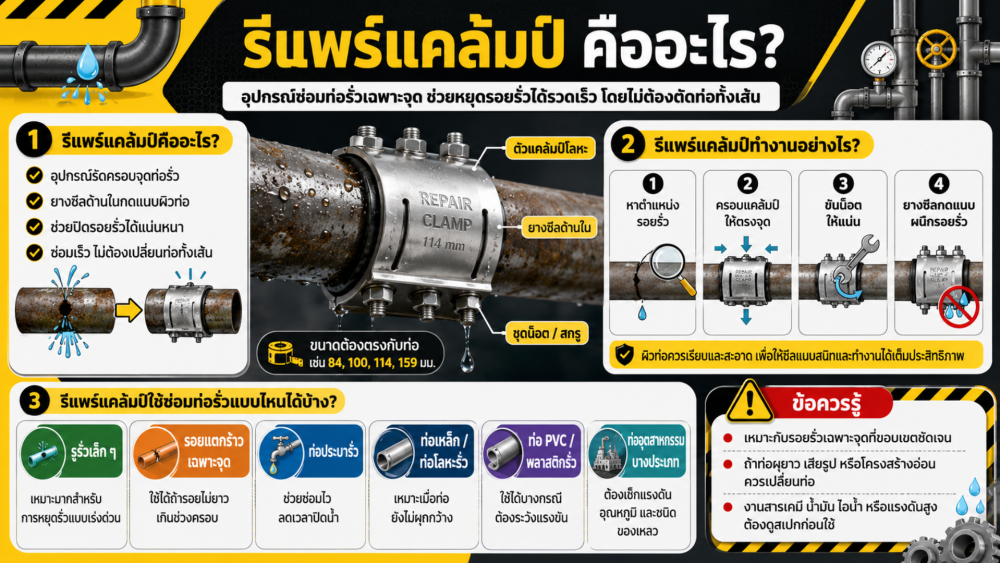
Repair clamps are suitable for localized pipe leak repairs; choosing the right one and installing it well helps eliminate many problems.
Pipe Repair Clamps It is a device that solves the problem of localized pipe leaks, cracks, or punctures without having to dismantle or splice new pipes in many cases. The simple principle is clamping over the leak so that the inner rubber sheet presses tightly against the pipe surface, quickly and effectively stopping the water leakage.
This device is suitable for repairing water supply pipes, steel pipes, PVC pipes in certain cases, as well as plumbing systems in buildings and factories that require fast repairs, reduced downtime, and no wasted time replacing entire pipe sections. However, there are unsuitable situations, such as widespread pipe corrosion, long cracks, pipe deformation, or system pressure exceeding product specifications. In these cases, alternative repair methods or replacing the pipe entirely should be considered.
What makes a repair clamp perform well or poorly lies in selection and installation. You must thoroughly consider the pipe's outer diameter, clamp width, clamp material, rubber seal type, system pressure, and the actual condition of the leak on site. If everything matches, a repair clamp will clearly make pipe leak repairs faster, safer, and more cost-effective than dismantling and replacing in many situations.