


 EN
 ไทย


Customers Also Purchased
When a sprayer acts strangely, many people immediately think the machine is broken, especially with common symptoms like a clogged nozzle, no spray, weak pump, pressure drop, or unusually fast battery drain. But in reality, many problems don't start from machine failure, but from accumulated usage habits—such as not filtering water before filling the tank, improper cleaning, leaving chemical residues in the system, or charging at the wrong intervals, causing the battery to degrade unknowingly.
Why do sprayers cause problems so often when they seem like simple tools?
What many people overlook is that the problem doesn't come from the sprayer alone, but also from the liquid added to it—whether it's chemicals with sediment, incompletely dissolved liquid fertilizers, bio-fermented liquids containing organic debris, or even water from ponds or canals carrying sand, rust, or silt. When these enter the system, they clog small points first and gradually escalate into major issues.
Another point to understand is that the nozzle and pressure work directly in tandem. The nozzle determines the flow rate of the liquid under appropriate pressure. If the pressure is too high, the mist becomes too fine and drifts easily; if the pressure is too low, the droplets become too large, distribute unevenly, and reduce spraying efficiency.
A sprayer may look like a simple tool, but it actually operates as a fluid passage system that must remain clean and continuous from the tank, suction filter, tubes, pump, valves, delivery hose, and spray wand all the way to the tiny nozzle orifice. If any single point gets dirty, clogged, or unbalanced in pressure, symptoms show up immediately at the output—such as poor atomization, one-sided spray, weak discharge, or the pump working harder than normal.
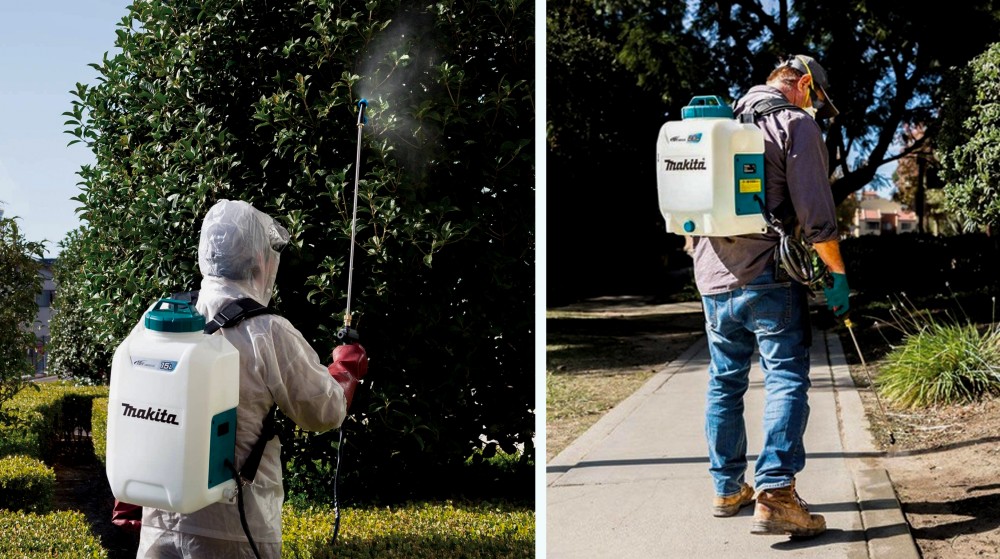
Problem 1: Clogged nozzle, no spray, poor atomization
A clogged nozzle is the most common problem, especially with chemical sprayers used alternately with different types of chemicals. Clogging doesn't just happen at the nozzle orifice; it can occur anywhere from the tank strainer and hose filter to the spray lance and the nozzle tip itself. Symptoms that indicate a clogged nozzle include spraying to one side, uneven mist, spraying in a stream instead of a fine mist, or the pump running while almost no chemical comes out. The main causes are unclean water, chemicals not fully dissolved, leaving liquid in the sprayer after use, or not thoroughly flushing the entire system.
For a preliminary check, remove the nozzle and spray with clean water. If the water flows strongly, the problem lies in the nozzle or the filter near the nozzle. However, if the flow is still weak, trace back to inspect the tank filter, suction hose, or pump. Disassemble and clean with clean water and a soft brush. Never use wire or needles to poke the nozzle hole, as this can deform the orifice and cause uneven spraying in the long run.
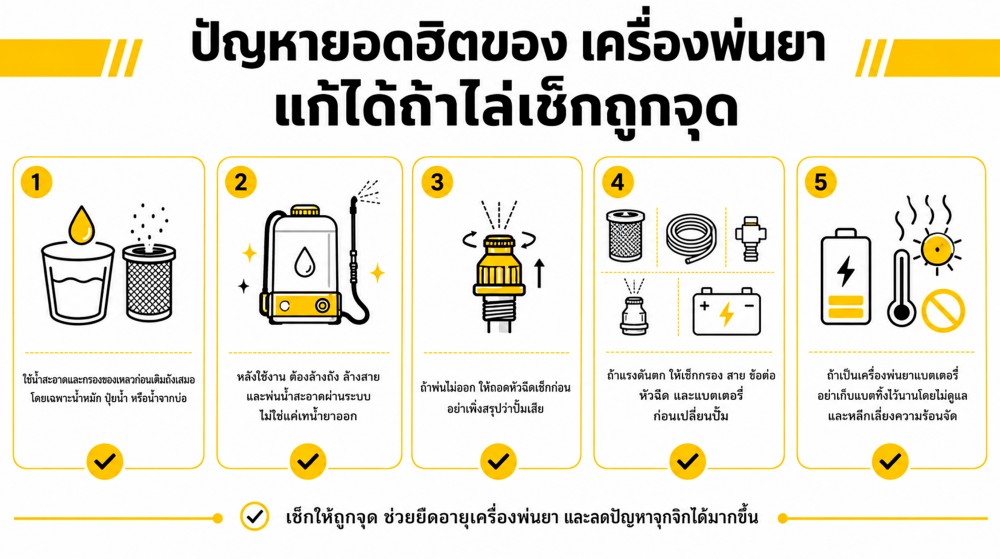
You can prevent this from the start by filtering water before filling the tank every time, and spraying clean water through the system after use to flush out chemical residues—not just dumping leftover liquid out of the tank before storage. In addition, nozzles used for a long time may wear out and enlarge, dispensing more chemical than necessary. If the flow rate is significantly off, replace it with a new nozzle instead of forcing continued use.
Problem 2: Weak pump, pressure drop, not spraying as far as before
A pressure drop doesn't always mean the pump is broken. Sometimes a clogged nozzle causes erratic pump operation, a clogged tank filter prevents sufficient chemical flow into the pump, or kinked hoses, leaking hoses, and loose fittings can cause pressure loss before reaching the nozzle tip.
Check the fluid pathway before blaming the pump by following this sequence: Is there enough liquid in the tank? Is the filter clogged? Is the suction hose detached or leaking? Are fittings tightened? Is the nozzle clogged or worn? Then try spraying with clean water. If pressure is still low, proceed to check the pump and the electrical system.
Another point many overlook is using the wrong type of nozzle. If the nozzle orifice is too large, the pump cannot build sufficient end pressure fast enough, resulting in high volume output but low reach. If the hole is too small, the pump suffers from excessive backpressure, working too hard and deteriorating rapidly. You should not only check "is it spraying forcefully?", but also whether the mist is consistent and whether the machine is being overloaded.
Signs that the pump may be starting to degrade include abnormal pump noise, slow pressure build-up, inconsistent spray, or water leaks around the pump body. At this stage, you may need to consider replacing spare parts or the pump assembly, depending on the model and overall condition.
Problem 3: Fast-draining battery, won't charge, short runtime
A fast-draining battery does not always mean the battery is bad. It can be caused by a clogged nozzle forcing the pump to draw more power, a clogged filter making it harder for the pump to draw fluid, or using an unsuitable nozzle that overworks the pump unnecessarily.
To distinguish between a bad battery and excessive power draw, flush the system thoroughly, fill it with plain water, and test it. If runtime improves after flushing the system, part of the issue stems from fluid restrictions, not solely the battery. But if the battery still drains very quickly after everything has been cleaned, inspect the battery, charger, and wiring further.
Habits that cause rapid battery degradation include draining the battery completely before recharging, storing the sprayer for long periods without charging, charging in hot environments, or storing the unit under direct sunlight and inside hot vehicles. If left unused for a long time, periodically charge and maintain the battery according to the model's manual.
What many forget are the battery terminals and wiring. If the terminals are loose or oxidized, the machine may show signs of a weak battery even when the battery itself is fine. If the unit turns on and off intermittently or symptoms change when moving the wire, check the connection points before rushing to buy a new battery.
Troubleshooting sprayer symptoms by cause: Is the problem with the nozzle, pump, or battery?
When troubleshooting a chemical sprayer, do not randomly replace spare parts because many symptoms are very similar. For example, a weak spray could be caused by a clogged nozzle, weak pump, low battery, clogged filter, or hose leak. A more accurate method is to troubleshoot from easy to hard, from the nozzle end back to the source, and always test with clean water first.
The recommended troubleshooting order: If the pump runs but no water comes out, remove the nozzle first. If water flows well with it off, the problem is in the nozzle or nearby filter. If flow is still weak without the nozzle, check back to the tank filter, hoses, and pump. If the pump runs abnormally quiet or slow, inspect the battery and electrical system. If the pump runs strongly but pressure at the tip is lost, look for leaking hoses or loose fittings. Keep these guidelines in mind for basic checks.
- Pump runs, but no water comes out → Clogged nozzle, clogged filter, blocked hose, or air trapped in the system
- Water flows, but doesn't mist → Worn or dirty nozzle, incorrect pressure, or wrong nozzle type
- Weak pump, fast battery drain → Degraded battery, insufficient power, or clogged system causing pump overload
- Sprays strong at first then drops → Clogged filter, slow fluid intake, battery voltage drop, or failing pump
- Water leaking from joints → O-rings, seals, fittings, or hoses are degraded
Testing with clean water is very important because it reduces the risk of chemical residues and allows you to see the actual symptoms of the system without chemical stains interfering. Once the test is complete, drain the water, clean it thoroughly, and store the machine so it is ready for the next use.
How to clean a sprayer after use for long-lasting durability?
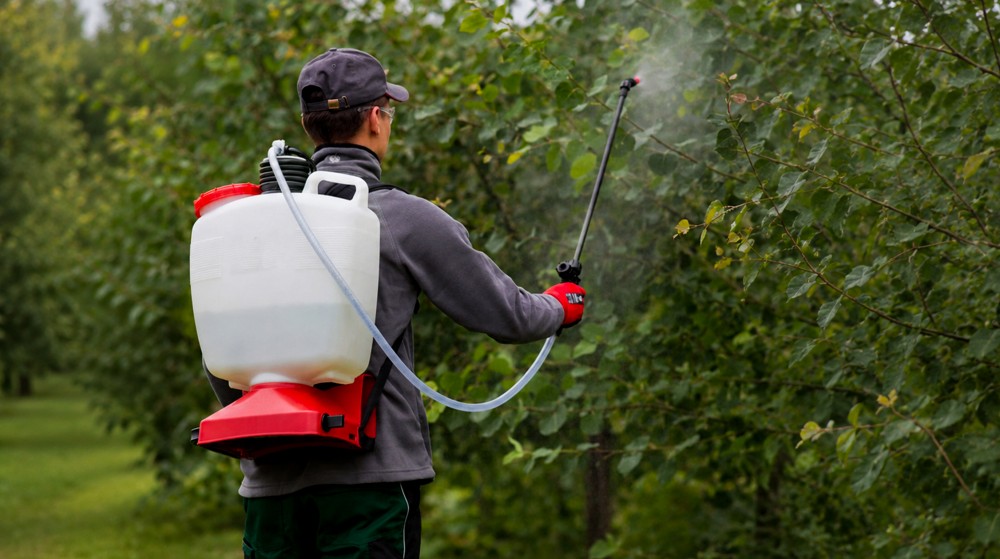
After using a sprayer, many people just pour out the remaining liquid and think they're done. In reality, residual liquid remains in the hoses, pump, valves, and nozzles. If left unattended, the liquid will gradually dry into sticky residues, powder, or tiny crystals, causing clogs the next time it's used.
Basic maintenance involves rinsing the tank with clean water, filling it with clean water, and running the sprayer to flush the system until the expelled water runs clear. Next, remove the nozzle and small filters to clean separately. Wipe or air dry as appropriate, then store in a shaded area away from direct sunlight and heat, ensuring hoses are not bent or kinked.
If used with residue-heavy liquids such as liquid fertilizers, fermented bio-extracts, or suspended powders, it is crucial to rinse immediately after use—do not leave it overnight, as residues will dry and become much harder to clean. A consistently rinsed sprayer is less prone to clogged nozzles, puts less strain on the pump, avoids excessive battery draw, and better extends the life of spare parts.
Safety considerations not to be overlooked when troubleshooting a sprayer
Although this article focuses on fixing clogged nozzles, weak pumps, and fast-draining batteries, it must be emphasized that if the sprayer has been used with chemicals, always beware of chemical residues before disassembling, cleaning, or repairing. Do not smell it, do not blow with your mouth, do not touch unknown residues with bare hands, and always read the product label—especially regarding personal protective equipment (PPE), safety distances, equipment cleaning methods, and disposal of leftover chemicals.
When operating a sprayer, pressure and droplet size directly affect safety, as fine mist can easily drift off-target, especially on windy days. Sprayer technical resources state that high pressure increases drift risk, while excessively low pressure results in poor spray patterns and uneven coverage. Therefore, select the appropriate pressure, nozzle, and spraying technique for the job rather than simply running at maximum power every time.
For general users operating a sprayer in a home or small garden, keep sprayers used for chemicals separate from those used for water or mild fertilizers; avoid interchanging them without thorough cleaning. Do not store the sprayer near children, pets, food, or drinking water sources, as invisible residues may still pose significant health risks.
Select Agriculture Spray Machine here