


 EN
 ไทย


Customers Also Purchased


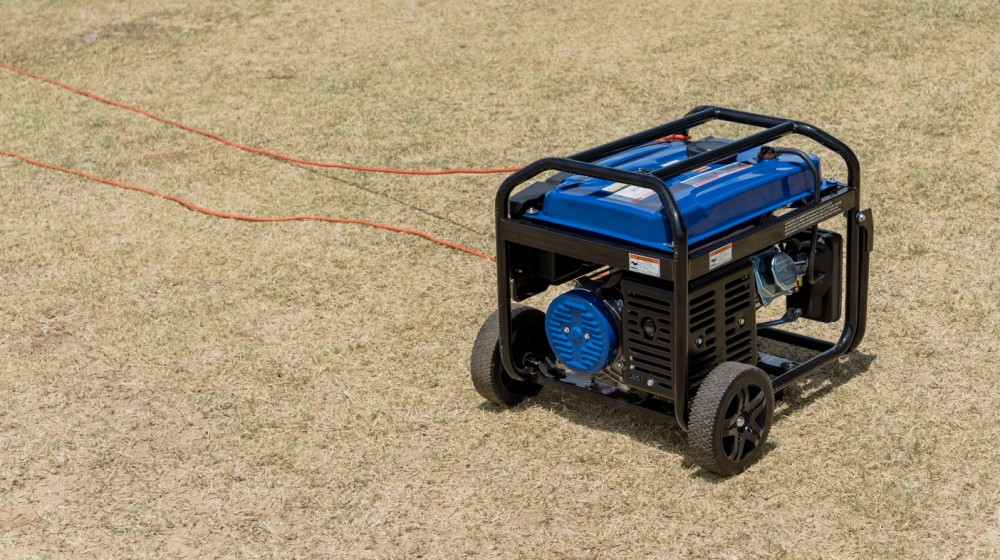
Placing a generator in the wrong spot can lead to a silent threat. To put it simply and directly: A generator must be placed OUTDOORS, at least 6 meters (20 feet) away from the house, and the exhaust must always be pointed away from the building! This is an international safety standard set by organizations like the CPSC and CDC. The real danger of a generator isn't noise or heat, but carbon monoxide—an invisible, odorless silent killer that can be fatal!
Many make the mistake of thinking that simply placing it Generators outdoors is enough. But if you place it against a wall, under eaves, in front of a door, near a window, or right by an air vent... massive amounts of exhaust fumes can roll right back into the house at any time! In this article, we'll clearly map out which spots are safe to place it, which spots are strictly prohibited, and what else you need to watch out for beyond just distance.
Why must generators never be placed close to the house?
A silent threat during power outages! Debunking the myth that opening windows vents exhaust: A generator is just like an engine—it undergoes combustion and constantly emits exhaust fumes. The scary part is that we usually run it during blackouts, when people inside often keep rooms closed or are asleep without noticing changes in the air around them.
- The shadowless killer: Carbon Monoxide (CO). This toxic gas is insidious because it is "colorless and odorless"—you won't even realize you're breathing it in! If a generator is placed near windows, doors, or vents, the gas can drift in, accumulate inside the house, and strike those within completely off guard.
- A myth you must stop believing: "Leaving doors and windows open is safe enough." This is a critical hazard repeatedly warned about by safety agencies! Never start a generator inside a house, garage, or semi-enclosed space. No matter how wide you open the windows, the gases cannot vent fast enough, and often the wind will blow the exhaust fumes back into the house even worse!
Exhaust fumes are invisible—do not trust your eyes and nose. You must place the generator outdoors only!
The safe distance to remember for a generator: at least 6 meters or 20 feet
The 6-meter golden rule: the minimum safe distance that is absolutely non-negotiable! According to international standards, a generator must be placed at least 6 meters away from the house (never place it on a balcony or in a garage!). If you can't picture it, 6 meters is roughly a little more than the length of 1 pickup truck, or about 8–10 long strides (though extending the distance even further is safest).
A critical mistake people often make: Many people use a tape measure to measure 6 meters from the wall and call it a day... but then they point the exhaust pipe directly toward an open window or ventilation vent. In that scenario, toxic gases will still smoke you out!
Placement: Toxic gases don't care about walls; they drift with the air! Therefore, besides keeping a 6-meter distance, you must always check the wind direction and point the exhaust pipe away from the house and ventilation vents!
Is placing the generator 6 meters away enough?
The answer is: not quite yet, you also need to check the wind direction. A distance of 6 meters is a great starting point, but it doesn't mean you're safe in every situation, because the wind can blow exhaust fumes back into the house—especially in houses with air vents, louvered windows, kitchen doors, attic vents, or areas where wind swirls near the building.
A NIST study found that a generator located about 15 feet (around 4.6 meters) from an open window might still not be far enough in certain wind conditions, and some wind directions can cause more CO to flow into the house. Therefore, a distance of 20 feet (about 6 meters) is the minimum distance you should stick to, and wind direction should always be considered alongside it.
The simple principle is to point the exhaust pipe away from the house, away from doors, away from windows, and away from neighboring houses. If the machine is set up and the wind blows exhaust back toward the house, you should relocate it, even if the distance appears to reach 6 meters. True safety doesn't depend on distance alone, but also on the “path the exhaust travels.”
Places where you should never place a generator, even if they seem outdoor
Think placing a generator outdoors is automatically safe? Quick-check whether you've inadvertently placed it in any of these stagnant zones!
❌ Balconies / Beside doorways / Near windows
❌ Bathroom vents / Ventilation openings
❌ Under awnings / Under eaves / Building crevices
❌ Storage sheds / Under stairs
Safety Warning! The garage is a trap! Don't think setting it in the garage with the door open will save you! The wind cannot blow the exhaust out in time, and toxic gases will instantly seep through door gaps to accumulate in your home. Never do this! To keep it simple: place it only outdoors, in an open area, at least 6 meters away from the house! Once a safe space is prepared, the next step for anyone eyeing a new unit is... How to calculate the load before buying a generator: where should you start? Let's look at simple math to get the exact right specs for your machine.
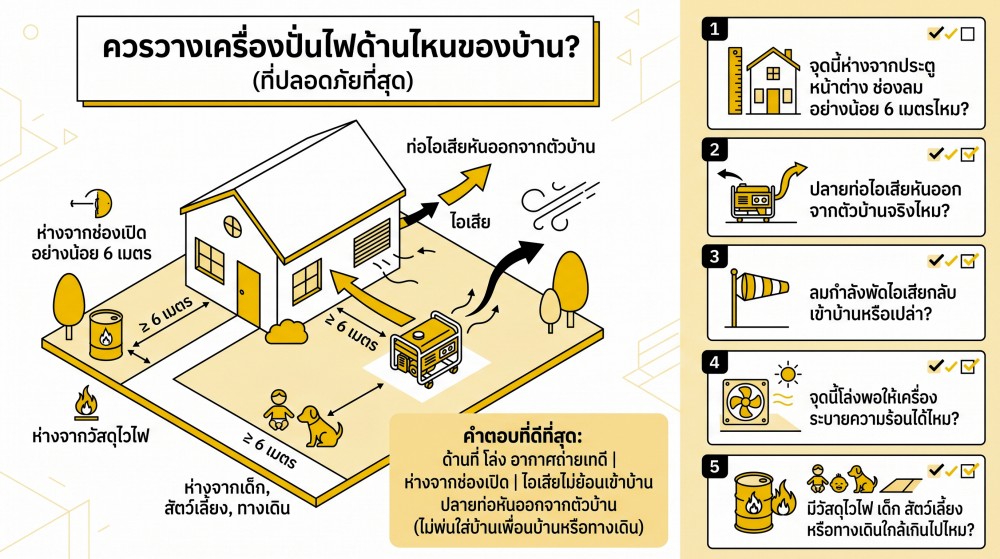
Clear-cut solutions for on-site issues: townhomes, noise, power cords, and neighbors!
Beyond the 6-meter distance rule, real-world sites have several other factors to watch out for. Here is a safety checklist you must not overlook.
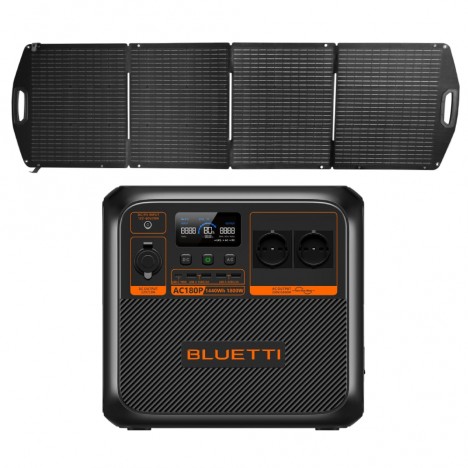
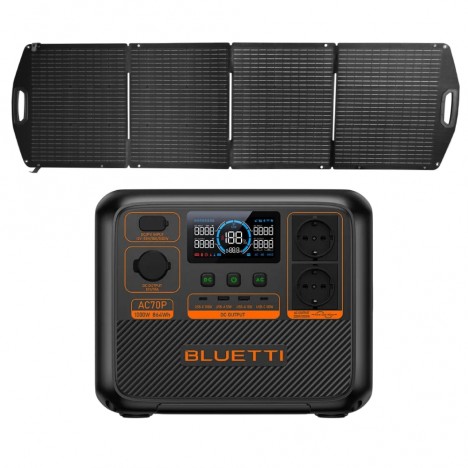
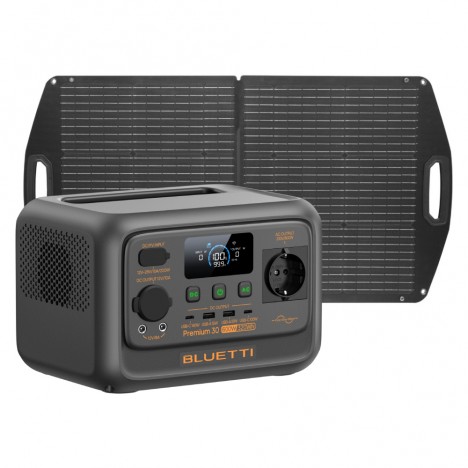
- Townhomes / narrow spaces: placing it in a "side alleyway" is a disaster! Because air doesn't circulate, exhaust fumes will swirl between walls. If you truly cannot find an open space at least 6 meters away, we recommend switching to a backup battery (Power Station / UPS) instead to eliminate the exhaust issue entirely.
- The Golden Rule for Neighbors: Never point the exhaust pipe toward a neighboring house's windows under any circumstances! Safety must encompass the entire community, not just keeping power running in your own home.
- Watch out for heat & fire hazards: An operating generator gets extremely hot. Never place it on dry grass or near piles of paper / fuel cans. And "never refuel while the engine is running or still hot"—always shut off the engine and let it cool down first.
- Regarding echo and noise: Placing it against a wall or in a corner will only make the noise amplify! However, never attempt to solve the issue by covering it with a solid box or placing it inside a storage room (risk of fire and CO accumulation). If noise is a concern, opt to buy a soundproof Inverter model instead.
- Running electrical cords: Extension cords must be heavy-duty and rated strictly for outdoor use. Fully unwind the cord (do not leave it coiled up). And "never plug a generator directly into a home wall outlet (Backfeeding)" as it is life-threatening; it must only be connected via a Transfer Switch.
- Lifesaving tool: You should always install a Carbon Monoxide Detector (CO Detector) near bedrooms. If the alarm sounds, evacuate the house immediately—never assume it's just a malfunction!
Conclusion
Always remember that the 6-meter safety distance is just the starting point, because on the actual job site you must also assess wind direction, ventilation openings, and neighboring houses to close any gaps preventing toxic carbon monoxide gas from reversing back into the house. Before pulling the recoil starter on a generator next time, we urge technicians and users to memorize this 4-point checklist by heart.
- Outdoors only: Must be an open, genuinely well-ventilated area.
- At least 6 meters away: Back away from any home openings (doors / windows / vents).
- Point exhaust away from the house: Check wind direction and always point the exhaust pipe to blow toxic gases away.
- Don't trust windows: Leaving doors or windows open won't help ventilate the gas fast enough!
Select Generators More