


 EN
 ไทย


Customers Also Purchased
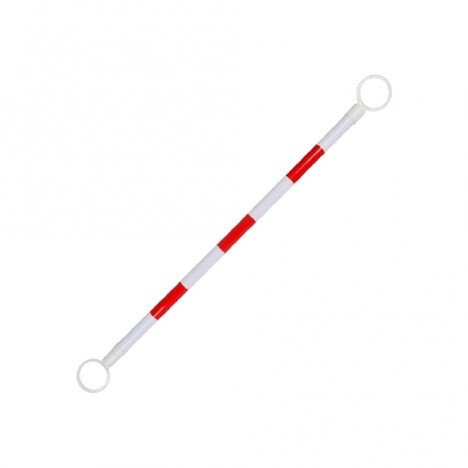
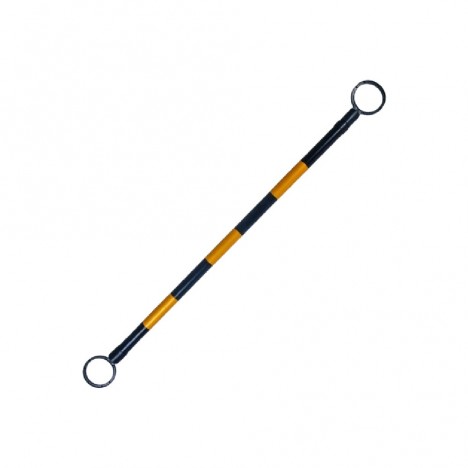
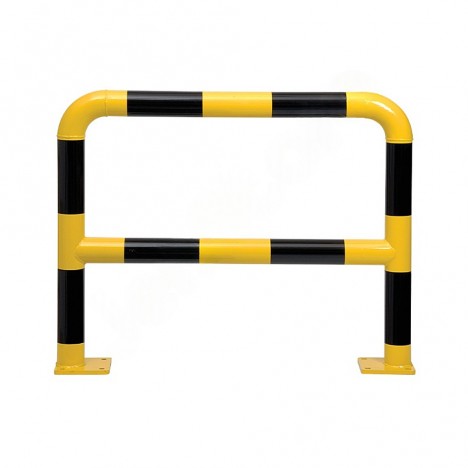
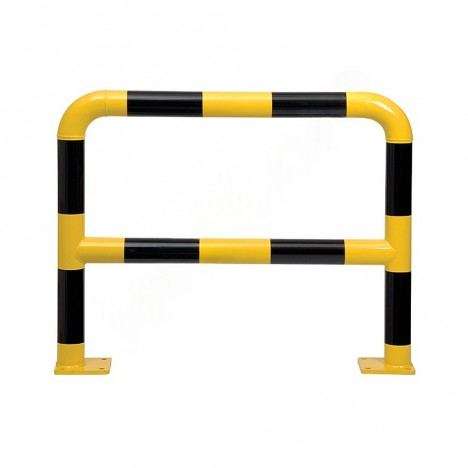
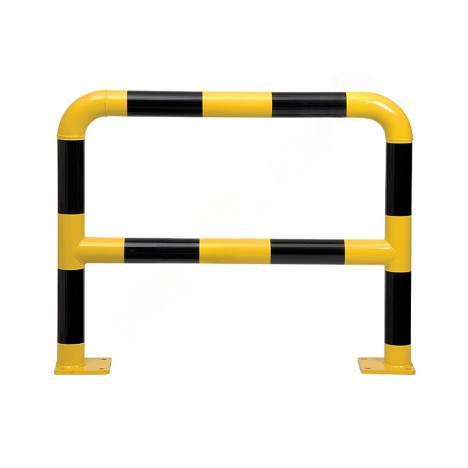
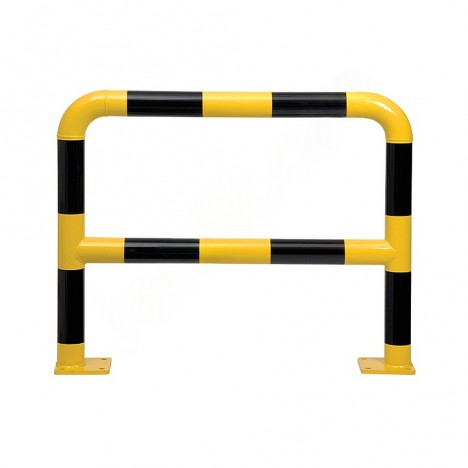
When it comes to Traffic Barriers Many people might think of the orange and white blocks lined up along roads, in front of construction sites, or at traffic diversions. In reality, barriers do not come in just one type and do not exist merely to "block off an area." On real job sites, barriers are essential equipment that help demarcate boundaries, control traffic flow, reduce accident risks, and help drivers, pedestrians, and workers see boundary lines more clearly.
A common problem is that many people choose barriers based on price, color, or a size that looks right for the space, without considering whether they suit the actual working conditions. Examples include using plastic barriers in high-speed traffic areas, using concrete barriers for jobs requiring frequent relocation, or using lightweight barricades in areas subject to truck impacts. Choosing the wrong type can lead to extra expenses, wasted installation time, and most importantly, inadequate risk protection.
Generally, barriers can be categorized into various types based on material and application, such as water- or sand-filled plastic barriers, concrete barriers, steel barriers, corrugated steel guardrails, box beams, cable barriers, and other designs. For instance, the Department of Highways' road asset manual classifies guardrail equipment into concrete barriers, corrugated steel, cable barriers, box beams, and others, reflecting that road and safety barriers come in various types tailored to the actual risk levels and site conditions.
What Are Barriers? Why Are They More Important Than Just "Space Dividers"?
Barriers are equipment used to block, demarcate, guide traffic, or prevent vehicles, people, or objects from entering unauthorized areas. They are commonly used in traffic management, construction, road repairs, industrial plants, parking lots, warehouses, office buildings, and various public areas.
The primary role of barriers is not just to signal "No Entry," but also to establish order in an area—such as creating temporary traffic lanes, setting up construction boundaries, keeping vehicles out of hazard zones, designating pedestrian walkways, cordoning off loading docks, or mitigating crash severity in certain collision scenarios, especially in road and traffic applications where guiding visual aids must be clearly visible day and night.
The key point is that each type of barrier differs in strength, weight, portability, and job suitability. Some are suited for temporary use, some for permanent installation; some merely indicate boundaries, while others are engineered to absorb impacts or deflect vehicles in high-risk zones. Therefore, before purchasing or deploying them, you should fully evaluate the "application area, risk level, installation duration, and ease of relocation."
How Many Types of Barriers Are There? Classified by Material and Actual Use
To categorize them simply based on what is commonly found in the market and on job sites, barriers can mainly be divided into about 6 groups: plastic barriers, concrete barriers, steel barriers or guardrails, rubber barriers, traffic barricades, and specialized barriers such as roller barriers or crash cushions. Each type has distinct strengths, limitations, and specific application areas.
1. Plastic Barriers or Water-/Sand-Filled Barriers
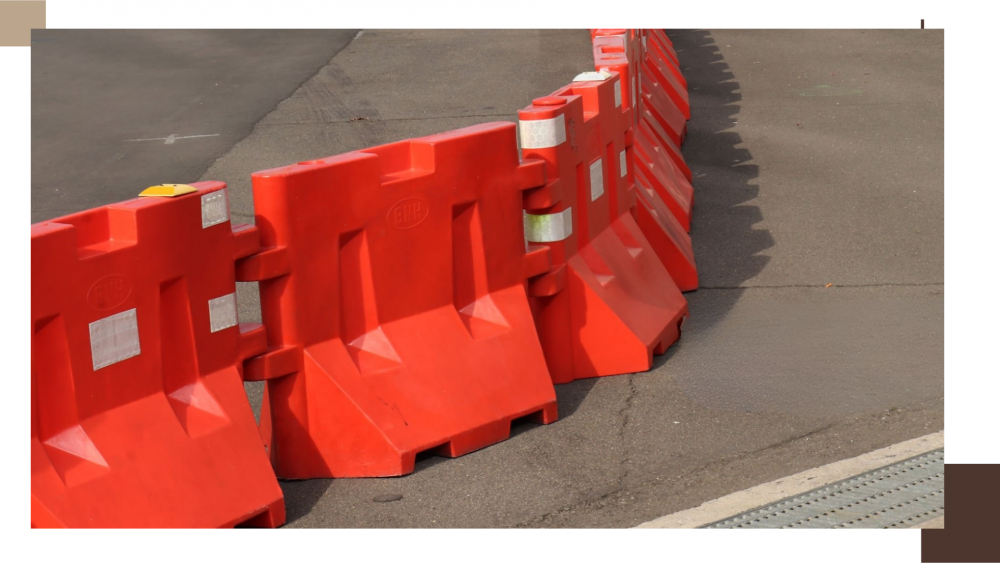
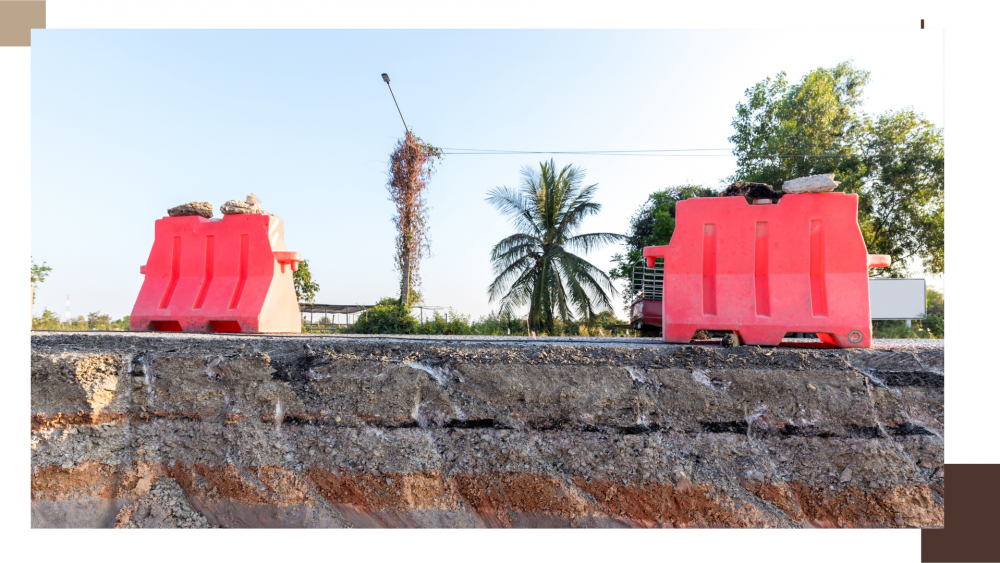
Plastic barriers are the type most familiar to the general public. They are often orange, red, yellow, or red-and-white, arranged along roads, in front of job sites, maintenance areas, or zones requiring temporary closure. Their key advantage is being lightweight when not yet filled with water or sand, making them easy to transport, quick to install, and convenient to reposition. Once filled with water or sand inside, their weight increases, allowing them to stand firmly in place.
They are typically manufactured from sun- and rain-resistant plastics such as HDPE or high-quality plastic materials. Some sources state that plastic barriers can be filled with water or sand to increase stability, and some models are designed to interlock in curved or angled configurations, making them ideal for tasks requiring frequent site layout adjustments.
Plastic barriers are particularly suitable for applications such as temporary construction, short-term road repairs, entry/exit detour points, outdoor events, temporary parking lots, factory areas needing occasional zoning, or areas where clear demarcations are needed without requiring high impact protection like concrete barriers.
The advantages of plastic barriers are that they are generally more affordable, easy to move, require less labor to install, and cause less ground damage compared to heavy barriers. However, the limitation is that they are not suitable for areas with very high vehicle speeds or points subjected to severe impact forces, as even when filled with water or sand, they do not provide the same level of impact protection as concrete barriers or road standard guardrail systems.
In brief, if your job is temporary, requires frequent relocation, prioritizes high visibility, and the area does not involve high vehicle speeds, plastic barriers are a very cost-effective and flexible choice. But if it is an area with high crash risks or requires permanent installation, stronger options should be considered.
2. Concrete Barriers
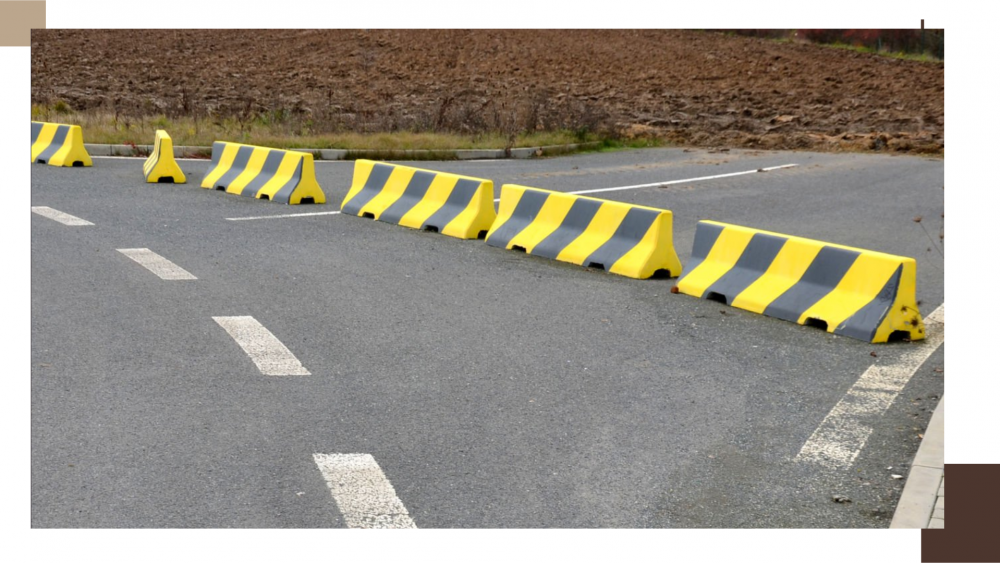
Concrete barriers offer high strength and substantial weight, making them popular for roadwork, highways, bridges, expressways, median strips, long-term construction areas, or zones requiring a much sturdier boundary than plastic barriers. Concrete barriers are typically used to divide traffic lanes, line road shoulders, prevent vehicles from veering off course, or block areas to prevent easy vehicular access.
The key strengths of concrete barriers are high durability, resistance to sun and rain, long service life, and heavy weight that prevents easy displacement. On the other hand, heavy machinery is required for lifting, placing, and moving them, making them unsuitable for jobs requiring frequent repositioning or cramped spaces where machinery cannot easily access.
Generally, concrete road barriers come in various profiles, such as single-slope bases for roadsides and double-sided profiles for medians or lane separation. Some product data in Thailand show sample dimensions for a Type 1 concrete barrier with a length of approx. 2 meters, height of approx. 0.81 meters, and weighing over 1 ton per piece, reflecting that this equipment must be handled with appropriate machinery rather than manual human labor.
Concrete barriers are suitable for applications requiring stability and continuous use, such as long-term detours, road construction projects, roadside barriers, areas near steep slopes, permanent lane divisions, sections preventing vehicles from crossing over, or areas with risks from heavy vehicles.
However, a word of caution: concrete barriers cannot just be placed anywhere due to their heavy weight, which may exceed floor load capacities on thin pavements or certain building slabs. Furthermore, layout planning must take into account sightlines, detour clearances, end treatment distances, and the safety of road users. For actual roadwork, standard drawings should be referenced or traffic engineering specialists consulted.
In simple terms, if you need a durable barrier for long-term use that does not require frequent moving in high-risk areas, concrete barriers are more suitable than plastic ones—though at the expense of higher transportation, installation, and storage costs.
3. Steel Barriers and Steel Guardrails
Steel barriers or corrugated steel guardrails are commonly seen along roads, curves, shoulders, bridges, ramps, mountain descents, or areas where vehicles must be prevented from running off the road. The primary material is usually galvanized steel or rust-protected steel to withstand outdoor weather conditions.
The advantage of steel guardrails is that they offer more flexibility than concrete in certain aspects, helping to absorb impact forces and redirect vehicles according to design specifications. They are suitable for road applications requiring roadside containment systems rather than basic perimeter barricades. Highway manuals and documentation often classify corrugated steel guardrails as a key type of road barrier or safety barrier equipment.
Steel guardrails are ideal for areas where there is a risk of vehicles running off the lane, such as curves, grade separations, canal edges, road shoulders, bridges, or areas where utility poles, signs, trees, or hazardous obstacles are located close to the road surface. However, they are not suitable for temporary, movable barricading, as they require post anchoring, continuous alignment installation, and consideration of engineering design clearances.
To make a simple comparison: plastic barriers are for "organizing and guiding lanes," concrete barriers are for "heavy, stable barricading," while steel guardrails are designed to "protect road perimeters and mitigate run-off-road risks."
4. Rubber Barriers
Rubber barriers or wheel stops are commonly used in parking lots, office buildings, warehouses, factories, shopping malls, condominiums, or areas where controlling vehicle positioning is needed rather than cordoning off large areas. Common examples include wheel stops, curb guards, speed humps, and column corner guards.
Although rubber barriers do not function like large road barriers, they play an essential role in low-speed vehicle control areas, such as preventing vehicles from parking beyond the stall, reducing the risk of collisions with walls, columns, or warehouse equipment. Their highlights are being more flexible than steel and concrete, easy to install, not causing severe damage to vehicles upon minor impacts, and being suitable for areas requiring tidiness.
Applications suitable for rubber barriers include indoor parking lots, outdoor parking areas, loading docks, truck parking bays, indoor ramps, warehouse front areas, or locations where impact force between vehicles and building structures needs to be minimized.
The limitation is that they are not suitable for use as barriers on high-speed roads and should not be used in place of traffic barriers in high-risk accident areas. The primary function of wheel stops or rubber bumper guards is to help control positioning and reduce damage from low-speed impacts, not to absorb severe collision forces.
5. Traffic Barricades or Steel Barricades
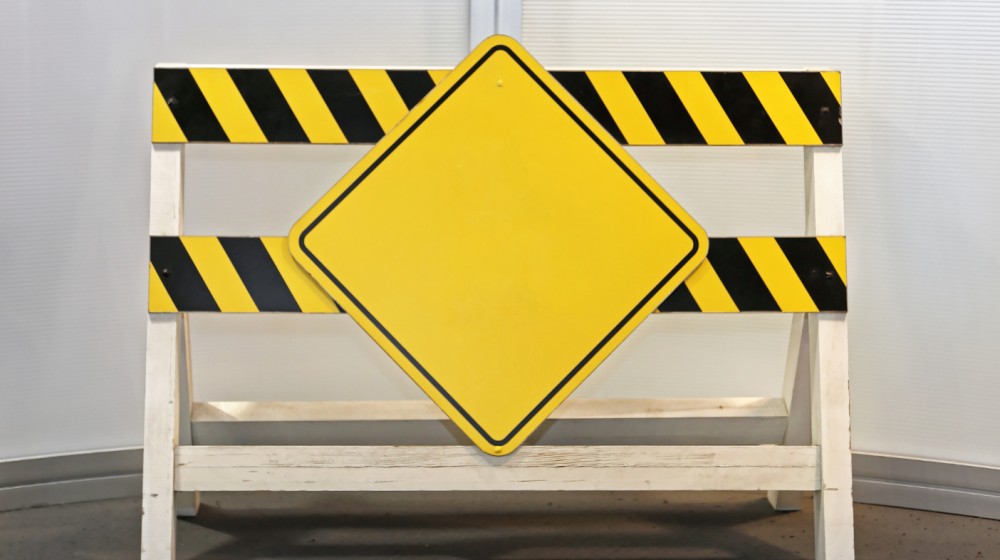
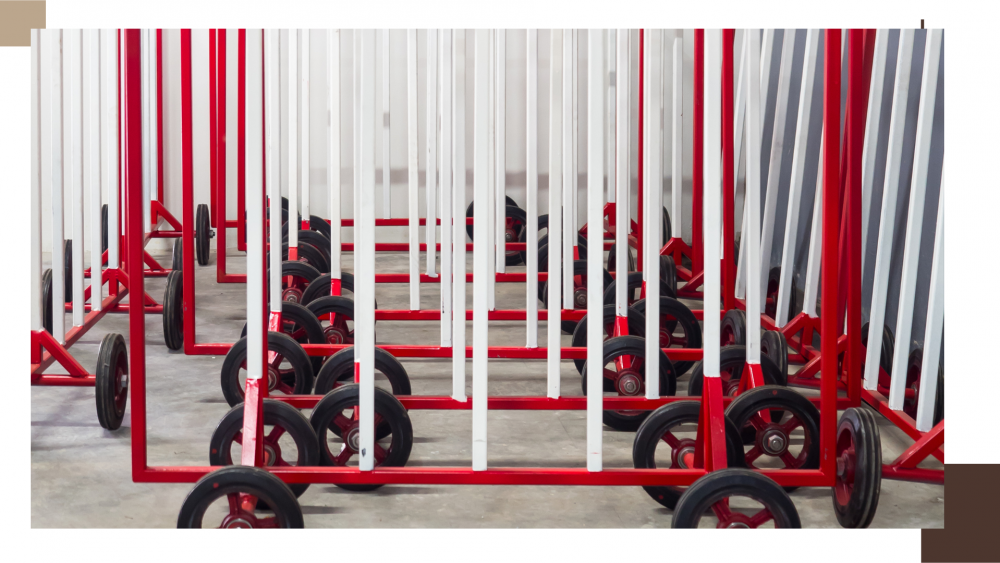
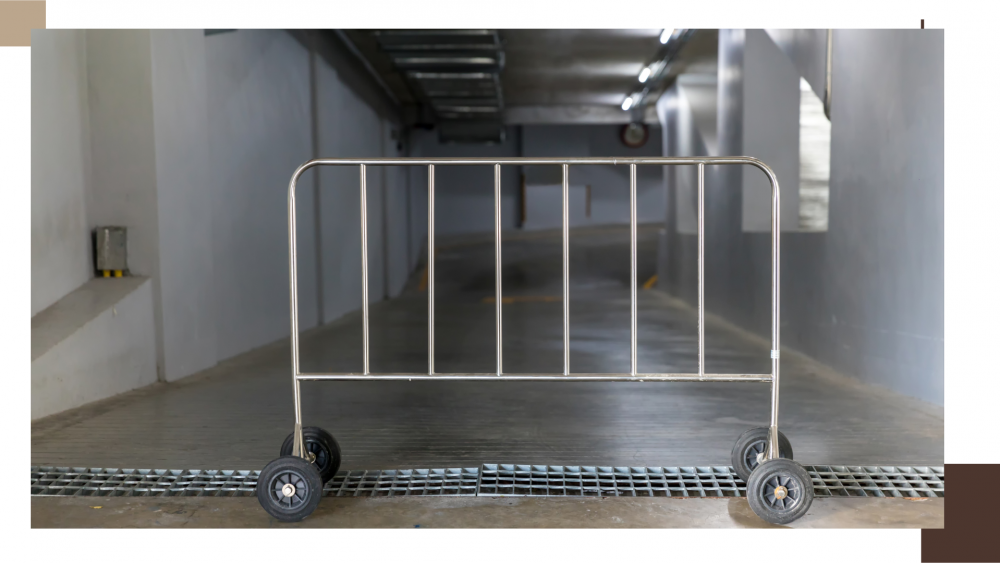
Traffic barricades are commonly found at events, festivals, construction sites, maintenance work, crowd control, or areas requiring pedestrian lane separation. Their key strengths are being easy to move, quick to connect in series, manually portable, and suitable for temporary demarcation that does not need to withstand direct vehicular impacts.
Traffic barricades are often used for organization rather than collision protection, such as cordoning off walkways at events, restricted areas, stage perimeters, small maintenance zones, temporary entrances and exits, or used alongside traffic cones and warning signs to make boundaries clearer to see.
The advantage is a relatively low unit cost compared to heavy-duty barriers, stackable storage, fast relocation, and a neat appearance. However, the limitation is lower stability than water-filled plastic barriers and concrete barriers. If used outdoors in windy or densely crowded areas, choose a model with a stable base or a interlocking mechanism to prevent tipping over easily.
Traffic barricades are therefore more suitable for "pedestrian control" than "vehicular control." If it is an area where vehicles might crash or sideswipe, other appropriately designed barriers should be used instead.
6. Specialized Barriers (e.g., Roller Barriers, Cable Barriers, and Crash Cushions)
In addition to general barriers, there are specialized barriers used for roads or specific risk points, such as roller barriers, cable barrier systems, and crash cushions. These are often used in areas requiring dedicated safety systems, such as highway junctions, dangerous curves, concrete wall terminals, expressway ramps, or locations with a high risk of direct collisions.
International road safety barrier resources often categorize safety barrier systems by structural rigidity, such as rigid barriers, semi-rigid barriers, and flexible barriers, with examples including concrete, steel, cable, water-filled barriers, and crash cushion systems. This concept helps one understand that barriers are not chosen solely by material, but also by how the system is designed to absorb, dissipate, or redirect vehicle impact forces.
For general applications, these specialized barriers may not be necessary. However, for road projects, highways, ramps, intersections, or areas exposed to high-speed vehicle risks, a road safety engineer or specialist should assess the setup, as an incorrect selection might not adequately mitigate the risks.
Which Barrier to Choose? Consider These 5 Factors Before Buying
Choosing the right barrier for the job should not start with "Which one is the cheapest?" but rather with "What needs to be cordoned off on-site, from what, and for how long?" A good barrier should not merely stand in place; it must truly address the risks of that specific area.
1. Is it for pedestrians or vehicles?
If used to direct people—such as at events, restricted areas, temporary walkways, or queuing points—traffic barricades may suffice, as their main role is to define boundaries and guide pedestrian flow. However, if used for vehicles, even at low speeds, you should consider water-filled plastic barriers, rubber wheel stops, or more stable devices.
If it is an area where vehicles may travel at high speeds or where severe collisions could occur, such as main roads, construction detours, curves, or shoulders, lightweight barricades should not be used as substitutes for proper safety devices; they may only aid in visibility without the ability to absorb impact or redirect vehicles.
2. Temporary or Permanent Application?
For temporary jobs—such as road repairs lasting a few days, short-term construction cordoning, organizing events, or re-routing factory walkways—plastic barriers and traffic barricades often fit the bill better because they are easy to move and quick to install.
However, for long-term cordoning—such as major project detours, road medians, hazardous roadside areas, or permanent protective lines—concrete barriers or steel guardrails are more suitable because they offer greater strength and better durability for continuous use.
3. What vehicle speeds are involved in the area?
Vehicle speed is a critical variable. In parking lots, buildings, or warehouses where vehicles move slowly, wheel stops, rubber barriers, or plastic barriers may be used. However, on roads where vehicles travel at higher speeds, equipment with higher safety ratings must be considered, such as concrete barriers, guardrails, or specialized systems.
Simply put, the faster the traffic, the more attention must be paid to structural strength, anchoring, visibility, and installation standards. One should never rely on just a vague feeling that "putting up any barricade should be enough."
4. Do they need to be moved frequently?
If the site requires frequent repositioning—such as multi-phase construction work, daily maintenance, or event spaces—plastic barriers are much more convenient. When unfilled with water or sand, they can be relocated far more easily than concrete barriers.
Conversely, for locations requiring long-term placement without frequent adjustments, opting for concrete barriers can be more cost-effective over time since there is no worry about them shifting, blowing over in high winds, or easily deforming.
5. How much visibility is required?
For traffic applications, visibility is vital—especially at night, in rain, or in low-light environments. An effective barrier should feature prominent colors, be fitted with reflective tape, or be used alongside warning lights, cautionary signage, traffic cones, and light towers as appropriate.
Plastic barriers in orange, red/white, or yellow/black are generally easier to see than solid dull-colored materials. However, if concrete or steel barriers are used in nighttime conditions, they should be supplemented with reflective strips, warning paint, or additional signaling devices so drivers can spot the barrier line sooner.
Choosing barriers by actual site conditions: Which type is best?
For temporary roadworks—such as resurfacing, pipe laying, or short-term lane closures—we recommend water- or sand-filled plastic barriers paired with warning signs, traffic cones, and flashing lights, as they install quickly, are highly visible, and move easily. However, for detours lasting months or areas with fast-moving traffic, concrete barriers or sturdier systems should be considered.
On construction sites, plastic barriers are ideal for perimeter demarcation, blocking entry/exit points, or segregating vehicles from pedestrian zones. Still, in high-risk zones where heavy trucks frequent, heavy machinery operates, or adjacent to main thoroughfares, concrete barriers should be integrated as well.
In parking lots, condominiums, shopping malls, or office buildings, concrete barriers are not necessary everywhere, as they can be bulky and look overly heavy. More suitable options include wheel stops, column edge protectors, bollards, barricades, or compact plastic barriers to steer traffic flow and minimize low-speed collision damage.
In factories or warehouses, consider whether the barrier is meant for pedestrians, forklifts, or freight trucks. For pedestrian walkways, simple barricades or queue stanchions will suffice. However, in areas with frequent forklift traffic, more robust barriers are required—such as steel barriers, heavy-duty industrial rubber buffers, or floor-anchored safety barriers.
For events, festivals, or high-crowd areas, traffic barricades are ideal for crowd control because they are easy to relocate, interlocking, and not overly bulky. However, stability should be reinforced in areas prone to pushing or crushing, such as in front of stages, main entrances, or queue lines.
Common mistakes when selecting barriers
One of the most common mistakes is choosing barriers that are too light for high-risk zones—such as using lightweight traffic barricades beside fast-moving traffic, or deploying empty plastic barriers without water or sand ballast in windy areas. This can cause the barriers to blow over, shift, or fail to provide adequate risk reduction.
Another mistake is choosing barriers that are heavier than necessary, such as using concrete barriers where locations must be adjusted daily. The result is difficult operations requiring forklifts, adding unnecessary labor and time costs when plastic barriers would have been far more suitable.
Some worksites choose the right barriers but install them poorly—such as placing them too far apart, not aligning them clearly, lacking reflective tape, having no warning signs before the barricade line, or placing barriers behind a curve where drivers have late visibility—which greatly reduces their effectiveness.
Therefore, choosing a barrier isn't just about buying the right type, but also considering placement, visibility, and the behavior of people in the area.
Frequently Asked Questions About Barriers
Do plastic barriers need to be filled with water or sand?
If placed in areas requiring stability, water or sand should be added, as empty plastic barriers are lightweight and more prone to shifting or tipping over, especially outdoors, in windy areas, or near passing traffic. Filling with water is suitable for applications requiring later relocation, while filling with sand provides greater stability but is more difficult to transport and manage.
Are concrete barriers better than plastic barriers?
Not necessarily in every case; they suit different types of work. Concrete barriers are strong and ideal for permanent installations or high-risk areas, while plastic barriers are suited for temporary work, frequent relocation, and areas requiring mobility. Choosing based on actual job-site conditions is more cost-effective than deciding solely on strength.
Can barriers be used instead of traffic cones?
They can substitute in some cases, but not all. Traffic cones are suitable for guiding paths or light lane delineation, whereas barriers provide a clearer and more continuous barrier. For jobs requiring actual site cordoning, barriers are more appropriate, but for short-term path marking or locations needing rapid pack-up, traffic cones may be more convenient.
What color of barrier is suitable for traffic management?
Popular colors are orange, red/white, yellow/black, or colors that contrast with the environment, as they help provide high visibility. When used at night, they should include reflective tape or warning lights. Do not choose colors based solely on appearance; since barriers are safety equipment, visibility must come first.
How many types of barriers are there, and how do you choose the right one for the job?
Traffic Barriers There are many types, including plastic barriers, concrete barriers, steel barriers, rubber barriers, crowd control barricades, and specialized barriers. Each is designed for different purposes: some excel in mobility, some in strength, some are suitable for pedestrians, some for low-speed vehicles, and others for highway work requiring high safety standards.
If you need temporary use, frequent relocation, and high visibility, water- or sand-fillable plastic barriers are a great choice. If you need durability, long-term use, and high-risk protection, concrete barriers or guardrails are more appropriate. For parking lots or buildings, wheel stops and rubber barriers usually fit best. For events or crowd control, barricades are the easiest to use and most cost-effective.
The key is not to choose barriers based on price alone, but to consider the site characteristics, vehicle speeds, duration of use, frequency of relocation, and risk level of the job site. The right barrier not only keeps the area orderly but also reduces risk, improves safety, and allows operations to proceed with greater confidence.