


 EN
 ไทย


Customers Also Purchased
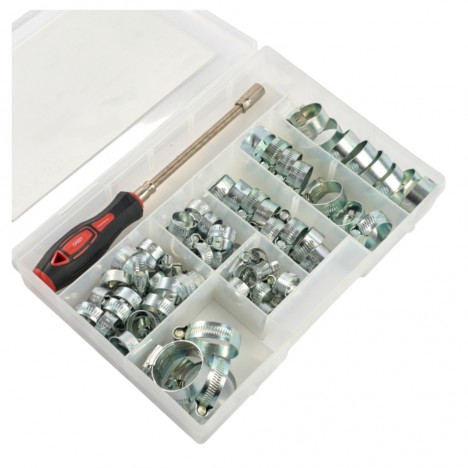
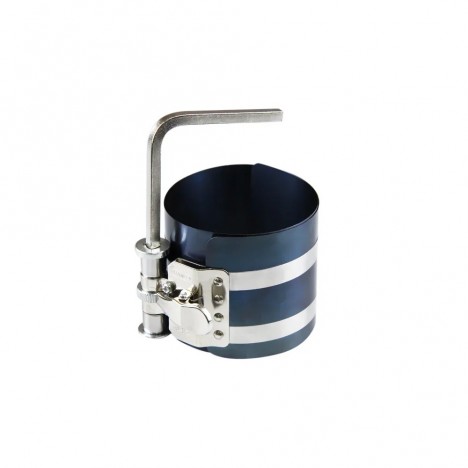
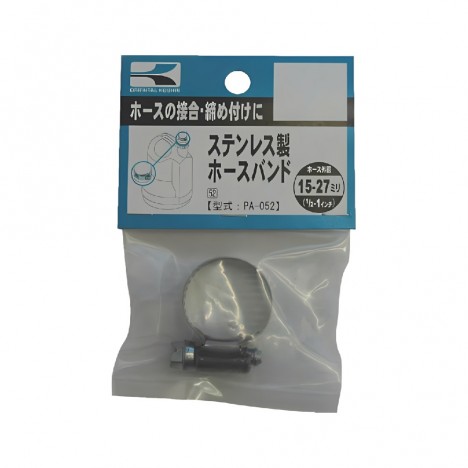
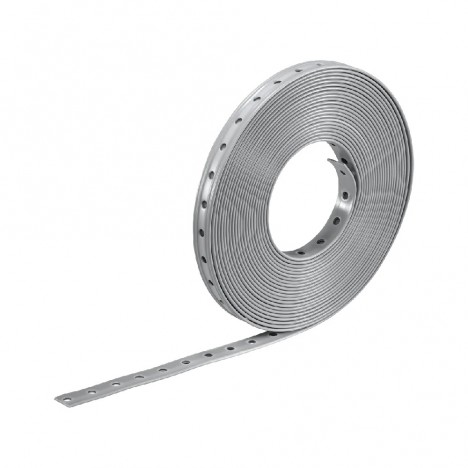
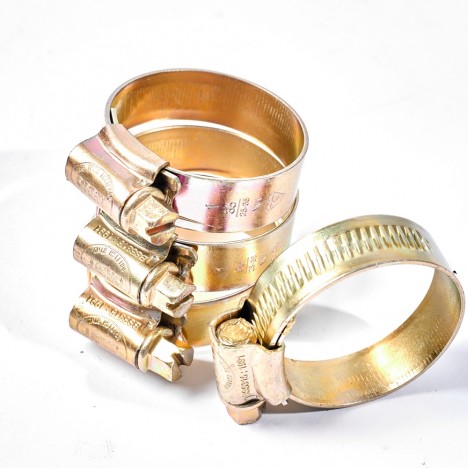
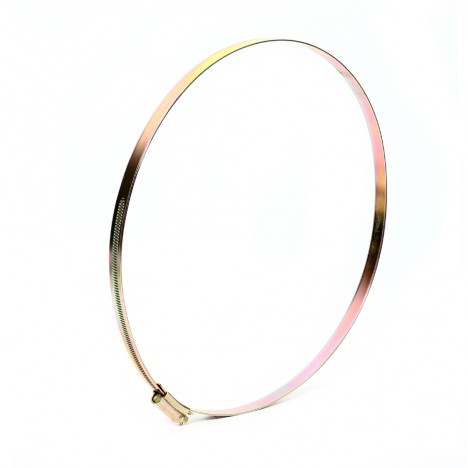
When you see Hose Clamps Most people think of hose clamps as small accessories that all look the same—just pick the right size, tighten it down, and you're done. But in real-world applications, it’s not that simple. Hose clamps come in many types, each engineered for different operating conditions: pressure, vibration, temperature, ease of disassembly, and the hose material itself. If you make the wrong choice, it might seem to work on day one, but once put into actual use, familiar problems soon emerge—such as leaks, loosening, hose deformation, or clamps rusting prematurely.
The reason many make a mistake isn't just about getting the size wrong; it's assuming all hose clamps perform the same function. In reality, the clamping force and the way the clamp applies pressure to the hose surface differ considerably. Some types are suitable for general-purpose jobs requiring flexible adjustment, some are meant for high-pressure setups, others for applications with frequent temperature fluctuations, and some are engineered for clean installation and uniform clamping force around the circumference beyond standard clamps.
This article breaks down the different types of hose clamps, what applications they suit, their pros and cons, and what factors to consider when buying or troubleshooting recurring leaks. This ensures you get a clamp that truly fits your application—not just one that “fits on,” but one that “holds tight.”
What is a Hose Clamp and Why Can the Wrong Choice Easily Cause Problems?
The primary function of a hose clamp is to exert radial pressure around a hose or tube, sealing it tightly against a fitting to minimize leak risks. However, “tightening securely” in practice doesn’t mean tightening as much as humanly possible. Under-tightening can cause the hose to slip off or leak, while over-tightening—especially on soft, silicone, or thin-walled hoses—can cause bulges, deformation, or hose damage. Many industry sources agree: choosing the right type of clamp is just as vital as choosing the correct size.
Another key point is that hose clamps don't all operate in the same environment. Some sit in dry, low-pressure rooms, while others must endure mechanical vibrations, alternating hot and cold cycles, or outdoor exposure where moisture and rust are major concerns. If you pick a clamp based solely on price and size without considering type and material, the likelihood of long-term problems is extremely high.
How Many Types of Hose Clamps Are There?
For an easy-to-understand breakdown for general technician and industrial work, commonly found hose clamps are divided into 4 main groups:
- Worm gear or screw clamps
- T-bolt clamps
- Spring or constant-tension clamps
- Ear or crimp clamps
Some sources may break them down further, such as band clamps, bolt clamps, spiral clamps, or wire clamps. However, in terms of practical selection, these 4 groups represent the core types most commonly encountered and adequately cover most applications.
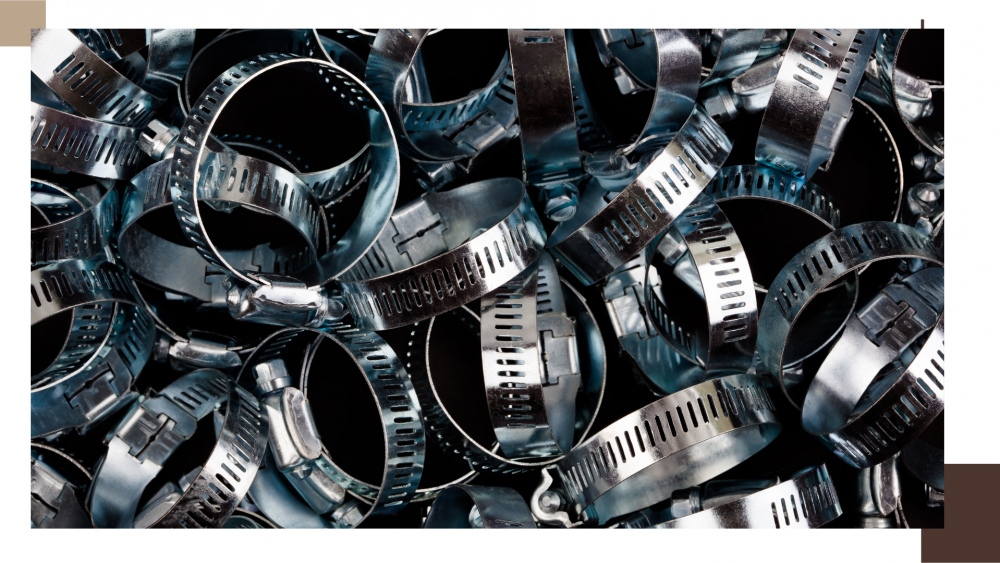
1) Worm Gear Hose Clamps: The standard type most people know
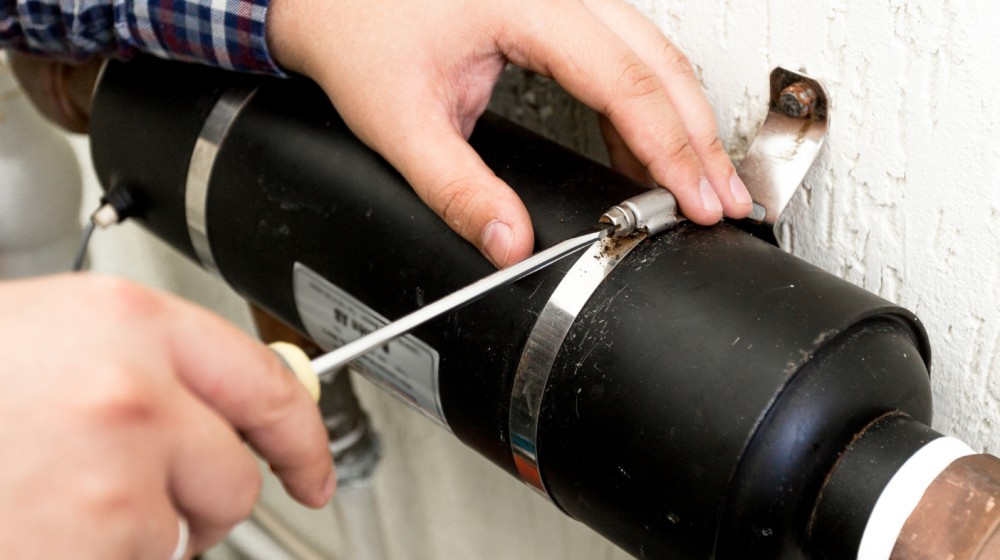
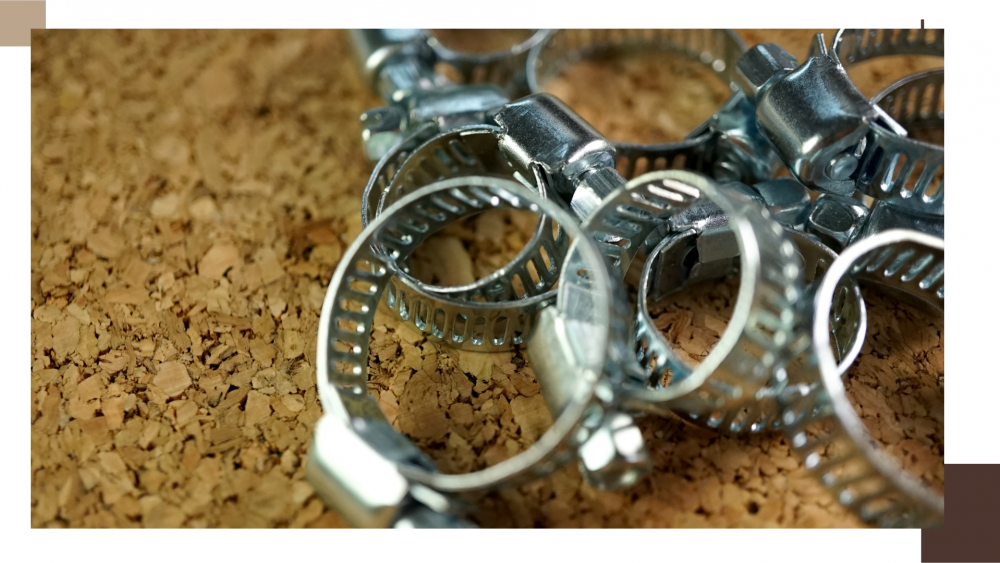
Worm-drive or screw clamps are what most people picture when they hear “hose clamp.” Their key feature is a metal band paired with a screw that tightens the clamp around the hose. Their advantages include ease of use, flexible size adjustment, widespread availability, and suitability for various general-purpose tasks—whether plumbing, basic automotive repairs, or systems without extreme pressure. Many references list worm-drive clamps as the most widely used because they offer a good balance of cost, convenience, and practical performance.
Their strength lies in versatility. On-site selection is straightforward since they can be tightened or loosened as needed, making them ideal when occasional disassembly is required. Another advantage is their relatively compact build, fitting well into tight installation spaces.
However, versatile as they are, they aren't suitable for every application—especially very high pressure, continuous vibration, or tasks requiring exceptionally heavy and uniform clamping force. In those scenarios, T-bolt or heavy-duty clamps are far better suited. Forcing a worm gear clamp into an overly demanding application may seem tight initially, but under continuous real-world use, it can loosen or fail to seal properly.
What applications are worm gear clamps suitable for?
Worm gear clamps are suitable for general applications that require convenience and low cost, such as general piping, maintenance work that requires occasional opening and closing, low-pressure systems, or tight installation spaces that need a compact clamp. They can be used broadly in households, agriculture, and light industrial tasks.
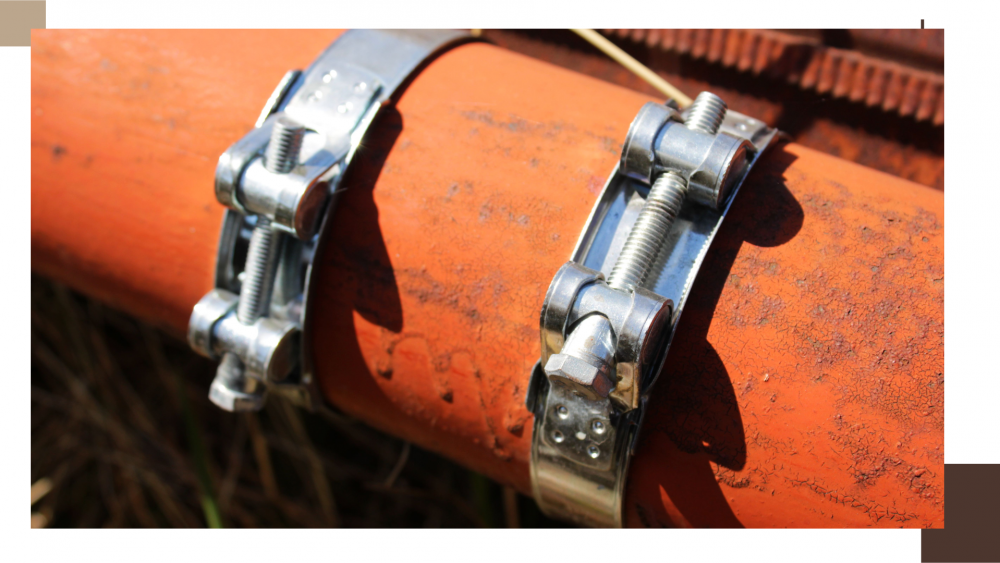
2) T-bolt hose clamps are heavy-duty options focused on serious clamping force
If worm gear clamps are the standard choice for general use, T-bolt clamps are the step-up option for tasks requiring higher clamping force, greater consistency, and higher system reliability. The T-bolt design uses a bolt and nut to generate the primary clamping pressure, making it ideal for higher-pressure applications, high-vibration environments, or systems demanding continuous strength—such as heavy industry, certain automotive applications, pressurized air systems, or setups with heavier loads than typical DIY work.
The advantage of T-bolts is not just being "tighter," but providing heavier, more stable clamping force than worm gear clamps in many scenarios. They are widely regarded as ideal for heavy-duty tasks or systems where leaks cause far more damage than minor seepage. Many sources similarly state that T-bolts are best suited for high-pressure applications or systems requiring exceptionally firm holding power.
However, T-bolts are not the best answer for every situation, as they are typically bulkier, take up more space, and cost more than worm gear clamps. If the application is light-duty or requires frequent adjustments, choosing a T-bolt may be unnecessary and not practically cost-effective.
What applications are T-bolt clamps suitable for?
T-bolt clamps are suitable for high-pressure systems, high-vibration systems, machinery, certain automotive tasks, or applications requiring greater clamping reliability than standard options. When the risk of loosening or leaking is high, these applications usually favor T-bolts.
3) Spring or constant-tension hose clamps are ideal for fluctuating temperatures
Another very interesting group of clamps is the spring or constant tension clamp. Its highlight is not delivering the highest clamping force, but maintaining a relatively consistent clamping pressure even when hoses expand or contract due to changes in temperature or pressure. This is a clear advantage in applications like cooling systems or setups with thermal cycling, where the hose does not stay dimensionally constant. Without compensation capabilities, a seal might be tight when cold but loose when hot, or vice versa.
Multiple sources consistently explain that constant tension clamps are designed to maintain clamping force during temperature fluctuations, pressure changes, or cold flow of hose materials. In other words, they suit systems where hose conditions are not completely "static" over time, unlike standard applications where worm gear clamps easily do the job.
Note that these clamps are not something general users can just casually pick up and use as easily as worm gear clamps, because they serve more specialized needs. If your application does not experience frequent temperature shifts or changes in clamping pressure over time, worm gear or T-bolt clamps might be more direct and easier to use. But if thermal cycles and hose expansion/contraction are factors, spring clamps are very attractive.
What applications are spring clamps suitable for?
They are suitable for cooling systems, certain automotive applications, systems with frequent temperature fluctuations, or environments where hoses tend to expand and contract. If the main issue is a system that is tight today but loose tomorrow due to temperature, this type typically fits the bill better than standard fixed clamps.
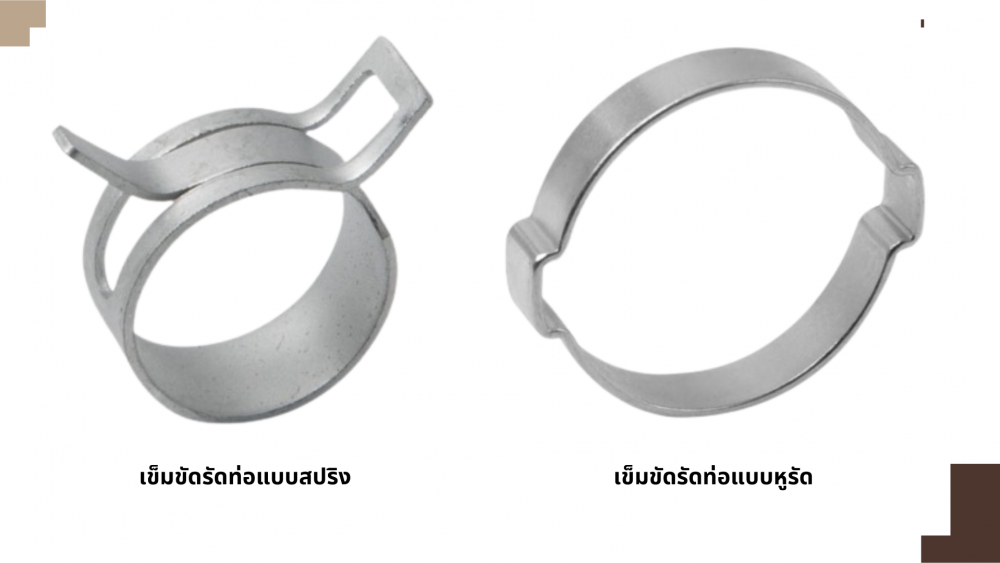
4) Ear clamps are suitable for applications requiring a flush profile and uniform pressure
Ear clamps are another type found in specialized applications and tasks requiring a neat finish. Their defining feature is the "ear" crimped with pliers to contract the clamp and grip the hose. Their strength lies in providing relatively uniform clamping force around the circumference, a compact profile, and no protruding bolt head—making them ideal for tight installation areas where bulky parts are unwanted. Many manuals categorize ear clamps separately because their operational behavior differs considerably from screw-tightened clamps.
Their limitation is that they are not as convenient to remove and reuse as worm gear clamps, as their concept is to crimp for a permanent, secure hold rather than repeated opening and closing. If the task requires frequent maintenance or loosening, ear clamps may not be the most versatile choice. However, if the job prioritizes a sleek, snug profile and rarely requires disassembly, they are a great option.
Is choosing the right clamp type enough?
No, it's not enough. Even if you pick the right type, using the wrong size, wrong material, or mismatched operating conditions will still lead to problems.
The first thing you should always do is measure the outer diameter (OD) of the hose or tube, as selecting the correct clamp size is primarily based on the OD, rather than relying on nominal hose sizes in documentation or visual guessing. Many sources recommend that sizing the clamp so that the application falls in the middle of its adjustment range is usually much better than choosing one at the extreme ends of the range.
Next is considering the actual working conditions.
For outdoor, wet, or chemical-exposed applications, the clamp's material is crucial. Stainless steel clamps are generally considered better suited for humid or rust-prone environments, whereas dry or light-duty tasks allow for a wider variety of material options.
Another common mistake is assuming that "tighter is always better." In reality, over-tightening can deform the hose, misalign seals, or damage the hose surface—especially on silicone, flexible, or thin-walled hoses. Certain applications require considering both the clamp type and the proper clamping force, rather than just tightening with maximum force.
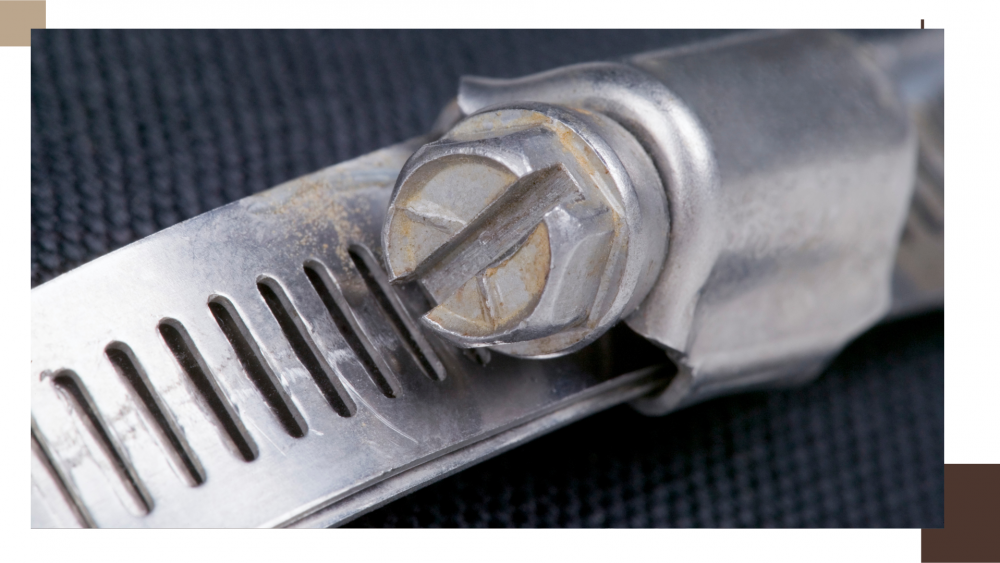
So which type is the best?
The truest answer is that there is no single best type for every job.
- For general-purpose use, easy maintenance, and simple adjustment, worm gear clamps are usually the right fit.
- For high-pressure, heavy-duty, or high-vibration applications, T-bolt clamps are usually more suitable.
- For applications with frequent temperature fluctuations where the hose expands and contracts, spring or constant tension clamps make more sense.
- If you need a neat finish and uniform clamping pressure around the circumference, ear clamps may be more suitable.
Therefore, choosing the right hose clamp isn't about finding the most expensive or toughest-looking one, but rather matching it to the hose size + nature of the job + environment + actual operational conditions.
How many types of hose clamps are there, and how do their applications differ?
To summarize in the simplest terms:
- Worm gear clamps Suitable for general applications, easy to use, convenient to adjust, and affordable.
- T-bolt clamps Suitable for high-pressure, heavy-duty applications requiring substantial clamping force.
- Spring / constant tension clamps Suitable for applications with temperature fluctuations causing hose expansion and contraction.
- Ear clamps Suitable for applications requiring a neat, snug fit with uniform clamping pressure.
Finally, if you are looking for Hose Clamps For practical use, don't just look at size and price alone—also consider the type of clamp. The right type will provide a tighter, more durable fit and significantly reduce the risk of leaks or loosening over the long run.