


 EN
 ไทย


Customers Also Purchased


If you have ever chosen Selector Switches and felt that they look similar and are about the same size, but when reading the specs you encounter terms like "maintained / stay-put" versus "spring return / momentary" and weren't sure which one to choose—this is where many people frequently make mistakes. The difference between these two types isn't just about "whether it springs back when turned," but directly affects the control logic, safety, machine behavior, and the actual tactile operating feel.
In specs from major manufacturers, the descriptions are quite clear. For example, Eaton has models specified as "maintained, 2 positions" alongside models specified as "momentary, spring-return." Similarly, Schneider Electric offers both "stay-put" models and "spring return to center / spring-return-to-left" models within the exact same product line.
Therefore, this article won't just superficially explain "what the differences are," but will break down:
- What is a maintained selector switch?
- What is a spring-return selector switch?
- How do they differ in practical use?
- Which applications should use which type?
- And where do people frequently make the wrong choice?
After reading this, you will be able to select selector switches more accurately, whether for control panels, machinery, or systems requiring mode switching.
What Is a Maintained Selector Switch?
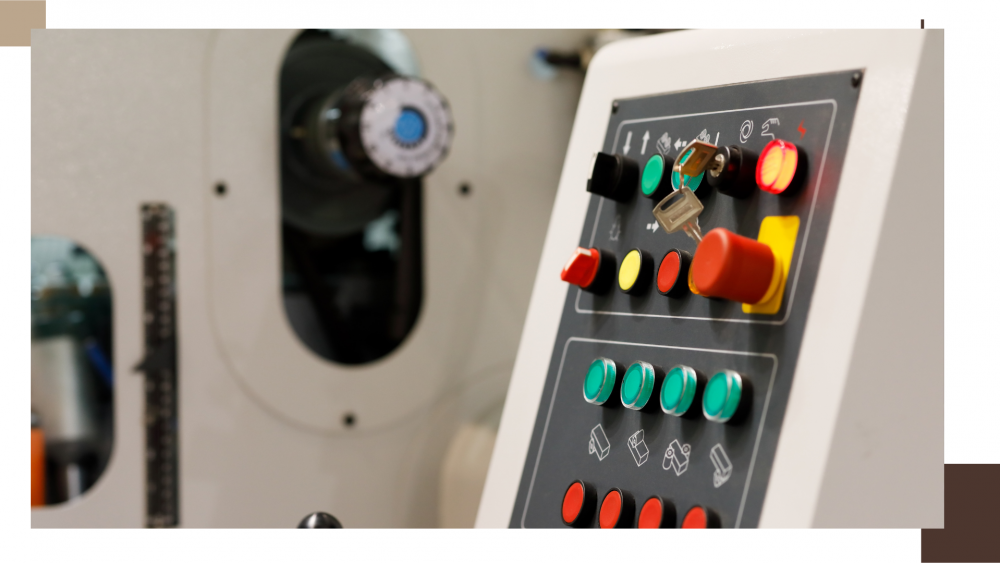
A maintained selector switch—commonly referred to in specs as maintained or stay-put—is a switch where, once turned to a position, the actuator "stays in that position" until the operator manually turns it back.
A clear example from Eaton's specs is the M22 series specified as "maintained, 2 positions," and from Schneider Electric's Harmony XB4 series specified with a "3 positions, stay-put mechanism." These clearly reflect the concept of maintained switches: "select a position and stay there" without springing back automatically.
The operational feel of a maintained switch is therefore more like "setting a mode" rather than "sending a momentary command," such as:
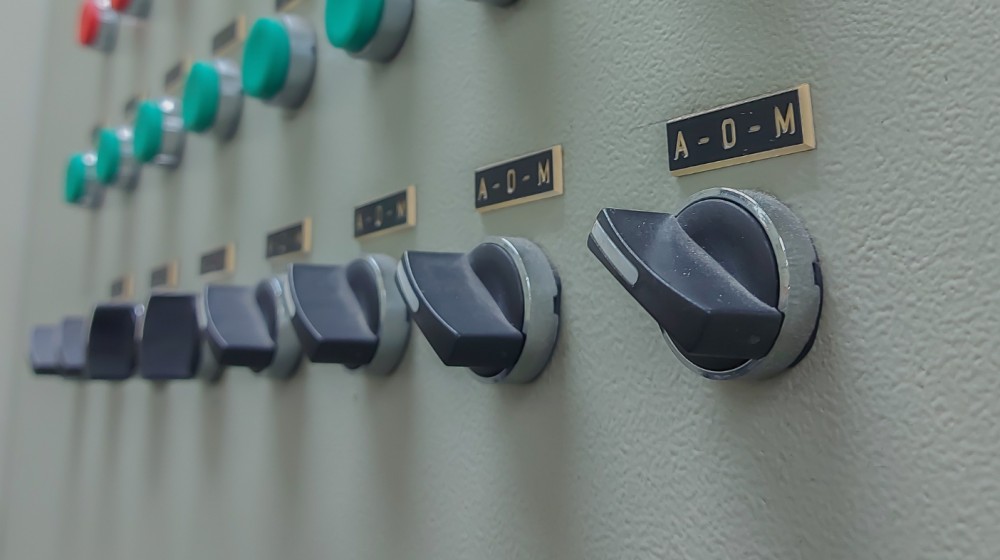
- AUTO / HAND
- LOCAL / REMOTE
- ON / OFF
- MANUAL / AUTO
Its key advantage is that operators can tell what mode the machine is currently in just by looking at the panel, because the switch handle remains in that position—no guessing, no remembering, and no relying solely on indicator lights.
What Is a Spring-Return Selector Switch?
A spring-return selector switch is a switch where, once turned to a position and released, the switch is automatically pulled back to its original position by spring tension.
In Schneider Electric's specs, there are very clear examples such as models specified as "3 positions, spring return to center" and "2 positions, spring-return-to-left." Eaton also offers models specified as "momentary, spring-return," and even their cam switches feature descriptions like "spring-return from both directions with 0 (Off) position."
Therefore, the core of the spring-return type is "sending a command upon turning", but once released, it does not remain in that position; it returns on its own.
Applications suited to this concept are typically temporary commands, such as:
- JOG
- START commands held down/turned only when needed
- Jogging left/right commands
- Forward or Reverse for short test runs
- Certain types of Resets
To put it most simply: the maintained type is "select a mode and leave it", while the spring-return type is "command while holding, returns upon release".
What are the main differences between these two types?
Even though they look very similar, in actual use, the differences are more multilayered than you might think.
1. Difference in behavior after releasing your hand
This is the most fundamental difference.
- Maintained type: Turn and it stays in place
- Spring-return type: Turn and it springs back
It sounds simple, but the impact on the system is massive because it determines whether the "signal is maintained or not" after the operator lets go of the switch. Manufacturers like Eaton use the term "maintained" for the stay-in-place type and "momentary / spring-return" for the spring-back type, which is very literal in practice.
2. Difference in the switch's role in the system
- The maintained type is suited for a role of "status selection".
- The spring-return type is suited for a role of "momentary commanding".
This is where many people frequently make the wrong choice by only looking at the number of positions without considering the switch's function in the circuit. If you want the system to remember which mode it is in, a maintained switch is usually more suitable. However, if you want the command to trigger only while the operator is actively holding it, a spring-return type is more appropriate.
3. Different in reading the status from the panel door
Maintained switches offer a major advantage for status visibility because the switch operator remains in that position. For example, if turned to HAND, anyone looking at the panel immediately knows the machine is in HAND mode.
On the other hand, a spring-return switch returns as soon as you let go, so it is not primarily used to “show the current mode,” but rather to send a momentary command. Therefore, if the job site requires operators to read the status directly from the switch itself, a maintained type has a distinct advantage.
4. Different in the risk of operational errors
Maintained switches carry the risk that if turned and forgotten, the system will remain in that mode. For example, the machine might stay in Manual mode even though the operator thought they had exited it.
Meanwhile, spring-return switches reduce this type of risk because the user must “intentionally hold it.” Once released, the switch returns on its own, making it suitable for commands you don't want left active unintentionally.
In practical terms, what is the difference between maintained and spring-return switches?
To put it simply without being overly technical:
Maintained switch is like "selecting a mode" for the machine. Once turned, the machine stays in that state until someone changes it.
Spring-return switch is like "issuing a temporary command." Turn it when needed; release it, and the command ends as it returns on its own.
Therefore, if you are designing a circuit where the user selects AUTO or MANUAL and the system stays in that mode continuously, a maintained type is more natural.
However, if you want the user to turn it to JOG a motor or move equipment only while actively operating it, a spring-return switch is safer and more appropriate.
What kind of applications should use a maintained selector switch?
Maintained selector switches are ideal for applications requiring "state retention" or "mode locking" clearly visible on the panel door.
Suitable application examples include:
- AUTO / HAND A maintained type works very well in this case because once HAND is selected, you want the system to actually stay in that mode until someone turns it back. Many Eaton models also come directly engraved with AUTO HAND markings.
- LOCAL / REMOTE If a factory needs to choose whether the machine accepts commands from the panel front or from other systems, using a maintained type provides clear visibility and reduces confusion.
- FORWARD / OFF / REVERSE mode selection In some applications where the direction needs to remain held until changed, a maintained type can be used, but appropriate interlocks and logic must be designed.
- Test Mode / Operating Mode Such as TEST / RUN or MAINTENANCE / OPERATION
The advantage of the maintained type is that it is easy to use, easy to read status, and suitable for tasks that do not require the user to hold it continuously.
What kind of applications should use a spring return selector switch?
The spring return type is suitable for applications involving "momentary commands" where you do not want the switch to remain maintained unintentionally.
Suitable application examples include:
- JOG This is a very classic example because JOG requires the machine to operate only while the user is actively commanding it; once released, it should stop.
- INCHING or fine position adjustment This type of application should not use a maintained type, because if held at the wrong moment, it might travel beyond the intended position.
- RESET for certain logic Some systems only require a brief reset signal and do not need it to stay maintained.
- Spring return to center for 3 positions For example, Left-Center-Right, where Center is the normal position, and the user turns left or right for a momentary command; once released, it returns to center automatically. Schneider clearly specifies models like this in their product specifications.
- Momentary commands that require reducing the risk of forgetting to reset position The spring return type is ideal when you don't want the switch to stay maintained by accident.
The advantage of this type is that it helps reduce human error in tasks that should not be maintained, aligning the switch's behavior more closely with the nature of the work.
What is a 3-position switch that is maintained on one side and spring return on the other?
This is another very interesting point, as many people think selector switches must either be fully maintained or fully spring return, but in fact, there are "combination" models available.
Eaton clearly states in a knowledge article that one model is maintained in all three positions, while another is maintained in the left and center positions but has a spring return in the right position. In addition, within Eaton's Crouse-Hinds line, there are models specified as spring return to center, maintained contact counterclockwise operation, or vice versa—maintained on one side and momentary on the other.
This point is crucial because it allows for more flexible application designs, such as:
- Left = Maintained
- Center = Maintained
- Right = Spring return
Or in some applications, it might be:
- Left = Spring return
- Center = Normal
- Right = Spring return
This is why, when choosing a selector switch, you must never look only at the number of positions; you must also check the "behavior of each position".
Common Mistakes When Choosing
This is an essential point to include in the article because it makes the content practical rather than just theoretical.
Choosing by appearance without checking the actuator function
Many people see that they are both 2-position selector switches and assume they are interchangeable. However, in reality, the specifications between maintained and spring-return can be completely different.
Looking only at the number of positions without checking which position it returns to
Especially with 3-position switches: some models are spring return to center, some are spring return to left, and others are stay-put in all positions. If you do not read the specs carefully, your designed circuit and the actual device may not match.
Using a maintained type for applications that should be momentary
For example, in JOG or inching operations, using a maintained switch can cause unintentional latched operation, resulting in the machine running continuously beyond what the user intended.
Using a spring-return type for applications requiring visual mode indication
For example, in AUTO / HAND modes, if you use a spring-return switch, users cannot tell from the switch position which mode the machine is in, forcing reliance on indicator lights or an HMI instead.
How to Choose Correctly: Ask These 5 Questions Before Buying
If you need to choose between a maintained or spring return selector switch, ask yourself these questions first:
1. Is the switch's function to "select a mode" or to give a "temporary command"?
If it is for mode selection, it usually leans toward maintained.
If it is for a temporary command, it usually leans toward spring return.
2. Does the user need to know the status immediately just by looking at the panel?
If you need to read the status directly from the switch knob, the maintained type has an advantage.
3. Will there be negative consequences if the user forgets to return the switch to its position?
If the consequences are severe—such as a machine continuing to run unintentionally—a spring return type may be safer.
4. Should the operation be held automatically by the switch?
If the task shouldn't require the user to hold it in place for a long time, the maintained type is more convenient.
However, if the operation should only occur while being held, the spring return type is more appropriate.
5. Do all positions need to have the exact same behavior?
Don't forget that some models "can be combined"—they don't have to be all maintained or all spring return across all positions.
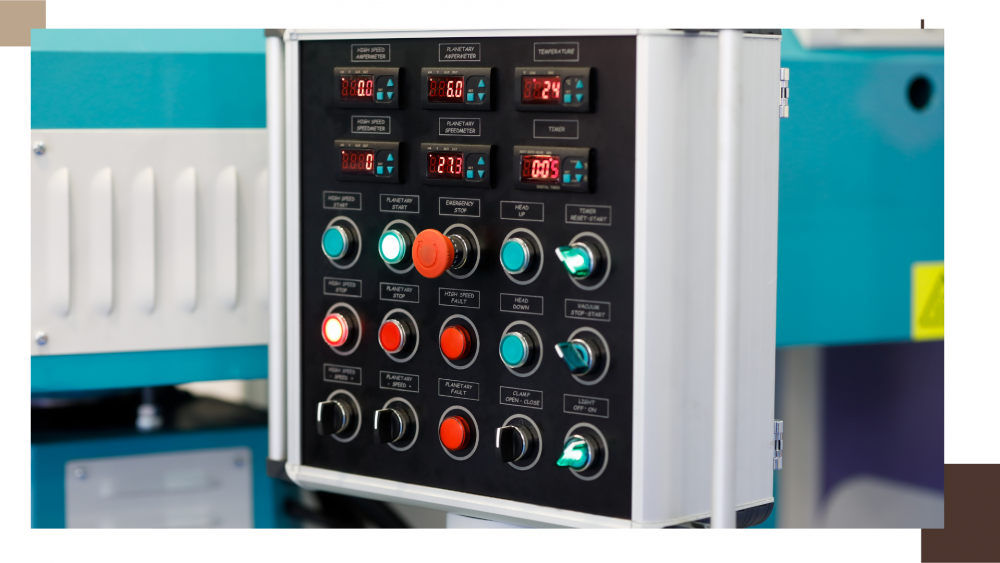
To summarize in the simplest terms:
If you are choosing, Selector Switches and want to remember the difference in a single sentence:
Maintained switch = Turned and stays in place: used for "selecting a mode"
Spring-return switch = Turned and returns on release: used for "temporary commands"
And to select properly for real-world applications:
- AUTO / HAND, LOCAL / REMOTE, MANUAL / AUTO → usually suitable for Maintained switch
- JOG, INCHING, certain RESET functions, momentary commands → often suitable for Spring-return switch
Ultimately, the most important thing is not just knowing its name, but understanding that the switch's behavior must align with the behavior of both the machine and the operator. Choosing correctly from the start makes the panel easier to operate, clarifies the circuit's intent, and significantly reduces the risk of operational errors.