EN
 ไทย


Customers Also Purchased
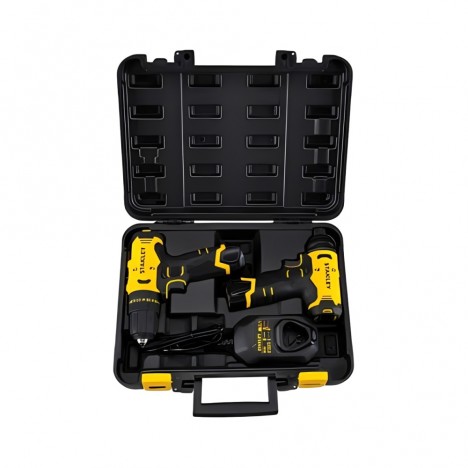
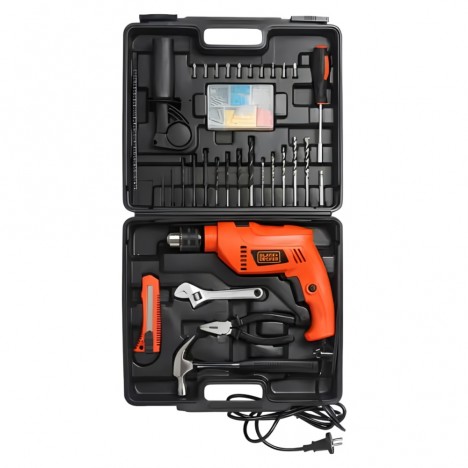


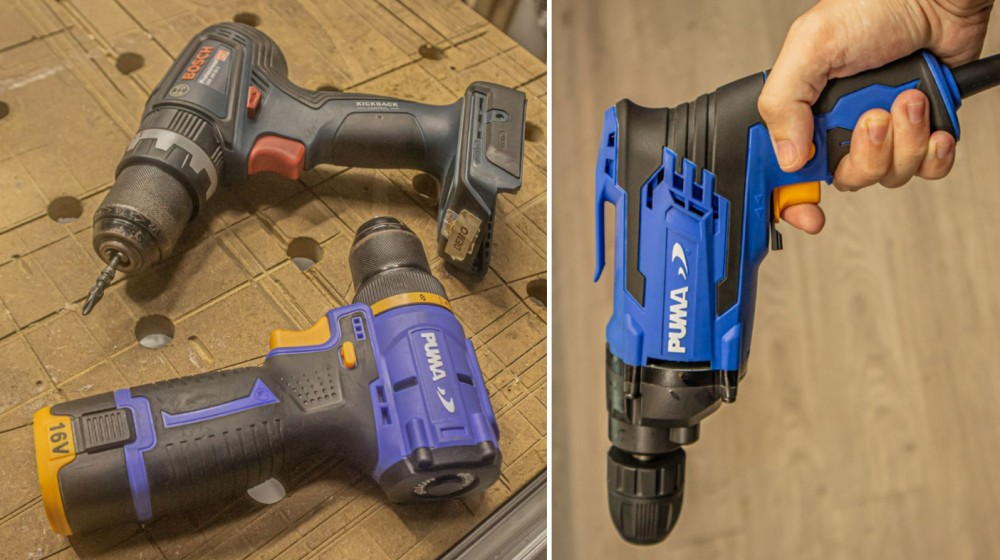
Cordless drill How do they differ from corded electric drills, besides having a cord versus being cordless? At first glance, both types are used for drilling, fastening, and performing very similar technical tasks. But in actual use, the handling feel, responsiveness, weight, and suitable applications are distinctly different.
The difference between cordless drills and corded electric drills isn't just on the outside, but is hidden in virtually every part of the operating system—from the power source, motor control, and gearbox to heat management. Cordless drills must be designed to balance power, endurance, and maneuverability, while corded electric drills have a different set of strengths powered directly from the outlet.
Some people who have used both feel that corded electric drills seem more "stable" in certain tasks, while cordless drills are distinctly more "agile." Some feel that today's cordless drills are much more powerful, capable of replacing corded drills in many applications, while others still believe corded drills remain superior for heavy-duty work. 5 Reasons Why Corded Electric Drills Are Still Essential in Today's Cordless Era
The question is: what really causes these differences? Let's take a look from the basics to the big picture to clearly see what lies behind the mechanics of cordless drills compared to corded drills, and why that difference matters more to your tool selection than many people think.
Do cordless drill motors and corded electric drill motors work the same way?
The answer is "Similar, but not entirely the same." Indeed, both cordless drills and corded electric drills use motors to convert electrical energy into rotational force. However, their operating conditions can differ greatly, especially regarding voltage, power source, and power regulation.
As we already know, corded electric drills have the advantage of receiving continuous power, making it easier to maintain RPM and power during non-stop tasks. Especially for jobs requiring long continuous runtime or working in the same spot for a prolonged period, there is no need to worry about the battery draining mid-job.
Meanwhile, cordless drills require motors designed for higher energy efficiency. Newer models often utilize brushless motors paired with electronic circuitry to regulate power delivery according to the workload, making modern cordless drills highly responsive with much finer torque control.
- Both use motors, but their operating conditions differ.
- Corded electric drills excel in continuous power supplied from an external source.
- Cordless drills excel in efficient energy management and smarter responsiveness.
- Newer cordless drill models use brushless motors and control circuits to provide more consistent power.
Why do newer cordless drills seem so much more powerful than before?
Years ago, many viewed cordless drills as tools meant only for light-duty tasks, driving screws, drilling thin wood, or general installation work. Today, that perception has changed drastically because battery, motor, and control circuit technologies have advanced significantly—especially lithium-ion batteries that offer higher energy density, better current output, and without adding excessive weight.
Combined with brushless motors and more precise control systems, cordless drills can draw energy from batteries much more efficiently. Why Choose a Brushless Drill? Why Does It Matter and How Does It Differ?
Newer cordless drills aren't just more powerful on paper; they deliver more power in "real-world use" as well. Whether drilling steel, driving long screws, or demanding sustained torque, the tool responds so well that many feel it has begun to replace corded electric drills.
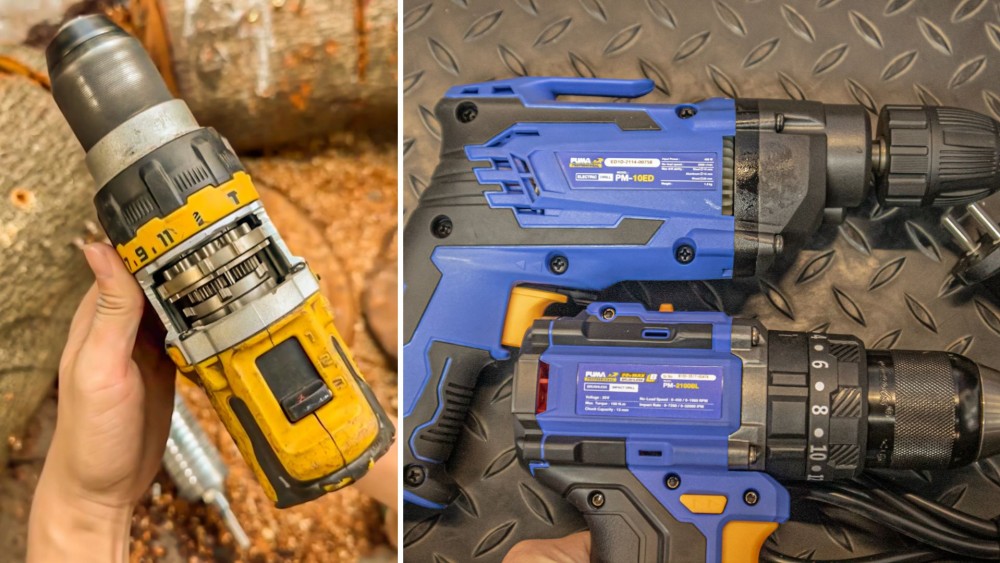
Power management systems are another key factor behind cordless drills
One of the things users can feel—yet rarely know the source of—is the "character" of the tool's power delivery. Some models surge immediately upon pulling the trigger, some deliver power gradually, some are remarkably easy to control when driving screws, while others offer great power but tend to jerk. This is directly related to the power control system.
Many corded electric drills use straightforward control systems focusing primarily on delivering stable power output and responding directly to the trigger or switch. In contrast, cordless drills must simultaneously manage power, current, heat, and battery life. The internal circuitry therefore plays a critical role in determining "how much power to release at that exact moment."
As a result, many cordless drill models feel smoother for precision tasks and smarter when load conditions shift. At the same time, for extremely heavy-duty and prolonged continuous work, certain types of corded electric drills still hold the advantage of steady, uninterrupted power—especially when the job has no portability constraints.
Why do the weight and balance of the tools differ?
Have you ever held a cordless drill and felt that it was heavy at the handle or base, whereas a corded electric drill has an entirely different weight distribution? This is no coincidence; it is a direct result of their internal construction. Because a cordless drill must carry a battery pack, this battery serves not only as a power source but also as an integral part of the tool's balance. Consequently, manufacturers must carefully design the placement of the motor, handle, gearbox, and battery base to achieve optimal balance.
The advantage is that cordless drills typically offer high maneuverability, making it easier to work in tight spaces, climb up high, or move around multiple work areas compared to corded electric drills. The trade-off, however, is that the total weight depends on the battery capacity—using a larger battery for longer runtime will naturally increase the tool's overall weight.
Corded electric drills do not have an attached battery, so there is no need to account for this weight. This allows weight distribution to be focused entirely on the motor and gear set, making the operating feel distinctly different from a cordless drill, especially during prolonged, continuous use in the same spot.
Do Cordless Drills and Corded Drills Handle Heat Differently?
Heat is something we often think about later, but it is actually a crucial part of power tool design. The motor, circuitry, and drivetrain all generate heat; the heavier the task and the longer it runs, the faster heat accumulates.
For corded electric drills, the advantage is not having to worry about an onboard battery. This allows greater freedom in designing certain ventilation areas, and the tool body does not need to shield battery cells from heat to the same extent as a cordless drill.
Crucially, a cordless drill must arrange everything within a confined space while simultaneously preventing heat from affecting the motor, electronic circuitry, and battery pack all at once.
Because of this, quality cordless drills often feature more protective systems—such as thermal overload cutoffs, automatic power reduction, or current management to prevent unnecessary power spikes. Sometimes, people unaware of these internal mechanisms might feel the tool is losing power, but in reality, the system is actively protecting the unit.
Torque and RPM: What Makes Cordless Drills Different?
In practical work, we shouldn't just look at whether a cordless drill can spin; we need to see if it can "power through the job." This involves torque, RPM, and the tool's gearing calibration.
Many cordless drill models are designed with 2-speed gearboxes or multiple modes to easily balance high RPM and high torque. For example, a low gear for screwdriving or heavy drilling, and a high gear for general drilling. This makes cordless drills more versatile, allowing them to act as both a drill and a driver in one tool.
Many corded electric drill models also manage speed and torque. However, due to different power constraints, there are specific tasks where corded drills remain more suitable, especially heavy-duty continuous work requiring sustained power over extended periods.
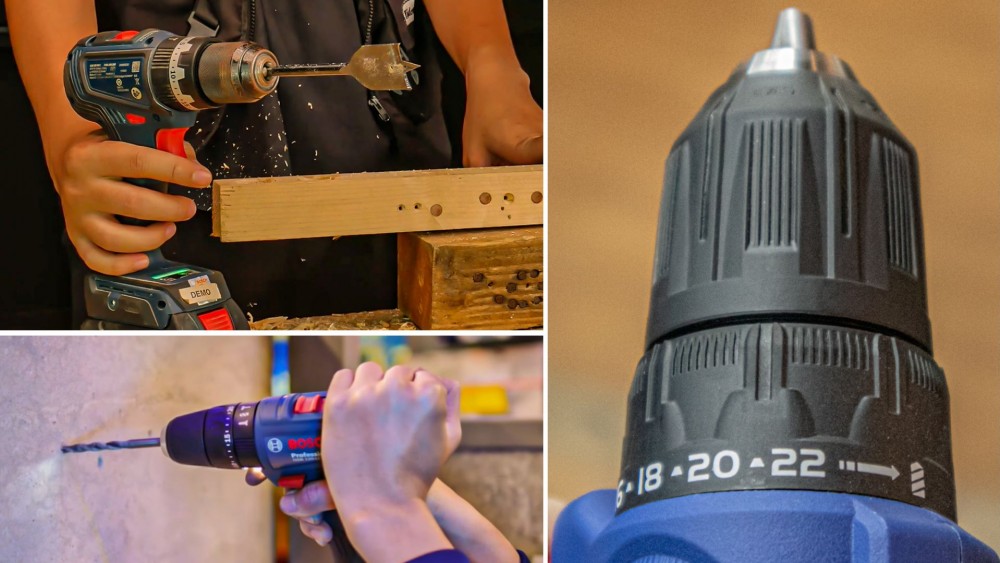
Why Do Cordless Drills Sometimes Feel Powerful but Not as Aggressive as Corded Drills?
Many corded drills deliver a more direct, continuous feel, whereas cordless drills are constantly regulated via electronic circuitry. This results in power delivered in a more managed way, often feeling smoother or easier to control, especially at startup or when encountering sudden load changes.
This isn't necessarily a drawback. For many tasks—such as furniture assembly, hinge installation, home repairs, or driving screws where you don't want to strip the head—the controllable nature of a cordless drill is a clear advantage over a tool delivering raw, unbridled power. Can you use a corded drill to drive screws? Is it a simple answer, or is there more to it?
Lifespan: Cordless vs. Corded Drills, Which Is More Durable?
There is no definitive answer to this question, as it depends on tool quality, maintenance, and usage patterns. Structurally, corded drills have the advantage of not relying on batteries, meaning there is no cost associated with battery degradation over time like with cordless drills. Even if the tool itself is still good, if the battery degrades, convenience can decline.
Newer cordless drills have improved significantly in durability, greatly enhancing their long-term usability, especially due to factors such as:
- Brushless motors help reduce wear-and-tear parts
- Electronic protection systems protect the tool during use
- Interchangeable battery platforms make continuous operation easier
- If you choose a brand with durable batteries and readily available spare parts, the weakness regarding lifespan is significantly reduced.
If you ask which one is more durable, the fairest answer is that it depends on how it is used. For repetitive work in a fixed spot or continuous long-term tasks, corded drills may still be the best choice in terms of simplicity and consistency.
If you prioritize mobility, working across multiple spots, and value a flexible user experience, cordless drills may be more worthwhile overall than corded drills.
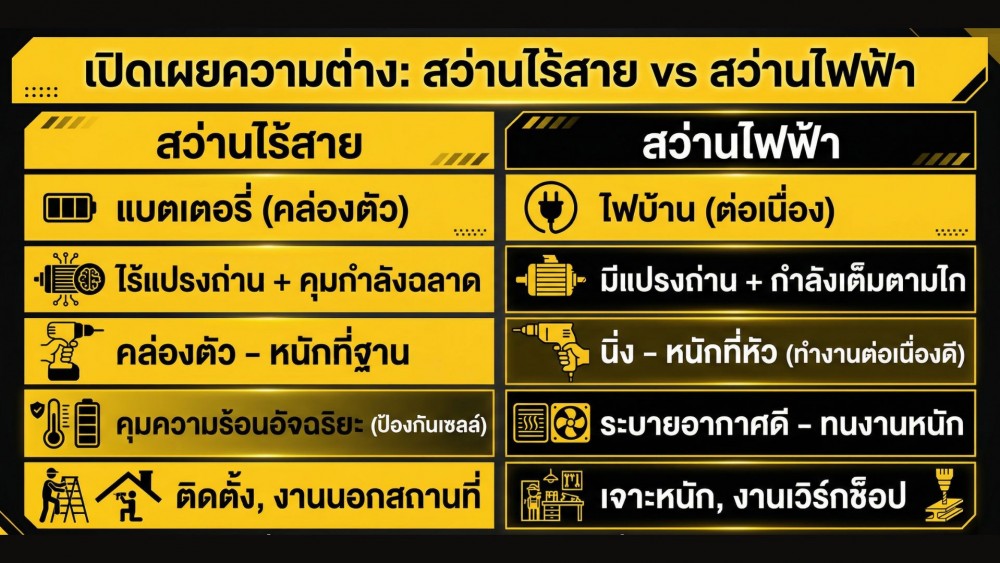
Conclusion: How are cordless drills different from corded drills?
The difference between cordless drills and corded drills isn't just about the power cord, but starts from the power system and design philosophy. Cordless drills focus on mobility and flexible control, while corded drills excel in continuous power and stability for heavy-duty tasks.
Understanding these differences will make it easier to choose whether Cordless drill a cordless drill or a corded drill is truly suitable for your application.