


 EN
 ไทย


Customers Also Purchased

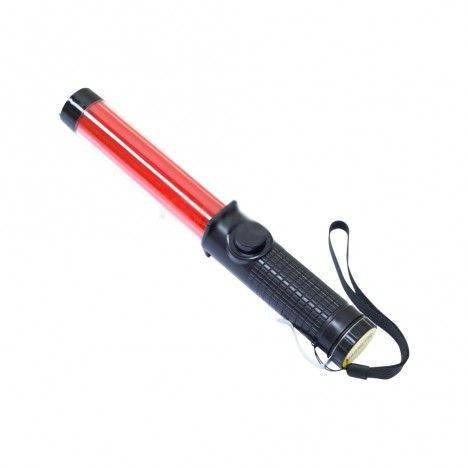


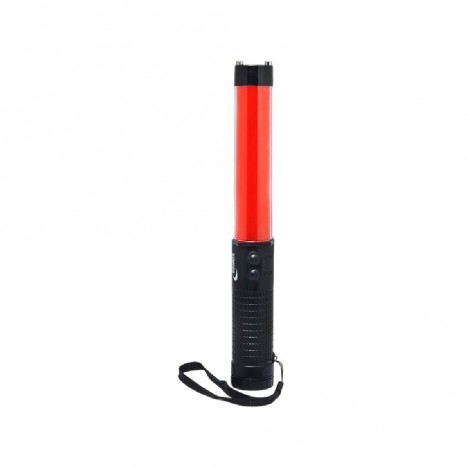
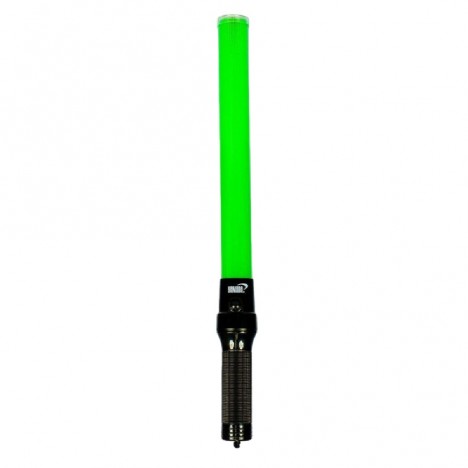
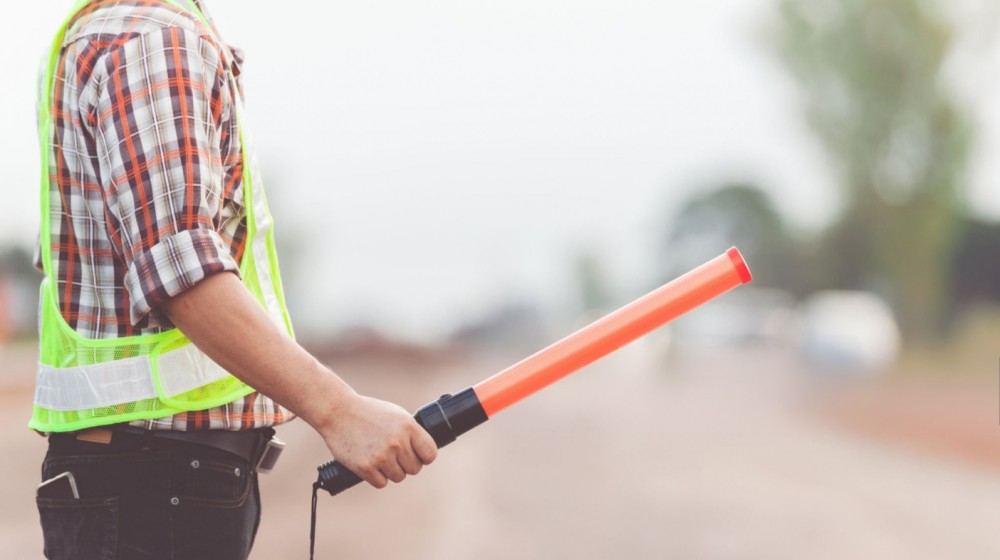
Traffic Batons It looks like a simple tool, but on actual job sites—especially in safety-related operations like security, construction, or vehicle access control points—this device plays a crucial role because it serves as the "communication language" between the controller and drivers.
And what many overlook is that if a traffic baton "doesn't meet standards," even if it lights up, it may fail to communicate effectively, potentially leading to poor visibility, misunderstandings, or delayed reactions. Below are the key standards you should know in "real depth" to choose and use them correctly.
Traffic Baton Brightness Standards (Brightness & Visibility)
Brightness is the heart of a traffic baton, but it must be understood that it's not just about "turning on and having light"; it must emit light that is actually visible across various environments.
A standard-compliant traffic baton should deliver "uniform light along the entire wand" without bright spots and dark patches, because in the driver's eyes, what is seen must be a distinct signal bar, not scattered light.
On actual sites—such as at night or in areas with oncoming vehicle headlights—if the brightness is insufficient, the light from the baton will be washed out immediately, requiring drivers to take extra time to spot and interpret it.
Another critical point is "viewing distance." A good baton should allow drivers to see it from a long distance to give them time to make decisions, such as slowing down or preparing to stop, rather than spotting it only up close and having to brake abruptly.
Real Standard = Not just bright, but must be "clearly visible well before reaching the spot."
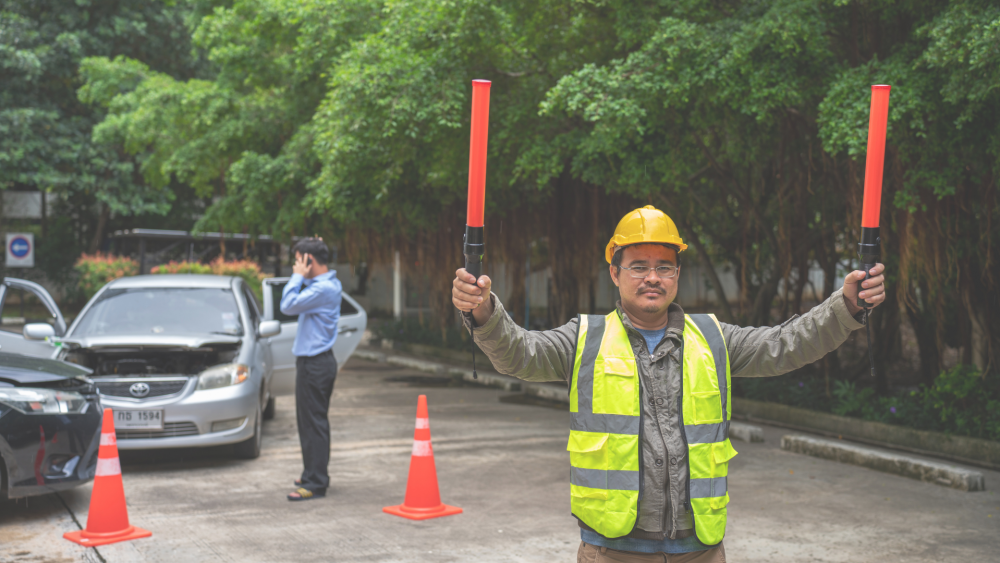
Traffic Baton Color Standards (Color Accuracy & Signal Meaning)
The baton's color is another element that directly affects communication, because color conveys "meaning," not just aesthetics.
Generally:
- Red → Used to indicate stop or danger
- Orange → Used to warn for caution or slow down
Standard traffic batons must provide "bold and clear" colors that are not faded, distorted, or shift tone over prolonged use. If the color is unclear, drivers might misinterpret it—such as mistaking a stop signal for a mere caution—which immediately affects safety.
In daylight conditions, the color must still stand out clearly enough to be seen, and at night, it must not be washed out by vehicle headlights or streetlights.
Good color = Seen and "instantly understood" without guessing
Lighting Mode Standards (Lighting Modes & Practical Use)
A good traffic baton should not just turn on and off, but should offer "display patterns" that can be adapted to the situation.
Essential modes it should have:
- Steady light → Used for directing traffic, such as signaling to go or stop
- Flashing light → Used for warning at hazard points
On real work sites, such as hazardous areas or construction zones, using a flashing light attracts attention better than a steady light because the movement of light helps the human eye focus faster.
Having multiple modes is not just an extra feature, but a tool that helps "communicate more clearly without words."
Lighting modes = A tool to enhance driver "comprehension"
Structural and Material Standards (Build Quality & Real-world Durability)
On real job sites, traffic batons are not used in ideal conditions; they must endure:
- Drops and falls
- Impact Rate
- Continuous use
Therefore, the structure must be sturdy enough to handle these situations. Materials should be durable, resistant to cracking, and not easily deformed after extended use.
Another critical point is the "grip surface." If it is slippery or uncomfortable to hold, it can easily slip out of hand, especially in sweaty or rainy conditions.
Real standards = Functional in "imperfect" environments
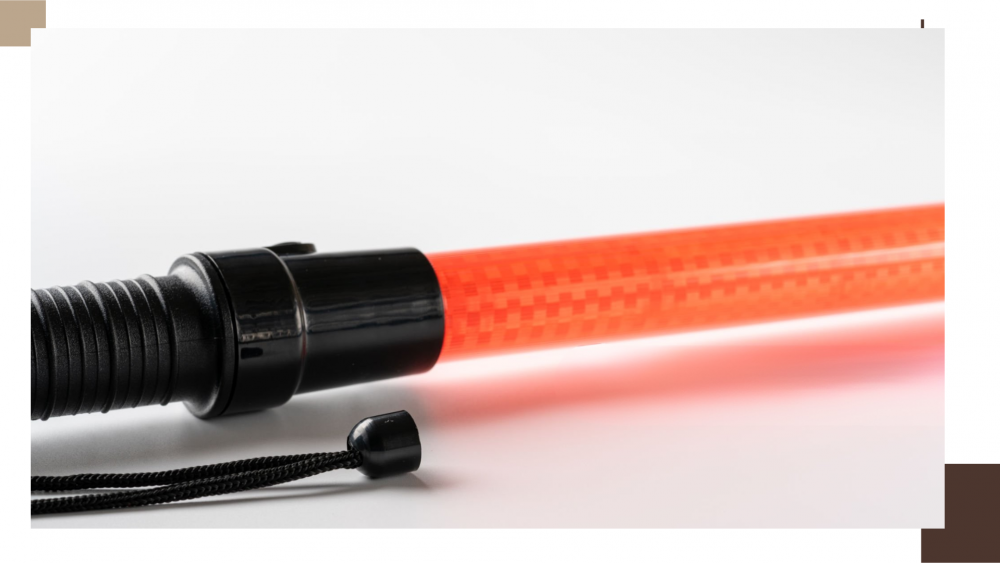
Water and Dust Resistance Standards (Weather Resistance)
Most traffic batons are used outdoors, so they must withstand changing weather conditions.
Real-world situations you will encounter:
- Rain
- Dust from jobsites
- Accumulated moisture
If the device lacks proper protection, water or dust can penetrate and damage the electrical system or cause malfunctions.
A good standard should feature tight sealing and the ability to operate even in harsh environments.
Waterproof = Not just keeping it dry, but “preventing breakdown on the job”
Power Standards (Battery Performance & Reliability)
The power system is the factor that most affects "operational continuity".
A good traffic baton should:
- Last for many hours per charge
- Have a battery that does not degrade quickly
- Be stable and not shut off unexpectedly
On actual jobsites, such as night shifts or monitoring an area continuously for several hours, running out of battery mid-job will immediately compromise safety.
True standard = Continuous use, no worries during operation
Handling Standards (Ergonomics & Long-use Comfort)
Although a minor detail, it significantly impacts real-world use, especially for tasks requiring holding the baton for long periods.
Essential features:
- Secure, non-slip grip
- Well-balanced weight, not front-heavy or back-heavy
- No hand fatigue even after prolonged use
In security or event work, you sometimes have to hold a traffic wand for several hours. Poor design causes fatigue and reduces operational efficiency.
True standard = Usable for long periods without feeling burdensome
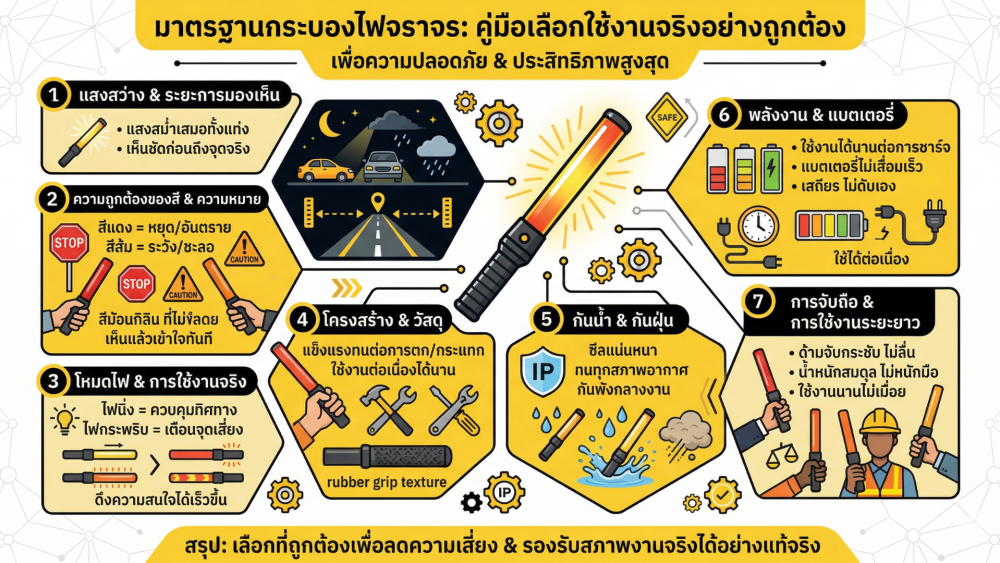
Conclusion
The standard of a Traffic Batons traffic wand isn't just about having a light, but rather the ability to "communicate clearly in any situation" in terms of brightness, color, signal patterns, build structure, and durability.
Choosing correctly isn't just about finding something that works, but about choosing to "reduce risks" and genuinely withstand actual operating conditions.