


 EN
 ไทย


Customers Also Purchased


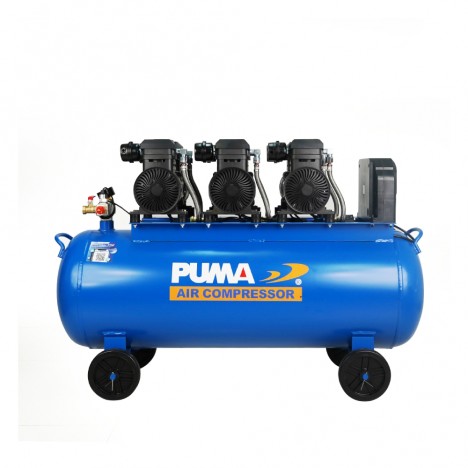
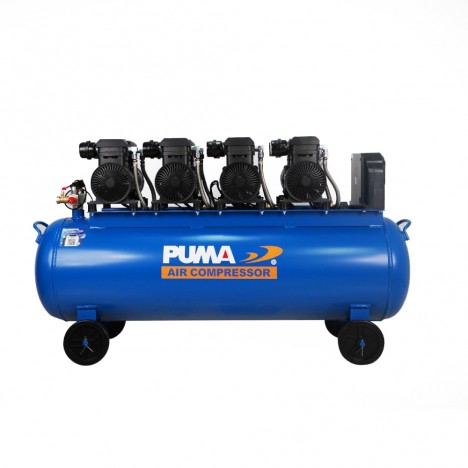
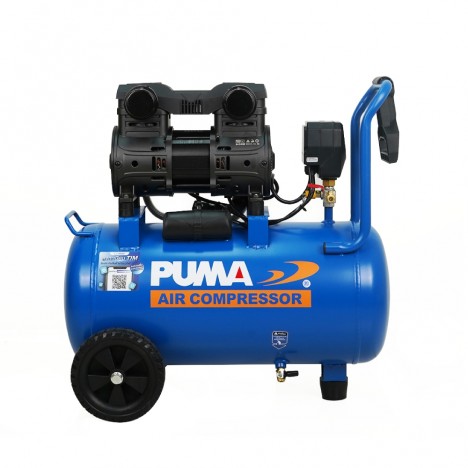
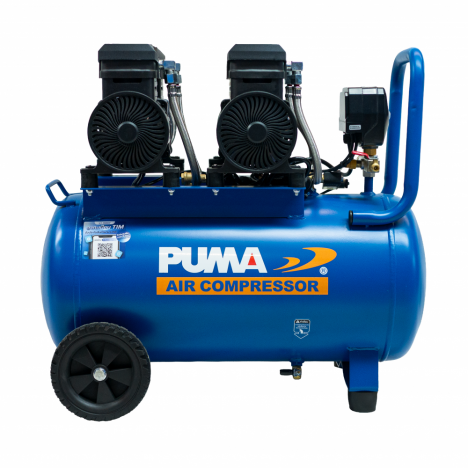
Silent air compressor Also known as an oil-free air compressor It probably brings to mind a machine that isn't deafening when turned on, right? And this type of machine can easily be used at home or in small shops.
Many people assume that if it's called a silent air compressor, it must stay quiet throughout its lifespan. But in reality, "silent" doesn't mean completely noiseless. More importantly, machines with motors and compression units inevitably change over time—parts start to loosen, rubber mounts deteriorate, or sometimes simply the machine's placement can amplify echoing sound.
After extended use, many people may start to feel that the silent air compressor, which once wasn't loud or annoying, has gradually gotten louder. Until one day they realize it is no longer as quiet as when it was brand new. The question is: is this increase in noise truly unavoidable? Is it called a silent air compressor only to end up being loud anyway?
In this article, we will clear up the doubts: How quiet should a silent air compressor actually be? Is the noise getting louder over time just normal wear and tear, or is it a sign that something is starting to go wrong? We'll also cover what factors make an once-quiet machine louder, and if you want it to run pleasantly quiet again, where you should start checking or maintaining it first.
Why is a silent air compressor quieter when brand new than after being used for a while?
This symptom is real and considered normal to a certain extent, because oil-free air compressors or silent air compressors are designed to reduce noise effectively, but that doesn't mean the sound level will remain the same forever. With prolonged use, internal parts will naturally experience wear and tear. Why Are Oil-Free Compressors Called Silent Compressors? Origins and Meaning Explained
What typically causes a silent air compressor to become louder?
To answer most directly, the increased noise from a silent air compressor or oil-free compressor usually doesn't stem from a single cause, but from a combination of several factors. This is especially true for machines that have been used for a long time, used frequently, or installed without accounting for vibration dampening from the start. The noise that many people hear can be broadly divided into 3 groups: noise from the motor and compression unit, noise from vibrations transmitted to the floor or surrounding structures, and air noise from piping, fittings, or small leaks.
- Wear and tear of internal components
- Bolts or fasteners that are starting to loosen
- Noise from rubber foot pads or the surface the machine is placed on
- Noise from air leaks or issues in the air system, such as hissing, seeping sounds, or more frequent cycling
When a silent air compressor is used for a long time, the pistons, rings, seals, bearings, or other continuously moving parts experience changes in clearance, friction, or stiffness. Just these factors alone can change the operating sound.
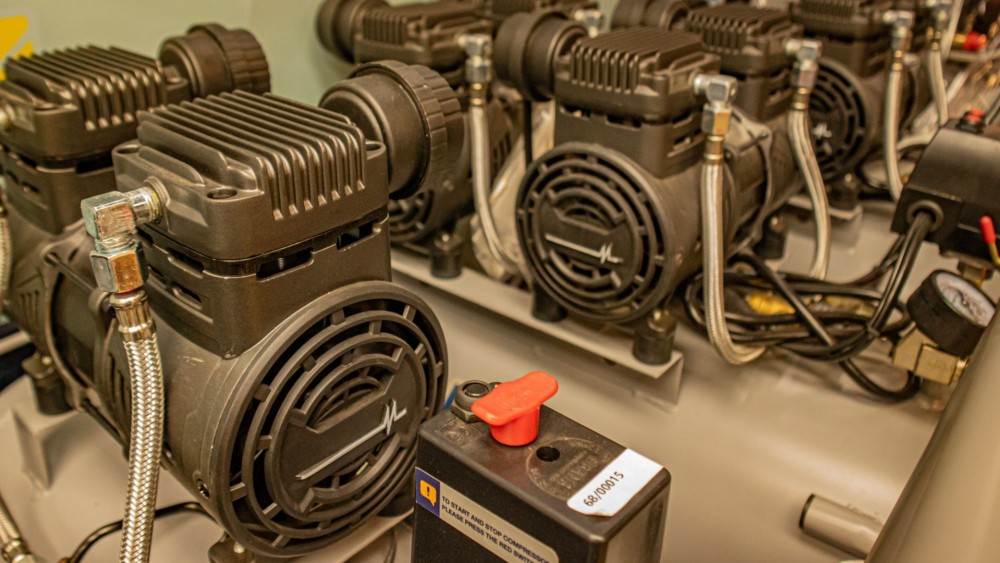
Another point many people overlook is the surrounding environment. Silent air compressors are truly quiet in open spaces, but over time, they might be moved up against a wall, placed near metal shelving, or set on a surface that reflects vibrations more, making the perceived sound louder even if the machine itself has no issues.
In addition, accumulated heat also affects sound. Sometimes the machine is quiet when starting up, but after running continuously for 10–20 minutes, the sound may start humming or vibrating more. This doesn't necessarily mean the machine is broken, but it is a sign that you should start inspecting the silent air compressor more thoroughly.
What counts as getting louder from normal wear and tear, and what counts as abnormal?
In general, for a silent air compressor that has been used for a long time, slight changes in sound are considered normal. For instance, a slightly heavier sound during startup, a slight increase in vibration when placed on a hard floor, or a consistently louder sound while the machine still runs smoothly without stuttering or overheating abnormally. This is considered normal change due to service life.
However, if the sound of the silent air compressor changes distinctly—such as shifting from soft to knocking, from steady to fluctuating, or developing new noises like grinding, metallic tapping, high-pitched squealing, whining, or continuous hissing—this is considered abnormal. Especially if accompanied by symptoms like slower inflation, the tank heating up quickly, frequent cycling, motor stuttering, or frequent breaker tripping, you definitely should not continue forcing it to run.
Warning signs you shouldn't overlook
- The noise gets louder quickly over a short period of time
- Severe vibration, much more than usual
- The machine runs unevenly or stutters
- There is a burning smell or abnormal overheating
- Constant air leaks, with hissing sounds still heard even when turned off
How to make a silent air compressor quiet again, just like when it was new?
The best answer is: don't rush to disassemble the machine yet. Start by checking simple things around the unit first. Often, noise issues with silent or oil-free air compressors stem from installation and maintenance rather than internal damage. Checking step-by-step will help you identify the cause faster without wasting time replacing spare parts unnecessarily.
1. Always check the machine's placement first
Check what kind of floor the silent air compressor is currently placed on. Is it too close to a wall? Is it near hard surfaces that reflect sound? Is the floor level, and are all feet of the base touching the floor? Even a slight tilt or uneven footing can cause vibration to transfer unevenly into the floor, increasing the noise level. Moving the machine away from tight corners or placing it on a stable base that doesn't amplify vibrations usually helps reduce noise noticeably and quickly.
2. Inspect the rubber foot pads and floor contact points
If your silent air compressor has been in use for a long time, the rubber pads may have hardened, cracked, collapsed, or gone missing in some spots, causing the machine's frame to touch the floor directly. Once running, resonant noise will clearly amplify. Replacing them with suitable rubber pads or adding anti-vibration pads capable of supporting the weight will make the unit steadier and quieter than most people expect.
3. Tighten all bolts and mounting points
With continuous use, bolts on a silent air compressor can easily loosen—especially on the base, covers, and mounting points subjected to repetitive vibrations. Tightening them appropriately helps eliminate rattling, reverberation, and buzzing sounds. However, be careful not to overtighten, as this could deform or crack components as well.
4. Listen for air leaks
If the silent air compressor cycles unusually often, try listening for hissing noises along joints, air hoses, valves, check valves, and tank connections. Even a tiny air leak forces the unit to start up more frequently. As the number of operating cycles increases, the overall daily noise rises. In many cases, simply fixing the leak makes the machine quieter overall because it doesn't have to cycle on as often.
Silent air compressor still not quiet enough? How to fix it without damaging the machine?
Many people who want to make their silent air compressor quieter immediately think of putting an enclosure over it, sealing around the machine, or wrapping it with thick soundproof materials. To be clear, this idea isn't entirely wrong, but if done without understanding ventilation, it ends up trapping heat rather than reducing noise—and ultimately accelerates wear and tear on the machine.
If you genuinely want to reduce silent air compressor noise, choose methods that dampen vibration, minimize sound reflections, and still allow the machine to ventilate and cool down normally.
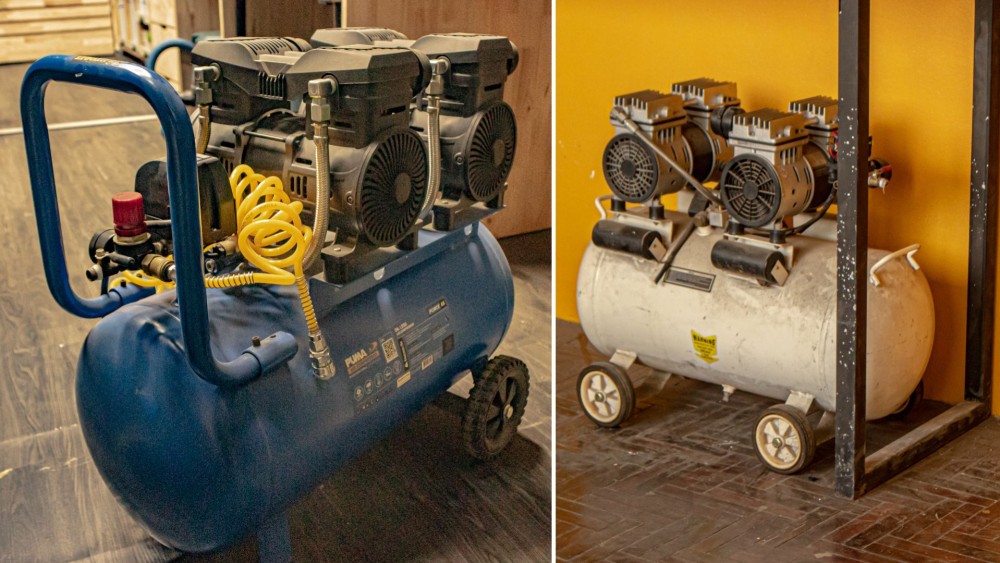
Use an anti-vibration base
What helps a lot for a silent air compressor is a base support designed to reduce vibration—not just putting any random object underneath. While some materials are indeed soft, they cannot support the weight; over prolonged use, this causes the machine to wobble and worsens the noise. The best approach is to choose a material with proper density that can bear the load and does not collapse easily, keeping the machine as stable as possible during operation.
- Choose materials that can actually support the weight
- Do not use pads that are so soft they sag or buckle
- Prioritize machine stability over just soft padding
- A good base significantly reduces resonant vibration noise
Leave clearance around the unit for ventilation
Don't forget that a silent air compressor still generates heat. The closer it is placed to walls, cabinets, or crowded with items around it, the less air can circulate. When the machine overheats, the sound from components and cooling fans can also change. Leaving adequate space around the unit helps manage both temperature and noise over the long run.
Build an acoustic barrier that is not fully enclosed
If you need to reduce noise in an actual workspace, a better method than a tight enclosure is to build a partition or sound-deflecting baffle that keeps the airway open. This helps reduce direct noise traveling toward you without trapping the silent air compressor in an overly hot, stuffy environment. The simple rule is to deflect sound direction rather than blocking ventilation paths.
Long-term maintenance is better than waiting for it to get loud before fixing
Noise issues with oil-free air compressors usually accumulate from repeated use without periodic maintenance, such as running the machine until symptoms appear before inspecting it. If you want a silent air compressor to stay quiet long term, check the unit periodically: inspect fastener tightness, listen for changing sounds, clear dust around ventilation vents, check rubber base pads, and observe whether cycling on and off becomes more frequent.
Regularly drain moisture and inspect the air storage system
Although a silent air compressor does not generate noise directly from water in the tank, moisture accumulation in the system affects the lifespan of valves and multiple components. If issues arise in this system, the silent air compressor may have to work harder, leading to more noise. Regularly draining water from the tank and keeping the air system ready at all times is therefore a great indirect way to prevent noise problems.
- Drain water from the tank periodically
- Do not let moisture accumulate over long periods
- Check both the air storage system and air valves simultaneously
- A complete, healthy air system helps the machine run quieter and more stably than before
Another case is buying a silent air compressor because you want a quiet machine, but pushing it with heavy-duty use beyond its specifications; the noise then increases faster than usual because heat and wear develop much more quickly.
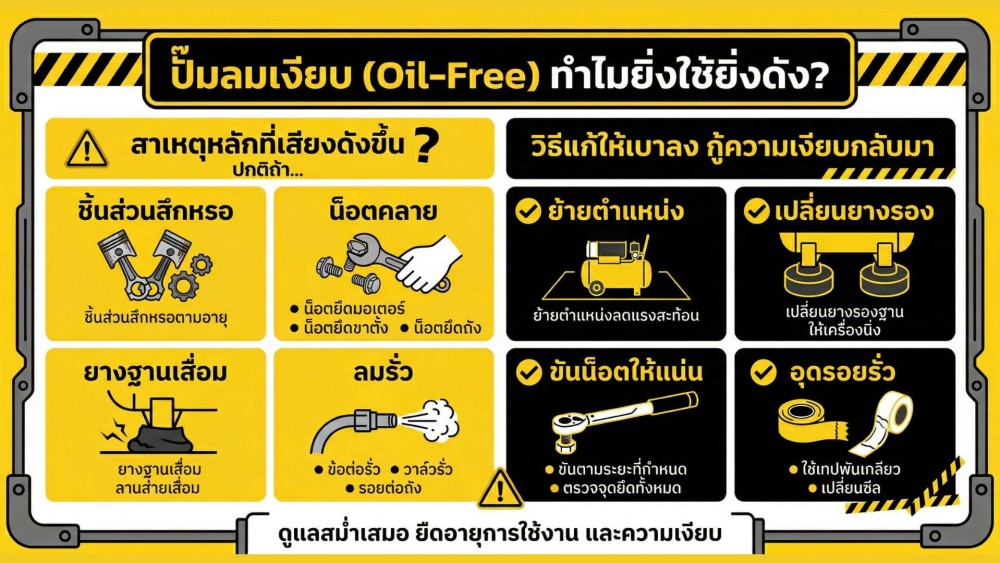
Summary: Silent air compressors can get louder over long-term use, but it can be solved if you know the root causes
Silent air compressors or oil-free air compressors can indeed become louder over extended use. Increased noise typically stems from wear and tear, installation issues, deteriorated rubber feet, loosened fasteners, or air leaks—all of which cause the silent air compressor to cycle more frequently.
When “Silent air compressor starting to get noisy” Don't jump to the conclusion that the machine is broken. First, start checking basic points such as the placement surface, rubber pads, mounting bolts, and air leak points. Often, addressing the right spot can reduce the noise without needing to replace the machine.
Maintain Silent air compressor regularly, because “silence” is not just a model name, but also depends on our usage and maintenance.