


 EN
 ไทย


Customers Also Purchased


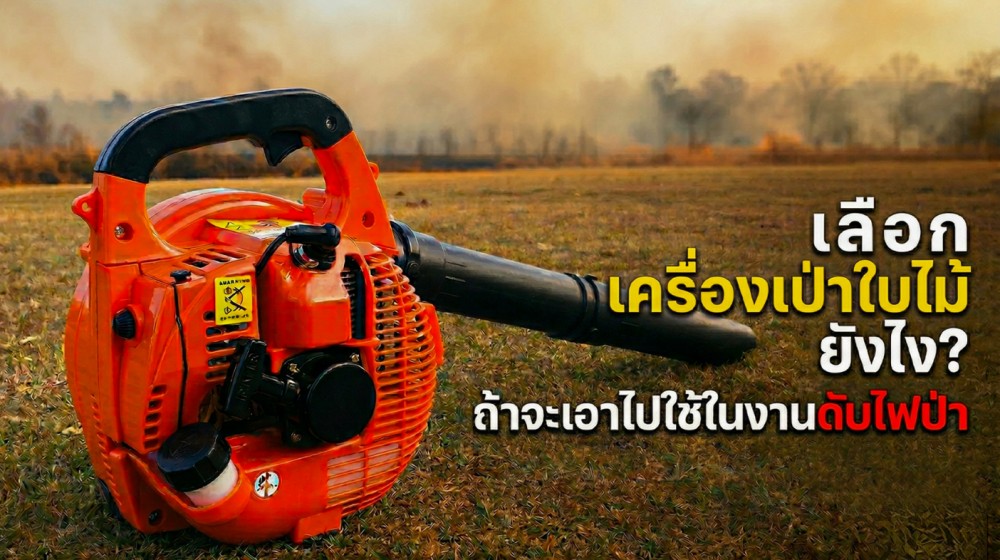
When we talk about leaf blowers, for many people the image of tackling wildfires comes to mind; they are truly a major player that plays a much bigger role than you might think. Their job isn't just to blow out the flames, but to cut off the fuel source—quickly clearing away dry leaves, small twigs, and various fire fuels.
Many people mistakenly believe that fighting wildfires relies primarily on spraying water. In reality, water lines alone are not always guaranteed to hold the fire. The most dependable firebreak is clearing fuel down to bare soil. That is why leaf blowers have become the hero, especially in areas where water access is difficult.
In this article, we'll walk you through point by point in an easy-to-understand way: Leaf Blowers & Vacuums How is it different from spraying water? Which type of fire is it suitable for? What are its strengths and weaknesses? Why can a leaf blower sometimes help with wildfire operations more than you might think? Without wasting any time, let's dive into this article.
Before choosing, you must first understand the role of a leaf blower in wildfire control.
Many people might imagine that using a leaf blower for wildfire control means blowing air directly into the flames. But on the actual front line, its primary roles are creating firebreaks and mopping up after the fire has passed.
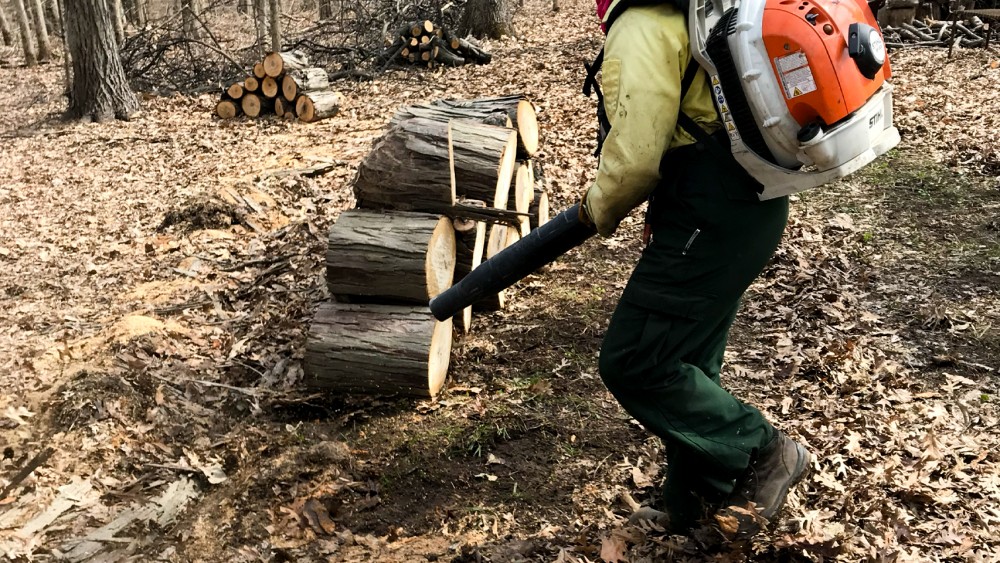
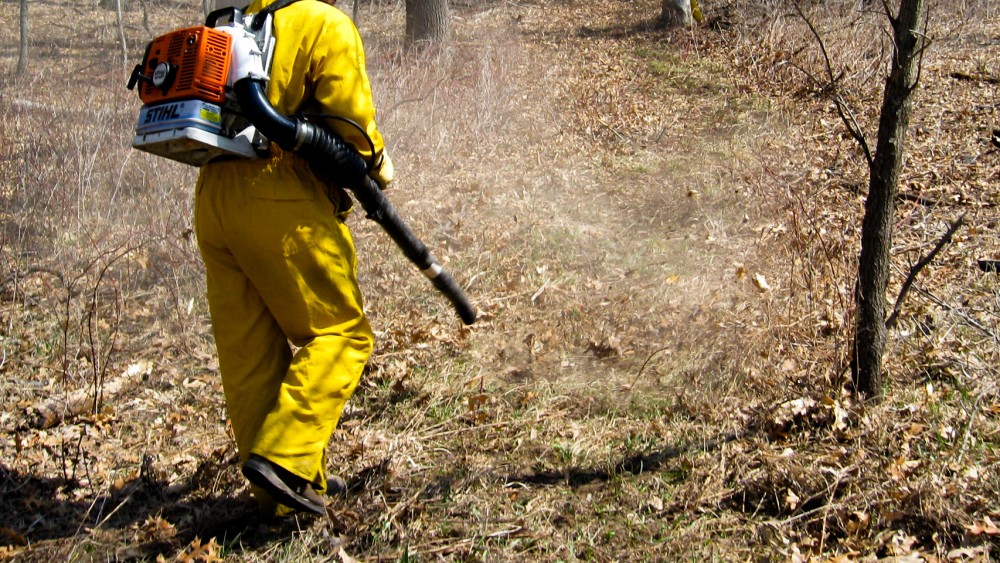
- Clearing the area down to bare mineral soil: used to completely blow dry leaves and fallen branches off the firebreak down to the soil layer to break the continuity of the fuel, leaving the fire nowhere to spread.
- Mop-up operations: extremely effective for herding smoldering embers or perimeter sparks back into the "black zone" (the area already burned), as well as thoroughly dealing with small piles of debris.
Once we understand the core essence of the work here, our perspective on choosing a machine changes immediately. Instead of just looking for a box labeled with the most extreme specs, we begin to focus on well-balanced power and air volume, durability, maneuverability, and comfort when worn on the back. These qualities are the true allies that will help us navigate field operations smoothly and safely.
The first thing to look at isn't just air power, but your "primary task" first.
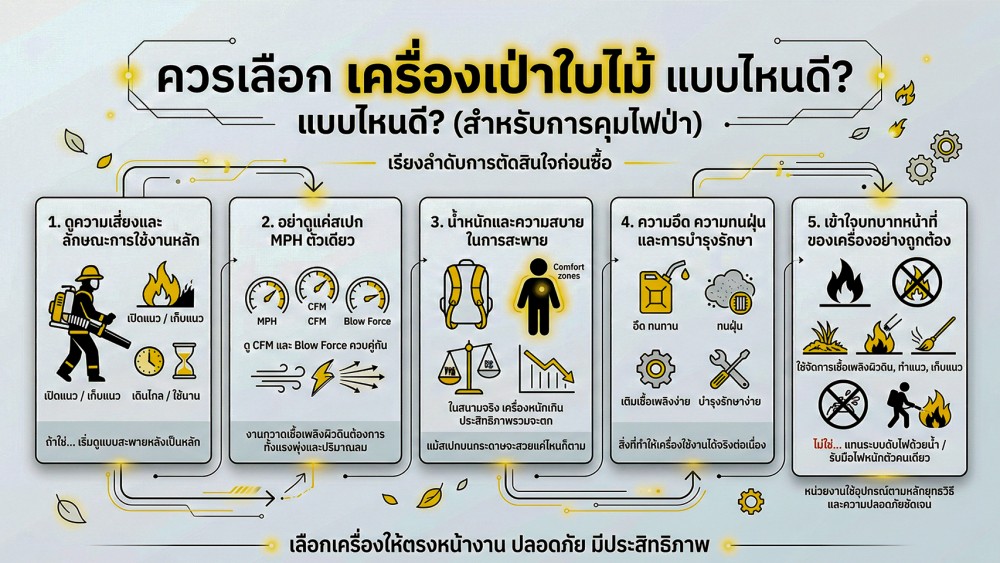
When choosing a leaf blower to tackle wildfire operations, the first question to answer is: what will you mainly use it for? This answer will help pinpoint which machine is truly right for you.
- Marathon operators (long walks, establishing long lines, steep slopes): We recommend choosing a "backpack blower" because it distributes the weight across your back and shoulders, avoiding the arm fatigue caused by handheld models. Plus, pro-grade backpack blowers (such as top-tier models like the STIHL BR 800) typically deliver extremely high blowing force, built specifically for heavy-duty and continuous work.
- Support operators (small areas, brief usage, frequent pickup): If the job site isn't tough enough to require walking and carrying it all day, a compact machine is more than sufficient. You'll gain an advantage in maneuverability and a significantly lighter weight.
Don't just look at MPH; check the CFM and Blow Force of the leaf blower too.
A common mistake when choosing a leaf blower is only looking at the air speed (MPH) figure because it's easy to understand and feels like higher numbers mean satisfying power. But for wildfire control, which requires clearing both dry leaves and various debris, air speed alone isn't enough! The true specs require looking at these 3 metrics together:
- Air Speed (MPH): Delivers high-velocity, penetrating airflow.
- Air Volume (CFM): Helps sweep and move "large volumes" of debris at once.
- Total Blowing Force (Blow Force - in Newtons): This is the decisive metric that summarizes the overall efficiency of the air coming out of the nozzle for easy comparison (leading brands like STIHL or Husqvarna now list this as a primary spec).
Simply put, for cutting firebreaks in forests with thick layers of accumulated leaves, we don't just need "sharp, high-velocity air," but rather airflow that can push large masses of leaves broadly and continuously. So, don't get swayed by MPH figures alone! If the air speed is sky-high but the air volume (CFM) is low, in real field conditions you'll immediately feel that the airstream is narrow, clearing lines takes too long, and you'll exhaust yourself for nothing.
Leaf blower weight is more important than people think.
Many people getting excited about air power when choosing a leaf blower forget to weigh in the machine's actual weight. But for field operations, weight is practically the deciding factor in whether you can "actually use it." Clearing lines in forest terrain isn't like blowing a front yard—there are tree branches, uneven ground, inclines, declines, and sometimes quite a long hike just to reach the work zone.
A machine that is extremely powerful but puts too much strain on the shoulders can exhaust the operator quickly, preventing continuous work or slowing down movement. In wildfire control, lost time isn't just an inconvenience; it affects whether you can establish the line in time. Therefore, when choosing, don't look only at the dry weight—factor in fuel, PPE, and real-world use across actual terrain.
A simple way to think about it: if a machine is 20–30% more powerful but significantly shortens how long an operator can work, that machine might not be truly worthwhile for your team. Balancing airflow power and weight is always more important than chasing maximum numbers.
Check the engine system and continuous operating time
Working deep in the forest like this sometimes means walking far from vehicles or rest areas. The endurance of a leaf blower is just as important as its power! For tackling forest fires, petrol-engine models are definitely better than battery-powered ones because they can provide long, continuous power without the worry of finding charging stations or carrying heavy spare batteries. Therefore, when choosing one, in addition to power, don't forget to look out for these specifications as well.
- Fuel capacity & consumption rate: Is the fuel tank large enough? Is it fuel-hungry? (Top-tier heavy-duty models like the Husqvarna 350BT or STIHL BR 800 clearly specify this data to support heavy-duty work)
- On-site agility: Is it easy to refuel along the way, and is post-operation maintenance complicated?
In simple terms, sky-high spec numbers aren't always the best. The real key is overall continuous operation. Especially if you have to go into remote areas, a machine that runs stably, durably, and stays with you for a long time will reduce your burden much more than an extremely powerful machine that gulps fuel and forces you to stop and refuel constantly.
Tube and nozzle structure also affects actual performance
A small detail that many people often overlook is the nozzle and tube tip style. Yet, this part has a huge impact on actual on-site use! Did you know that each type of nozzle tip produces different airflow behavior? Some focus on concentrated, penetrating air, while others focus on wide sweeping airflow. Professional brands like STIHL even separate spec numbers based on the type of nozzle tip.
For clearing firebreaks or blowing away dry leaves, what we need most is precision. We need to control the airflow direction accurately so that the air doesn't disperse randomly and blow sparks or embers in the wrong direction.
Buying tips: Consider these additional points
- Does the nozzle tip control the airflow direction as desired?
- Can you adjust the blowing angle conveniently?
- Is the tube length suitable for your height and build? (So you won't have to bend down or strain your arms during use)
Remember: no matter how powerful the machine's specs are, if controlling the nozzle feels awkward... in real field use, you'll be exhausted for nothing and struggle to control your work!
Summary
If you ask what to buy Leaf Blowers & Vacuums For tackling forest fires, which model should you choose? The best answer isn't picking the model with off-the-charts specs, but choosing the one that best suits your actual on-site work. As mentioned, the primary role of this equipment is creating firebreaks, clearing fuel debris, and cleaning up after the fire has passed. It is not a magic tool that can blow out fires instead of using water in every situation.