


 EN
 ไทย


Customers Also Purchased
If you are researching Electric Tow Tractors whether for use in factories, warehouses, or distribution centers, Nong Chang is confident you've encountered this question before:
"Should you choose a sit-down or stand-on model?"
At first, it might seem like a minor detail—just a change in driving posture. But in real-world use, especially for repetitive tasks throughout the day, this difference has a massive impact on speed, workflow smoothness, operator fatigue, and long-term costs.
Nong Chang has seen many facilities pick the wrong type despite buying great machines, only to end up with slower operations, reluctant operators, or unexpected workflow bottlenecks. This article breaks down in detail how sit-down vs. stand-on electric tow tractors differ, and how to choose the right one for your actual application.
What is an electric tow tractor? Understand before choosing so you make the right choice
Electric Tow Tractor It is equipment used for towing items such as pallets, carts, or various equipment within a workspace, powered by electricity instead of fuel.
What makes electric tow tractors increasingly popular is that they meet the needs of both the environment and practical applications.
- No emissions/smoke → Can be used indoors
- Quiet operation → Suitable for enclosed spaces
- Easy maintenance → No complex engine maintenance required
- Continuous operation → Suitable for industrial tasks
In many businesses, an electric tow tractor is not just a "helper," but truly the "heart of the workflow." Once you put it into practical use, the next crucial question is whether to choose a sit-down (ride-on) or stand-on model.
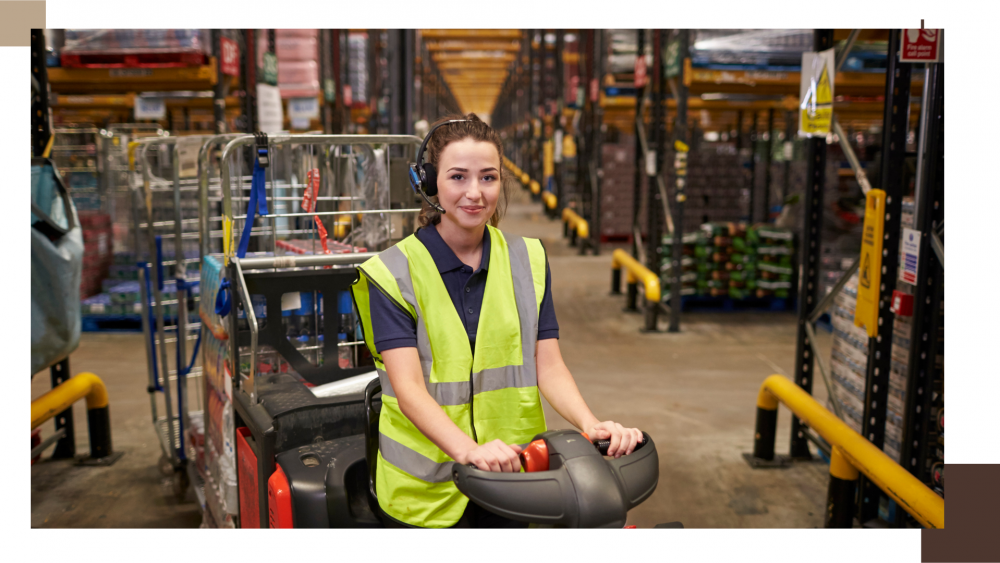
What is a ride-on electric tow tractor and what kind of work is it suitable for?
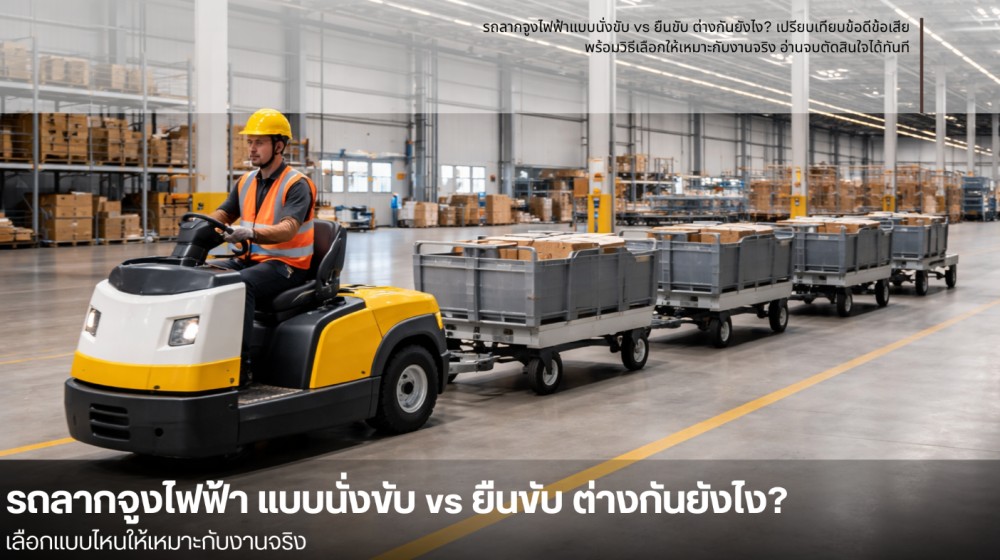
Ride-on Electric Tow Tractor This model is designed for the operator to "sit and control" it, just like driving a compact vehicle.
This point might seem small, but in actual on-site work, it completely transforms "work habits." The feel of a sit-down model provides stability, continuity, and comfort.
Imagine a task that requires towing goods from one end of a factory to the other dozens of times a day. If you use a stand-on model, the operator will get fatigued very quickly. And once fatigue sets in, precision and speed drop immediately.
However, with a ride-on model, physical strain is significantly reduced, resulting in:
- Continuous operation
- Consistent speed
- Reduced errors
Another interesting point is control in open areas: the sit-down type provides greater stability because the seating position allows for steadier steering and directional control.
Advantages of a Ride-on Electric Tow Tractor
- Reduces operator fatigue over the long term
- Suitable for long-distance operations
- Performs well in continuous operations
- Stable and secure control
Limitations you need to know
Requires more space
Harder to turn in tight spaces
Not suitable for jobs that require frequent stops
In summary: The sit-on type “excels” in long, continuous tasks and open spaces.
What is a stand-on electric tow tractor, and what kind of work is it suitable for?
Stand-on Electric Tow Tractor This model is designed for the operator to "stand and control" on the vehicle. The feel is distinctly different from the sit-on type, focusing on "speed and maneuverability".
Imagine warehouse work that requires stopping, mounting and dismounting, turning, and changing directions constantly.
The stand-on type is ideal because the operator can:
- Quickly mount and dismount
- Control quickly and responsively
- Change directions easily
It’s like a tool designed specifically for “fast-paced work”.
Advantages of a stand-on electric tow tractor
- Highly maneuverable
- Turns well in tight spaces
- Ideal for tasks requiring frequent stops
- Quick mounting and dismounting
Limitations
- Standing to drive for long periods can cause fatigue
- Not suitable for long-distance transport
- Drivers will tire quickly with continuous all-day operation
In summary: The stand-on type "excels" at tasks requiring speed, agility, and confined spaces
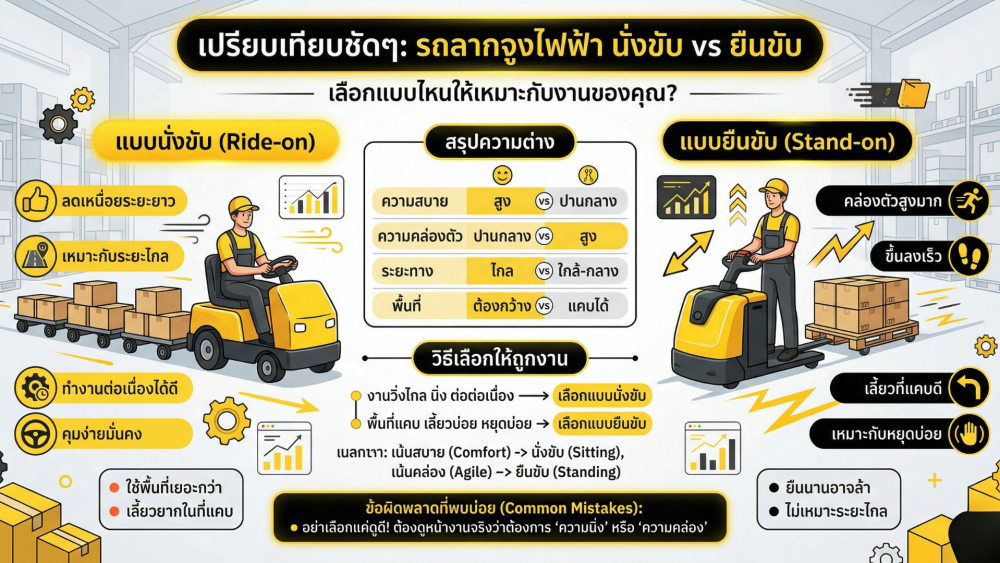
Comparison between Sit-on vs. Stand-on Electric Tow Tractors
| Factor | Sit-on | Stand-on |
| Comfort | Very high | Medium |
| Maneuverability | Medium | High |
| Distance | Long | Short to medium |
| Coverage Area | Requires wide space | Can be narrow |
| Mounting and dismounting | Slow | Fast |
| Warehouse Suitability | Medium | High |
What Nong Chang wants you to see is that neither is "better"—there is only which is "more suitable."
Which electric tow tractor should you choose?
Before choosing, Nong Chang wants you to pause and think for a moment: don't start with "which model should I buy?", but rather with "what does your job entail?"
If your work involves
- Long travel distances
- Extended operating hours
- Infrequent turns
The sit-on type will help the entire operation run more steadily and smoothly
However, if your work involves
- Narrow spaces
- Frequent turns
- Constant stop-and-go
The stand-on type will immediately improve your workflow efficiency
Put simply: prioritize comfort → sit-on; prioritize agility → stand-on
On-site Insight: Common Mistakes Many Companies Make
Nong Chang sees this very often: many companies choose Sit-on electric tow tractor Because
- Looks better
- Thought it would be more comfortable
But forgot to look at "what the actual job site is really like"
In actual operation
- Hard to turn
- Wastes time
- Work slows down
Once switched to the stand-on type, work improved immediately
This is what Nong Chang really wants to emphasize: choosing wrong from the start = wasting both time and money
And in the end... is the difference really just "sitting vs. standing"?
At a glance, it might seem like just a change in driving posture, but once put to work in the field, you'll immediately see that it's much more than that.
The sit-on type feels like a "machine that keeps cruising steadily"—the operation is steady, continuous, and ideal for days when you need to tow loads over long distances and multiple trips without exhausting the driver too quickly. Meanwhile, the stand-on type is like a "machine ready to move at any moment"—stops quickly, goes quickly, turns agilely, perfect for jobs requiring constant movement without any room for delays.
Once you start seeing it this way, choosing is no longer a matter of "which one is better." Instead, it becomes a question of whether your work requires "stability" or "agility." And once you can answer this question, you will know exactly which one to choose without having to guess.
Looking back at your own job site once again
Nong Chang wants you to visualize your actual job site, rather than just looking at the specifications or product photos.
Ask yourself honestly:
- How long does the operator have to stay on the machine?
- Do they need to turn frequently?
- Is the area open, or narrow where you constantly have to maneuver around obstacles?
Because in the end, Electric Tow Tractors the "right" choice isn't the one that looks best in the catalog, but the one that, once put to use, you don't have to fight with, and doesn't force workers to strain themselves.
If you make the right choice, you won't feel a thing... because everything will run smoothly on its own. But if you choose wrong, you'll start feeling it from day one that it's "not quite right," and that is the clearest sign of all.