


 EN
 ไทย



Customers Also Purchased
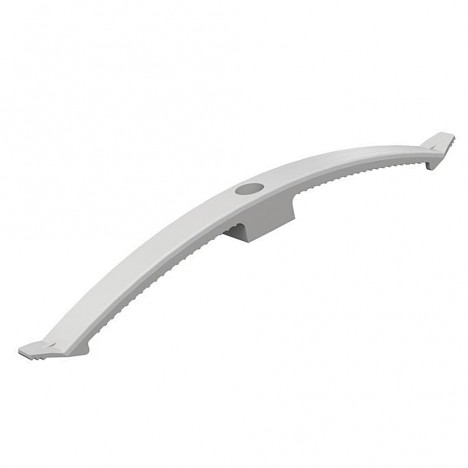
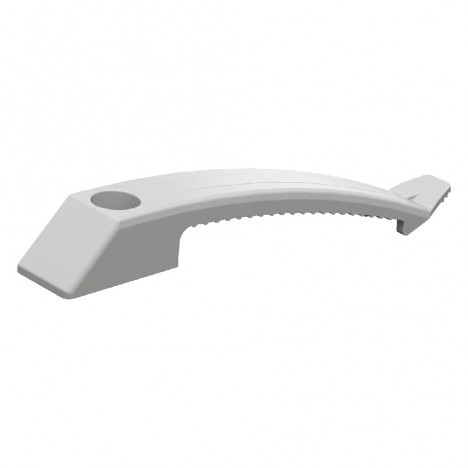



Have you ever noticed that... Cable Tie It's extremely easy to use: just insert, pull, and you're done. But the moment you try to pull it back, it doesn't budge at all. In fact, the harder you pull, the tighter it gets—sometimes unexpectedly tight. This experience makes many wonder how such a small piece of pure plastic, with no springs or metal, can create such a remarkably tight locking force.
The truth is, a cable tie is not just a "thing for bundling wires"; it is the result of simple yet ingenious engineering design. Utilizing basic mechanical and physical principles, it creates an automatic one-way locking system—and the greater the force applied, the tighter it locks.
A tiny locking head concealing an entire mechanical system inside
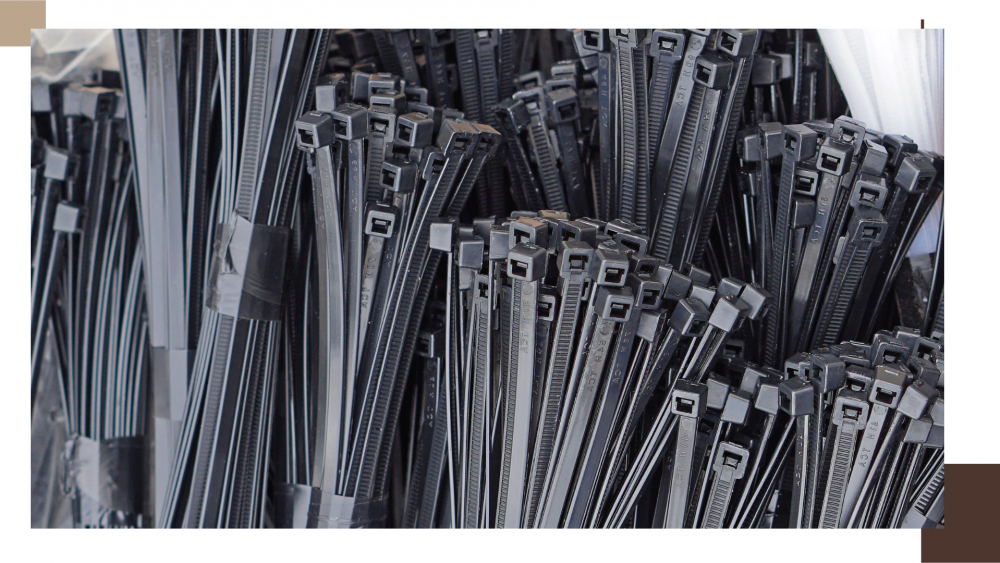
Looking from the outside, a cable tie's locking head may look like an ordinary piece of plastic. In reality, the interior features a carefully orchestrated structure with distinct functions: a main housing frame, a pawl that acts like a spring, and serrated teeth along the strap serving as anchor points.
What's fascinating is that the entire system is molded from a single piece of plastic. By taking advantage of material properties like nylon's flexibility and resilience, it eliminates the need for springs or extra separate parts while maintaining precise and durable functionality.
Locking Mechanism: Why It Goes In, But Won't Come Out
When you insert the tip of the cable tie into the locking head, the pawl is pushed up slightly to clear the way for the teeth to slide through smoothly. This is why it feels "easy to pull through." However, the moment the teeth pass that point, the pawl snaps back down and presses firmly onto the teeth.
The key lies in the shape of the teeth, which are designed with a sloped angle on one side for smooth insertion, and a steep angle on the other side to prevent backward movement. When reverse tension is applied, the pawl is pressed down even tighter instead of lifting up.
The result is a lock that tightens even further when pulled backwards—a signature feature of a one-way gearing system, mechanically known as a ratchet mechanism.
The Physics Behind It: Tension Converted into Compression
What actually happens in this system is the conversion of tensile force into compressive force between the pawl and the teeth. The greater the pulling force in reverse, the harder the pawl is pressed against the teeth, increasing friction accordingly.
In other words, the force you use to pull it loose automatically turns into the force that locks it tighter. This is why cable ties provide that "the harder you pull, the tighter it gets" feel, even without any complex internal components.
Why Some Cable Ties Lock Extremely Tight While Others Are Loose
Even with identical mechanisms, locking quality can differ significantly depending on material quality and manufacturing precision. Sharp, uniform teeth allow the pawl to engage fully, whereas shallow or irregular teeth drastically reduce holding strength.
Material is another crucial factor. High-quality nylon provides the right balance of flexibility, allowing the pawl to depress and rebound effectively. In contrast, overly rigid materials may prevent the pawl from flexing properly, while overly brittle materials can cause the pawl to snap easily.
The Weak Point of the Locking Head Most People Miss
Despite the high efficiency of this locking system, its critical vulnerability lies in the pawl, which constantly bears the load. If the pawl deforms or wears down, locking strength weakens immediately. Additionally, if the teeth wear out or debris gets trapped between them, holding power will also decrease.
This explains why cable ties sometimes "slip loose on their own" even without unusually high tensile force.
Why Cable Ties Cannot Be Released and Shouldn't Be Reused
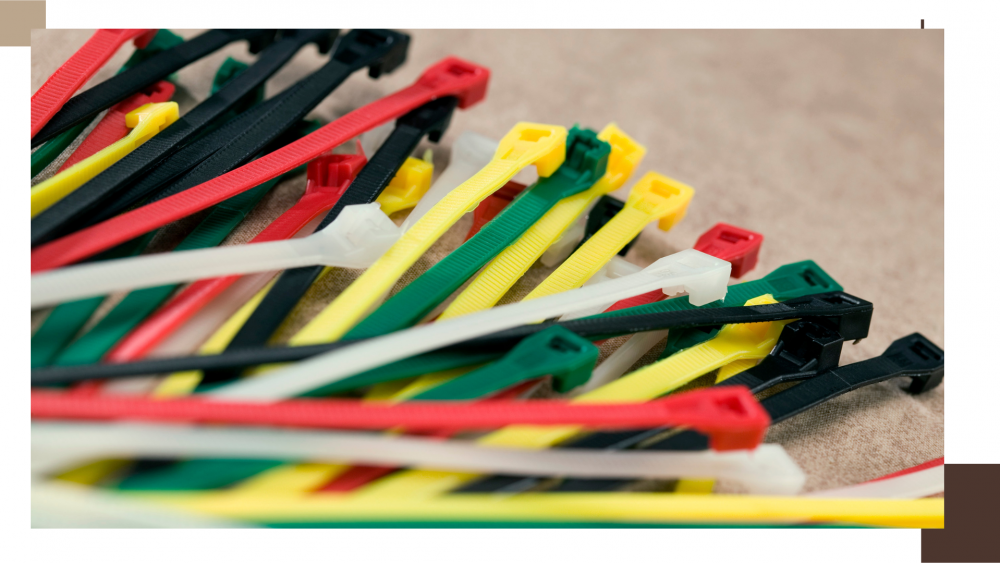
Cable ties are designed as single-use devices. The locking pawl is positioned so that it cannot be easily lifted back, and with constant pressure applied, attempting to pull it backward only tightens it further.
Although a tool can be used to pry it open for release, this process often deforms the locking pawl. When reused, its strength is significantly reduced to the point where it should not be used in applications requiring a secure hold.
Releasable cable ties: An option traded off with strength
Releasable cable ties are designed with a tab to lift the locking pawl, allowing the strap to slide back. However, adding this mechanism reduces the overall locking force because space and movement must be accommodated for the release system.
Therefore, they are more suitable for applications requiring flexibility in use rather than maximum strength.
Factors that cause the locking head to degrade without you realizing it
Even if it locks tightly at first, over time, the locking capability may decrease due to external factors such as sunlight making the plastic brittle, high temperatures softening the material, and vibrations causing the teeth to wear down.
Another commonly encountered factor is overtightening from the start, which places the locking pawl under constant stress and causes it to deteriorate faster than normal.
Technician's tips: How to use them for a tight lock and long-lasting durability
Using cable ties with maximum efficiency does not depend on force alone, but also on how they are used. Pulling them to a proper tightness helps the locking pawl operate within an optimal range without creating unnecessary stress.
Aligning the locking head straight and avoiding twisting helps distribute force evenly to the locking pawl and reduces the chance of the system weakening over the long term.
Why cable ties often fail at the head
In many cases, cable ties do not snap along the strap, but fail at the locking head because it is the point that bears the most load and experiences the most movement. The locking pawl must constantly press against and rub against the teeth, making it the most vulnerable point to wear and tear.
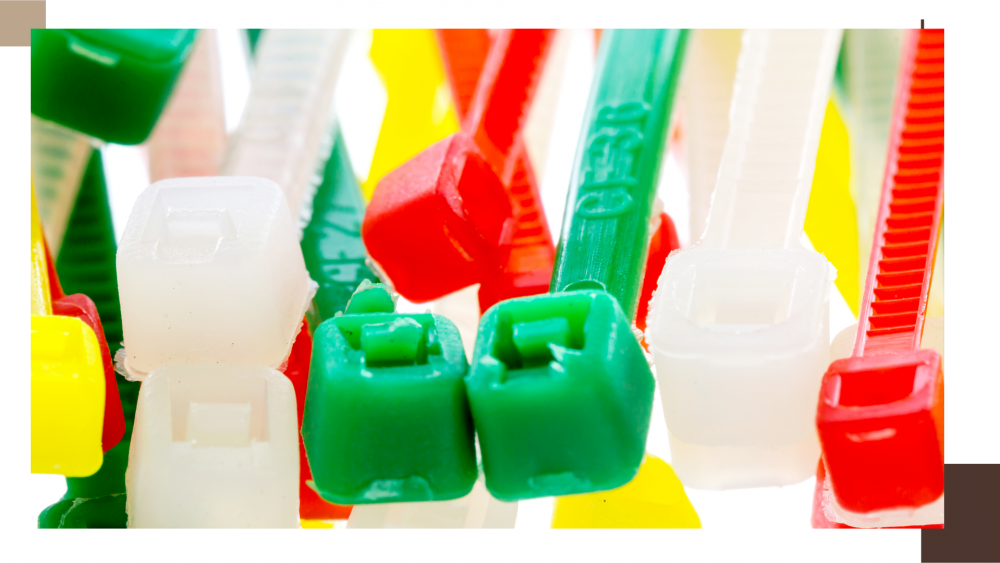
A small mechanism that turns tensile force into tight security
The locking head of a Cable Tie operates on a one-way ratcheting system, using a locking pawl and gear teeth to create a lock that slides in only one direction and cannot reverse. The key principle is converting tension into compressive force, so that the more force applied, the tighter the lock becomes.
Although it is a simple mechanism, its efficiency depends on material quality, design, and proper usage. Understanding this principle will allow you to select and use cable ties correctly, easily avoiding problems that many people overlook.