


 EN
 ไทย


Customers Also Purchased


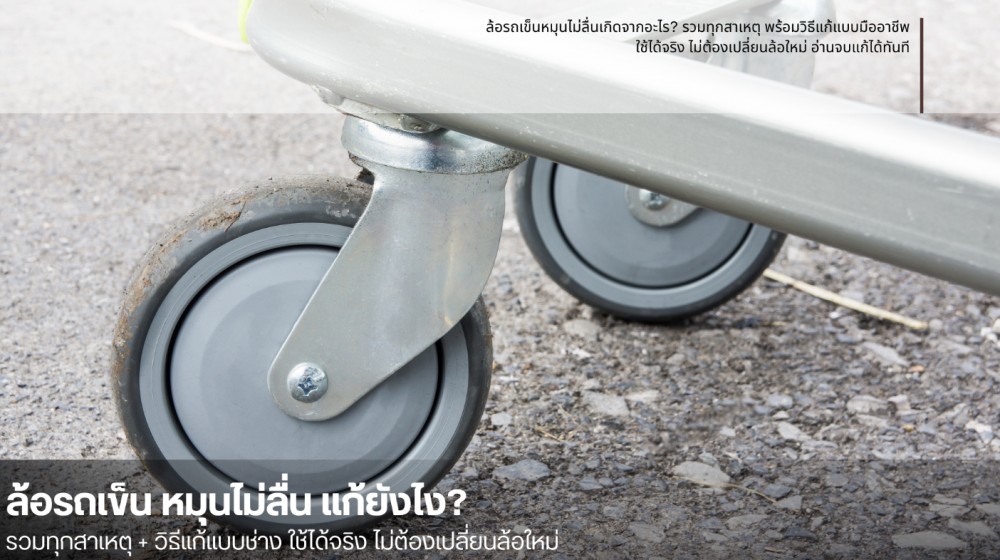
Casters and Wheels Stiff rolling is a common problem in almost all material handling tasks, whether in industrial plants, warehouses, restaurants, hospitals, or even home use. Symptoms usually start small, such as feeling more resistance when pushing, requiring more effort than usual, or hearing faint squeaks. However, if left unaddressed, this issue can escalate into difficult handling, wheels refusing to roll, catching, or even causing damage to the trolley's entire system.
When encountering this issue, many people immediately assume that "the wheels are broken" and decide to replace the entire set. While this may be the right solution in some cases, in reality, more than half of the stiff trolley wheel problems stem from minor causes that can be resolved without high costs if you know how to properly inspect and fix them.
This article will walk you through all the key causes of stiff trolley wheels, along with practical, professional solutions and preventive guidelines, so your trolley wheels can roll smoothly again and enjoy a longer service life.
How trolley wheels work and why they get "stiff"
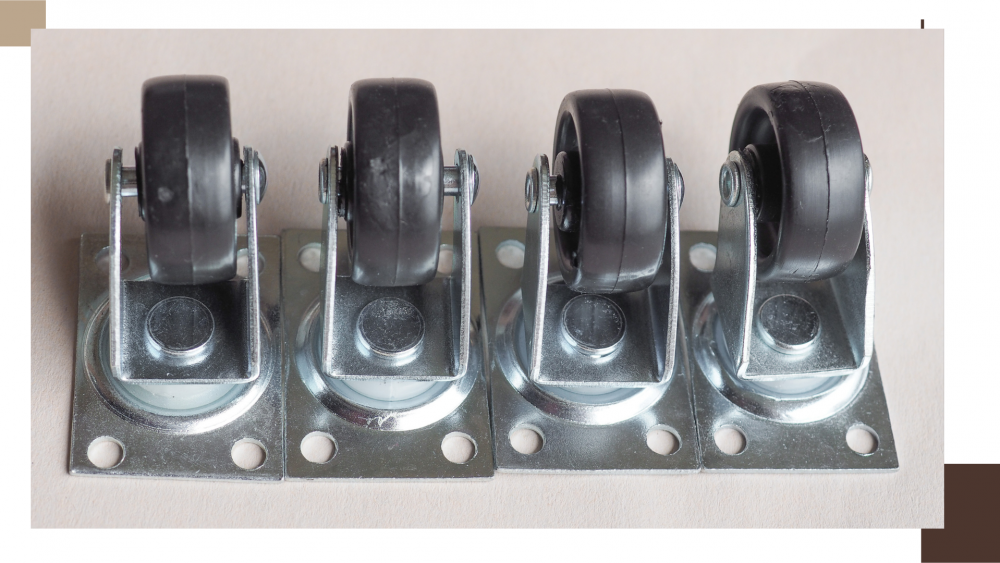
A typical trolley wheel consists of 3 main parts: the Wheel, the Axle, and the rotation system such as Bearings or Bushings, which function to reduce friction and allow the wheel to rotate freely. When any part of this system malfunctions—whether due to increased friction, structural deformation, or foreign objects obstructing rotation—the wheel will immediately begin to feel stiff.
The importance of understanding this construction is that it helps you accurately diagnose the problem and pinpoint where to fix it, rather than unnecessarily replacing the entire set.
1. Debris wrapped around the axle: The #1 cause many overlook
In real-world environments, trolley wheels constantly encounter dust, scraps of paper, hair, string, or plastic debris. Especially in areas with continuous use, these materials gradually wrap around the wheel axle unnoticed by users. As they accumulate, they create rotational resistance.
Noticeable symptoms include wheels becoming increasingly stiff to rotate, failing to complete a full revolution, or occasionally jerking slightly while pushing.
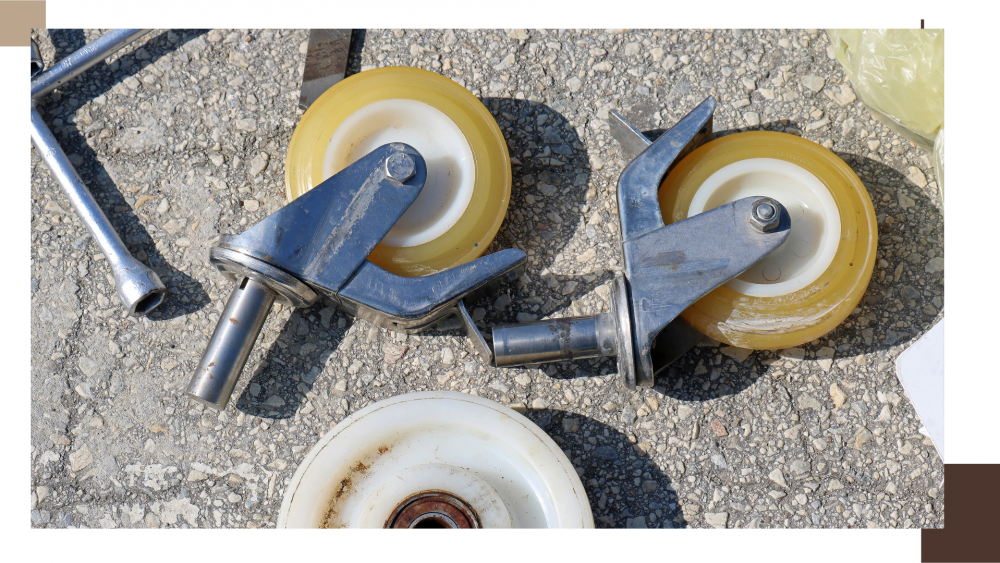
The solution is thorough inspection and cleaning. You should turn the trolley upside down, inspect the axle area, and use pliers or a screwdriver to gently remove all wrapped debris. If there is sticky residue, wipe it clean with a cloth dampened with a cleaning solution. This step is the simplest method, yet it resolves the issue in many cases.
2. Lack of lubrication: Directly increases friction
The bearing system or pivot points of trolley wheels require lubricants, such as oil or grease, to help reduce rotational friction. Over extended use, lubricants degrade, dry out, or get washed away, preventing the wheels from turning as smoothly as before.
Clear symptoms include stiff wheel rotation, squeaking noises, or the wheel coming to an unusually quick stop after spinning.
The solution is to reapply lubricant by choosing a lubricating oil suitable for the application. Apply it around the axle or bearing areas, then spin the wheel to distribute the lubricant evenly. However, be careful not to apply too much, as excess oil can easily attract and accumulate dust.
3. Worn or damaged wheel bearings
Bearings are the heart of wheel rotation. If the bearings begin to wear out, the wheel will not roll smoothly, resistance will increase, and abnormal noises may emerge from within.
Symptoms indicating bearing issues include a stuttering or catching sensation during rotation, grinding noises, or uneven spinning—even after cleaning and lubrication.
In this case, the appropriate fix is to replace the bearings. If they cannot be disassembled and replaced, replacing the entire wheel may be necessary, which is often a faster and more cost-effective choice in the long run.
4. Exceeding the wheel's load capacity
One of the causes of stiff trolley wheels and premature wear is exceeding the load rating that the wheels can support. Many people assume that the load capacity of the entire trolley equals the individual capacity of each wheel, which is incorrect.
The total weight is distributed among the wheels. For example, a 4-wheel cart rated for 400 kg means each wheel supports approximately 100 kg. If loaded beyond this capacity, the wheels can deform—such as swelling, flattening, or suffering internal structural damage—resulting in stiff, sluggish rotation.
The solution is to use the equipment within its rated capacity, and if necessary, upgrade to wheels with a higher load rating, such as Heavy Duty wheels.

5. Deformed Wheels from Misuse or Prolonged Parking
Wheels that bear a static load for an extended period without moving can develop a "flat spot" on one side, causing them to lose their perfect roundness.
When pushed again, you will feel a rhythmic bump and notice that the wheels no longer roll smoothly.
In some cases, this condition may improve with continuous use, but if the wheel is visibly deformed, replacing it with a new one is the best option.
6. Overtightened Installation Restricting Free Rotation
Caster stiffness is not always caused by the wheel itself, but rather by improper installation—especially overtightening the axle bolt, which pinches the wheel axle and prevents it from spinning freely.
The fix is to loosen the nut slightly and adjust the tension until the wheel spins freely while remaining securely fastened.
7. Choosing the Wrong Wheel Type for the Floor Surface
The operating surface directly impacts wheel performance. Choosing an improper wheel material increases rolling resistance and prevents smooth rolling.
For example, smooth and hard floors are ideal for nylon or PU wheels, while uneven surfaces require rubber wheels to help absorb shocks. Choosing the wrong type leads to friction, difficult pushing, and rapid wear.
How to Inspect Trolley Wheels Like a Pro
Before deciding to replace the wheels, follow these inspection steps: First, check for debris wrapped around the axle; next, inspect the lubrication; then, test the bearings for smooth rotation; verify that the load capacity is not exceeded; check the wheel's physical condition for deformation; and finally, inspect the installation to ensure the bolts are not overtightened.
Following this sequence will help you accurately pinpoint the problem and choose the most appropriate fix.
How to Maintain Trolley Wheels for Smooth Rolling
Prevention is always better than cure. Regular maintenance significantly reduces the chances of problems. Clean the wheels and axles regularly, routinely inspect and reapply lubricants, avoid overloading, and select the appropriate wheel type for your floor surface.
Conclusion
Casters and Wheels Stiff trolley wheels can be caused by various issues, but most can be fixed without needing a replacement if you know how to inspect and troubleshoot properly. Paying attention to small details—such as cleaning, lubricating, and operating within proper limits—will keep your cart wheels rolling smoothly and extend their service life in the long run.