


 EN
 ไทย


Customers Also Purchased


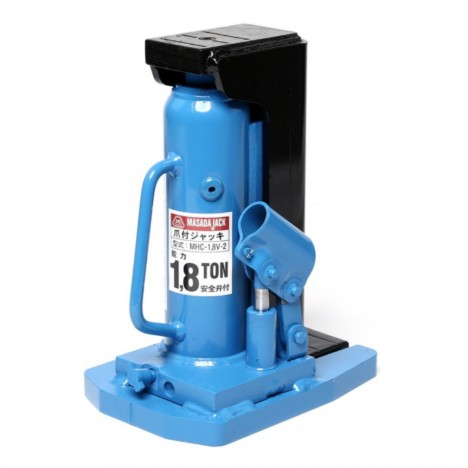
If you ask whether Bottle Jacks What is it? Imagine a compact object that can lift heavy loads weighing tons. When pumping the handle, we don't feel like we have to exert much effort at all. If you ask why, some might simply explain, "Well, it's because of the hydraulic system." Others focus on the oil or the long handle. But if you ask what truly creates that massive lifting force, the answer certainly doesn't lie in a single component, because a bottle jack operates through the coordination of both Receiving, transmitting, multiplying, and controlling force.
When talking about the "force multiplier" of a bottle jack, we need to distinguish between mechanical force multiplication and hydraulic force multiplication. Both work in tandem: a small force from a person's hand is converted into downward force, then into fluid pressure, before being transmitted to exert force on a larger piston. Once this is understood, it becomes clear why bottle jacks that look similar can feel different during operation, lift at different speeds, and offer varying durability.
In this article, we'll dive deep into the construction of a bottle jack to see what the true "force multiplier" is—whether it's the handle lever, the pump piston, the oil, or the cylinder bore area. We'll also examine how worn, leaking, or bent components, or air in the system, affect lifting, helping you understand bottle jacks well enough to operate them safely and diagnose basic symptoms.
What are the main components of a bottle jack?
Before answering what the "force multiplier" is, we first need to look at the overall construction of a bottle jack. Without knowing what each part does, it's impossible to understand the system component by component, leading to easy misconceptions—like thinking it's all just about having oil. In reality, the answer to the question of Why can a bottle jack lift heavy loads despite its compact size? involves much more detail than that.
1. Body and Base
The body and base of a bottle jack support the entire load. If the base isn't rigid, square, or becomes warped, force is lost to tilting, leading to improper load distribution. For heavier tasks, the rigidity of the base becomes even more crucial for safety and stability.
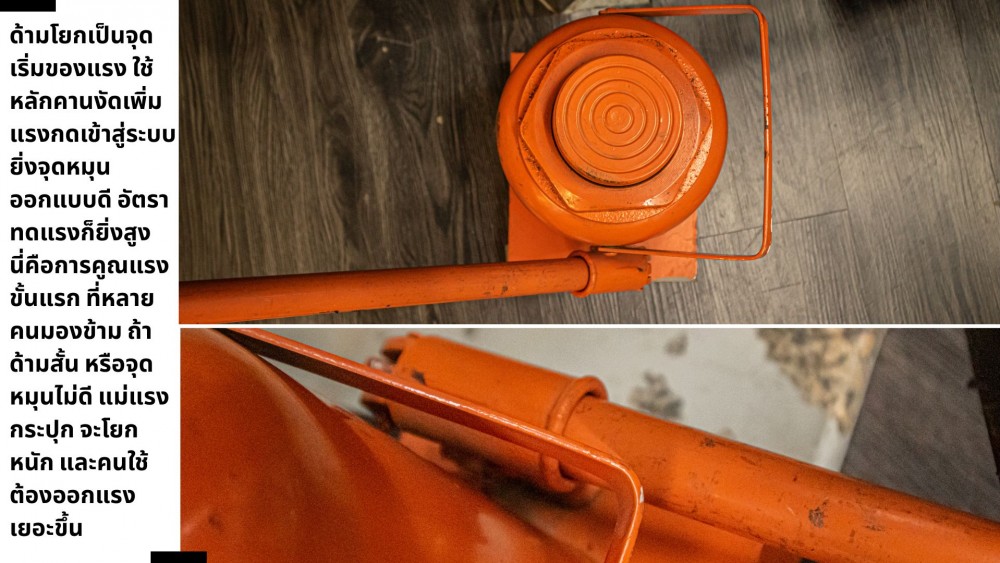
2. Lever Handle and Pivot Point
3. Pump Piston
The pump piston receives force from the lever handle and converts it into oil pressure. While not the direct lifting element, it is the primary pressure generator in a bottle jack. The smaller its cross-sectional area, the higher the pressure it can generate with the same input force.
4. Check Valve and Release Valve
Valves control the oil's direction and hold the pressure. If the check valve does not seal completely, the bottle jack will lift more slowly and fail to hold its position or slowly collapse. A poorly sealed release valve can also cause internal pressure leaks.
5. Main Cylinder and Ram Piston
This part converts oil pressure back into actual lifting force. The larger the surface area of the ram piston, the greater the lifting force, though it also requires more oil volume. This is why heavy-capacity jacks lift more slowly.
6. Hydraulic Oil
Oil is the pressure-transmitting medium of a bottle jack. Hydraulic oil must flow well, resist foaming, and not degrade seals. If the oil degrades or has air trapped inside, the system will feel spongy, sag, or fail to lift at full capacity.
7. Seals, O-rings, and Gaskets
Seals and O-rings are responsible for containing the pressure. If worn or damaged, pressure will leak, causing the bottle jack to fail to reach full lift or hold its load. In many cases, repairs simply come down to replacing seals rather than major components.
What is the true force multiplier of a bottle jack?
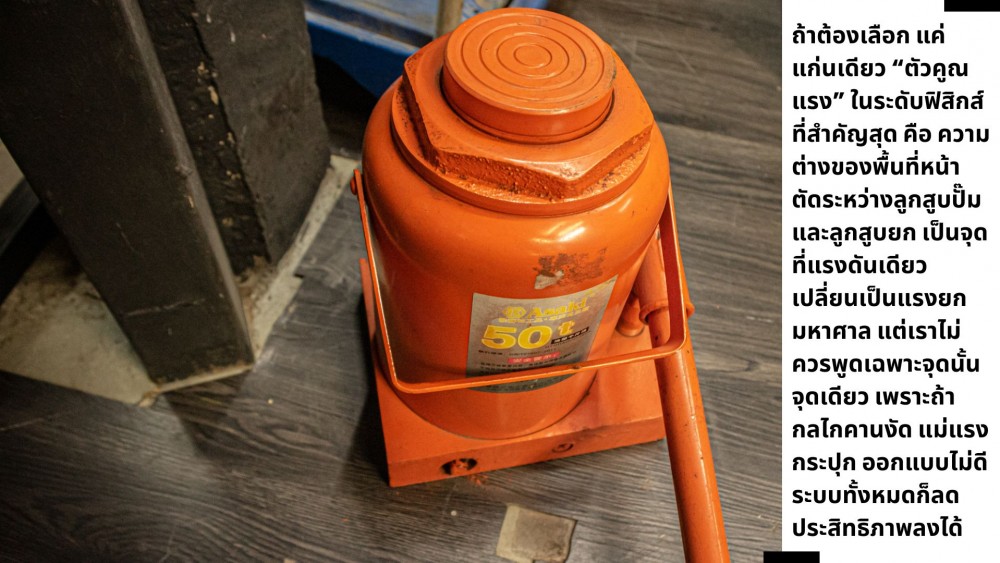
The true "force multiplier" of a bottle jack is a two-stage force multiplication system working together, consisting of mechanical force multiplication from the handle and pivot point, combined with hydraulic force multiplication from the difference in cross-sectional areas between the pump piston and the ram piston.
Therefore, saying "the oil is the hero" is an incomplete answer, because oil is merely a medium for transmitting force—it does not create force multiplication on its own. Answering that "the large piston is the answer" is also incomplete, because without transmitted pressure, the large piston does nothing. Meanwhile, answering that "a long handle provides high force" is only correct for the first stage of the system. A complete answer must look at the entire power transmission chain, from the user's hand all the way to the contact point with the load.
Stage 1: Force multiplication from mechanical leverage
The first stage of force multiplication in a bottle jack is the most basic yet powerful leverage mechanism. Almost every bottle jack user experiences it intuitively: the longer the handle and the more optimally the pivot point is designed for leverage, the more manual input force is transformed into downward force at the other end. When well-designed, you will immediately feel that pumping is smooth and continuous, without kickback or jerky effort, which impacts both safety and the lifespan of the pump system.
Stage 2: Force multiplication from cross-sectional area difference
This is the stage that truly turns a bottle jack into a heavy-duty lifting tool. In short, the principle is "Pascal's Law" Pressure generated in the fluid is uniform throughout a closed system, but the force exerted on a piston depends on its cross-sectional area.
If the ram piston is several times larger than the pump piston, the resulting lifting force will also be multiplied by several times. The advantage is requiring minimal manual effort; the trade-off is needing multiple pump strokes to deliver sufficient fluid volume to lift step by step. This is why bottle jacks often seem slow yet powerful.
To visualize it simply: your hand pushes down on the handle with a certain force. The handle and pivot amplify this force onto the pump piston. Then, the pump piston—with its small cross-section—generates high pressure in the oil. This pressure travels to the main cylinder and acts upon the ram piston, which has a larger cross-section. With a larger surface area, the total force produced on the ram piston is high enough to lift immense weight. This is what the term "force multiplier" truly means—not any single component, but a design where force passes through each stage and is continuously amplified without excessive losses.
The handle initiates force multiplication, the oil transmits the force, and pistons of different sizes amplify the force to heavy lifting capacity.
Why does a bottle jack struggle to lift, or fail to hold its load?
Common symptoms of a bottle jack are few, but each clearly reflects issues within the force multiplication system. If it lifts slowly, suspect air in the system, low oil level, a leaking check valve, or degrading pump piston seals. If it lifts but won't hold the load, it means accumulated pressure cannot be maintained properly—it may be leaking through the release valve, internal seals, or dirt trapped on the valve seat preventing a tight seal.
A common mistake people make is assuming that as long as the bottle jack can still lift, it is operating normally. In reality, the force multiplication system may have already begun losing efficiency, even if it hasn't completely failed yet. This is extremely hazardous because lifting jobs with bottle jacks should never wait until an outright failure to be repaired. Especially when working under vehicles, beneath machinery, or supporting heavy loads, even the slightest drop has severe safety consequences.
Warning signs you should not overlook
- Pumping an unusually high number of strokes before the bottle jack begins to lift
- The bottle jack lifts up and then gradually sinks on its own
- The handle feels spongy or has a lot of air bubbles.
- Oil seepage stains around the ram shaft or the base of the bottle jack.
- Lowering is not smooth, or it lowers with intermittent jerking.
- Tilts or wobbles more than usual when lifting at full capacity.
These symptoms not only indicate that the bottle jack is developing issues, but also warn that the internal "force transmission" system is no longer transferring power as completely as before.
Understand the structure of a bottle jack to use it with greater confidence.
When choosing a bottle jack, many people only look at tonnage capacity and price. In reality, you also need to consider collapsed height, maximum lifting height, actual stroke, saddle diameter, base stability, as well as seal and valve quality. Choosing the right tool for the job ensures both safety and an appropriate service life.
- Choose a rated capacity higher than the actual load, not just an exact match. If constantly operated near its maximum capacity ceiling, the bottle jack will be overworked.
- Check the minimum height to ensure it fits the clearance area. Some jacks have high load capacities but are too tall to fit under the lifting point, especially for lowered vehicles or tight spaces.
- Check the build quality and base stability. Products that look similar can perform very differently. Poor assembly, low-quality seals, or a flimsy base will cause the lifting system to become stiff, leak, and unstable.
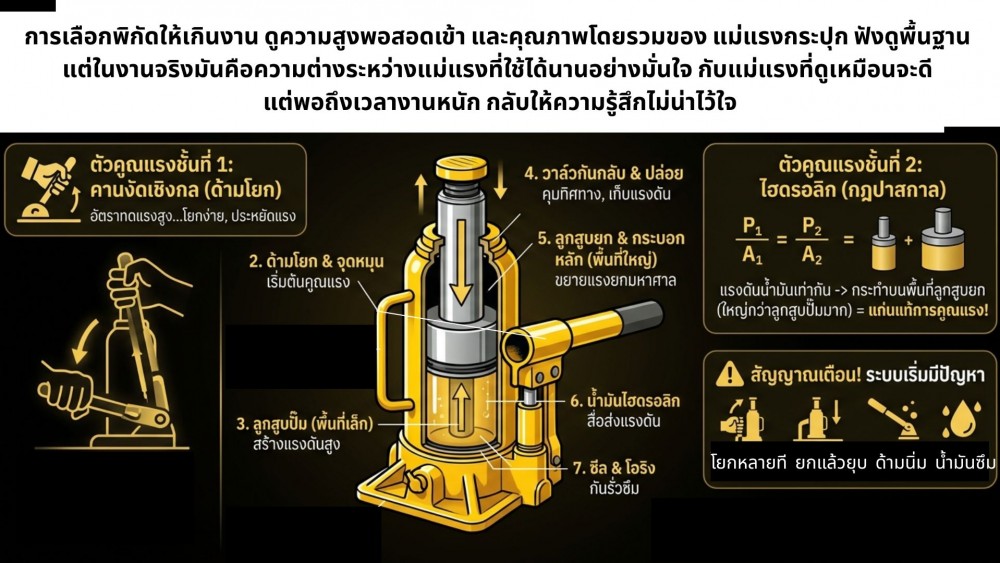
Summary: The real force multiplier of a bottle jack is not just a single component.
A bottle jack does not lift heavy loads thanks to a single miraculous part. It lifts because of a design that multiplies human hand force through leverage, converts it into fluid pressure, and translates it back into lifting force via a piston with a larger cross-sectional area. That means: The true "force multiplier" is not just the oil, not just the piston, and not just the handle. It is the entire system working together with precision.
Theoretically, if I had to pinpoint the core element of force multiplication, I would point to the difference in cross-sectional area between the pump piston and the ram piston according to the physics of fluid mechanics—that is where the same pressure clearly translates into immense lifting force. In practical use, however, if the lever handle is flimsy, the valves don't seal tightly, air is trapped in the oil, or the seals start leaking, no matter how flawless the multiplication principle is on paper, the bottle jack still won't perform at its full potential.
To truly understand the structure of a Bottle Jacks bottle jack, you must not see it merely as a car-lifting tool, but as a remarkably clever miniature power transmission system. The more we understand how it multiplies force, the safer we can operate it, the faster we can detect symptoms, and the better we can utilize it to its full potential.