


 EN
 ไทย


Customers Also Purchased
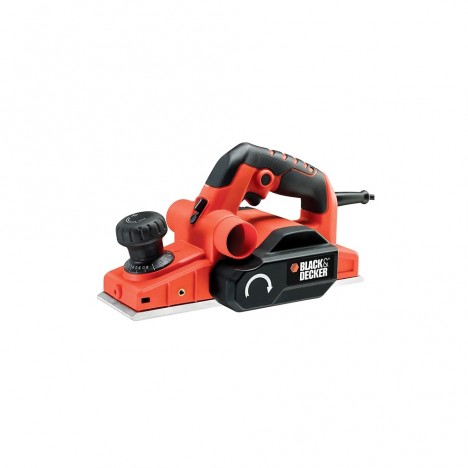


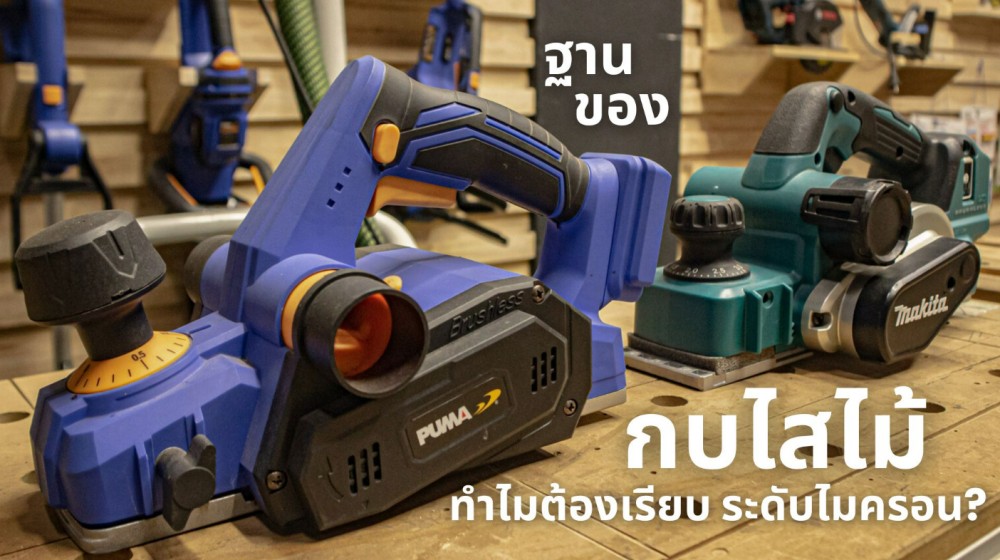
When talking about power tools like Power Planer what comes to mind first? The blades, the motor, or the cutting depth? All of these are important, but in actual use, you'll find another part that is just as crucial: the "base plate" of the electric planer, which directly determines the smoothness, straightness, and glide during each pass.
Many people may already know that what an electric planer is and why it is important for woodworking The next question, however, is why must an electric planer's base be flat, and how flat does it need to be? Wood itself is a natural material with grain, moisture, and a tendency to warp. The answer is that the more variable the workpiece, the more precise the tool must be so tool inaccuracies don't compound the problem. If the base isn't flat, the cut is even more likely to go astray.
In this article, we will take a deep dive into why a wood planer's base is so important, why flatness is not just about looks, and why being "micron-level flat" actually matters in real-world use—especially if you are looking for an electric planer for serious, precision work.
A Wood Planer's Base Does More Than Most People Think
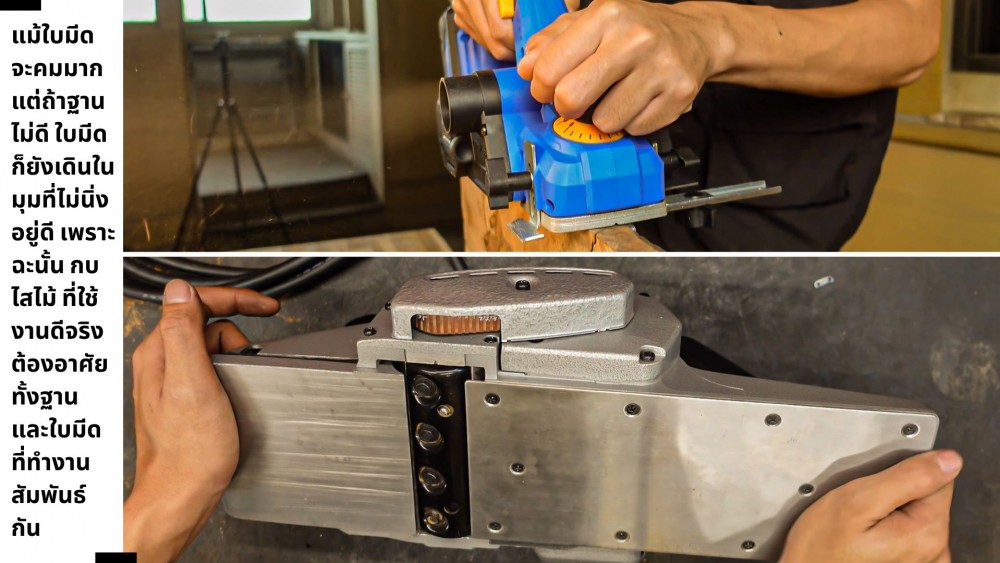
A planer's base is the flat bottom surface that makes direct contact with the workpiece. But its real role is not just to support the tool; it serves as the "reference plane" for the entire planing pass. With a good base, planing becomes effortless, smooth, and easy to control with confidence.
For electric planers, the base is typically divided into a front shoe and a rear shoe, both of which must be aligned in the same plane. The front shoe sets the initial entry of the cut, while the rear shoe supports the tool along the already-planed surface. When properly aligned, passes are smooth and uniform. However, if the front shoe tilts up, the rear shoe droops, or there is even a slight height mismatch, you risk end snipe, gouging at the start of the cut, or stepped surfaces along the wood.
"Flatness" of a Planer Base Is Not Just What Meets the Eye
This can be considered a key point to check before buying a wood planer for your work. In common parlance, "flat" often means it feels smooth to the touch or does not wobble when placed down. But for a wood planer, true flatness means an accurate, consistent reference plane across the entire base. Even if a base looks perfectly flat, any crown in the middle or dip at the end changes the feed angle as the tool moves across the wood, resulting in an uneven depth of cut along the stroke.
Especially in precision tasks such as planing door leaves to fit, trimming door and window frames, or truing long board edges, small errors accumulate and become obvious—because planing is not a single press-and-done action, but dragging the tool across a span of distance.
How Do Microns Matter to Wood Planers in Real-World Use?
A micron is an extremely small unit that might sound irrelevant to woodworking. But the reason toolmakers talk about micron-level precision is not because you need to measure it daily; it reflects that the planer base must be manufactured and flat-machined tightly enough to function as an utterly dependable reference plane in real use.
Leading manufacturers inspect base alignment using high-precision instruments (Dial Indicators) to ensure tolerances stay within optimal limits before reaching users like us.
Another critical point is that an electric planer operates while in motion and actively removing stock, not while sitting still. Therefore, even minuscule variations in the base can become glaring in action, causing inconsistent weight transfer between the front and rear shoes and leading to uneven cutting.
Why Electric Planers Rely on Base Accuracy Even More Than You Think
With manual hand planes, you can still adjust your hand pressure and feel the wood surface in real time during the stroke. An electric planer, however, works much faster and responds aggressively. If it cuts off-target, the workpiece is instantly affected. That is why the tool needs an inherently stable, solid baseline—which is precisely what the base provides.
From another angle, many tradespeople use electric planers for on-site installations, such as trimming doors on site, planing cabinet edges during assembly, adjusting frames, or leveling already-installed fixtures. These environments are not controlled workbench settings: you might work in awkward postures, tight spaces, and on uneven surfaces. If the tool's base is subpar, mistakes become far more likely.
A Perfectly Flat Base Ensures Straight Lines and Seamless Joints
Another vital role of a wood planer is preparing workpieces for assembly—whether edge-gluing boards, flush-fitting cabinet doors, sealing frames snugly, or achieving crisp miter joints in furniture. If the planed surface or edge is not strictly controlled on a true plane, assemblies will show gaps, misalignment, or fail to clamp flush face-to-face.
A base that is flat and truly coplanar allows the electric planer to act like a portable reference tool, meaning: It doesn't just remove wood, but removes it while maintaining a continuous plane throughout the entire stroke. When planing on a consistent plane, edge joints will mate much more closely. Even though real wood still involves grain and moisture factors, a tool that provides a good plane will significantly reduce issues stemming from the machine itself.
In addition, for jobs requiring multiple passes, a good base ensures better continuity between passes. The chance of ridges or dips at overlap points is reduced, making the workpiece appear "seamless" rather than planed in sections—a detail that real woodworkers value greatly.
How do base materials, manufacturing, and assembly affect flatness?
The base of a good quality electric planer emphasizes rigidity, flatness, and the ability to maintain coplanarity after long-term use. This is because the tool faces vibration, minor impacts when set down, wood dust, temperature fluctuations, and sometimes rough handling. If the base is well-made but the supporting frame or assembly is poor, the plane can shift over time.
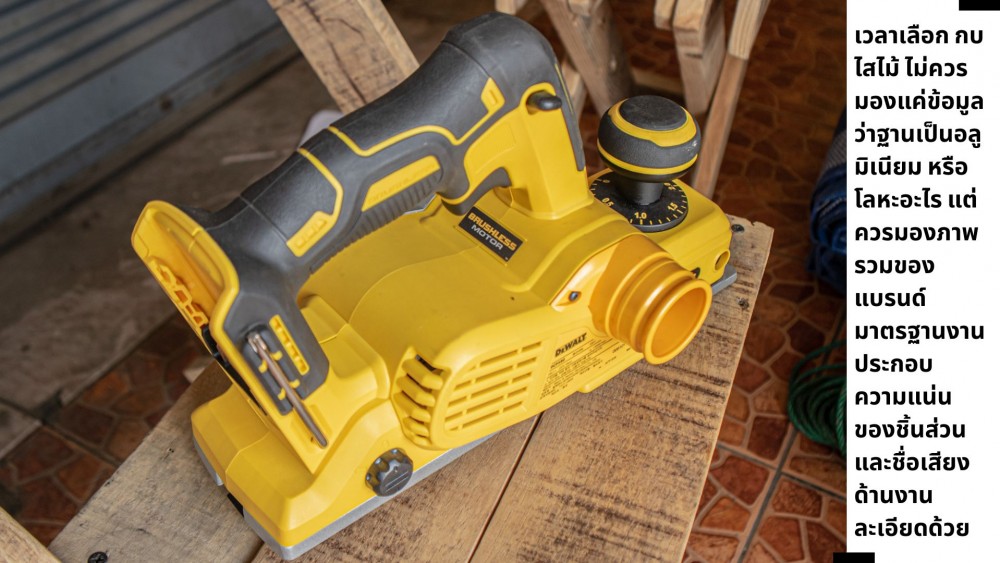
High-quality planers such as Makita KP0800 or DeWALT DCP580 often feature precision-machined cast aluminum bases (Precision Machined Aluminum) to provide the most stable reference plane and withstand impacts.
How seriously do you need to take microns?
The answer is You should understand the concept, but there's no need to obsess over the exact numbers. If you are a general user looking for an electric planer to trim doors, ease edges, or do occasional woodworking, what matters more than memorizing figures is knowing that the base directly affects real-world results and shouldn't be overlooked when buying or using one.
How does an uneven electric planer base affect woodworking?
If an electric planer's base is uneven or not coplanar, the negative effects appear at virtually every stage—from the moment you place the tool down until you lift it off the workpiece. Let's look at what these drawbacks are.
1. Inconsistent planing depth
Even if you set the cutting depth evenly, an uneven base causes the actual distance between the blades and the reference surface to fluctuate during the pass. This results in cutting deeper in some spots and shallower in others, leading to an uneven surface and requiring frequent repeated passes.
2. Snipe at the ends of the workpiece
Snipe can occur at both the beginning and the end of a pass, especially when improper weight transfer is combined with an imperfect base. The tool digs deeper into the front or back edge of the board, creating slight dips that become very noticeable in joints requiring sharp, clean edges.
3. Wavy or ridged surface
Sometimes the surface isn't smooth after planing even though the blades have just been sharpened or replaced. This problem is often not just about sharpness, but rather an uneven base causing inconsistent contact with the workpiece, which leads to an uneven cut line.
4. Harder to control than usual
An electric planer with a good base feels like it "glides" across the wood. But if the base has high and low spots, the tool feels like it refuses to track straight, requiring constant guiding, causing quick hand fatigue, and making long workpieces easily veer off-line.
5. Adds an unconscious burden to the user
A planer with an inaccurate base forces you to compensate with downward pressure, shift hand weight, or over-planing and coming back to touch up. These workarounds might suffice for rough work, but for true quality work, relying on operator skill to mask tool defects is simply not worth it.
How to tell if your planer might have a base problem
If a planer that once worked great suddenly starts yielding odd results—even though your technique and the wood are essentially the same—check the base.
Common signs
- Abnormally deep cuts occurring more frequently at the beginning or end of a pass (snipe)
- Uneven surface finish even when set to a shallow depth
- The tool feels sluggish or no longer glides smoothly
- Requiring more guiding pressure to stay on track
- Ridges or banded lines on the wood surface even though the blades are in acceptable condition
- The planer rocks or doesn't make full contact when placed on a flat surface

Conclusion: Why must an electric planer base be micron-level flat?
In short, the planer's base is critical because it serves as the reference plane for the entire cut, not just a surface for the tool to rest on. The more accurate the base, the more stable the tool, the easier it is to control, the more consistent the finish, and the lower the risk of cumulative errors. This is especially true for electric planers, which operate much faster and continuously compared to hand planers.
The phrase "micron-level" refers to controlling base flatness strictly enough to ensure reliable real-world performance. Even if you don't measure it in numbers every day, you will feel it in the smooth pass, the refined wood finish, and the ease of keeping a straight line.
Finally, when choosing an electric planer or power planer, don't look only at motor power or cutting depth. Pay close attention to the base and ensure it is flat and even.
Often, great woodworking results come down to the tool itself Power Planer that has a good reference plane and is dependable every time it's used