


 EN
 ไทย



Customers Also Purchased


At first glance, a steel tray is just something to hold items, so there shouldn't be much to think about, right? But when it's time to actually pay for one, questions come flooding in... Should you go for a thick or thin steel tray? What's the difference between galvanized and painted steel trays? And if it's meant for oil-stained spare parts, what special features should you look for?
Steel Tray It's something many people often overlook because it isn't a large power tool. But on the actual job site, it's a piece of equipment that gets heavy daily use! Choose the right one, and work flows smoothly, you can place heavy items with confidence, it's easy to clean, and it won't bend or warp. But choose the wrong one, and get ready for the frustration of rust, peeling paint, and a tray that deforms prematurely.
In this article, we'll dive into how to select a steel tray that matches your exact job specifications. Once you finish reading, you'll be sure to pick a steel tray that is cost-effective and truly meets your needs!
First, understand that "steel trays" don't just come in one type
Before diving deep into thickness or coatings, let's start with shapes and actual applications, because steel trays don't just come in one type.
- Shallow trays for easy access: Ideal for screwdrivers, wrenches, and bolts in dry areas.
- Deep trays for high capacity: Designed for holding bulk parts or spare parts.
- Reinforced folded-edge trays: Built for durability, placed on shelves or carts.
- Heavy-duty trays: Made specifically to withstand impacts or catch oil spills in auto repair shops.
- Does it frequently deal with water or oil stains?
- Do you need to carry it around often, or does it stay in one place?
- Is it for neatly organizing tools, or tossing spare parts into hardcore style?
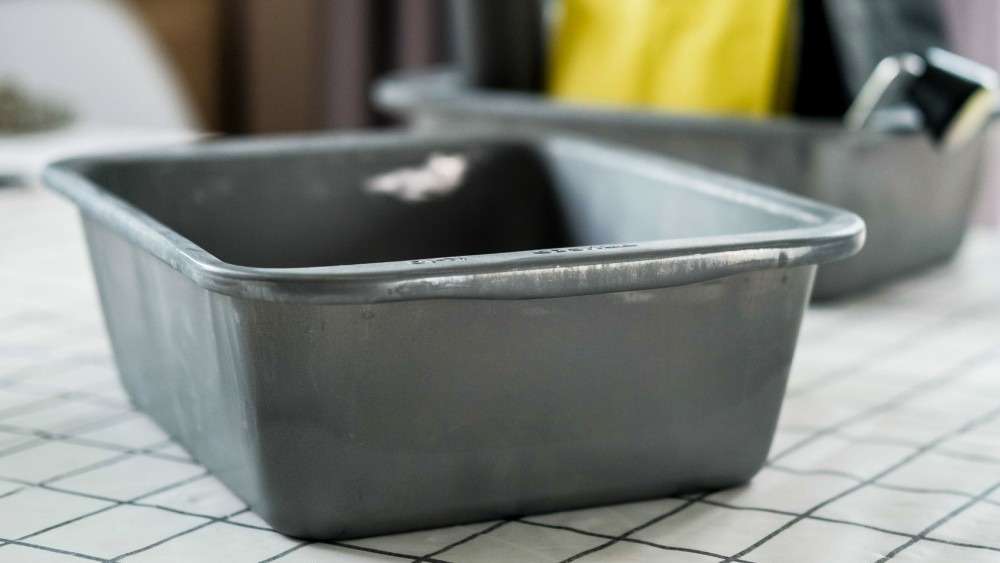
Why steel tray thickness matters—and why it's not just about strength
Is a "thick steel tray" really better? The answer is... not always! Many people assume that if you're buying one, thicker is automatically better. That's only half true. Let's look at the reality from the job site.
- Advantages of thickness (the sturdy side): When placing heavy objects (like motors or jacks) on thick trays, they feel "solid" without nerve-wracking flex or sag. For larger trays especially, thickness helps prevent twisting when you lift them.
- The seldom-mentioned drawback (the carrying side): Thick tray = heavy weight! If your job involves carrying the tray around the shop all day to pick spare parts, a thick tray will become a burden, causing unnecessary wrist strain. For this type of work, a slightly thinner yet durable tray works much better.
- Tray edges: Are they rolled back or folded into reinforcing ribs?
- Tray corners: Do the welds or rivets look solid and sturdy?
- Tray base: Is it ribbed or embossed to help distribute weight?
- Under-base structure: Are there crossbeams or steel braces underneath?
- Pressure test: Try pressing your hand in the center of the tray; if it sags easily... skip to another model!
The best steel tray is not the thickest one, but rather one that balances a "comfortable handling weight" with a "strong edge-folded structure!"
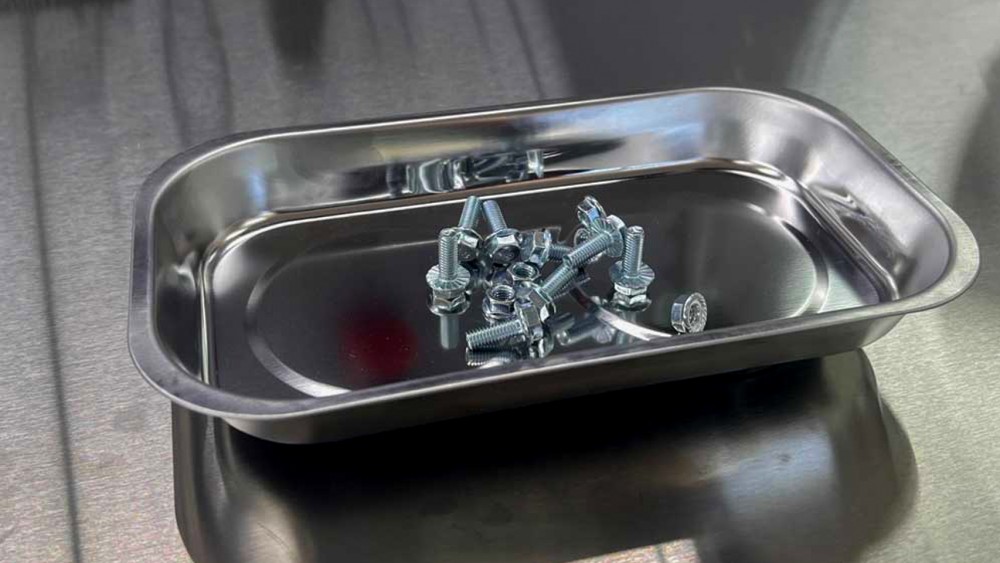
Who thin steel trays are suitable for, and why they aren't necessarily bad
- For organizers and frequent users: If you just need it to hold nuts, bolts, screws, or small spare parts, a thin tray is definitely the answer! It's feather-light, easy to grab, stacks away neatly, and is super budget-friendly. If used in dry conditions without being thrown or dropped, its service life will last for years.
- For bulk users who need large quantities: For anyone needing many trays at once to categorize spare parts on shelves, thin trays massively reduce both "costs" and the "total weight" on the shelving. Insisting on using heavy, thick trays across the whole system might exceed the shelf's load capacity and waste money unnecessarily.
Cautions: Thin trays have their limits. If used for the wrong job, here is what you'll definitely encounter...
- Cannot handle point loads (sags immediately)
- Loses shape easily; edges or corners tend to flare out upon impact
- Surface scratches and dents are more pronounced because the sheet steel deforms easily under pressure
What jobs thick steel trays are suitable for, and when they are truly worth it
Built for heavy-duty use (garages, maintenance, factories): In these environments, trays must handle heavy loads, dragging marks, impacts, oil stains, as well as hot objects and sharp edges. Thick trays deliver by "retaining their shape without warping." When you toss in a torque wrench or a pile of heavy sockets, you'll feel the solid sturdiness—no need to support it carefully or worry that the bottom will buckle.
Better value... if "time" is worth more than the "tray cost": This is an angle people often overlook. If a tray is too thin and sags or drops spare parts, you lose more than just a broken tray—you cause "work interruptions" and safety hazards. Imagine a cart tray with a sagging bottom where bolts constantly roll together, or one that's hard to wipe clean... it's bound to cause daily frustration! Biting the bullet to buy a thick tray from the start is a far more worthwhile long-term investment.
How steel tray surface finishes differ, and why choosing the wrong one matters more than you think
Standard painted steel tray
- Highlights: Bright, distinct colors (great for color-coding spare parts categories), clean appearance, budget-friendly price. Suitable for indoor, dry applications such as workbenches or storage shelving.
- Weaknesses: If scratched by sharp objects to the point where the "paint peels down to bare steel", rust will immediately target and camp out on that wound. If standing water or chemicals are involved, it spreads even faster.
Zinc-Plated / Silver Steel Trays
- Highlights: Levels up rust resistance by a notch. It might look raw and unpolished, but it's built to withstand humid environments, open-air warehouses, or jobs requiring frequent washing much better than painted types—plus it avoids the problem of "peeling paint".
- Weaknesses: Though tough and durable, it's not indestructible. Facing strong chemicals or deep scratches and impacts that penetrate the zinc layer, rust can still creep in.
Powder-Coated Steel Trays
- Highlights: If you love a smooth, solid finish, this is the one. It's a coating that significantly upgrades scratch resistance over ordinary spray paint, easily wipes clean of oil stains, stays looking new longer, and delivers a premium tactile feel.
- Weaknesses: No matter how thick the shield is, heavy impacts that cause the "coating to chip into craters" will still allow rust to seep through those cracks.
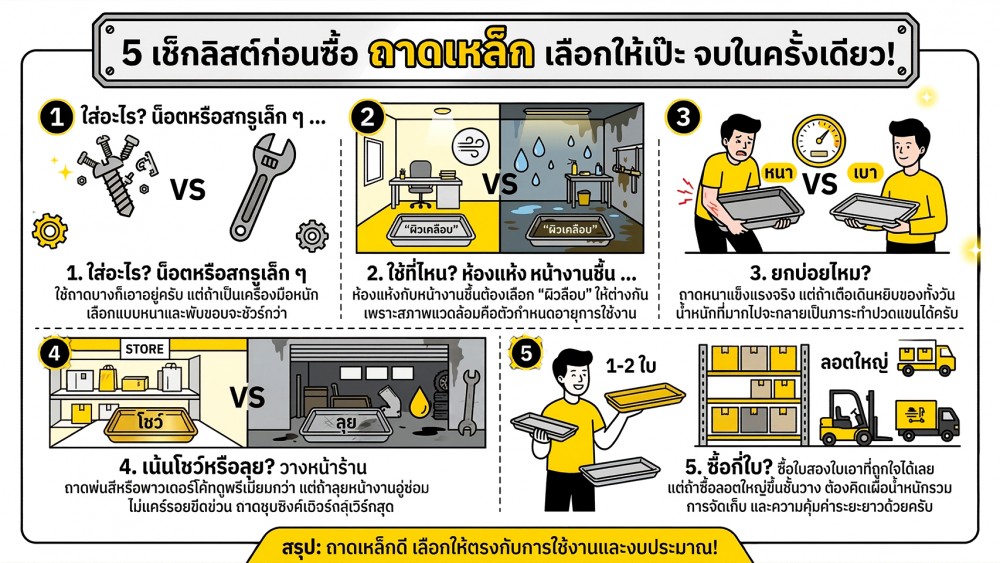
Angles general articles rarely mention, but matter greatly in real-world use
- Balance is best: A truly satisfying tray meets all 4 criteria: just the right weight in hand, a sturdy structure, a coating that handles site conditions, and an easy-to-grip shape.
- "Hemmed edges" matter more than thickness: Don't just look at thickness specs! A tray edge with a well-rolled hem upgrades structural strength, prevents flexing when carrying heavy items, and provides a comfortable grip that won't cut your hands.
- Picking the right coating saves massive effort: Don't prioritize looks only to deal with rust issues later. If facing oil or moisture daily, choosing the right coating spec from the start drastically reduces maintenance burdens.
- Value isn't measured by the "price tag": A cheap tray might seem budget-friendly on day one, but if the bottom sags, paint peels, or it flexes until spare parts spill all together after short use... it becomes a "hidden cost" that disrupts workflows and wastes time every single day!
Conclusion
The best steel tray is the one that fits your jobsite: In short, a good steel tray isn't the thickest, prettiest, or cheapest—it's the one that "best matches your actual jobsite needs".
- Light-duty work, prioritizing agility: A thinner tray with well-hemmed edges for structural reinforcement handles the job with great cost-effectiveness.
- Heavy-duty work, daily grind: A thicker tray is the answer for long-term confidence and durability.
- Coating: Choose one that survives real-world conditions like moisture and oil stains; don't just judge its looks on the display shelf.
The key is shifting your perspective: a steel tray is a working tool, not just a container to hold stuff. Small details like thickness, hemmed edges, or weight all affect your daily work agility.
Select Steel Tray here