


 EN
 ไทย


Customers Also Purchased


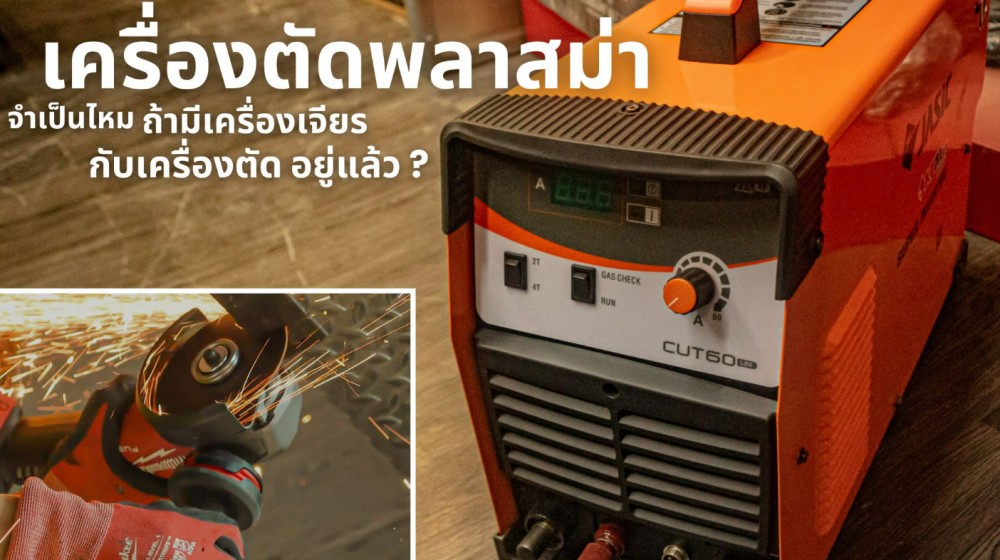
Have you ever cut sheet metal with an angle grinder and felt that while it does cut, there's too much dust, excessive sparks, loud noise, hand fatigue, and the cut line isn't as neat as expected? Switching to a chop saw improves things, but when facing curved cuts, cutouts, or custom fabrication, the original tools quickly show their limitations. This is precisely where Plasma Cutting Equipment (Plasma Cutter) it suddenly becomes interesting, because this boxy machine can fill the gaps in jobs where conventional tools struggle, even though it doesn't entirely replace them.
Therefore, in this article, we will take a straightforward look at who a plasma cutter is suitable for, what kinds of jobs truly require it, and cases where there is no rush to buy one. We will also answer the crucial question of whether it is still a must-have tool if you already own a chop saw or an angle grinder.
Why is a plasma cutter interesting for metalworking?
Before we look into whether a plasma cutter is necessary, I think we should first understand how it works differently from standard tools. Its principle is using electric current combined with compressed air to generate an extremely high-temperature plasma arc (similar to a welding arc) to melt and blow molten metal away from the cut path, allowing rapid cutting of conductive metals such as steel, stainless steel, and aluminum.
Plasma Cutters: What Can and Cannot Be Cut? Along with Reasons You Should Know What makes a plasma cutter appealing is not just that it "can cut," but that it "cuts with versatility and ease." It offers greater cutting freedom—whether cutting straight lines, curves, circles, cutouts, or intricate patterns, it is much easier than using a chop saw or an angle grinder in many situations.
Another reason plasma cutters are very attractive is that they are much more accessible nowadays. Many models are compact and better suited for workshops or serious jobs. This shifts the question from "What is it?" to "If I'm already doing metalwork, will it really make my work easier?"
If you already have an angle grinder, is a plasma cutter still necessary?
If you just ask "Can it cut?", an angle grinder certainly can. But if you ask "Is it the most suitable?", it depends on the nature of the job. An angle grinder is suitable for straightforward cutting jobs that do not require continuous operation. When the workload increases or when greater speed and neatness are required, you'll start to notice that an angle grinder takes considerable time, causes hand fatigue, and does not consistently produce uniform cut lines.
A plasma cutter is different because it helps overcome these limitations. Especially when cutting sheet metal, making long cuts, or cutting custom shapes, the work flows much more smoothly and is easier to control. Therefore, if metal cutting is your regular work, done daily or in high volumes, a plasma cutter can be a tool that delivers clear savings in both time and labor—far from being an unnecessary luxury.
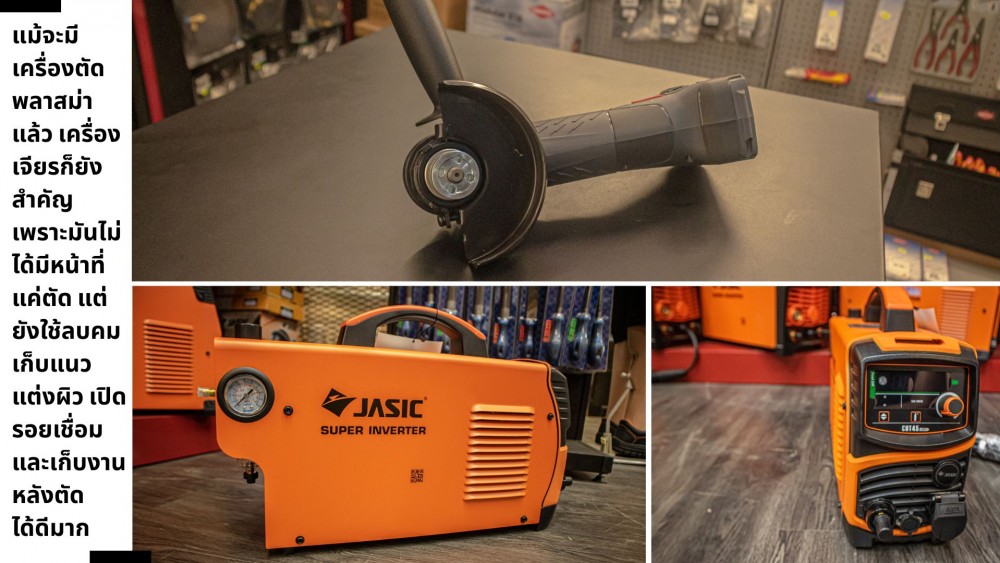
- Can be used for grinding, finishing, and deburring
- Multipurpose use in a single tool
- Low initial cost
- Suitable for general repairs and on-site minor tasks
In real-world work, angle grinders and plasma cutters do not entirely replace each other; they are rather complementary tools.
Where angle grinders start to fall behind plasma cutters
The turning point occurs when cutting becomes the primary task rather than an occasional job, such as frequent sheet metal cutting, cutouts, curves, or continuous long cuts. In these cases, you will begin to feel that an angle grinder is slow and tiring—and this is precisely where a plasma cutter becomes clearly worthwhile.
Already have a metal cut-off saw or chop saw, do you still need a plasma cutter?
What about comparing it directly to dedicated metal cutters, such as abrasive chop saws or benchtop cutters also designed for cutting metal? The question is: if you already own these, would adding a plasma cutter be redundant?
The answer depends on the nature of your workpiece. Benchtop metal cut-off machines are exceptionally well-suited for repetitive straight cuts, such as: Pipes, square tubing, angle iron, or workpieces requiring consistent angles
However, if the job involves sheet metal, cutouts, large openings, curved cuts, or on-site modifications, benchtop cutters start to show their limitations. This is where a plasma cutter becomes the solution, offering significantly more cutting freedom than conventional metal cut-off saws.
In what ways do plasma cutters outperform angle grinders and metal cut-off saws?
When discussing the advantages of plasma cutters, many people only think of fast cutting speed. In reality, their strengths go far beyond that, and many benefits are immediately noticeable during actual use.
1. Cuts metal quickly, especially sheet metal
If you have ever cut sheet metal with an angle grinder, you know you have to constantly control downforce and alignment. But with a plasma cutter, the workflow is much smoother. Especially on thin to medium sheet metal, once you try it, you may realize that doing this kind of work every day makes this type of cutter far more cost-effective than you thought.
2. More versatile for cutting curves, cutouts, and custom shapes
This is a distinct advantage: a plasma cutter provides complete freedom in following cut lines. Whether cutting enclosure cutouts, custom profiles, or opening up repair sections, it is definitely more convenient than benchtop metal cut-off saws and angle grinders.
3. Narrow kerf and easier finishing
Using a plasma cutter doesn't mean every cut is flawlessly finished without any cleanup. However, with the right settings, steady air pressure, and a smooth hand travel, the cut edge is often much cleaner than what you get from an angle grinder in many applications.
4. More comfortable for continuous work in certain tasks
Angle grinders require a fair amount of downward pressure and steady support, which can be tiring over long periods. In contrast, plasma cutters use a different cutting method, significantly reducing fatigue during continuous or long cuts.
What are the limitations of a plasma cutter?
To be fair, a plasma cutter is not for everyone, and it does not mean anyone working with steel must have one. Many plasma cutter models require a compressed air system. Therefore, if the job site does not yet have an air compressor or the air supply is unstable, that introduces an additional cost. Why does using a plasma cutter require an air compressor? An in-depth look at the system and operation
Another point is that it is strictly a cutting tool; it cannot entirely replace an angle grinder. Especially since all types of steel cutting still require tools for deburring, surface finishing, and post-cut dressing.
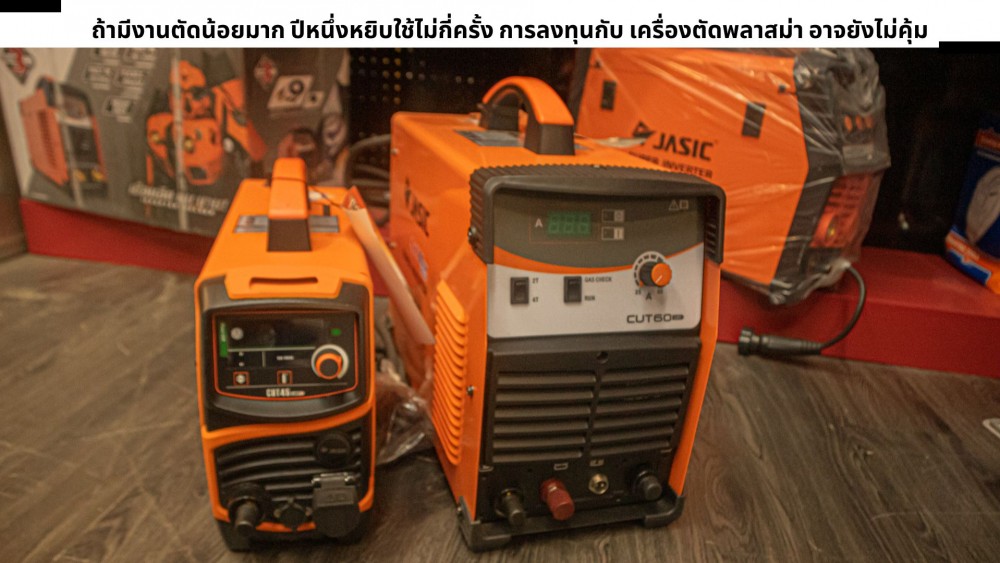
Here are the main limitations to keep in mind:
- Requires a suitable compressed air system
- Still requires other finishing tools
- Work quality depends on settings and the condition of consumable spare parts
- If cutting work is minimal, it may not be worth the investment
What kind of work does not yet require rushing to buy a plasma cutter?
- Cutting steel only once in a while If you only cut a few pcs of steel a month for general repair work and do not cut every day, your existing angle grinder is still sufficient.
- The main task is repetitive cutting of pipes or straight steel bars If you already have a chop saw and your main job is repetitive straight cuts, your existing tool already serves the purpose well. Buying an additional plasma cutter might not make a noticeable difference.
- No compressed air system ready for use If you have to purchase the plasma cutter, an air compressor, and additional accessories all together, the initial cost might be higher than expected. In this case, you should evaluate your workload first and choose accordingly.
Comparison: Angle Grinder, Cut-Off Saw, and Plasma Cutter
Many people know that these 3 types of tools can all cut steel, but in actual use, the details and suitability of each tool differ considerably. Therefore, we will briefly summarize which types of tasks these three tools are suitable for, especially the plasma cutter.
- Grinder Suitable for those who need a versatile, multi-purpose tool that can cut, grind, and deburr, making it ideal for general work or on-site repairs.
- Cut-off machine or chop saw Suitable for repetitive straight cuts or long workpieces requiring consistency and systematic speed.
- A plasma cutter is ideal for sheet metal cutting that requires agility, opening up cutouts, curved cuts, on-site modifications, and tasks looking to overcome the limitations of conventional tools.

Conclusion: How necessary is a plasma cutter really?
A plasma cutter isn't necessary for everyone, but it is extremely essential for certain jobs. When your work falls into that category, it becomes a tool that clearly makes work much easier.
If you only use an angle grinder to cut steel occasionally, the workload isn't huge, isn't complex, and you don't mind the time spent, then it might not be necessary yet. However, if you're starting to cut sheet metal, doing cutouts, curved cuts, custom modifications, or feeling that your existing tools are too slow, exhausting, and produce subpar results, that is a clear sign that a plasma cutter is becoming a must-have.
Ultimately, don't judge whether a plasma cutter is necessary just by its name or price tag. Consider how much time, effort, or missed opportunities you are losing with traditional cutting methods every day.
Because sometimes, Plasma Cutting Equipment a good machine can make your work vastly easier than before.