


 EN
 ไทย


Customers Also Purchased


Many people may be familiar with Rulers as an ordinary tool used to measure length or draw lines in a notebook. But in the world of actual tools, there are many more types of rulers than you might think, and each type is clearly designed to serve different applications.
In school, rulers help us easily measure distances and draw straight lines. But in trades, design work, or engineering drafting, this tool also plays a vital role in determining precision, because an error of just a few millimeters could lead to misaligned assembly or manufacturing discrepancies.
This article will introduce you to how many types of rulers there are, along with explanations of the characteristics, highlights, and uses of each ruler type so you can choose the one most suitable for your work.
What Is a Ruler and What Can It Be Used For?
A ruler is a tool for measuring length and serving as a straight edge for drawing lines, featuring marked scale increments such as:
- Millimeters (mm)
- Centimeters (cm)
- Inches (inch)
Rulers are not just used in classrooms, but are also utilized in various tasks such as:
- Distance measurement in technical and trade work
- Engineering drafting
- Architectural design
- Art and drawing
- Cutting materials such as paper, plastic, or thin sheets
Although it seems like a simple tool, the accuracy of a ruler can significantly impact the quality of work, especially in tasks requiring high precision.
How Many Types of Rulers Are There? Get to Know the 7 Commonly Used Types
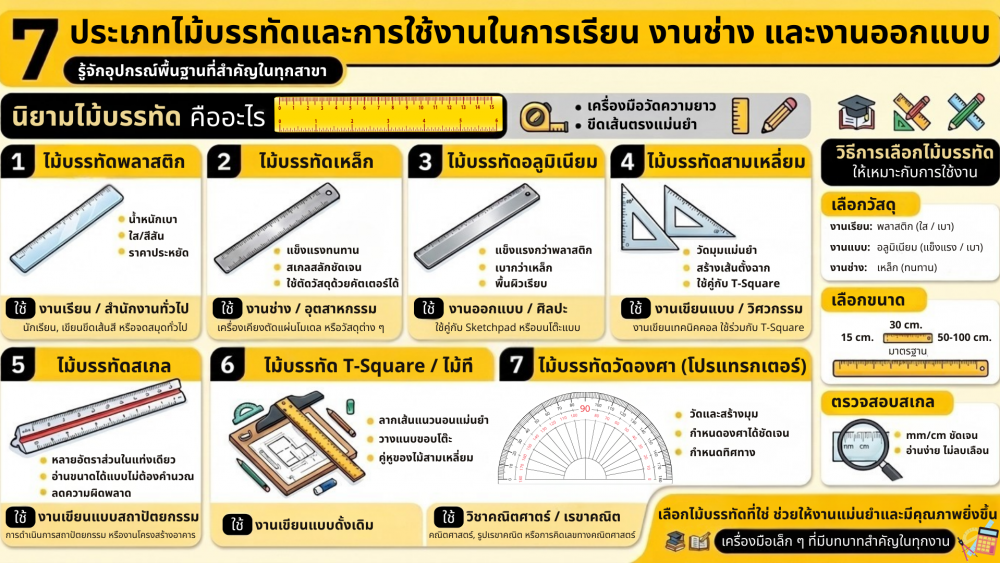
Generally, Rulers can be divided into various types based on their material and application. However, the most common and practically used types fall into approximately 7 main categories as follows:
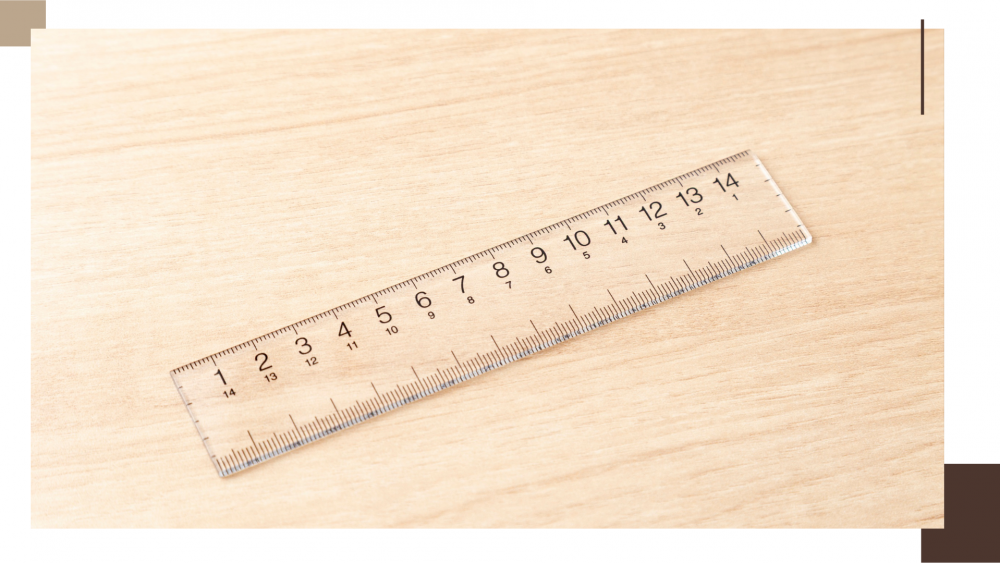
1. Plastic Ruler
The plastic ruler is the most common type and the one many people have used since their school days.
The ruler is usually made of clear or colored plastic, making it easy to see the lines being drawn underneath. It is also lightweight and economical, making it a staple choice for schools and offices.
The highlight of this type of ruler is its ease of use, portability, and availability in various sizes—from 15 centimeters to 30 centimeters, which is the commonly used standard size.
However, plastic has limitations in terms of durability. If subjected to heavy use or stored in high-heat conditions, the ruler may warp or bend.
Suitable for:
- Schoolwork and studying
- General writing tasks
- Basic drawing and sketching
2. Steel Ruler
A steel ruler or stainless steel ruler is a popular tool in technical and industrial work because it is highly durable and does not bend or warp easily.
The scale on a steel ruler is often etched into the metal, ensuring that the numbers and measurement markings do not wear off easily even after long-term use. Additionally, it can be used as a straight edge for cutting materials with a utility knife without damaging the ruler.
Due to its high durability and accuracy, this type of ruler is frequently used in mechanical work, metalworking, and measurement tasks requiring high precision.
Suitable for:
- Technician work
- Material cutting tasks
- Distance measurement tasks requiring precision
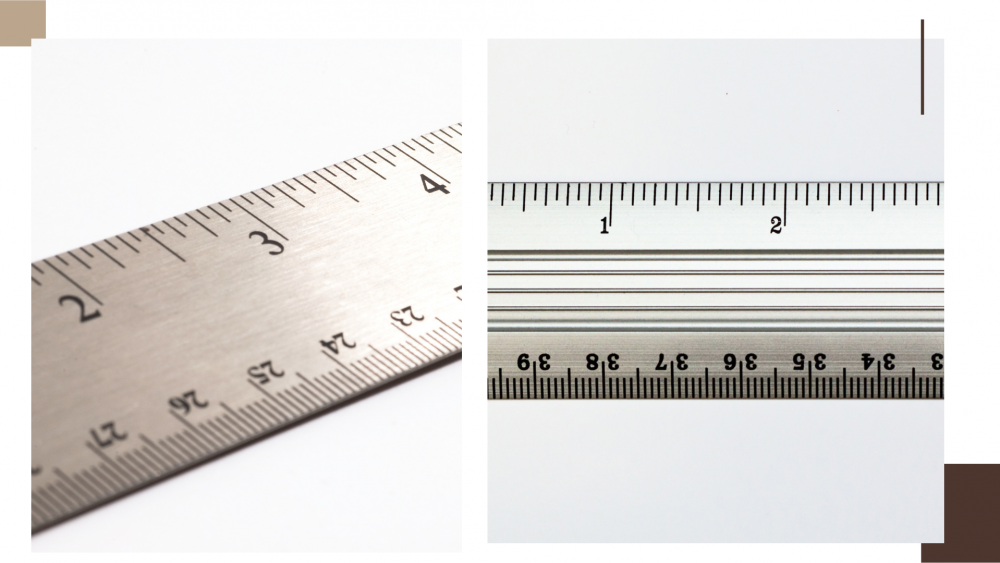
3. Aluminum Ruler
An aluminum ruler is a middle-ground choice between plastic and steel rulers because it is sturdier than plastic yet remains lighter than other metals.
The aluminum material makes the ruler resistant to bending and provides a sufficiently rigid surface for design work or measurements requiring precision.
With these qualities, aluminum rulers are popular among designers, art students, and those who need to use a ruler regularly.
Suitable for:
- Design work
- Art and artwork
- General drafting and drawing
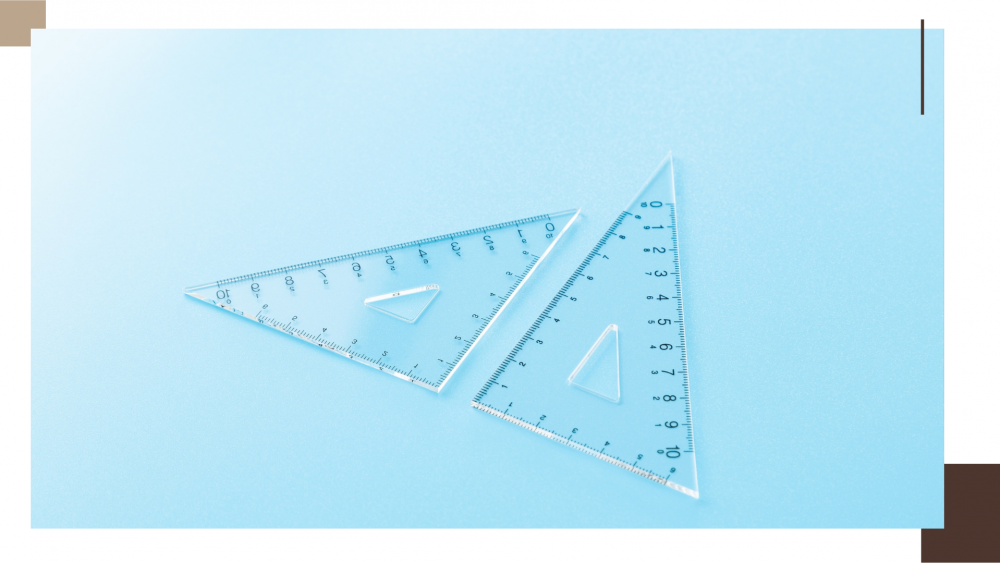
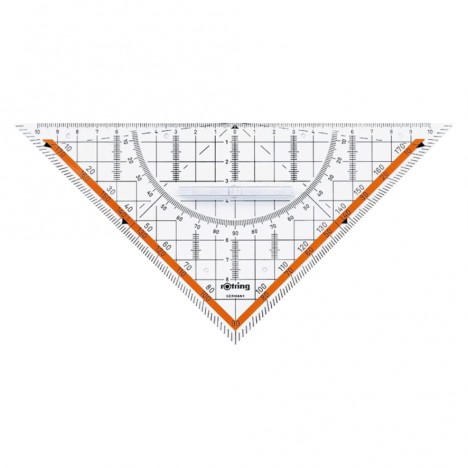
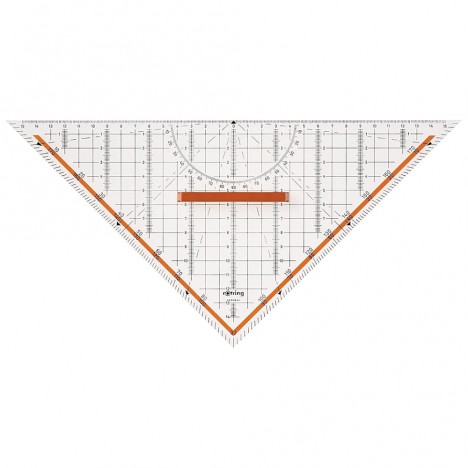
4. Set Square (Triangle Ruler)
A set square (triangle ruler) is a tool used in drafting and technical drawing, shaped like a right-angled triangle and usually featuring standard angles such as:
- 45° – 45° – 90°
- 30° – 60° – 90°
This tool helps create various angled lines precisely without having to remeasure degrees each time.
In traditional drafting, a set square is often used in conjunction with a T-Square to quickly draw vertical, horizontal, and various angled lines.
Suitable for:
- drafting / drawing
- Engineering work
- Architectural work
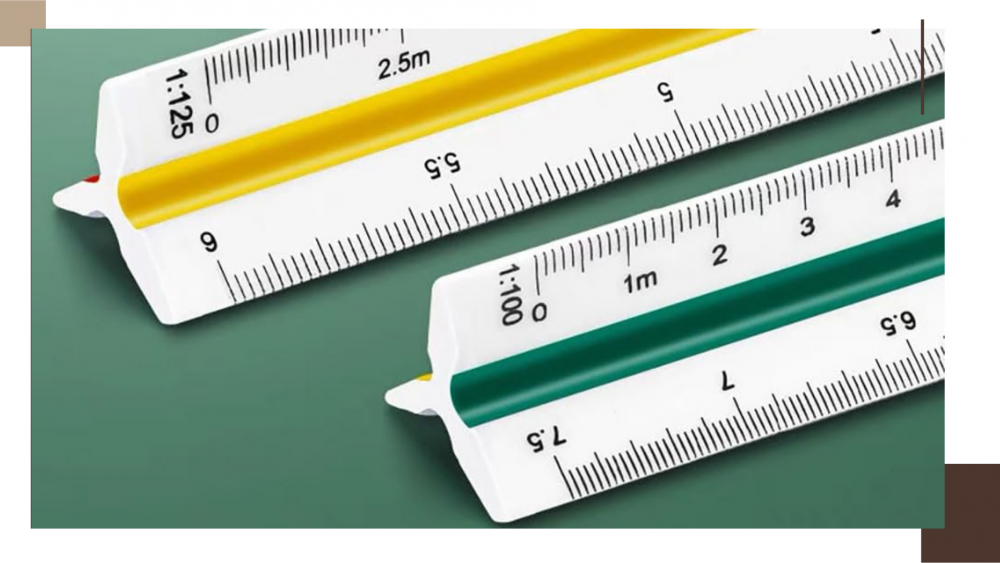
5. Scale Ruler
A scale ruler is a tool specifically designed for use in architectural and engineering drafting.
This type of ruler contains multiple scale ratios on a single body, such as:
- 1:50
- 1:100
- 1:200
These scales allow users to read blueprints or measure dimensions from plans without having to recalculate every time, making work more convenient and reducing the chance of errors.
Suitable for:
- drafting / drawing
- Architectural work
- Engineering work
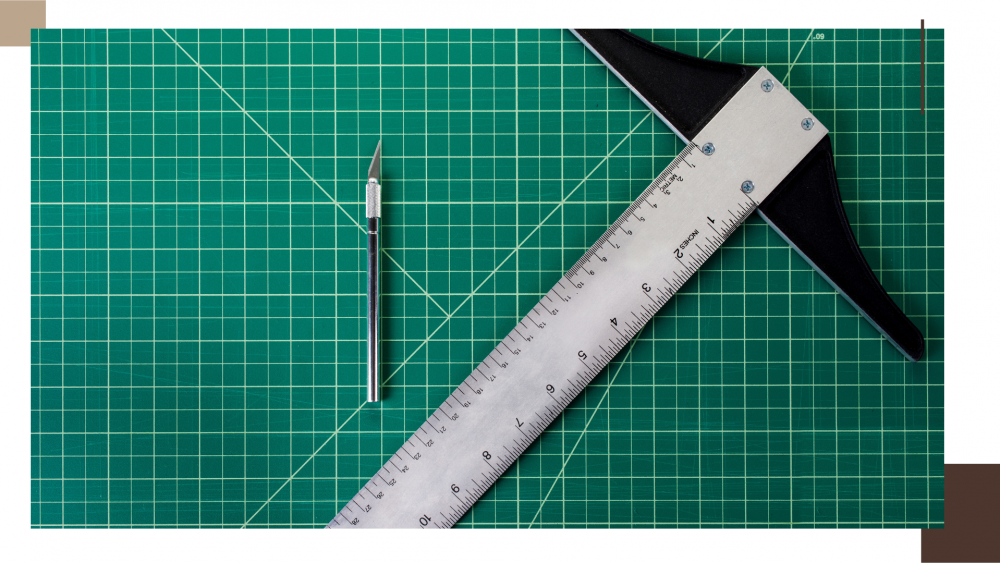
6. T-Square Ruler
A T-Square ruler is shaped like the letter T, with the head designed to align against the edge of a drafting board to help draw precise horizontal straight lines.
This tool used to be a staple on drafting boards before computer-aided design software took over a more prominent role.
A T-Square is often used in conjunction with a set square to help create vertical lines or various angled lines in design work.
Suitable for:
- drafting / drawing
- Architectural work
- Technical design work
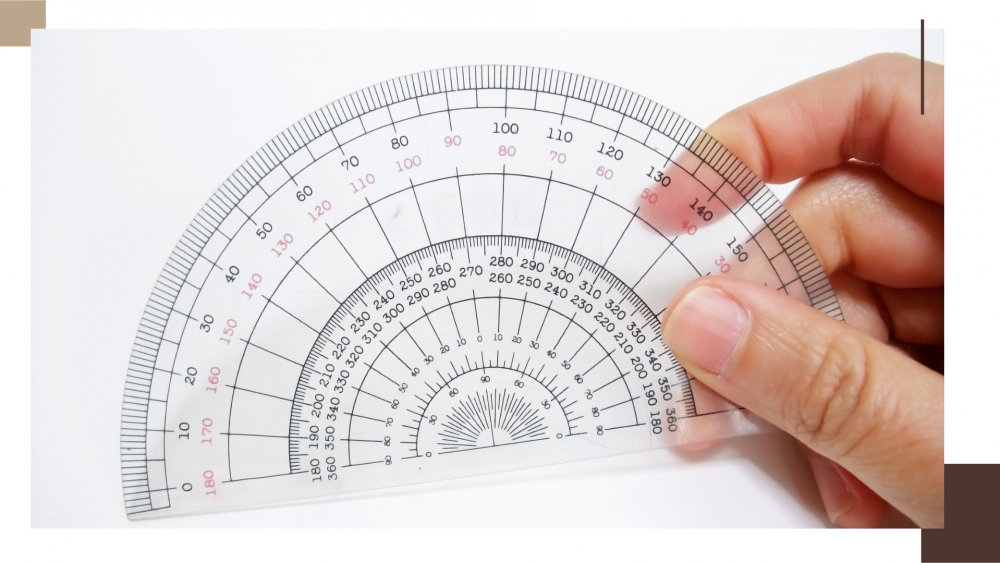
7. Protractor ruler
A protractor ruler, commonly known simply as a protractor, is a tool for measuring and creating angles, typically shaped as a semicircle or a full circle marked with degrees.
This tool is frequently used in mathematics, drafting, and design work that requires precise angle determination.
Some models combine a straight ruler and a protractor into a single device, allowing you to measure both distance and angles simultaneously.
Suitable for:
- Studying mathematics
- drafting / drawing
- Design work
Summary table of ruler types
| Ruler Type | Main material | Applications & Usage |
|---|---|---|
| Plastic ruler | Plastic | Schoolwork and studying |
| Steel ruler | Steel / Stainless steel | Technician work |
| Aluminum ruler | Aluminum | Design work |
| Set square / Triangle ruler | Plastic | drafting / drawing |
| Scale ruler | Plastic | Architectural work |
| T-Square | Wood / Aluminum | drafting / drawing |
| Protractor | Plastic | Angle measurement |
How to choose the right ruler for your application
Although a ruler is a basic tool, choosing the right one for the job can make your work much more convenient and accurate.
Choose the right material for the job
- Study → Plastic
- Design work → Aluminum
- Craftsman / technical work → Steel
Choose the length
Rulers come in various sizes, such as
- 15 cm
- 30 cm
- 50 cm
- 100 cm
The 30-centimeter size is the most commonly used size because it is suitable for general use.
Check the scale and clarity of the numbers
A good ruler should have:
- Clear mm and cm markings
- Easy-to-read numbers
- Does not easily fade after long-term use
Conclusion
Even though a Rulers is a basic tool that many people have been familiar with since school days, in reality, rulers come in more types than you might think, and each type is designed to support different tasks.
From commonly used plastic rulers to steel rulers for craftsman work or scale rulers for drafting, every type plays a unique role in enhancing measurement and line-drawing precision. Choosing the right ruler for the task not only improves work convenience but also helps minimize errors and elevates the quality of the final outcome.
Therefore, even though it is a small tool, the ruler remains an essential instrument that plays a vital role in classrooms, design work, and craftsmanship to this day.