


 EN
 ไทย


Customers Also Purchased
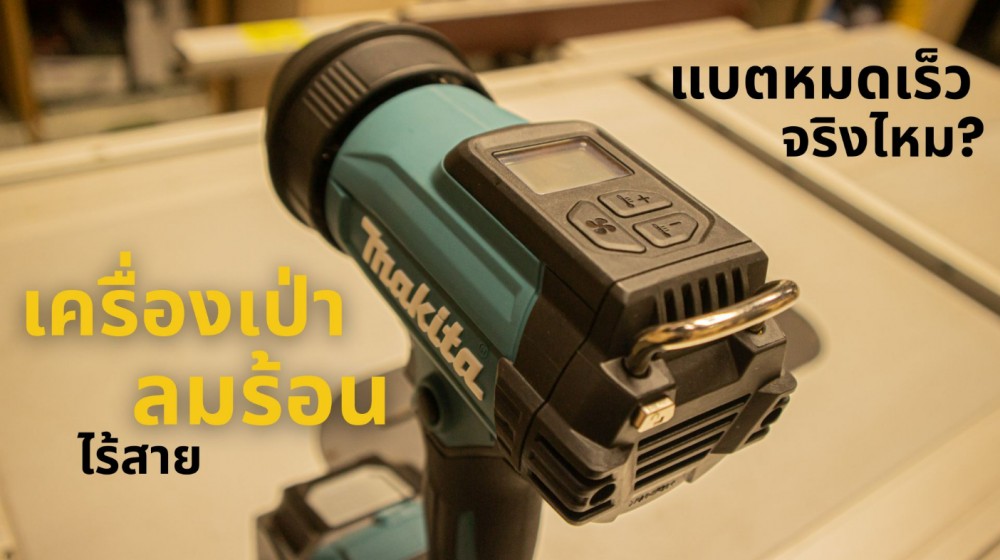
Have you ever wondered why, whenever it comes to a Heat Guns cordless model, reading the reviews reveals that everyone says the exact same thing: "the battery drains fast"? Some people use it a few times and complain that it's a huge power drain, running for just a short while before half the battery is gone. Yet other users say it's completely fine and extremely convenient on the jobsite.
Anyone who has used a corded heat gun before will find it hard to resist when seeing an ultra-maneuverable cordless model. You can take it anywhere, without dragging extension cords, looking for nearby wall outlets, or dealing with tangled cables. For jobs at height or in tight corners, just eliminating the power cord feels like cutting the workload in half. But right when you're about to hit order, the first question that pops into mind almost instantly is: "Does the battery drain quickly?" And then followed by: "If it really runs out that fast, why buy it? Is it really worth it, or will I just end up going back to a corded model like before?"
That's why this article isn't here to claim that cordless heat guns are better or worse than electric or corded models. The truth is, there are scenarios where they are extremely worthwhile, and others where they aren't worth it at all—it entirely depends on your tasks and how you use them. Let's break it down step-by-step: why cordless heat guns drain fast, what specs to check so you aren't misled by numbers, how battery types matter, which jobs allow cordless models to truly shine, and which jobs will leave you so frustrated you'll want to sell it off if you insist on going cordless.
Why do people think cordless heat guns drain batteries so quickly?
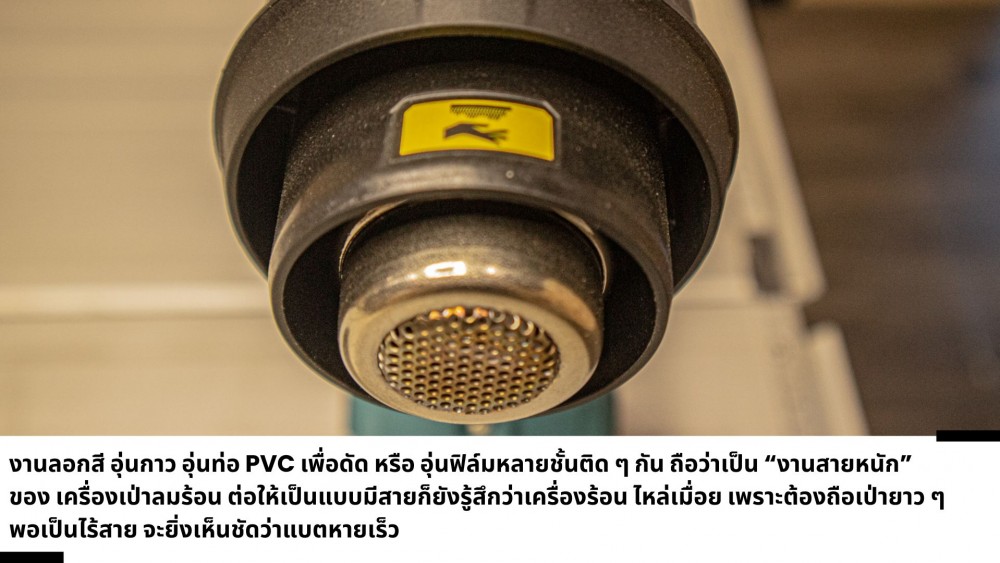
Let me start with a fundamental truth: a heat gun is an inherently "power-hungry" tool, whether corded or cordless. This is because its working principle is to convert electrical energy into heat and blow that heat out with airflow. Its job isn't just spinning a motor like a drill or a blower; it has to burn power to maintain high temperatures continuously. Some tasks require hitting 300–600°C and holding it long enough to transform materials—such as shrinking film, melting adhesive, softening paint, or molding plastic.
When it comes to a "cordless heat gun," all that energy must come from a battery, which has a "limited energy capacity." Even with a large battery, there are still physical limits. And crucially, Heat requires continuous high power This makes many people feel that the battery drains very quickly compared to other cordless tools.
What kind of work do you use a heat gun for?
Beginners must know! Basic heat gun usage I think the key also lies in the type of work being done. Many people buy a cordless heat gun because they find it convenient, but they don't clearly distinguish their own work patterns—whether it's intermittent use for a few minutes a day, on-site jobs where power outlets are hard to find, or heavy, continuous long-haul work. Without making this distinction, selecting the tool or battery might completely miss the mark. In the end, they blame the tool for running out of battery quickly, when in reality it might be because they chose a heat gun for a type of work it isn't suited for, or chose specs that don't match their actual usage.
The main question: Does a heat gun really "drain the battery quickly"?
Let me answer directly: A cordless heat gun's battery really will drain quickly if used for "continuous heavy-duty work" and kept on the highest heat setting for extended periods.
But if you ask from another perspective, "Does it drain so fast that it's completely unusable?" I'd say not to that extent, because many heat gun tasks don't require continuous operation. Let's look at a few simple scenarios:
- Applying heat shrink tubing at 20 points: you don't blow heat continuously for 20 minutes; you blow for a few seconds per point, then move to the next.
- Removing stickers: you just heat it until warm and peel; when it gets tough, you warm it up a bit more.
- Warming hot-melt glue: you heat it just to "stimulate" it to soften, with no need to bake it until scorching hot.
So the truly fair answer is: A heat gun's battery drains quickly when compared to other cordless tools. However, whether it's "fast" or "not fast" for you depends on your work pattern.
And whether it truly "runs out fast" mainly comes down to these 3 key factors:
1. What heat level is used, and how continuously is the heat gun operated?
If you buy a cordless heat gun and use it by "cranking it to max and running it continuously" to strip paint, peel decals off an entire door, or heat long sections of heat-shrink tubing at once, of course the battery will drain very quickly because it's running at maximum power the whole time.
However, as mentioned earlier, if the work is "intermittent"—such as warming small spots to loosen glue, heating adhesive tape for 2–3 seconds before pulling, heating shrink tubes in bursts, or blowing heat only when necessary—the battery will last significantly longer, making a world of difference.
2. What kind of heat/airflow control system does the heat gun have?
Some heat gun models may only offer 2 heat settings, such as Low / High, while others allow fine temperature adjustments. Additionally, they may feature temperature regulation systems (smart controls to maintain steady temperature) or a fast heat-up mode that gradually reduces power to sustain the temperature. Therefore, if the heat gun is smarter, it doesn't need to "burn through battery at full power" all the time.
3. What is the capacity of the battery used with the heat gun?
This is a common mistake people make with many types of power tools, not just heat guns. They buy the tool and then use a small battery they already own, like a 2.0Ah or 3.0Ah, but expect it to handle heavy-duty tasks just like a corded tool plugged into a wall outlet. Naturally, it feels like the battery drains quickly.
Even more so if the battery is starting to deteriorate, has been used for years, or is frequently stored in a hot car—its actual capacity might not even reach 70–80%, despite the original Ah rating.
How to tell which cordless model drains fast or is actually practical to use?
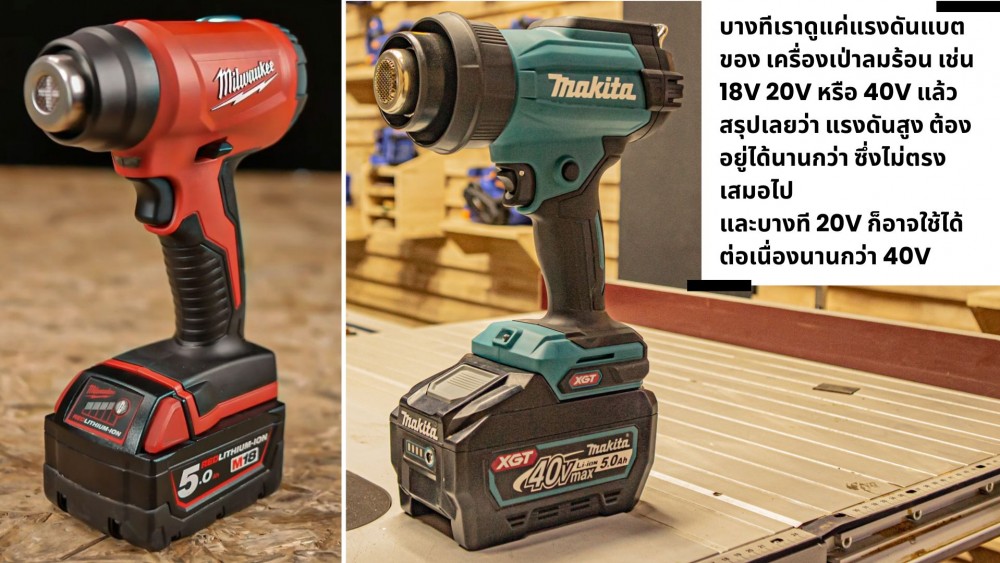
Equivalent power or heating power
Some heat gun brands provide equivalent wattage ratings, such as 300W or 500W. The higher the wattage, the hotter it gets and the more battery power it consumes, but it also finishes the job faster.
Another important question is: Why do corded heat guns have such high wattage ratings, and how do they differ from cordless ones? Do you really need that much "power"? If you only use it for heat shrink tubing or warming small glue spots, an overly powerful model might be unnecessary and only make you pay more. Plus, in cordless models, it also drains the battery much faster.
Actual runtime specified by the manufacturer (and conditions you must read)
Many heat gun models may state a runtime of X minutes, but if you read further, you'll find it applies to "low mode" or a "certain temperature setting." If you use the maximum mode, the actual runtime will be shorter.
Look at continuous runtime figures as a "general trend" rather than 100% reality, because everyone's actual workload differs. However, if a heat gun brand doesn't disclose anything at all, that's definitely something to think about.
Temperature / Airflow adjustment system
The finer the adjustment on a heat gun, the better you can control energy consumption. For example, if you only need 200–300°C for thin heat shrink tubing, you don't need to blast 500–600°C all the time. Being able to adjust it saves battery life and reduces the risk of burning and ruining materials.
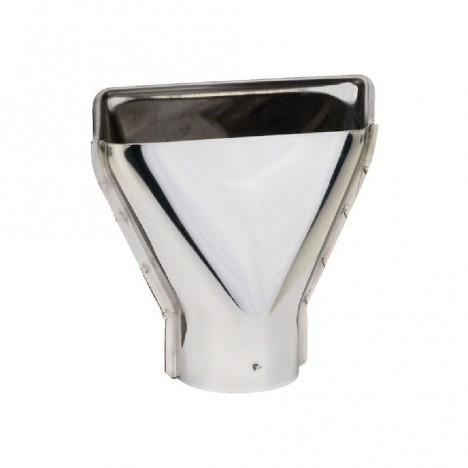
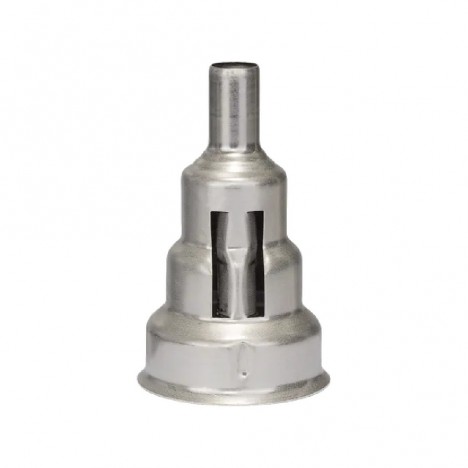
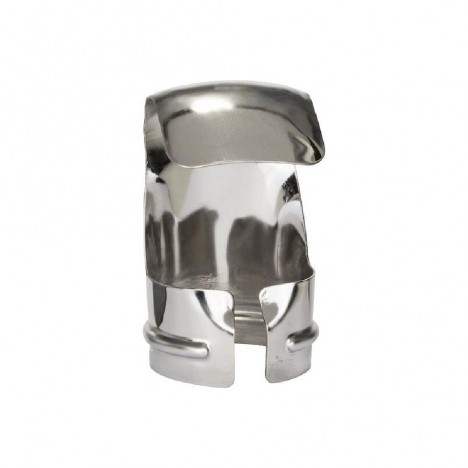
Nozzles / attachments and airflow design
This is often overlooked, but it makes a huge difference. A well-designed nozzle will "deliver heat to the workpiece" more efficiently, meaning less heating time, faster completion, and naturally longer battery life.
However, using a nozzle that doesn't fit the job—such as shrinking small tubing with a wide nozzle—wastes dispersed energy. You have to blow heat longer, and the battery drains faster, even though simply changing to the right nozzle would solve the issue completely.
Are cordless heat guns really worth it in practice?
Before answering whether it is "worth it" or "not worth it," I'd like you to shift your perspective a bit. Many people mistakenly evaluate cordless heat guns using the same standard as other cordless tools—simply checking how many minutes the battery lasts and immediately concluding whether it's usable or not. To give a fair answer, I'd like to divide this into distinct user profiles. Read through and see which one you fit closest, and the definition of "worth it" will become much clearer.
On-site technicians / Maintenance / Mobile workers
If it's on-site work where you encounter areas without outlets, voltage drops, insufficient power, or tripping hazards, I can tell you that a cordless heat gun is extremely "worth it" in terms of time and agility. No extension cords needed, no cables to drag around, no worrying about people tripping over wires, and no time wasted setting things up before starting work. The value isn't measured in battery runtime minutes, but in workflow continuity and reduced hassle.
Casual home DIYers using it occasionally
This group can also find it worthwhile. If you want a heat gun that's quick to grab and use for minor repairs, crafts, applying stickers, or certain shrink-wrapping tasks, it's great. But if you're buying it intending to strip paint off an entire house, I think going with a corded model would be much more appropriate.
Continuous heavy-duty work / 100% replacement for corded models
If you expect a cordless heat gun to handle continuous heavy-duty work and fully replace a corded model in every aspect, I think you have to accept the reality of "battery cycles." You might need multiple batteries or very high-capacity batteries to keep your workflow smooth.
It's not impossible, but costs will increase, and you need to manage charging well; otherwise, it will turn into being convenient to hold, but frustrating to wait for batteries.
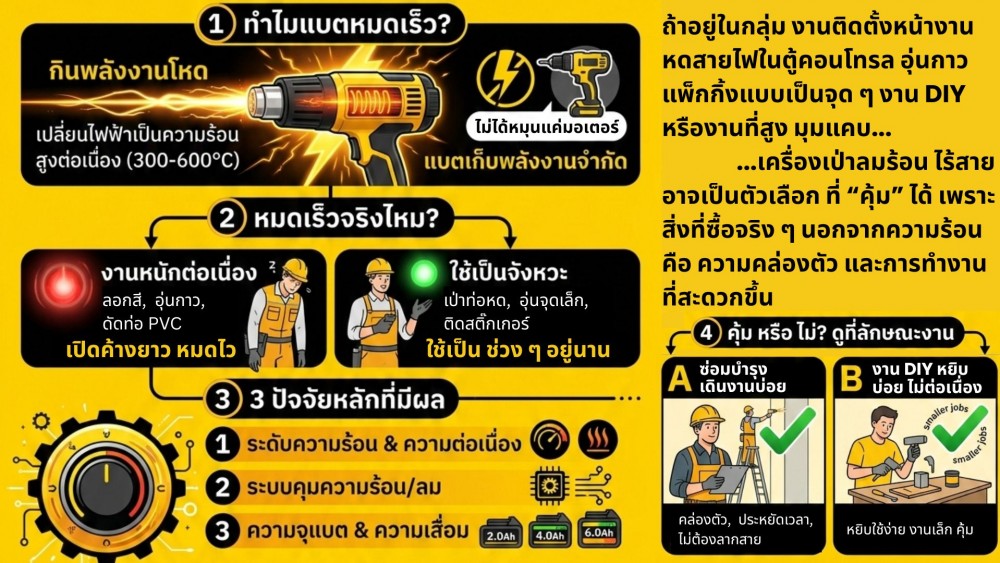
Summary: How should you look at a heat gun to make it "worth it"?
If you ask me whether a cordless heat gun is worth it, I wouldn't just give a flat "yes" or "no." Instead, ask yourself: are you paying for heat output, or mobility?
- If you are buying mobility and your work is intermittent, involves frequent moving around the job site, lacks ready power outlets, and requires quick grab-and-go use, I think cordless is definitely worth it.
- If you are buying heat for long, non-stop heavy-duty work where you don't want to pause at all, I think a corded model is still the better fit and far more cost-effective.
Therefore, if you are looking for Heat Guns a cordless tool, don't judge it solely on "the battery drains quickly." Base your decision on your actual work requirements, then choose the right specs accordingly.
Because sometimes, a cordless model truly helps you get the job done faster.