


 EN
 ไทย


Customers Also Purchased

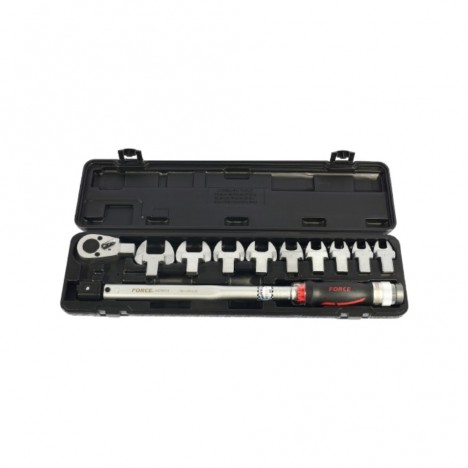


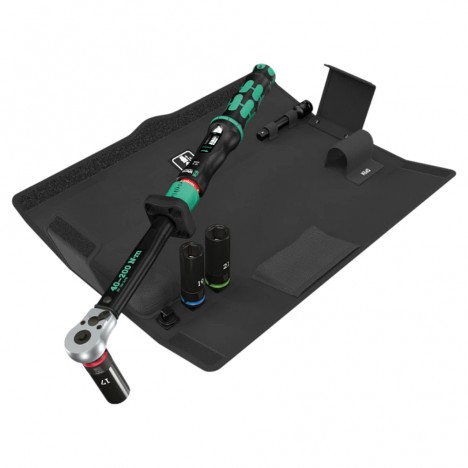

When talking about Torque Wrenches When hearing (Torque Wrench), we probably think of a hardcore tool designed to tighten bolts to precise torque specs to prevent loose bolts, leaks, or over-tightening that strips threads, right? But... once the word "adjustable" enters the picture... a flurry of questions pops up! Is it really accurate? Won't an adjustable jaw like this round off bolt heads? Can it handle real work, or is it just a gimmick?
In this article, let's talk straight and candidly from the perspective of someone with real job-site experience—from general repairs, machine assembly, and pipework to automotive repairs requiring exact torque specs. We'll break down clearly: What makes an adjustable torque wrench so great? What are its weaknesses? And if you're eyeing one to add to your collection... what are the "must-knows" before spending your money!
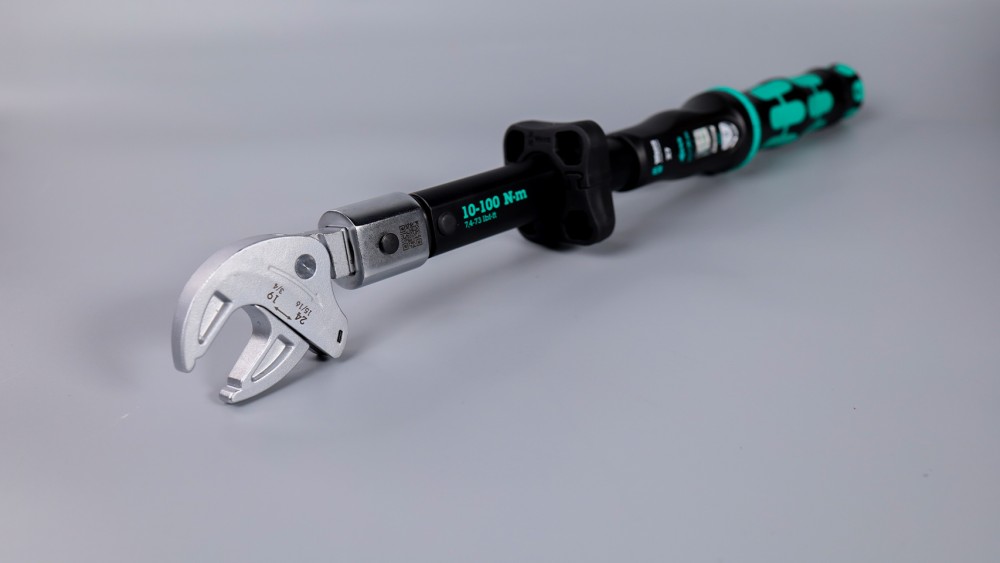
Adjustable Torque Wrench: A Perfect Combination
First, we need to understand that the primary function of a torque wrench is simply one thing: to control the torque applied so it stays exactly within specifications—not too much, not too little. In the world of mechanics, tighter doesn't always mean better.
- If tightened too much, disaster can strike: threads can strip, bolts can stretch, flanges can warp, seals can fail, or worse, you might inadvertently snap the bolt right off.
- If tightened too loosely, trouble follows just as well: bolts back out, fluids leak, machine vibration causes parts to detach, or components get ruined in the long run.
When "precision" meets "versatility" Now, when we mention an "adjustable wrench," our mental picture is of an all-purpose tool that adjusts to various sizes—one tool does it all. But the classic drawback every technician has faced is slipping! The jaws spread open, rounding the bolt head, especially when the jaw isn't tightened snugly or when applying force in the wrong direction. When fusing these two into an "adjustable torque wrench," doubts instantly surge: Will the adjustable jaw grip the bolt head securely enough?
- Will the preset torque value still be accurate and reliable?
- Is it really a lifesaver, or will it just ruin your bolt heads even faster?
"It works... but it wasn't made for every single job." And most importantly, our skills and "usage technique" have a massive impact on the results!
Where the adjustable torque wrench truly passes the test and excels!
- Tackling on-site jobs where you can't guess the bolt sizes (plus being too lazy to carry heavy loads): During real-world repair work on-site, we don't have time to sort out sockets of every single size. Especially when dealing with unusual bolt sizes mixed between metric and imperial (such as light structural work, rack installations, or air conditioning), having a tool that is both "adjustable in size" and "torque-controlled" saves an enormous amount of time.
- Squeezing into tight spots where sockets or ratchet handles can't reach: In some tight corners, a socket head simply won't fit—such as bolts right up against a wall, next to the edge of a workpiece, or obstructed by a crossbeam. Attaching long socket extensions causes the handle to wobble, throwing off the torque accuracy and making it hard to control. With an adjustable wrench featuring a slimmer head that can be clamped down snugly on the bolt head, it turns out to be much easier to "sneak in" than a socket set in many situations.
- Assembly jobs that just need to be consistently up to standard, without requiring lab-grade precision: Let's be completely honest, some on-site jobs don't demand world-class precision; what we need instead is "consistency," such as: fastening equipment mounting brackets, securing covers or structures where you want uniform load distribution across all points, or playing it safe to prevent "heavy-handed" crew members from over-tightening and stripping threads.
An adjustable torque wrench solves this problem perfectly. It allows everyone on the team to tighten fasteners to an appropriately snug, consistent level without relying on extensive veteran experience.
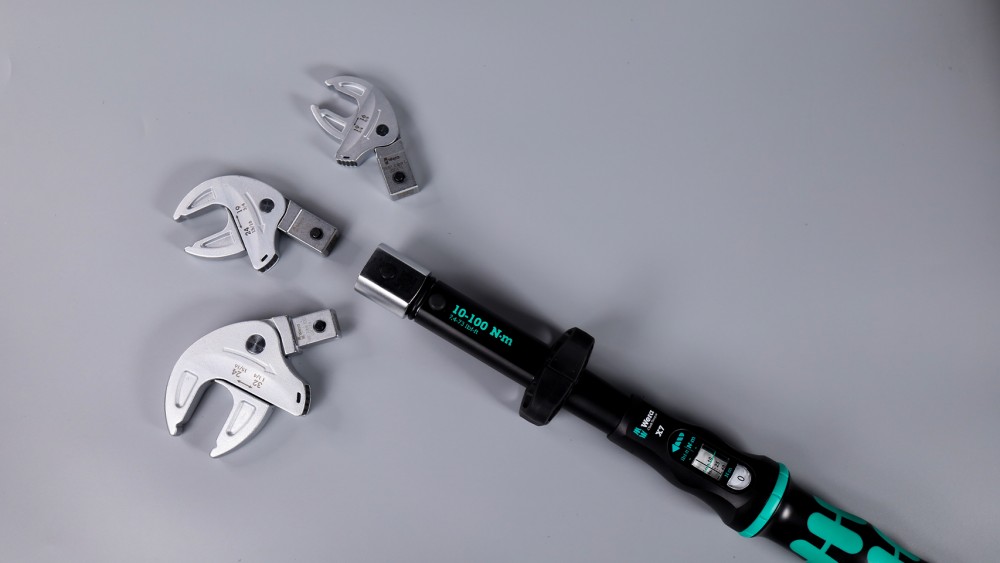
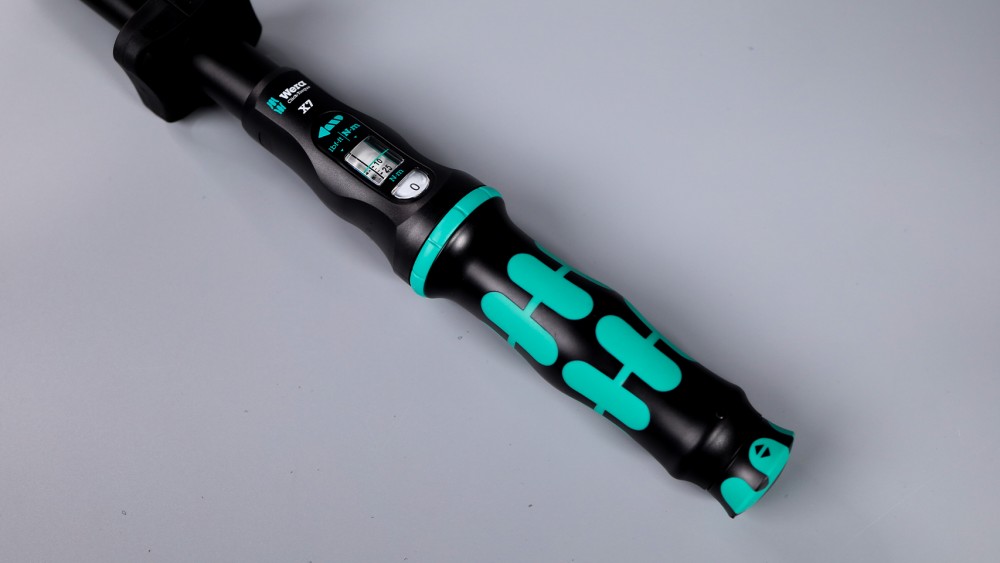
Does an adjustable torque wrench have any drawbacks?
Beware of stripped bolt heads! A classic issue if used incorrectly
The reason many people shy away from adjustable wrenches is precisely because they can "shift." Even if tightened securely, gripping at the wrong angle or applying skewed torque causes the jaws to try to slip off the bolt flats. The result is a total slip that severely damages the bolt head! A trick learned from firsthand experience that will save you is:
- Turn the worm gear to make the jaw "as tight as possible." Give it a gentle wiggle; if you still feel considerable play, do not force the turn under any circumstances.
- Face the wrench in the right direction: when applying force, ensure the load pushes the movable jaw "inward," not in the direction that forces the jaws to spread open.
- Apply force smoothly and steadily; never jerk the tool. Always remember: a torque wrench only controls the "final torque," but it won't protect the bolt head if the jaws don't have full surface contact from the very start!
High-precision, mission-critical engineering jobs... skip this tool for those
If it is a job where torque specifications directly affect safety—such as tightening engine cylinder heads, brake system components, or applications requiring precise torque plus angle (Torque + Angle)—for work at this level, I recommend going back to a "socket-head torque wrench" or specialized tools instead. Sockets fit completely, securely, and consistently over bolt heads with virtually no chance of slipping, delivering far more repeatable results.
Torque values may drift slightly due to a changing "lever arm distance"
Normally, standard torque wrenches are designed to transmit torque from the end of the handle to a fixed square drive. But with an adjustable-jaw type, the jaw thickness or the contact point on the bolt head shifts slightly depending on how wide you adjust the opening. This minor factor can cause the actual torque delivered on the job to deviate slightly from your set value.
Pre-tightening checklist: How to use an adjustable torque wrench without ruining fasteners!
- Tighten the jaw fully and lock it securely: When gripping a bolt head, rotate the worm screw until the jaw is completely snug, then back it off just a hair to fit perfectly into place. And if your wrench model comes with a locking mechanism... force yourself to use it every single time.
- Face the wrench jaws the right way: An easy trick to always keep in mind—when applying force, the direction of load must always push the adjustable jaw closed. Never pull in a direction that forces the jaw open, or it will inevitably slip.
- Pull smoothly and control the rhythm properly. The golden rule is: never jerk, never hammer. A torque wrench is designed for smooth, steady, and gradual pulling force. That's the only way its internal mechanism can calculate the torque value with the utmost accuracy.
- Once it clicks... stop immediately! When you tighten until you hear a "click" or feel a notch snap in your hand, that's it—stop immediately! Never fall into the habit of giving it "just a little bit more." Otherwise, the torque value you carefully set will be completely ruined and meaningless.
- Once done, reset the torque setting immediately. After finishing the job, always remember to unwind the torque setting back down to its lowest point as stated in the manual. This helps prolong the lifespan of the internal springs and mechanisms (especially on click-type torque wrenches) so they stay durable and ready to work with you for a long time.
Summary... Who is an adjustable torque wrench suitable for?
Very suitable if you are:
- An on-site technician dealing with diverse jobs and unpredictable bolt sizes.
- Someone doing installation/maintenance work who needs to carry fewer tools while covering multiple applications.
- Someone wanting to maintain more consistent torque control in general jobs.
Not very suitable if you are:
- Working on high-safety-critical tasks requiring high precision and repeatability.
- Jobs requiring sockets to grip bolt heads firmly (e.g., deep-set or recessed bolts).
- Someone who rarely uses adjustable wrenches and tends to grip them at the wrong angle (this can be learned, but requires practice).
Select Torque Wrench to suit the application