


 EN
 ไทย


Customers Also Purchased




Have you ever gone shopping for a Safety Helmet and encountered the question, "What's the difference between ABS and HDPE?", followed by the classic line: "Which one is worth it, affordable, and safe?" In this article, we'll explain what ABS and HDPE are in safety helmets, how they differ, and which one offers the best value for your work. We'll share real-world perspectives commonly encountered on job sites and in factories so you can decide faster—no guessing, and no buying the wrong one only to regret it later.
What does safety helmet material have to do with safety?
Let's start with the basics. When talking about safety helmets, most people think primarily of the outer shell. In reality, a safety helmet works as a system—just like a car isn't just about its bodywork; even with thick steel, if the seatbelts, airbags, or crumple zones fail, it won't protect you. A safety helmet is similar: its components must work together as a unit to absorb impact → distribute impact → reduce the force reaching the skull.
- Helmet Shell: Takes the initial external impact and distributes the force over a wider area so it doesn't concentrate on a single point on the head, while also protecting against penetration by hard objects or debris.
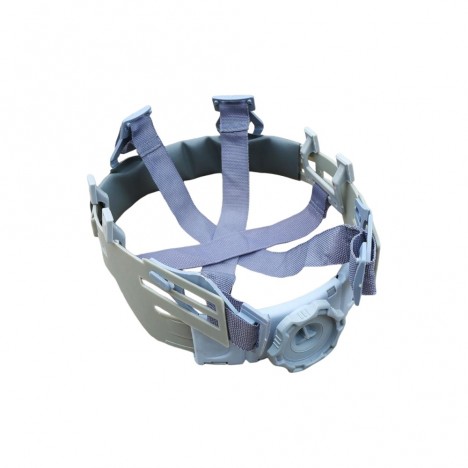
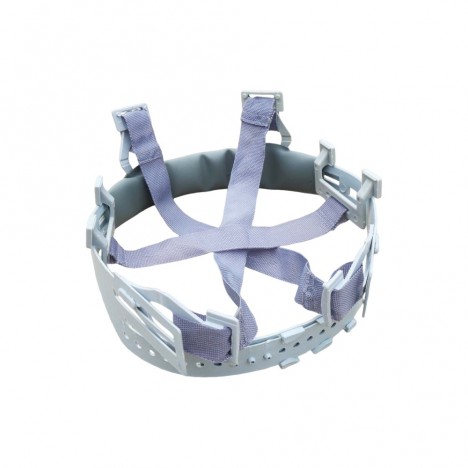
- Suspension System: This is the unsung hero, creating a "clearance space" between the shell and your head. When an impact occurs, the shell can deform or flex slightly, and the suspension absorbs the force, reducing the direct shock transmitted to the head.
- Straps / Adjustment System (Chin strap / Ratchet / Pinlock): Keeps the helmet in its proper position during an actual incident. Accidents don't happen while standing still; they happen when bending, looking up, climbing, moving up and down stairs, or facing strong winds/jolts. If the helmet slips or falls off, the impact won't hit the intended protective zone.
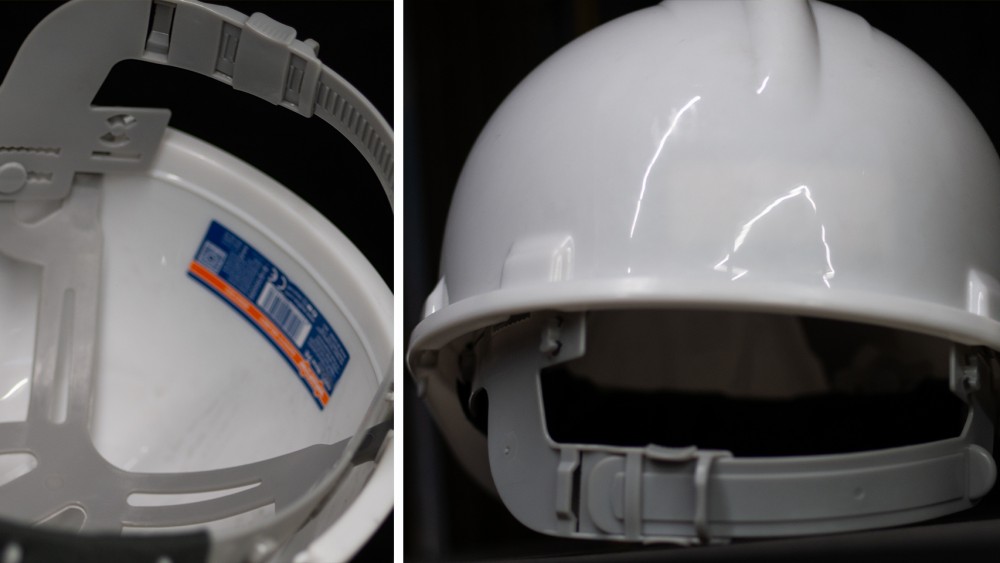
What many overlook is that safety helmets are not designed for the shell to sit directly against the head; there must be adequate clearance. If you wear a helmet that fits "too tightly against your head", the suspension system cannot function properly, and upon impact, force is transmitted straight to your head much faster (like pressing metal directly onto it). Therefore, the "shell material" is certainly important, but it's not the only factor in safety. A good helmet requires a balance of shell + suspension + design + manufacturing quality, and most importantly, "proper adjustment."
We often see people buy good helmets but wear them with a loose suspension or tilted back for style. In the end, when bending down to work, the helmet slides down over their eyes and needs constant pushing up. This is dangerous because during a real incident, the helmet can shift or come off much more easily than you think. To quickly check if your helmet system is ready to protect you, use this short checklist:
- Gently shake your head: the helmet should not wobble excessively or slide down over your eyes.
- Bend down and look up: the helmet should remain in place without sliding to the back or forehead.
- The suspension shouldn't pinch painfully, but should be snug enough to keep the helmet stable.
In reality, though... the helmet shell is the very first thing technicians inspect, as it's what people immediately see and touch. And the most common materials by far are ABS and HDPE.
What is ABS? Why are ABS safety helmets considered premium?
ABS stands for Acrylonitrile Butadiene Styrene. It is an engineering plastic known for its excellent balance of rigidity and toughness. Many may recognize it from other applications, such as tool cases, machine covers, or parts requiring higher strength than conventional plastics.
Highlights of ABS Material Safety Helmets
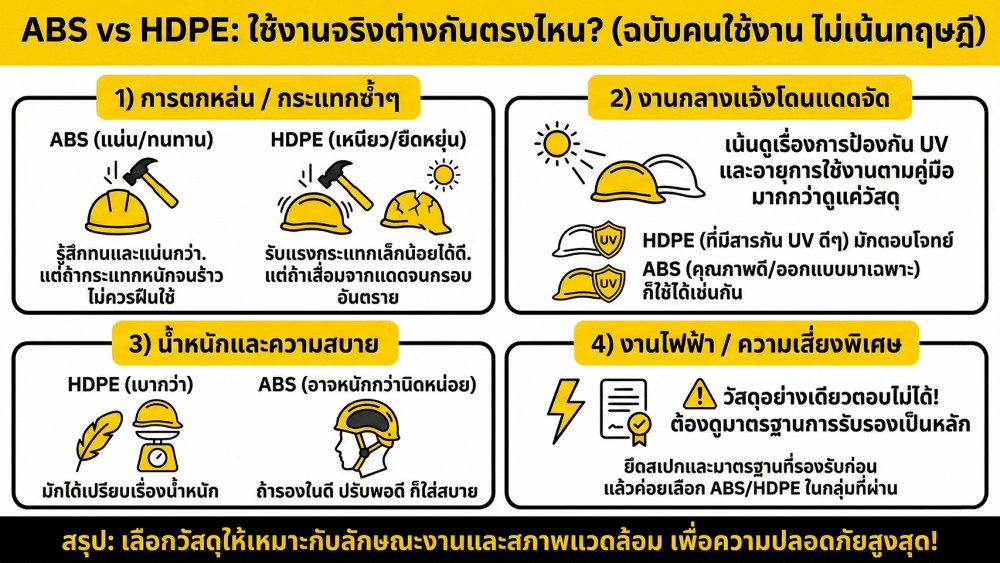
- Solid, rigid surface offering a "dense" feel. When holding an ABS helmet, you can immediately feel that it is firmer and more substantial in hand. Many prefer this as it inspires confidence.
- High impact resistance (especially in cold weather or varying environments). ABS tends to maintain its toughness across a wide range of temperatures, leading many factories to choose it for fluctuating working conditions.
- Excellent color quality and surface finish. If you see a safety helmet with a glossy surface, refined assembly, and consistent color, chances are it's made of ABS because it molds and finishes exceptionally well.
- Ideal for applications demanding durability and professional presentation, such as factories with high corporate image standards, long-term daily wear, or organizations with designated helmet color codes that want a professional look.
Things to Consider About ABS Before Buying
- Average price is usually higher than HDPE (though not always expensive, depending on brand/standards).
- Prolonged exposure to certain chemicals or intense sunlight can cause the material to degrade over time (in truth, all materials degrade eventually).
From my on-site experience, ABS helmets are often chosen where workers wear them all day and want a helmet that holds its shape once adjusted and doesn't feel flimsy.
What is HDPE? Why is an HDPE Safety Helmet a Value-Packed Choice for Real Workers?
HDPE stands for High-Density Polyethylene, a tough, durable, and lightweight plastic widely found in industrial applications. The highlights of HDPE are its good durability and flexibility at an accessible price.
Key Highlights of HDPE Safety Helmets
- Great value, budget-friendly: If it is a worksite that requires large quantities or involves revolving distributions for new employees, HDPE is an option that controls the budget well.
- Tough and flexible: Many people like HDPE because it is "not brittle" and has inherent flexibility, making it feel less prone to shattering into pieces upon impact.
- Lightweight, comfortable for all-day wear: In jobs requiring you to wear a helmet all day, lightness really matters, especially for those looking up while working, such as overhead installation or site inspection walks.
- Excellent resistance to moisture and general working conditions: For outdoor work, rainy environments, or heavy sweating, HDPE performs well overall.
Points to Consider about HDPE
- The surface texture may not feel as "solid" as ABS. Some users feel it is thinner to the touch (though this doesn't mean it's unsafe, as long as it meets certified standards).
- Regarding UV/sunlight degradation, you must check the quality and UV-stabilizer additives of each model, as helmets exposed to intense sunlight every day can degrade quickly.
From my experience, HDPE helmets are usually the first choice for construction sites, general maintenance work, or companies that need to control costs while maintaining full safety standards.
Checkpoints for True Value in Safety Helmets (Applicable to both ABS/HDPE)
We want you to check these various points before deciding, because this is what delivers true value—not just the material's name. These are the points where we repeatedly see people make mistakes, ending up with "buying a good helmet, but it's uncomfortable to wear / used incorrectly / deteriorates prematurely," ultimately wasting their money. In addition, we also have 5 Safety Helmet Accessories Every Worker Must Have to share with you, completing your ultimate safety setup!
Certified Standards (Match the job first before discussing materials)
Don't buy just because it says ABS or HDPE; check which standards the safety helmet meets and whether it matches your job's risks—such as construction, factory work, working at heights, electrical work, or flying debris hazards.
Manufacturing Date and Safety Helmet Lifespan
A safety helmet kept in stock for a long time can degrade over time even if never used, especially if stored poorly (extreme heat, humidity, sun exposure, or chemical vapors). Easy checks before receiving items or starting use:
- Check the manufacturing date on the safety helmet (many models feature a month/year dial wheel or stamped date).
- If a hard hat has an "abnormally strong plastic smell" or the surface looks dry, faded, or chalky even though it has never been used, be cautious that it has been stored for a long time or kept in improper conditions.
We have seen helmets that look brand new, but when gently flexed, they make a cracking sound. That is a sign of aging. Using items like this is not worth it because they will need to be replaced soon.
Does the hard hat harness fit snugly after adjustment?
A good harness truly saves lives; it absorbs impact and ensures wearing comfort. If the harness is stiff or does not fit properly after adjustment, no matter how good the shell is, it will cause discomfort to the wearer. Eventually, people will either "take it off" or "wear it loosely," which is even more dangerous. You can tell immediately whether it fits your head once you try it on.
- Adjust it snugly and gently shake your head; the helmet should not wobble excessively.
- Look up and down; the helmet should not slide down over your eyes or slip back behind your head.
- No sharp pain on the forehead or back of the head within the first 2–3 minutes.
Some hard hat models offer "replaceable spare parts" for the harness separate from the shell—this is very cost-effective for heavy-duty work because you only replace a worn, smelly, or degraded harness instead of discarding the entire helmet.
Adjustment System (Choose based on your work habits)
- Ratchet adjustment: Ideal for those who take it off and put it on frequently, wear it all day, need quick adjustments, or wear it over bandanas, hairnets, or sweatbands.
- Pinlock adjustment: Simple structure, durable, and suitable for jobs that do not require frequent fine-tuning.
If your job site requires other PPE such as earmuffs, face shields, or certain types of respirators, choosing an adjustment system that "does not interfere" with them will help reduce annoyance and allow you to wear it continuously without issues.
Hard Hat Weight + Balance
Some hard hats are not very heavy, but their poor balance puts pressure on the forehead or the back of the head. Wearing them for a while causes aches and fatigue, leading workers to unconsciously loosen or shift them. Here is a 30-second test method:
- Put it on, look down at the floor 3 times, and look up 3 times.
- Try turning your head quickly left and right; if the helmet "slips" or "wobbles," it means the balance or the harness is not properly dialed in.
For tasks that require frequent looking up, such as working under steel structures or overhead installation work, balance is even more important than having a thick shell. If the helmet is front-heavy, workers simply won't be able to bear wearing it.
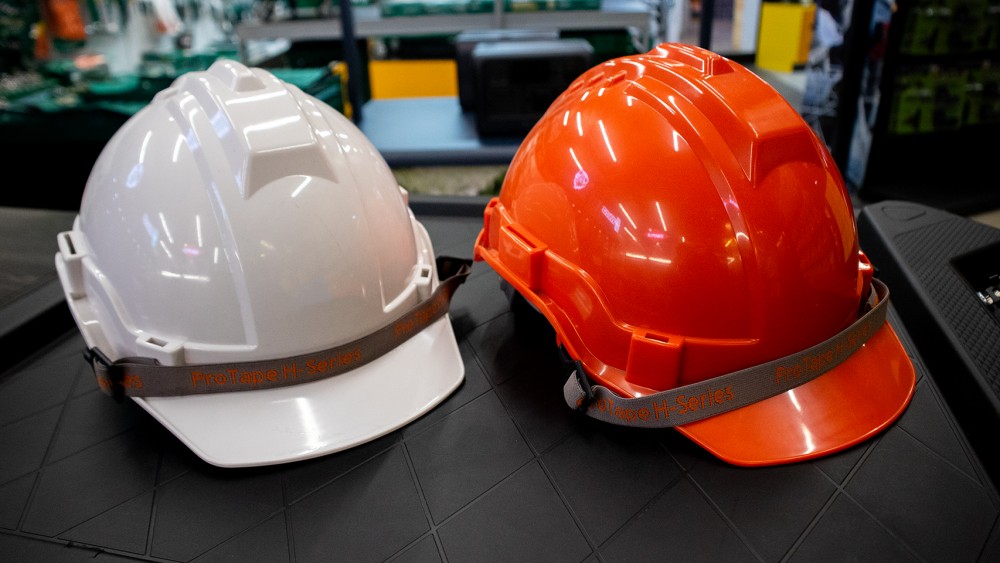
Hard Hat Sun/UV Resistance + How to Spot Early Degradation
Choose a hard hat genuinely suited for outdoor work and establish a replacement schedule. Do not expect a hard hat to last "forever"—plastics simply do not work that way. Here are signs of degradation (do not continue using if found):
- Abnormal color fading + dry, chalky surface
- There are hairline cracks around the edges/ridges/mounting holes.
- Gently flexing it causes crackling sounds or it feels brittle and stiff.
- The surface starts to become chalky/dusty (feels like powder comes off on your hand when touched).
Maximize value with proper storage
- Do not leave it on the car dashboard or in the back of the car under the sun.
- Avoid storing near chemical vapors, oils, or solvents (some chemicals cause plastic to become brittle quickly).
- Clean with mild soapy water and a cloth; do not use thinners or overly harsh chemicals.
Q&A Frequently Asked Questions
Are ABS safety helmets safer than HDPE?
If both pass the same standards and are of comparable quality, basic safety falls within the same standard parameters. The difference lies more in the feel of use, environmental durability, and comfort.
Can a sun-faded safety helmet still be used?
A faded safety helmet is one sign of degradation, but it is not the sole deciding factor. Check further: Is the surface becoming brittle? Are there cracks? Does it make cracking sounds when flexed? If yes, please replace it—don't take the risk.
Is buying an expensive safety helmet always more cost-effective?
Not always. If you do general work, use them in large quantities, and have a clear replacement schedule, standardized HDPE may be much more cost-effective. However, if you wear it all day every day and want comfort and a secure fit, a good ABS helmet may be more worth it in the long run.
Select Safety Helmet to suit the application