


 EN
 ไทย


Customers Also Purchased


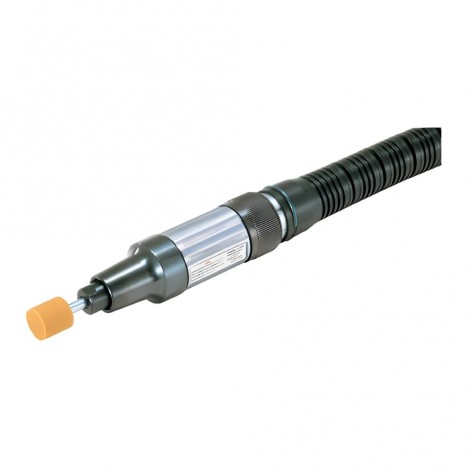
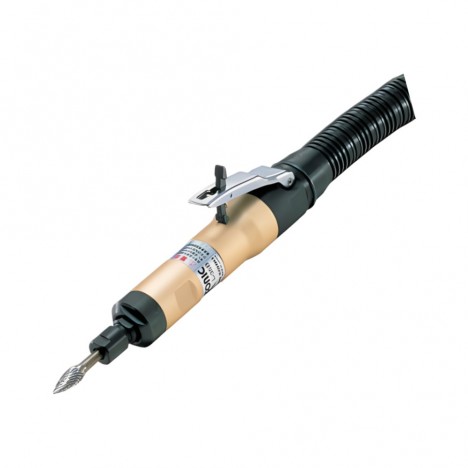

Have you ever wondered when people say, “ Pneumatic Grinder is industrial-grade, so once you have compressed air, it's definitely more worthwhile than an electric grinder"—sounds like an ironclad rule, doesn't it? But when I follow up by asking, "In what way is it worthwhile?", the answers usually circle around air being cheap, the tools being durable, or the build being solid yet simple, and that's it. Yet when we talk about "worthwhile" in real-world work, it refers to the total cost of operation—from the tool cost and maintenance to downtime and how smoothly the actual work progresses.
And the word "economical" isn't just about the price tag on the receipt; it also includes hidden costs, such as when work must halt because of power drops, overheating tools, workflow interruptions, or the opportunity costs when workpieces need repeated rework.
So let's frame the questions more sharply. Are air grinders really more economical than electric or cordless grinders? If so, where exactly do they save—tool cost, repair costs, time, or because work flows more smoothly? And if not, where are they more expensive—investing in an air system, air leaks, or choosing the wrong specs? And most importantly, for whom are air grinders economical?
Do air grinders seem economical only because you're just looking at the bare tool?
When comparing prices in stores, air grinders—especially 4-inch angle grinders for cutting and grinding, or straight die grinders used for dressing, cleaning welds, and deburring—lead many to quickly conclude, "Then air must be worthwhile." But in reality, the cost of an air system doesn't end with just the air grinder itself.
The question you should ask first is: do you already have an air system? If you already have an air compressor, air piping, filter-regulator-lubricator (FRL) units, an air grinder could be a cost-effective "upgrade" because you barely need to invest in a new system. But if you have nothing at all and buy an air grinder simply thinking it's cheaper than electric, your expenses will fall heavily on the air system itself—and trust me, you can kiss any "friendly price" goodbye.
In what aspects are air grinders more economical than electric ones?
How is an air grinder different from electric or cordless grinders? When talking about savings, electricity bills are usually the first thing that comes to mind, right? But with air grinders, the costs you truly save might lie in completely different areas. Therefore, to make things clear, let's break down the "savings" into categories first.
1. Durability and Spare Parts Costs: Compact Tools, Built for the Long Haul
Many who do heavy-duty work know that when electric grinders are used continuously for long periods, the first thing to cry out is heat: the motor gets hot, carbon brushes wear out, bearings get noisy, switches act up, batteries deplete, and power cords become brittle.
Air grinders, however, operate on the principle of an air motor, featuring a simpler structure, fewer critical heat-buildup points, and rarely suffering from "power drops due to heat" like electric tools do under sustained heavy loads (depending, of course, on the model and quality). As a result: For many jobs requiring all-day grinding, air grinders offer great endurance And for factory operations with routine maintenance schedules, replacing vanes / O-rings / lubricants at regular intervals keeps costs fairly stable.
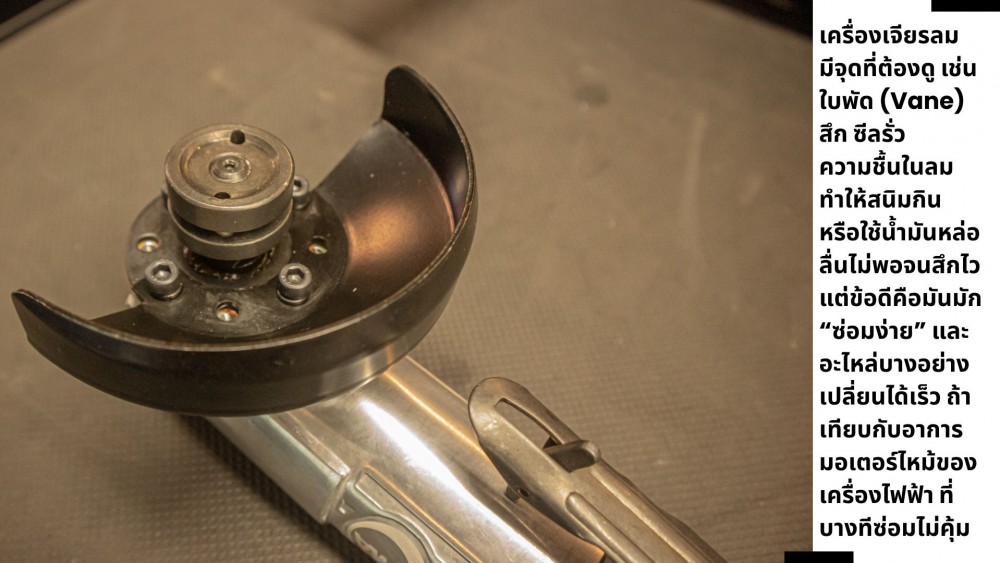
2. Time and Continuity: Air grinders can grind continuously for "long stretches" without needing frequent rest
A savings many overlook is "actual job site time." Air grinders in automotive workshops or production lines are typically built for heavy-duty work. If the air system is stable, the tool delivers consistent performance—press the throttle and power kicks in reliably without easily dropping off.
From a business cost perspective, 10 minutes wasted pausing for a tool to cool down or stopping due to thermal cut-off disrupts the technician's workflow. On some jobs, it can even degrade weld quality if the post-weld surface finishing rhythm drags on too long.
Therefore, "air grinders save money" can sometimes be translated as saving on hidden labor costs by allowing for more continuous work.
3. Lightweight and Fatigue: Air grinders are lighter—how is that cost-effective?
This is a factor rarely calculated in monetary terms, but in reality, many air grinder models are relatively lightweight compared to electric grinders that contain bulky motors and heavy coils inside.
With a lighter tool, hands don't fatigue as quickly, grinding angles are easier to control, the finish is smoother, and errors are less likely to happen. This translates to less rework which is the true hidden cost of grinding. Reworking isn't just lost time; it can mean scrapped workpieces or grinding beyond specified thickness tolerances.
In actual manufacturing or contracting operations, this factor matters more than you might think—especially for surface finishing, deburring, and awkward out-of-position grinding where precise angle aiming is required.
4. Safety and Risk: Rarely discussed, but genuinely impactful
Pneumatic grinders: high speed, lightweight, no electrical system—are they more dangerous? Many people using grinders have encountered cluttered extension cords, insufficient power outlets, or voltage drops over long cables. These risks aren't just technical; they involve accident hazards. In wet or humid areas, or factory environments where electrical risks must be strictly controlled, using an air grinder helps eliminate part of the electrical risk factor.
To be fair, however, pneumatic systems have their own risks, such as whipping or disconnected air hoses, leaking couplers, accidental air discharge toward the body, or high noise levels. Thus, "savings" in terms of safety will only materialize if the compressed air system is well-installed and properly maintained—using standard couplers, safety locks, shut-off valves, and regulated pressure matching specifications.
5. What about electricity? Do air grinders really save on electricity costs?
This is precisely where the most common misunderstanding lies. Air grinders don't plug directly into an electrical wall socket, but that doesn't mean they run for free—the energy cost is simply shifted to the "air compressor" instead.
The question you should be asking is:
- Are we already using an air pump or compressor for other tasks?
- How much more will the compressor have to work if we add an air grinder?
- Are there air leaks in the system? Is there moisture in the air supply? Or is there a pressure drop causing you to crank up the pressure unnecessarily high?
Whether "air cost" is expensive or cheap isn't measured solely by the electricity bill, but by overall pneumatic system efficiency—especially air leaks, which are like leaving a water tap running constantly. Some places leak so much that the compressor runs all day even though tools are only used for a few hours. This is why some people who use air grinders end up saying, "It's not saving anything at all."
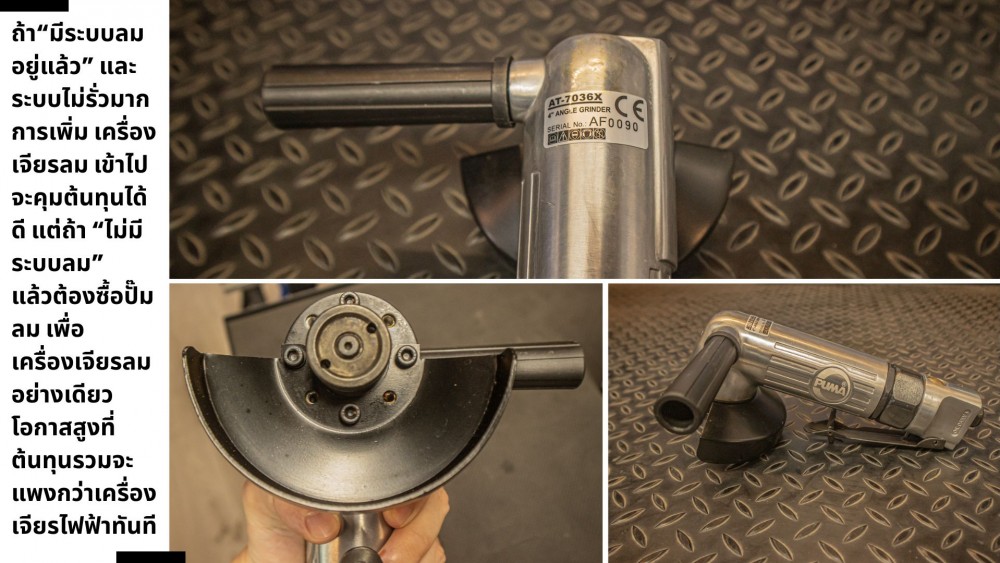
Who actually saves money with an air grinder? Let's clarify user scenarios first.
Think of it this way: the value of an air grinder varies across different groups because everyone's main tasks, daily operating hours, and existing pneumatic system costs are completely different.
Group A: Factories / Workshops with an existing air system
If you already have a compressor running all day for blow guns, air screwdrivers, tire inflators, spray guns, or other tools, adding an air grinder simply maximizes your existing resources. The only real added costs are minor maintenance and keeping the system clean.
For this group, air grinders truly "save"—delivering tangible savings through durability, smooth workflow, and easy repairs.
Group B: On-site contractors with unstable power supplies
Some job sites suffer from brownouts, insufficient power, lack of outlets, or floors covered in extension cords. If you bring your own air compressor and have heavy grinding work to do, an air grinder can help keep work running smoothly, reduce electrical issues, and minimize tool shutoffs.
However, this group must weigh options carefully, as portable compressors come with transport, noise, and maintenance costs. In many cases, a cordless electric grinder might be a better choice.
Group C: General handymen / DIYers with infrequent use
If you only grind once a month for small household projects, buying a complete pneumatic setup just for an air grinder likely isn't cost-effective—unless you already want an air system to run multiple tools like blow guns, air nailers, airbrushes, and also grind metal. In that scenario, an air grinder becomes one of the tools that make the air system worthwhile.
In the end, how does an air grinder actually save?
To help you weigh the decision quickly, here is a clear summary of how an air grinder delivers real savings:
- Long-term tool cost savings (for heavy-duty applications) Under continuous heavy use, a good quality air grinder lasts longer, is easier to repair in many cases, and rarely suffers from overheating and cutting out.
- Saves on downtime costs, making work flow smoother The tool doesn't cut out from overheating, reducing downtime for cooling or waiting for repairs—especially on production lines or in workshops where time is money.
- Saves on fatigue and mistakes The tool is lightweight, easier to control angles, yields better finishes, requires less rework, and minimizes damaged workpieces—actual operators know this is invaluable.
- Eliminates electrical risks in certain environments Reduces hazards related to power cords and plugs in damp areas or complex job sites, in exchange for maintaining a safe pneumatic system instead.
What about the "non-economical" side of air grinders?
To be fair, air grinders also have aspects that can drive up costs, especially if conditions aren't suitable, such as:
- Initial setup cost of the pneumatic system: If you don't already have a compressor and pneumatic system equipment, the startup cost is clearly higher than that of electric grinders.
- Energy costs of the air compressor (if the system has leaks or is inefficient): Air leaks are the opposite of "savings" and occur in almost every workplace. If not managed properly, compressor electricity costs will eat up all your savings.
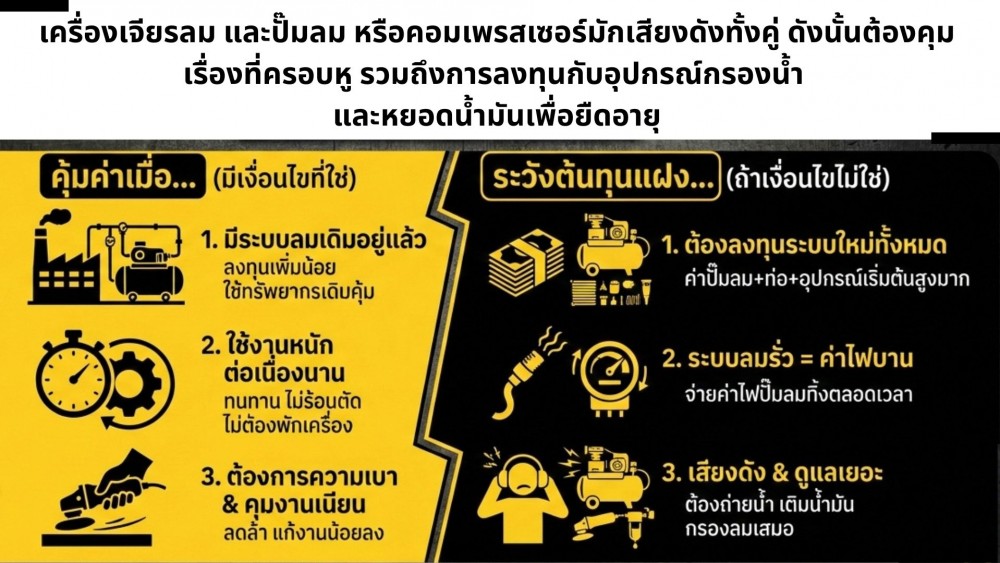
Summary: Are air grinders really more economical?
If you ask for a direct, straightforward answer: Air grinders are truly "economical" when you operate under the right conditions. However, you need to be able to answer: How often will you use the air grinder, and how ready is your pneumatic system? If you can answer these two questions, your decision will be much sharper. Whichever you choose, at least ensure that the grinder type fits your actual tasks, because when it comes to grinding, "a small mistake" can easily ruin the entire workpiece.
Pneumatic Grinder It is only worth it if it helps you work faster, reduce defects, and avoid frequent stops.