


 EN
 ไทย


Customers Also Purchased


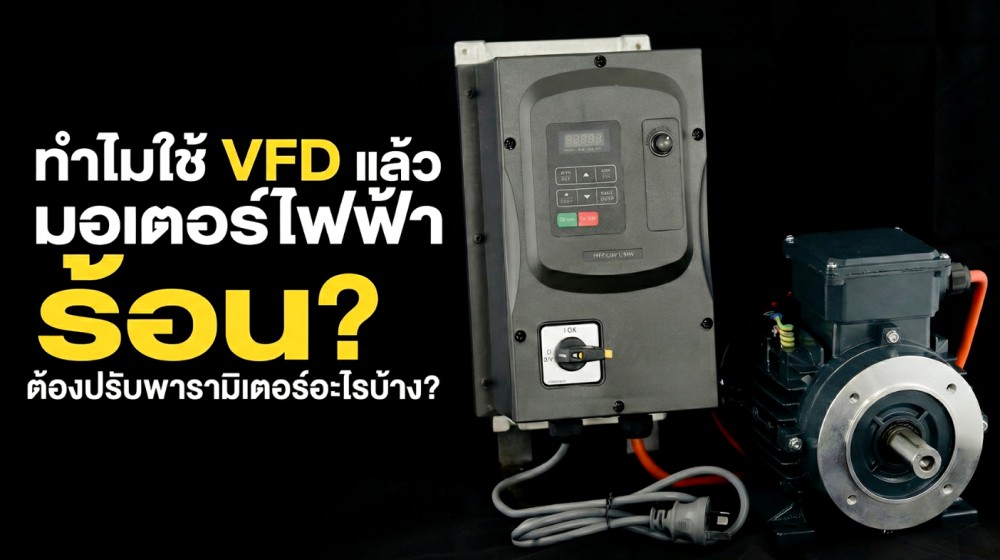
We believe many of you have experienced this: switching from direct-on-line (DOL) starting to a VFD, feeling that the machine runs smoother, speed is controllable, and it saves more energy. But… after using it in practice for a while, the electric motor becomes unusually hot—sometimes so hot that touching the motor frame startles you, or you start smelling the pungent odor of overheated insulation. The point is… a VFD does not always make it easier on an electric motor. If settings are not suitable for the actual job, or if hidden factors exist on-site, a VFD can actually cause an electric motor to run hotter. The scary part is that heat sometimes builds up gradually—until you finally realize it when the overload trips or the insulation has already begun to degrade.
In this article, we will summarize in simple terms why using a VFD causes an Electric motor overheating motor and which parameters need adjusting.
Why Does an Electric Motor Overheat When Using a VFD?
In principle, a VFD (Variable Frequency Drive) is an electronic device used to control the speed, torque, and start-stop of an electric motor. It converts AC power → DC power and then synthesizes a new simulated AC supply using PWM (Pulse Width Modulation) techniques—or high-speed pulse switching—to achieve the desired average voltage and frequency.
Unavoidable Effects
- Harmonics (Electrical Noise): PWM waveforms contain high harmonic content, causing iron core and winding losses that turn into accumulated heat.
- High dv/dt (Voltage Spikes): Fast switching generates high voltage peaks, which can easily damage winding insulation, especially with long cable runs.
- Cooling Efficiency (Insufficient Heat Dissipation): When running at low speeds, the rear cooling fan of the motor rotates slower, providing insufficient airflow. If the load remains just as heavy, the motor will immediately overheat.
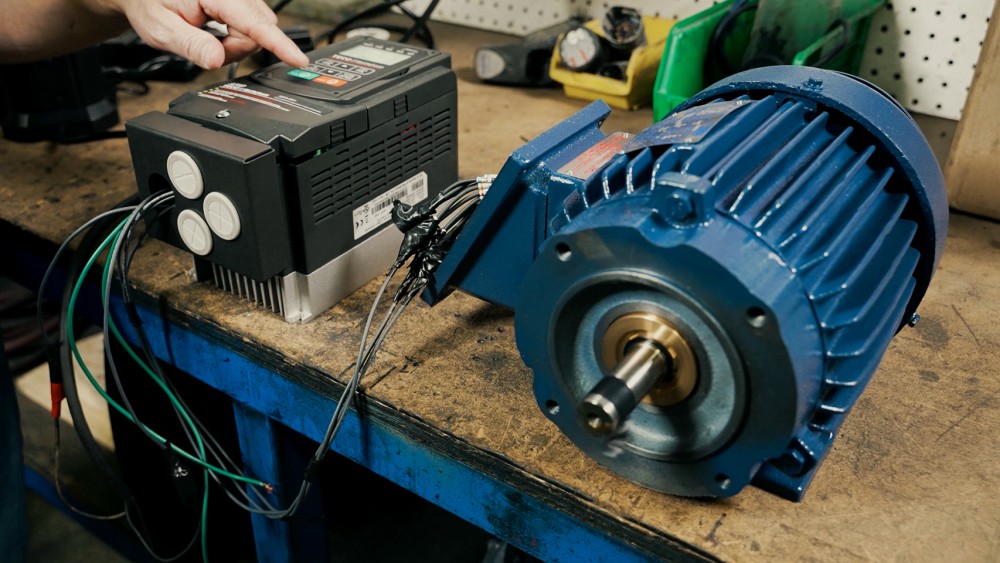
Main Causes of Electric Motor Overheating When Using a VFD
Running at Low Speed with a Heavy Load, Leading to Inadequate Heat Dissipation
This is encountered very frequently, especially in applications like fans, conveyors, and screw feeders where speed control is required, but on-site operations involve "reducing speed to control the process" while keeping the load just as heavy. Most standard electric motors use a shaft-mounted cooling fan.
- High RPM => Strong fan airflow, good cooling
- Low RPM => Weak fan airflow, poor cooling
However, heat doesn't always decrease with speed. If the load demands high torque, the motor must supply high current, immediately increasing heat from I²R losses. Symptoms: It gets abnormally hot quickly in the 10–30Hz range, but at 45–50Hz the temperature stabilizes. The conceptual solution: you must know whether the load is Constant Torque or Variable Torque. If it is a constant torque load (conveyors, screw conveyors, positive displacement pumps) and will run at low speeds for extended periods, you may need to use
an inverter-duty electric motor, install an external forced ventilation fan, or reduce the load/add a reduction gear instead of drastically dropping the frequency.
V/f or motor parameter settings that do not match the actual motor
This is a "trap" that causes baffling overheating. After installation, some people don't fully enter the motor nameplate data or enter incorrect values (e.g., entering 400V instead of 380V, or inputting a rated current lower than actual). The VFD calculates its control based on these values, such as:
- Rated Voltage
- Rated Current
- Rated Frequency
- Rated Speed / Poles
- Rated Power
If these values are incorrect, voltage boost compensation or flux control will be distorted, resulting in:
- Higher current than there should be
- Abnormal torque behavior
- Unnecessary motor overheating
We once encountered a case where a 7.5kW electric motor used on a conveyor load got extremely hot running at 25Hz. Eventually, checking the parameters revealed that the VFD was still set to the old production line's 5.5kW motor because the technician copied the parameters over and forgot to update them. Just that mistake caused the motor to deliver current against incorrect limits.
Carrier frequency (switching frequency) is set too high
The carrier frequency, or PWM switching frequency, makes the motor run quieter when set high (which some prefer). However, the downsides are increased losses in the VFD's IGBTs, higher harmonic levels in some areas, and the electric motor may run hotter—especially for small motors, long cable runs, or heavy loads.
A simple rule of thumb: want it quiet = set it high, but trading that for heat and equipment lifespan isn't always worth it. Symptom: The motor runs hotter after being tuned to run quietly, even though the load remains the same.
Using the wrong control mode (V/f, Sensorless Vector, Vector) without complete tuning
Many VFD models offer multiple control modes, such as:
- V/f (Scalar)
- Sensorless Vector
- Vector + Encoder
Modes with better torque control usually require motor auto-tuning, or at least properly configuring the motor model. If running in vector mode without tuning or if the tune failed, it may "push excess current" trying to chase the commanded torque, causing the motor to overheat.
From an on-site perspective: Sometimes, wanting stable torque at low speeds, we select sensorless vector mode but skip the auto-tune in a rush to hand over the job. In the end, the motor overheats and trips overload alarms intermittently, even though the actual load torque didn't require it.
Accel/Decel times are too short, causing recurring current spikes
Some production lines require fast acceleration and rapid stopping. However, if accel/decel times are set too short, the VFD struggles to meet the command, resulting in overcurrent spikes, high slip, and accumulated heat. Symptom: It doesn't overheat during steady running, but gets hot when starting and stopping frequently.
Overload curve / current limit settings are unsuitable for the application
VFDs have current limiting parameters and overload curves (e.g., 150% for 60s). If set to "allow heavy driving" just to keep the line from tripping, the motor is subjected to sustained overcurrent and builds up heat. Note: Some people fix overload trips simply by raising the current limit, but the real question to ask first is, "Why is it drawing that much current?"
Long electric motor cable + no dV/dt filter or reactor
Long cables cause pulse reflection (reflected wave), and the terminal voltage may be higher than expected, affecting insulation and increasing losses, as well as EMI. If the job site has the VFD in an electrical room and the electric motor is 50–150 meters away, the chance of encountering this problem is high, and it is usually solved by:
- Output reactor
- dV/dt filter
- Sine filter (in cases where a near-sine wave is required)
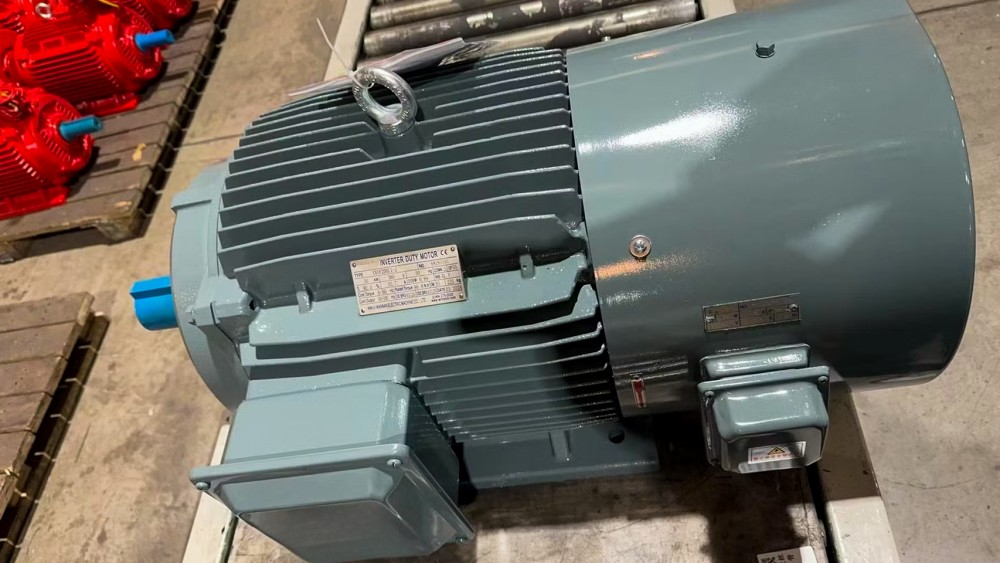
VFD Parameter Analysis and Tuning to Reduce Electric Motor Overheat Issues
- Nameplate Accuracy: The most fundamental aspect. If the motor rating data (Voltage, Current, RPM, Poles) is entered incorrectly from the start, the VFD's control algorithm will miscalculate the current, resulting in supplying more power than necessary.
- Control Strategy - V/f Control: Suitable for general applications, reducing complexity and overheating issues. Vector Control: Used when high torque at low speeds is required, but an Auto-tune must be fully performed; otherwise, the VFD will supply distorted current, leading to heat buildup.
- Voltage/Torque Boost: Excessive low frequency voltage boost will cause over-excitation (magnetic saturation), resulting in severe coil overheating even under light loads.
- Carrier Frequency: Setting it high (e.g., >8-10 kHz) makes the waveform smooth and operation quiet, but increases switching losses in both the VFD and the motor insulation. Lowering this value helps reduce the temperature.
- Low Speed Cooling: Standard motors are cooled by a shaft-mounted fan (self-ventilated). Cooling efficiency drops significantly at low speeds (<25Hz). If operating in this range continuously, installing an external blower is necessary.
- Protection Settings - Electronic Thermal (I²t): Must be enabled and set to match the motor's rated current so the VFD trips when it calculates accumulated heat exceeding the limit. Output Reactor: An essential accessory for long cable runs to reduce the dV/dt effect that damages insulation and to decrease heat caused by harmonics.
Common Example Cases
Reducing conveyor speed to 15Hz and asking, “Why is it hot even though it runs slowly?”
The answer is, “running slowly does not mean consuming less power.” If the conveyor load still requires the same torque, the motor must still draw nearly the same current, but the cooling fan spins much slower, leading to heat buildup. The real ultimate solution is often installing a forced fan or adding a reduction gearbox so the motor can spin near 50Hz, reducing the speed mechanically instead.
Setting the carrier frequency high for quiet operation, and the electric motor starts getting hot
We have encountered this many times, especially on production lines located near offices or work zones where people want it to be extremely quiet. Tuning it up to 12–16kHz causes both the motor and VFD to heat up noticeably. Lowering it to around 4–8kHz (depending on model/size) might bring back a slight hum, but the heat is reduced and the system is more stable.
Setting sensorless vector control without auto-tuning due to a rush to hand over the job
Ultimately, the machine could run, but it drew abnormal current when the load changed, accumulated heat, and intermittently triggered overload warnings. Once a complete auto-tune was carried out, the symptoms almost entirely disappeared.
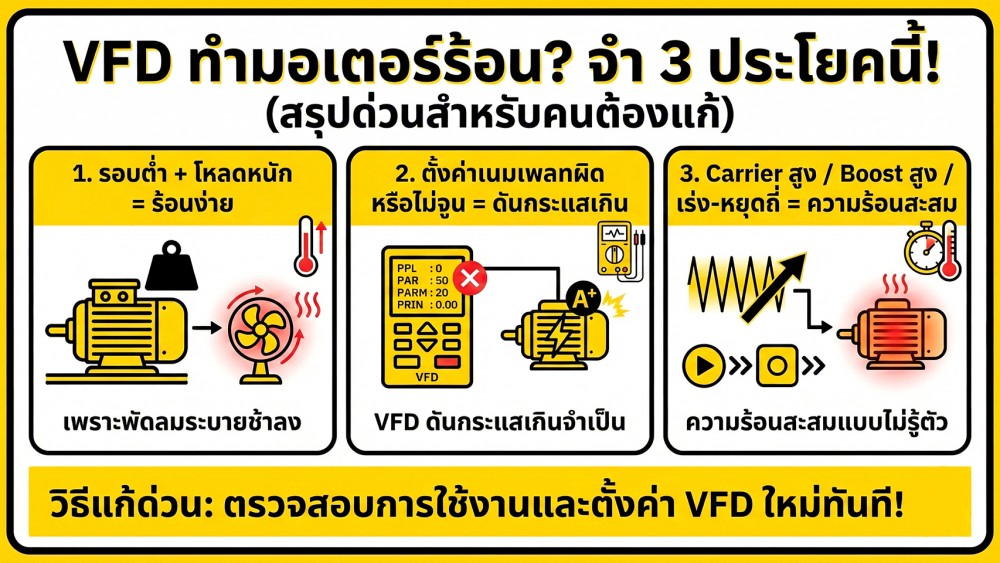
Finally, if your system must run at low speeds for long periods, do not rely solely on parameter adjustments. Sometimes the real permanent solution is to improve heat dissipation or choose an electric motor designed specifically for VFD duty.
Select Electric motor More