


 EN
 ไทย



Customers Also Purchased
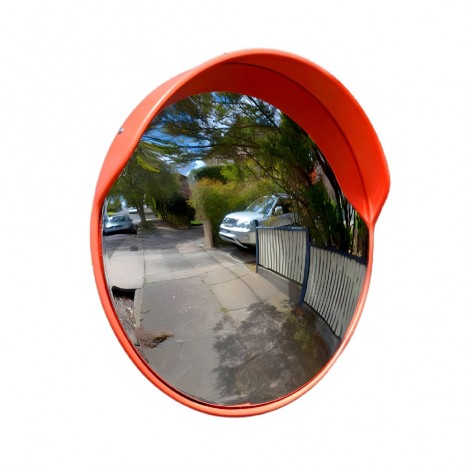
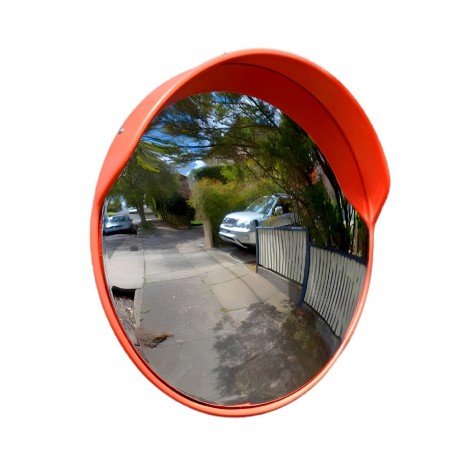
"It's so much cheaper, a small one should be enough, right?..." This exact sentence has been the starting point of accidents time and time again.
In the world of road safety, "Size" It's not just a matter of aesthetics or price, but a matter of "life and death." Many people misunderstand that "Traffic Mirror" (or what we commonly call curved mirrors / convex mirrors) only serve to reflect anything just so it can be seen. But in traffic engineering reality, the mirror's face size directly impacts the driver's "braking decision time."
Today, Nong Chang will walk you through the engineering principles to uncover the secret of Why is the size of a traffic mirror important? How many inches should you choose to stay safe? And why spending just a few hundred more THB to size up is the most worthwhile investment of your life.
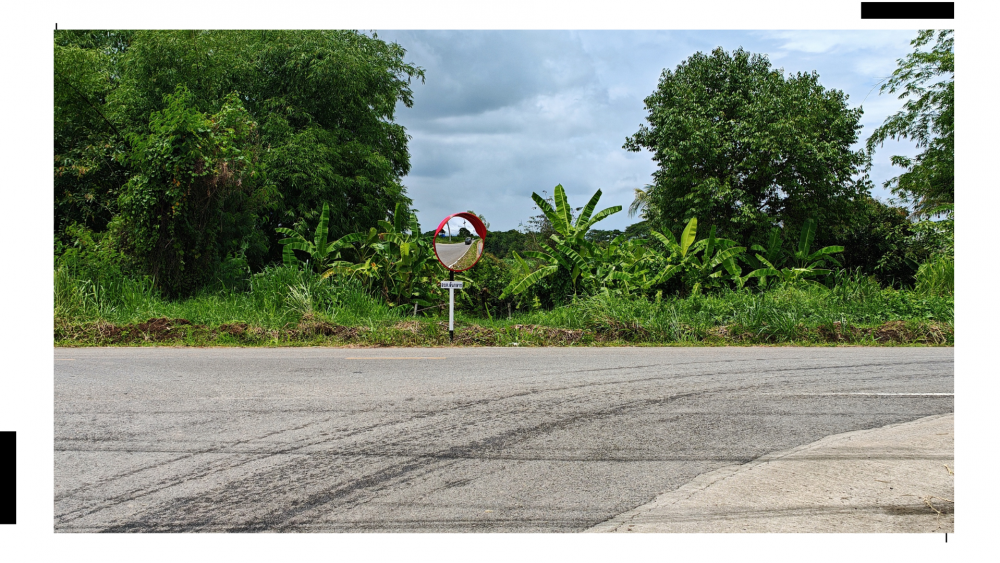
Why are "small" traffic mirrors dangerous? (A real fact unrelated to nearsightedness)
Before clicking to buy, we need to understand how it works. A traffic mirror is a Convex Mirror Its special property is "capturing a wide-angle view" into a limited space, just like a camera's fisheye lens.
1. Law of Image Minification
In exchange for a wider field of view, a convex mirror needs to "minify real objects"
- The more curved the mirror is (or the smaller the mirror): The wider the view, but the tinier the objects.
- The less curved the mirror is (or the larger the mirror): The view is reasonably wide, while objects still appear realistic.
2. Decision Distance (Reaction Time)
This is a critical point! The human brain needs time to "identify objects"
- If the reflection in the mirror is "large and clear": The brain takes 0.5 seconds to instantly realize "Hey! A car is coming" -> foot hits the brake in time
- If the reflection in the mirror is "tiny": The brain has to squint and wonder, "Wait, what's that? A car or a trash can?" taking 1.5 - 2 seconds -> the car has already surged forward and crashed
Therefore, "Mirror size" is therefore directly proportional to "survival speed" The larger the mirror, the faster you can make a decision.
Traffic Convex Mirror Size Comparison by Viewing Distance
1. Size 18 inches (45 cm): The compact model
- Effective viewing distance: Up to 5 - 7 meters
- Suitable for:
- Indoor pedestrian walkways
- Department store parking spiral ramps (where cars move very slowly)
- Blind spots in warehouses (for forklifts)
- In front of townhouses in narrow alleys (road width not exceeding 4 meters)
- Cautions: Never install it on main roads! Because at a distance of 10 meters or more, you won't see oncoming vehicles at all.
2. Size 24 inches (60 cm) : The popular standard model
- Effective viewing distance: Approximately 7 - 10 meters
- Suitable for:
- Intersections in housing estates
- Driveways exiting onto 2-lane alley roads
- Condominium parking lots
- T-junctions in residential communities
- Value: This is the best-selling model because the size is just right—not too small to see, and not too big to catch the wind. Suitable for most areas in Thailand.
3. Size 30-32 inches (80 cm) : The Big Brother (Recommended!)
- Effective viewing distance: approximately 10 - 15 meters
- Suitable for:
- Exits onto main roads or highways
- Industrial factories with truck traffic
- Sharp hairpin bends in shortcut alleys
- Points where vehicles travel at relatively high speeds (requires a larger image for quick decision-making)
- Why it's recommended: If your budget allows, I root for this size the most because "better to have too much than not enough." The reflection is large and prominent, clearly visible even in the rain or low-light conditions.
4. Size 40 inches (100 cm) : The Giant Model
- Effective viewing distance: 20 meters and above
- Suitable for:
- Highways, major traffic light intersections
- Mining sites, container yards
- Wide open spaces where the installation point is far from sight
- Cautions: It catches a lot of wind resistance, so it must be installed on a truly sturdy pole; otherwise, during a storm, the entire pole could be blown away.
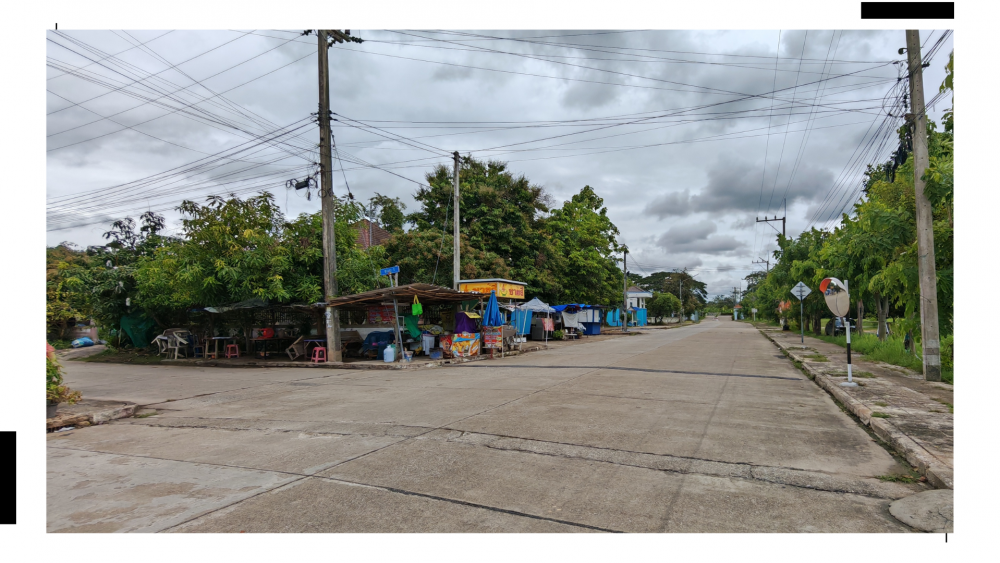
Does the traffic mirror material affect the "image size"?
Besides the diameter, "material clarity" also affects the perception of image size.
1. Real Glass Mirror:
- Clarity: 100% (The winner)
- Effect on viewing distance: Provides the sharpest image, allowing you to see object details from farther away compared to other materials of the same size.
- Disadvantage: Very fragile; if struck by flying pebbles, it's game over.
2. Polycarbonate:
- Clarity: Approximately 90-95% (compared to real glass)
- Effect on viewing distance: The image may look slightly "soft" at very long distances, but in return, you get durability that is "unbreakable and pops back into shape when dented."
- Popularity: The most cost-effective material for general traffic applications.
3. Stainless Steel:
- Clarity: Approximately 85-90%
- Effect on viewing distance: Stainless steel surfaces may have slight distortion depending on the polish grade, but the advantage is that it is "immortal"—weatherproof and sunproof, lasting up to 20 years without damage. Ideal for hard-to-reach installation spots where you don't want to climb up and replace it frequently.
Summary on Materials: If you choose a mirror size that is "just barely enough" (e.g., choosing 24 inches for a 10-meter distance), our tech team recommends real glass to compensate for clarity. But if you upsize with extra margin (using 32 inches), any material will do—safe and worry-free.
How to Properly Install Traffic Mirrors for Maximum Benefit
Having a giant 40-inch mirror installed incorrectly is no different from having a satellite dish decorating a pole.
1. Proper Height
- Standard: Should be installed approximately 2.5 - 3 meters above the ground.
- Why: If it is too low, it can be blocked by trucks or vandalized. If it is too high, the viewing angle tilts down toward the ground too much, making it impossible to see oncoming vehicles at a distance.
2. Tilt Angle
Many people install the mirror facing "parallel to the road" ... That's incorrect!
- Correct Way: The mirror face must be angled at 45 degrees to the road alignment to catch the image of vehicles approaching from the right/left and reflect it directly to the driver waiting to exit the alley.
3. Is a Rain Hood Important?
- Very important! The hood on top of the mirror isn't just for looks; it helps block blinding sunlight and prevents rainwater from sticking to the mirror surface and blurring the view.
- Tip: For large mirrors (32 inches+), choose a hood made of fiberglass or durable material because the wind-load area is large; thin plastic hoods might easily blow away.
Conclusion... Is paying a little extra really worth it?
- In exchange for decision-making time: You gain an extra 1-2 seconds to spot the oncoming vehicle, which is plenty of time to hit the brakes.
- In exchange for paint repair costs: A single bumper dent already costs 3,000 - 4,000 THB to repaint (3 times more expensive than the mirror).
- In exchange for peace of mind: No more squinting and holding your breath every morning when leaving the house.
Final advice from our technician: If you're torn between 2 sizes, such as "Hmm... should I get 24 or 32 inches?", remember this golden rule: "Go Big or Go Home" (always choose the larger size).
It's better to install a mirror that looks slightly bulky than a small one where you can't see anything at all, because a traffic mirror has only one job: to "save lives", not to be a decoration.
Choose the right size, install it in the right spot, and you'll thank yourself every time you drive out of your home safely!
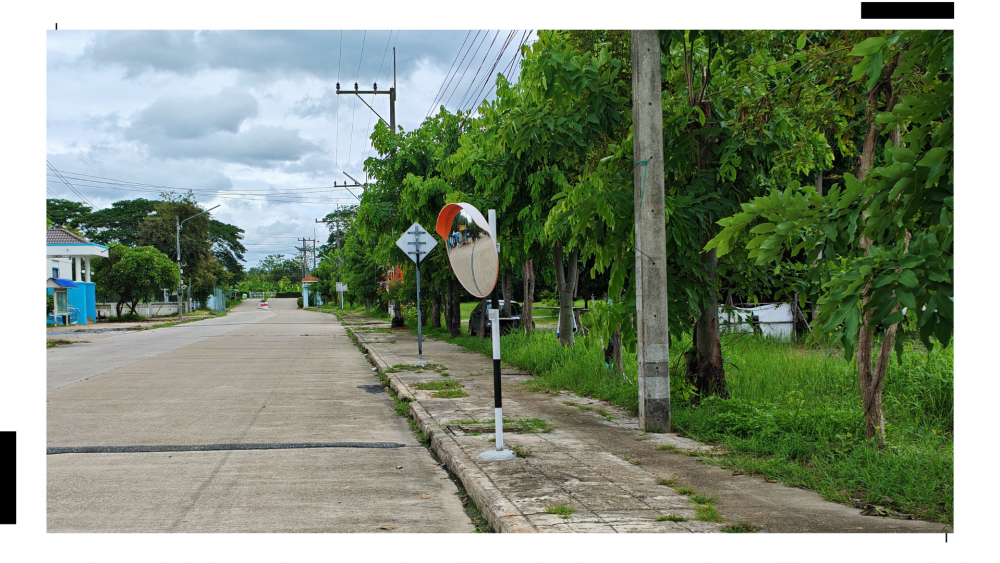
FAQ Frequently Asked Questions
Q: Can I install a traffic mirror on an electricity authority power pole? A: In principle, "No," because utility poles are property of the electricity authority. If you want to install one, you must submit a written request for permission, or it is best to notify your local Subdistrict Administrative Organization (SAO)/municipality to coordinate on your behalf.
Q: Stainless steel mirrors are 2-3 times more expensive than polycarbonate ones; are they worth it? A: They are worth it in the long run. Polycarbonate mirrors have a lifespan of about 3-5 years (prolonged sun exposure causes them to yellow and become cloudy), while stainless steel can easily last 10-20 years. If you don't want to replace them often, stainless steel is the answer.
Q: There are rectangular mirrors too; are they different from round ones? A: The difference is in the viewing angle. Rectangular mirrors are often used on steep slopes or long curves to provide a wider horizontal view, but the vertical view is less than a round one. For general intersections, "round mirrors" offer the most comprehensive coverage.