


 EN
 ไทย


Customers Also Purchased




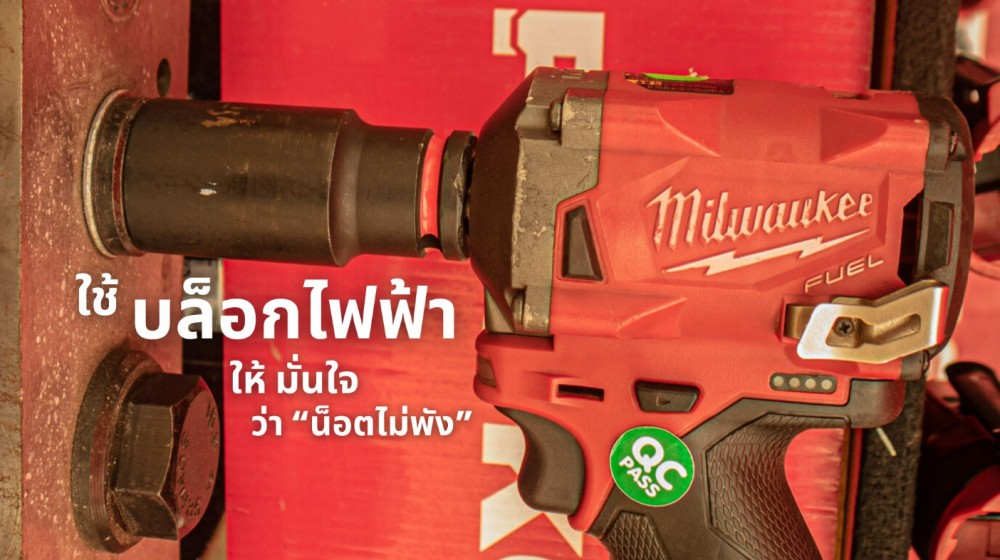
The very same bolt that came off easily yesterday is suddenly stuck tight like it's been welded on today, bafflingly so. Even though we're using the same setup, the same tools, and the same hands, right now just loosening a single bolt feels like an uphill battle. But once you pick up Electric block attach the socket, and pull the trigger, the loud rattle sounds like everything is going great. The power is there, the rhythm is there, and it feels like it should break loose in just a few seconds. But in the end, it doesn't.
Worse still, the bolt that "refused to loosen" leaves a whole series of damages behind: the bolt head looks chewed up, the socket chips, the bolt head corners round off and start slipping, and worst of all, the bolt snaps clean off without warning. The question is: Is the cordless impact wrench really too powerful? Or is the damage actually caused more by how it's used rather than the tool's power?
Therefore, in this article, we'll answer this question and reveal simple techniques—from setting the right torque and modes, timing your trigger pulls, and aligning the tool straight on the axis, to small habits that prevent damage—so you can use your cordless impact wrench with confidence that bolts won't break and work won't be disrupted. Work fast, stay in control, and avoid rework.
Why do cordless impact wrenches ruin bolts easier than you think?
The short answer is Cordless impact wrench: an essential tool nobody should overlook Generally, it delivers high impact and high torque in short bursts. The force doesn't flow smoothly like with a manual wrench or ratchet handle; instead, it comes in pulsing bursts. If the bolt head is imperfect or you pull the trigger without control, these impact forces can instantly "eat away" at the corners of the bolt head. Impact Wrenches, Ratchets, and Wrenches: What's the Difference?
And if you've ever seen a bolt head starting to round off, I can tell you that 80% of the time, if it isn't caused by a loose, incorrect socket size, it's due to trigger habits—such as holding the impact trigger too long until the corners collapse.
A powerful cordless impact wrench doesn't always mean it's safe
Many people think that a high-power cordless impact wrench is always good and gets the job done faster, but they might forget that "power" is a double-edged sword. Too much power without proper control ruins things even faster, especially the bolts. Picture this simply: if you use a heavy hammer to hit a screw instead of a rubber mallet, the screw will get damaged just the same. A cordless impact wrench is quite similar.
Check these 5 things before pulling the cordless impact wrench trigger to reduce the risk of ruining bolts
This might sound like nitpicking, but ask yourself a few questions before actually pulling the trigger. Are the corners of the bolt head still sharp? Is the socket fully seated? Is the socket size a 'perfect fit' or just good enough to slip on? And did you accidentally use a standard hand socket with a cordless impact wrench?
On real job sites, it's these small details that cause bolt heads to "gradually round off" without you noticing, sockets to "gradually chip" while still seeming usable, and ultimately turn into long, tedious repair jobs where you have to extract stripped bolts, hunt for new sockets, or worst of all, deal with a bolt head stuck and ruined inside the impact wrench, requiring multiple extra steps to fix. All of this starts with simple questions before pulling the trigger, such as:
1. Is the bolt head truly a 6-point hex? Or has it started to round off / swell?
If the bolt is starting to swell and the corners are beginning to round off, even if you use the correct socket size, it can still slip. This is because the contact surface area is reduced, and once the cordless impact wrench hammers it, the remaining corners will collapse very quickly.
2. Is the socket an "impact socket" or just a standard socket?
This is the most common reason why cordless impact wrench sockets crack or chip.
- Impact sockets are designed to withstand heavy impact forces; the steel is much tougher and more ductile.
- Standard sockets (Chrome / Hand Sockets) are hard and shiny, but more brittle. Using them with a cordless impact wrench can cause them to shatter.
If you really want to use a cordless impact wrench with confidence, start by primarily "using impact sockets," especially for heavy-duty work.
3. Are you using a 12-point socket for high-torque applications?
While 12-point sockets are indeed easier to slip onto fasteners, they offer less corner engagement than 6-point sockets. When subjected to the impact forces of a cordless impact wrench, the chances of rounding off the bolt head corners are much higher.
If the job is tight, old, or rusted: Select 6-point (Hex) straight away. It significantly reduces the risk of rounding off bolts.
4. Is the socket size an "exact fit" or just loosely fitting?
For an impact wrench, just "fitting on" is not enough; it must be a "snug fit" without any play. If there's even slight play, when it impacts, it will strike the edges and corners instead of gripping the full face.
Warning: Sometimes socket sizes are very close, such as 17 mm and 11/16" or 19 mm and 3/4". If you mix up standards, you'll unknowingly end up with a loose fit, and the bolt will definitely be ruined.
5. Are you using too many adapters, extensions, or universal joints?
The more adapters, extensions, or swivel joints you use, the more "flex" and wobble you introduce. When the impact wrench delivers its blow, the force strikes off-axis, making it easier to damage both the socket and the bolt head. If possible, keep it as short as you can; use only what is strictly necessary.
Trigger Control Techniques for Impact Wrenches to Prevent Damaging Bolts
An impact wrench isn't a power tool where you "just hold down the trigger and you're done." Many might assume holding it down continuously is a shortcut to finishing quickly, but in reality, it's a shortcut to rounded bolts, chipped sockets, and hard-to-control kickback. Just adjusting your trigger rhythm properly can make certain tasks noticeably safer.
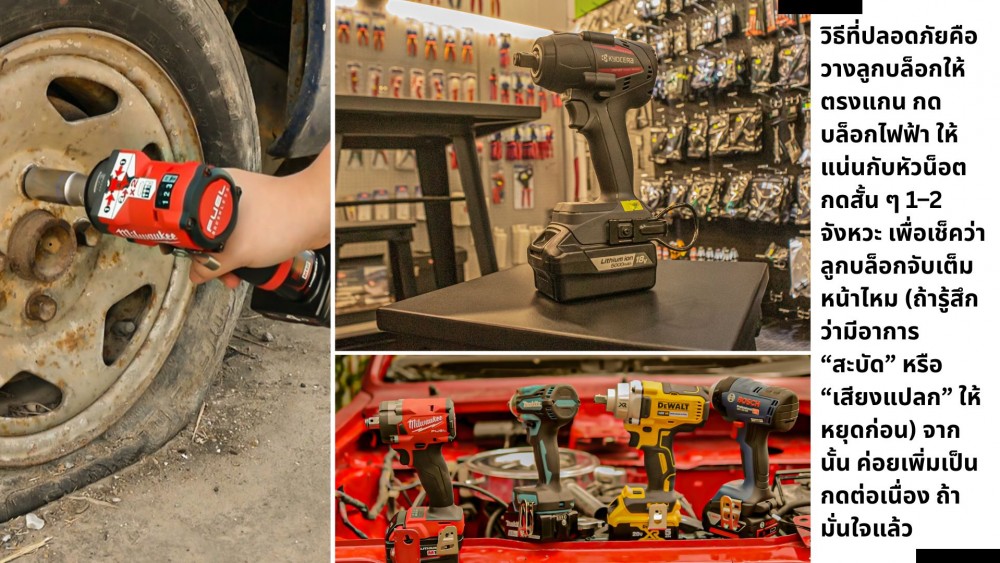
Always tap briefly before applying full power
If a bolt is very tight, don't immediately start by holding the trigger down for a long time. The initial hit is when the corners of the bolt head take the most force.
Never let the impact wrench "hammer freely" on a loosely seated bolt
"Free hammering" happens when the socket isn't firmly flush against the bolt head, yet the tool keeps impacting. The blows repeatedly strike the edges, and the corners of the bolt head will deform very quickly.
Simple trick: When tightening or loosening, "push forward" slightly into the tool so the socket stays fully seated against the fastener at all times.
Keep the tool aligned on-axis: even a slight tilt can cause real damage
Out of habit, we might think a slight tilt doesn't matter, but with an impact wrench, even a tiny tilt causes the impact force to concentrate on one side. This leads to:
- The bolt head rounding off on one side
- The socket chipping on one side
- Square drive (anvil) and sockets wear out quickly
Therefore, if you want your electric impact wrench to last long, make "proper alignment" a habit.
How to set the torque/mode of an electric impact wrench so you don't accidentally ruin anything?
Newer electric impact wrenches come with many modes, such as tightening mode, loosening mode, auto-stop mode, and multi-speed modes. These modes are real lifesavers if you know how to use them.
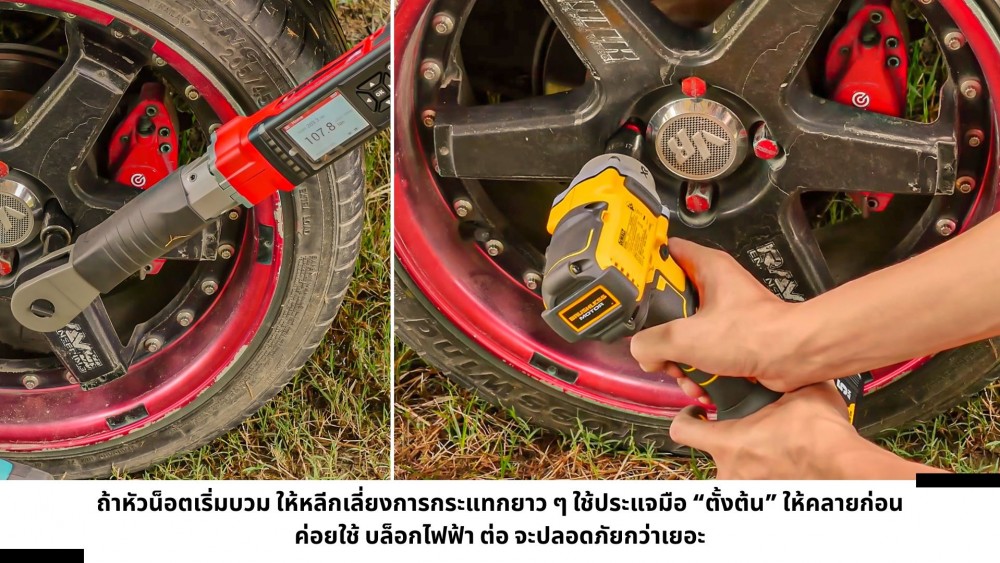
- Start with a low mode, then work your way up If you start with too much power, you risk exceeding the bolt's torque capacity, stripping the hole threads, or snapping the bolt. A simple method is to start on a low mode first, increase it as it nears completion, or finally "finish the job with a torque wrench/hand wrench" to control the torque precisely.
- Auto Stop Mode Suitable for jobs where overtightening must be avoided, such as assembly work or tasks involving multiple bolts requiring similar torque.
However, you must understand that Auto Stop is not the same as using a torque wrench. It is a "helper to reduce the chance of the electric impact wrench over-impacting," not a guarantee of 100% precise torque.
Common problem: The bolt won't come off, so you keep holding down the electric impact wrench until it snaps!
Some people might have experienced a bolt that won't come out or loosen at all, getting frustrated and holding down the electric impact wrench continuously, hoping it will eventually break free. In the end, the bolt snaps, making the job 10 times harder than before.
If the bolt won't budge, stop and ask these 3 questions first: Is the bolt rusted / threadlocked / seized from heat? Has the bolt head started to round off? Are you using a 6-point socket and fully seating it flush against the bolt face? If you answered "yes" starting from question 1, change your approach—don't rely on brute force alone.
A safer method is to clean around the bolt to remove sand-like rust debris, use penetrating oil/lubricant (if working conditions permit), use a hand wrench to crack it loose first, and use the electric impact wrench in short bursts rather than holding the trigger down continuously.
How to tighten with an electric impact wrench without stripping threads or snapping bolts?
Many people only focus on "loosening" because that's when bolts are stubborn, tight, and frustrating. But in reality, severe damage occurs during "tightening" much more often, because tightening is when we tend to "lose focus" or "rush too much," thinking just to tighten it down as much as possible first.
Always start tightening by hand
If possible, thread the bolt in by hand for the first 2–3 threads. This ensures the thread is straight and not cross-threaded, and more importantly, allows you to "feel" whether the threads turn smoothly. If it feels stiff right from the start, that's a warning sign that it might be misaligned, or there could be debris, rust, or threadlocker buildup inside the threaded hole.
Use an electric impact wrench just to run it in, not to fully torque it down
Use an electric impact wrench to "run it in" until it's almost fully seated. Let it serve as a helper to save effort and time, not as the final decider of tightening torque—especially for jobs with specific torque specifications or those requiring multiple bolts to be torqued evenly.
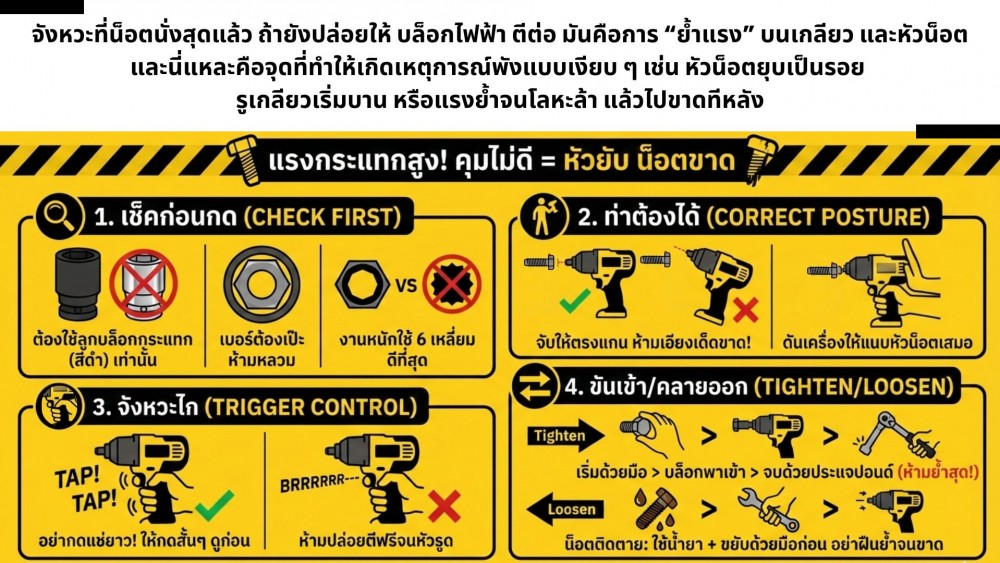
Summary: Preventing bolt damage with an electric impact wrench comes down to mindful trigger control
Electric impact wrenches are great tools; they speed up work, save effort, cut down time, and visibly boost efficiency. Once you get the hang of using one, you'll immediately notice that "work flows much smoother" in both rhythm and continuity. But don't forget that no matter how good it is, there are still rules to follow, starting with simple questions like: Can a cordless impact wrench be used to drive screws?
An electric impact wrench is a tool that delivers high torque and rapid impact cycles. If you use it in a "rush and hold the trigger down" manner—without checking the socket, keeping alignment, controlling the mode, or listening to whether the tool is hammering tight or spinning free—things can break very easily in the end. Sometimes it can even lead to collateral damage that wastes time on completely unwarranted rework.
Try starting with 2–3 small habits, like always pulsing the trigger first and keeping the tool straight. You will immediately feel that using Electric block it gives you more "confidence"—both in preventing bolt damage
and keeping work moving forward without having to tear things apart and redo them repeatedly.