


 EN
 ไทย


Customers Also Purchased



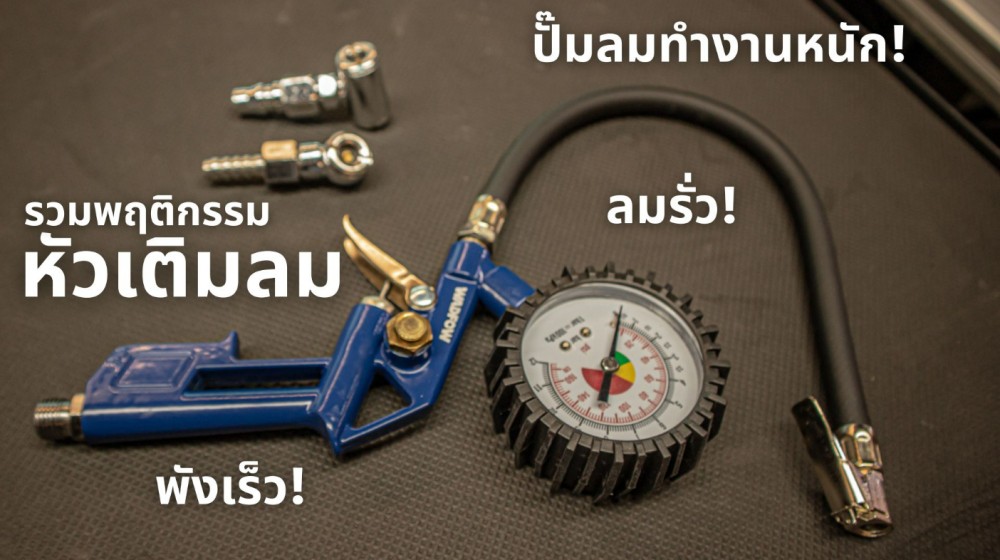
Have you ever wondered why, while inflating your tires, you sometimes have to hold Air Inflators and press the tire chuck down firmly to stop a loud hissing leak, or jiggle the angle around until it finally seals? And after just a brief moment of inflating, the compressor is already running like it's carrying the weight of the world, making you wonder, "Is my air compressor starting to fail?" But in reality, the root cause might simply lie right at the tip of the hose.
Did you know that repeatedly letting minor air leaks persist forces the air compressor to run continuously to compensate, secretly dragging out your work time? In the end, it always boils down to what technicians hear all the time: "The tire chuck is broken" or "The air compressor is acting up"—even though neither breaks that easily if we don't repeatedly engage in habits that cause them to wear down and loosen little by little.
That's why in this article, we'll explore which tire chuck habits cause air leaks, premature wear, and force the compressor to work harder than it should. We'll also cover simple ways to spot where the leak is and whether you should fix it by adjusting your habits or checking specific parts before rushing to buy a replacement, providing practical tips you can apply right away.
Why Are Tire Chucks More Important Than You Think?
Many people view a tire chuck as just a tiny end-of-line accessory—just plug it in and you're done. But did you know it might be one of the "most vulnerable connection points"? It has to withstand pressure, pulling force, impacts, and repeated connections and disconnections. Plus, if there is even the slightest gap, air will immediately leak out, forcing the air compressor to compensate instantly.
An air leak at the tire chuck doesn't just slow down inflation; it forces the compressor to "run longer" to achieve the same pressure. With prolonged run times, heat builds up, valves and pistons cycle more frequently, and if it's an oil-lubricated model, the oil degrades faster. Ultimately, this triggers a chain reaction affecting noise, heat, and significantly reducing the lifespan of the equipment.
Common Signs That Your Tire Chuck Is in Trouble!
Let's check the symptoms that occur most frequently first, as they often serve as early warning signs. For example, hearing a hissing sound at the chuck during inflation even when pressed down firmly, an unusually slow inflation rate despite full compressor power, or the compressor cycling on and off much more frequently than usual without any increase in workload.
If you nodded along to 2–3 of these, chances are high that certain tire inflator chuck usage habits are making everything break down faster. So, let's take a look at what these habits are.
Plugging in the Tire Chuck Halfway and Expecting It to Seal Itself
Tire Air Chuck Won't Lock Onto the Valve: Why Does It Happen and How to Fix It? Have you ever attached the chuck, felt unsure whether it was fully locked, but went ahead and inflated anyway?
This is one of the top habits causing air leaks and rapid chuck wear. Most tire chucks are designed to seal properly only when "fully engaged." If not pushed all the way in, the contact surface of the rubber seal (O-ring/gasket) takes the pressure at an angle, creating tiny gaps where air can escape. As backpressure pushes back, the rubber seal wears down unevenly at an angle much faster.
As a result, you have to press harder and harder, making inflation increasingly difficult, until eventually you're forced to hold it in place by hand the entire time. This makes you inadvertently twist or tilt it even more—a vicious cycle that ruins both the tire chuck and the valve stem in tandem.
Tilting the Tire Chuck During Inflation to Read the Gauge Easily
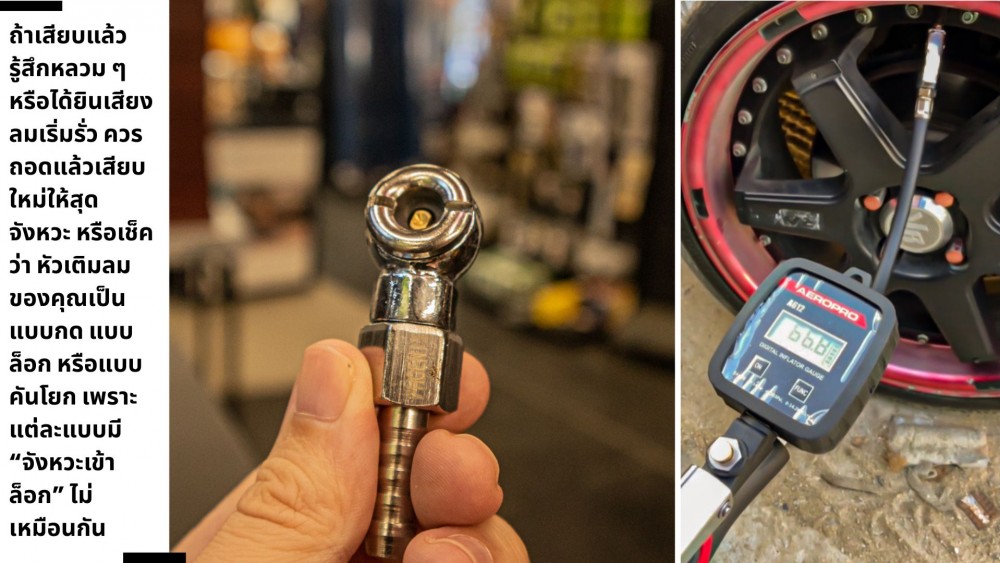
When inflating, have you ever tilted the tire chuck just to get a clear view of the gauge? This is an easy habit to fall into, especially when inflating tires in tight angles, such as on the inner side of a wheel or on vehicles with hubcaps. However, tilting the chuck concentrates the force on the "edge" rather than distributing it straight down, causing two simultaneous issues:
- The inner rubber seal takes uneven force and wears into grooves quickly
- The rim of the valve stem and the valve core inside are subjected to torsional force, causing the valve to start leaking or become bent.
Now, once the valve stem starts to bend, inflating it next time becomes harder. You end up having to tilt it even more to "find an angle that doesn't leak"—effectively solving the issue by accelerating its breakdown instead.
Handy technician's tips
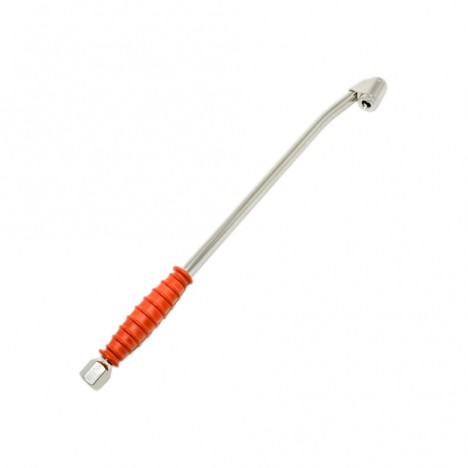
If the valve or valve stem is in an awkward angle, use an air chuck that is easier to access, such as a locking lever chuck, or use a short extension hose so your hands don't have to hold it at a twist.
Pressing the air chuck hard, as if "forcing it into submission"
What do you do when it leaks during inflation? Some people choose to press harder, thinking that pressing down with full force "will surely make it tighter."
It is true that pressing force helps create a tighter seal in the short term, but excessive force quickly flattens and deforms the rubber seal. Furthermore, if your air chuck uses a small internal pin to depress the valve core, excessive pressure will wear out or bend the pin, causing it to fail to depress or get stuck.
More importantly, high pressure comes with twisting and jerking forces because our hands naturally resist the backpressure. A sudden jerk transmits the full shock load straight to the air chuck and valve stem.
What you should do instead
If it leaks so badly that you have to press down hard, something is already wrong. It could range from a hardened or cracked rubber seal, a worn chuck mouth, dirt or rust on the valve stem, to a size mismatch with the valve. So pause and inspect it rather than forcing it down.
Allowing the air chuck to "drag on the floor" or repeatedly hit hard surfaces
The air chuck is an accessory that gets bumped very easily because it sits at the end of the hose, and people often let it drop onto the floor, especially in high-paced auto shops.
However, these impacts can chip the tip of the air chuck or knock the pressure gauge out of calibration if one is attached. If there are internal spring parts or ball valves, repeated impacts will weaken the spring or prevent the ball from seating properly, causing puzzling or intermittent leaks, especially under high pressure.
Very simple ways to extend its lifespan
Hang the air chuck on a hook or hose end hanger, or use a hose with a bend restrictor spring near the chuck. This reduces both dragging on the floor and hose kinking.
Failing to drain water or moisture from the air system
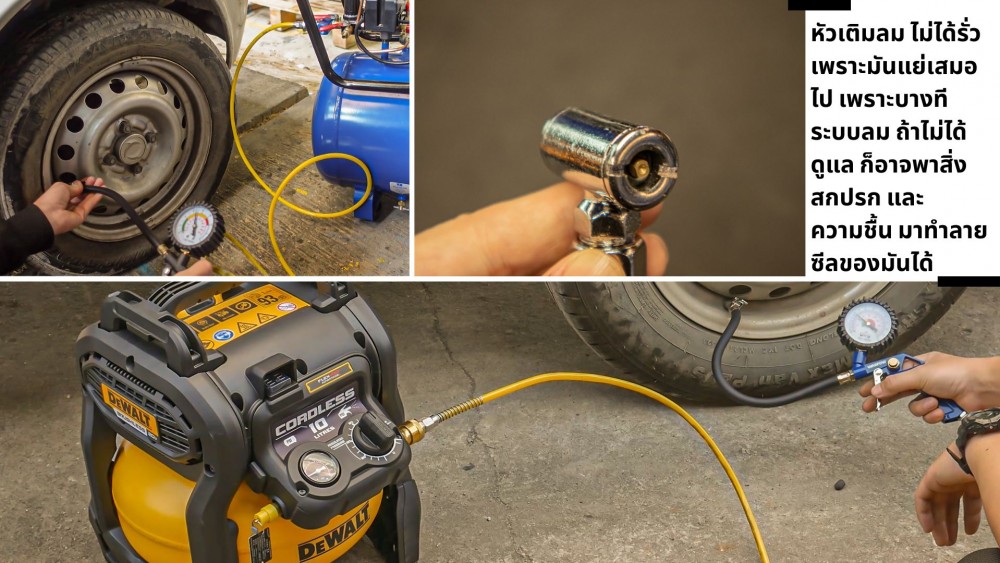
Have you ever noticed that on some days the air chuck seems to leak more easily than usual, even though you're using the exact same one? If there is moisture in the air system, water clings to the chuck and valve stem, making the rubber seal slippery or creating grime at the chuck opening. With grime present, the rubber seal cannot make full-surface contact, making air leaks much more likely. If accumulated moisture causes minor rust on the valve stem, the valve rim becomes rough and scratches the rubber seal every time it is connected.
Habits you should cultivate
Drain the air tank regularly based on usage frequency, and if you have an inline air filter/water separator, check whether water is trapped inside. Moisture is what quietly wears out air chucks, equipment, and other fittings prematurely.
Using the wrong type of air chuck for heavy-duty work
Can air chucks be shared between car, motorcycle, and bicycle tires? There are many types of air chucks, but the problem is that we often just grab “whatever we have” and use it for everything, from inflating bicycle tires to truck tires or large pickup truck tires, where the required pressure and flow rate differ significantly.
Some air chucks have good seals but narrow air passages, resulting in slow inflation. When it inflates slowly, the air compressor runs longer, and we inadvertently twist or hold it in place for too long. Other types have wide air passages and inflate quickly, but if their build isn't suited for frequent use, they wear out quickly too. So, first ask yourself:
- How “often” do we inflate?
- Do you mainly inflate large tires or small tires?
- How accurate does the gauge need to be?
- Do you frequently have to inflate tires in tight spaces?
You should have more than 1 type of tire inflator chuck, whether in the workshop or at home, to use appropriately without straining the equipment.
Carelessly tightening or loosening the hose fitting, damaging the threads and O-rings
Often, an air chuck leak isn't at the nozzle tip, but rather at the “connection point” between the chuck and the air hose, gauge, or fitting.
Behaviors that cause this range from overtightening or cross-threading to sloppily applying thread seal tape so that pieces break off into the air passage. Once tape gets stuck, ball valves or tiny air ports may fail to close completely, causing leaks or pressure drops.
Signs of a leak at the connection point
- The hissing leak sound comes from behind, not from the tip.
- Moving the hose alters the sound of the leak.
- Applying soapy water produces bubbles around the threads.
If this happens, even replacing the chuck with a new one won't stop the leak, because the root cause lies in the assembly and sealing of the connection.
Pulling the air hose taut, letting the air chuck take the yank
This is a classic scenario in workshops: You're inflating a tire, someone walks past, snags the air hose, and jerks the air chuck right off. And then you just quickly plug it back in.
This sudden jerking force is precisely what chips the chuck mouth, wears out the lever or locking mechanism, and causes the tire valve stem to endure misaligned pulling stress. What's more, rushing to plug it back in only increases the chances of incomplete insertion, tilting, and recurring leaks.
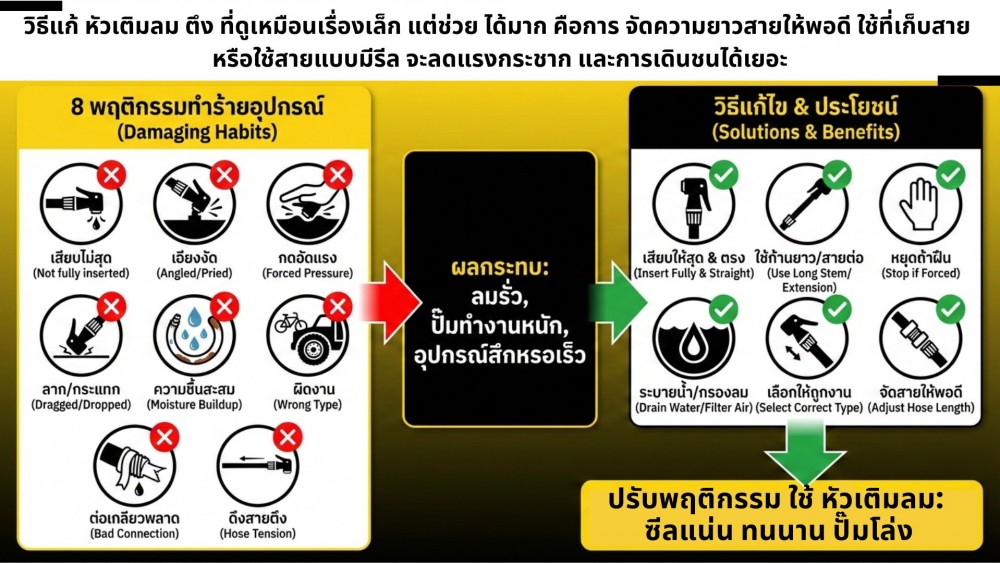
Conclusion: Tire Inflator Chucks Break Down Quickly—Sometimes It’s Just a Matter of "Habits"
Tire inflator chucks are more complex devices than you might think, and many aspects are easily overlooked. More importantly, they don't break down without reason; they break because they are repeatedly subjected to "tilting, pressing, dropping, dragging, and forcing." And every time a leak occurs, the air compressor immediately bears the brunt, having to run harder to make up for the escaping air.
So if you want your tire chuck to last and prevent your air compressor from being overworked, start with these small habits: simply insert it all the way, don't tilt, don't force it, and avoid letting it slam around. The difference in service life will be like night and day. Remember which practices you should "reduce, avoid, and quit," such as:
- Inserting the chuck halfway or at an angle during inflation: Causes an imperfect seal and leaks air right from the start.
- Pressing too hard, twisting, or forcing awkward angles: Causes premature wear on seals and valve stems, requiring you to hold it in place more often.
- Dropping, impacting, dragging the chuck along the floor, or yanking it by the hose: Chipping the mouth, loosening mechanisms, and causing unexpected leaks.
- Failing to drain moisture from the tank and air lines: Allowing moisture and contaminants to circulate, degrading seals and wearing out tire valves.
- Using the wrong tire chuck for the job or application: Leading to frequent inflation errors and overburdening the air compressor unnecessarily.
Just by adjusting these usage habits, you will instantly notice: Air Inflators Tighter seals, faster inflation, and an air compressor that doesn't overwork unnecessarily. Jobs get done quicker, and your tools last longer.