


 EN
 ไทย



Customers Also Purchased


Have you ever noticed? When building or renovating a home, we often "spare no expense" on the most prominent big-ticket items—whether it's the sofa, lighting fixtures, or even the tiles. Yet we often fall short on Light Switches the standard, plain-looking models that the electrician chooses to install on walls you invested hundreds of thousands or millions in. Yet this tiny detail that you overlooked is the very thing you have to "see and use every single day" more than any other decorative piece in the house.
In the world of interior design, a light switch is no longer just a device to open or close an electrical circuit. Instead, it is the "Jewelry of the Wall"—the final accessory that completes the room's look. Chosen well, it blends seamlessly and sophisticatedly with the design; chosen poorly, it becomes an eyesore that instantly downgrades the whole room.
The problem is… most people don't know that light switches are much more than just simple on/off switches, and each type has a distinct character, personality, and function suited to completely different spaces. In this article, Nong Chang brings together the 6 main types of light switches—complete with their functions, characters, and practical selection guides—so you can pick the right switch for your home's style and discuss specifications with your electrician like a pro.
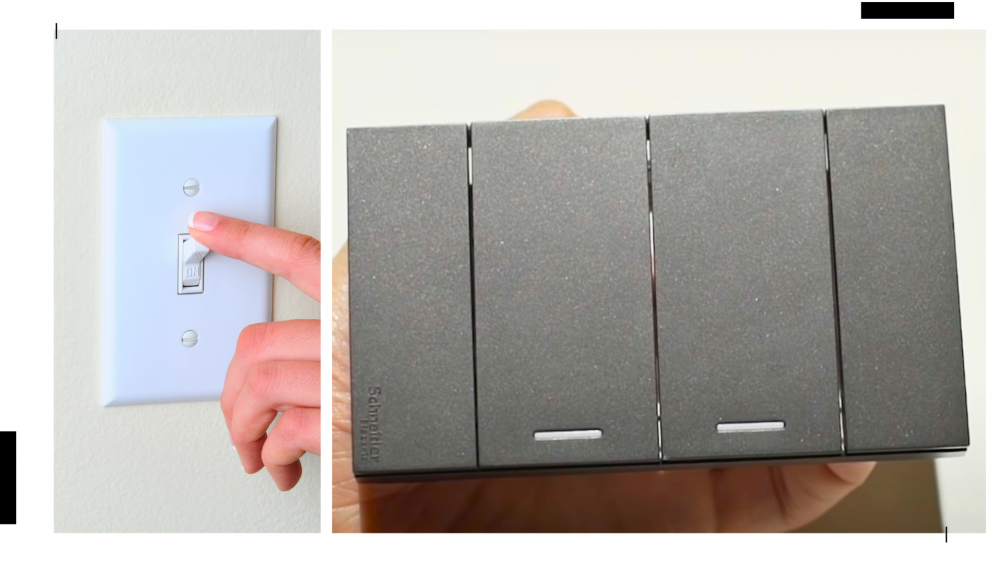
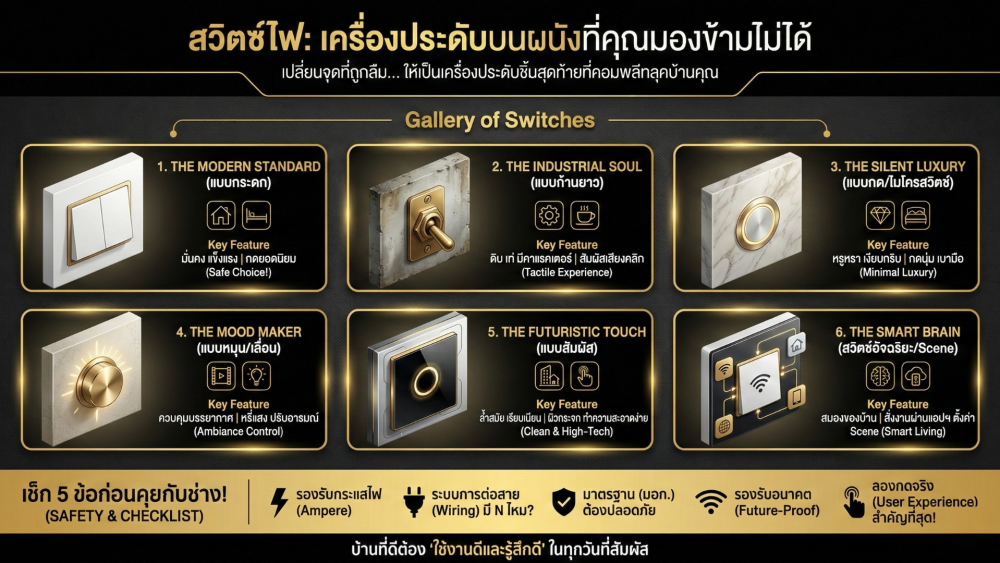
1. The Modern Standard: Rocker Switch
Suitable for: Modern style, Minimalist, general residential homes
If you're looking for home light switches that are "foolproof" and built to last, the Rocker Switch is the safest starting point. This switch type is widely used as a standard in Thai homes. With its simple mechanism and distinct up/down pressing (top = ON / bottom = OFF), it provides a solid, sturdy feel that withstands repetitive daily use.
This may not be a flashy switch, but it best meets most people's needs in terms of price, durability, and long-term maintenance.
Design Insight: Modern rocker switches aren't as "plain" as many think. The current trend is the Wide Series—full-face rocker switches with plastic bezels thinned down until they are almost invisible. When mounted on a wall, they deliver a clean, sleek, and more architectural look. They are also easy to press without aiming, making them ideal for high-traffic spots like entryways, stair halls, or living rooms.
Pro Tip: If you're building a new home or renovating, it's recommended to invest in high-grade rocker switches from the start. Since these are the switches you "touch" the most in the house, a firm, smooth, and wobble-free click creates a palpable sense of quality every day.
2. The Industrial Soul: Toggle Switch
Suitable for: Loft style, Industrial, Vintage, cafes, and restaurants
A toggle switch is for those who choose with intention—not just looking to turn lights on and off, but desiring a design with character. The metal lever that flips distinctly up and down turns every flick into an experience rather than just a routine action.
This is a switch that instantly turns an ordinary wall into a storytelling focal point for your home or shop.
Design Insight: The charm of the toggle switch lies in its tactile experience: the solid click sound, the firm resistance, and the cool touch of metal all enhance a raw, cool, and authentic ambiance. It pairs exceptionally well with exposed concrete, bare brick, or reclaimed wood without needing extra cluttering decorations.
Pro Tip: High-quality toggle switches often use genuine brass or stainless steel, offering an exceptionally long lifespan. With proper installation and grounding, this is a switch that only "looks better with age."
3. The Silent Luxury: Push Button & Microswitch
Suitable for: Luxury homes, Smart Homes, hotels, bedrooms
If you've ever stayed at a high-end hotel and felt that "the light switches look expensive" even though they appear understated, that is the charm of the push-button switch. Featuring a faceplate that sits virtually flush with the wall, premium models utilize a microswitch mechanism that responds swiftly to minimal actuation force.
Design Insight: Quietness, smoothness, and stability are at the core of this switch type. The almost silent actuation makes push buttons a popular choice for bedrooms and luxury residences. They often come with soft LED status indicators that don't strain the eyes, creating a truly minimal luxury aesthetic.
Pro Tip: If you are building a home for long-term living or one centered on experiences, such as a vacation home, Push Buttons are subtle details that make a house look "effortlessly upscale."
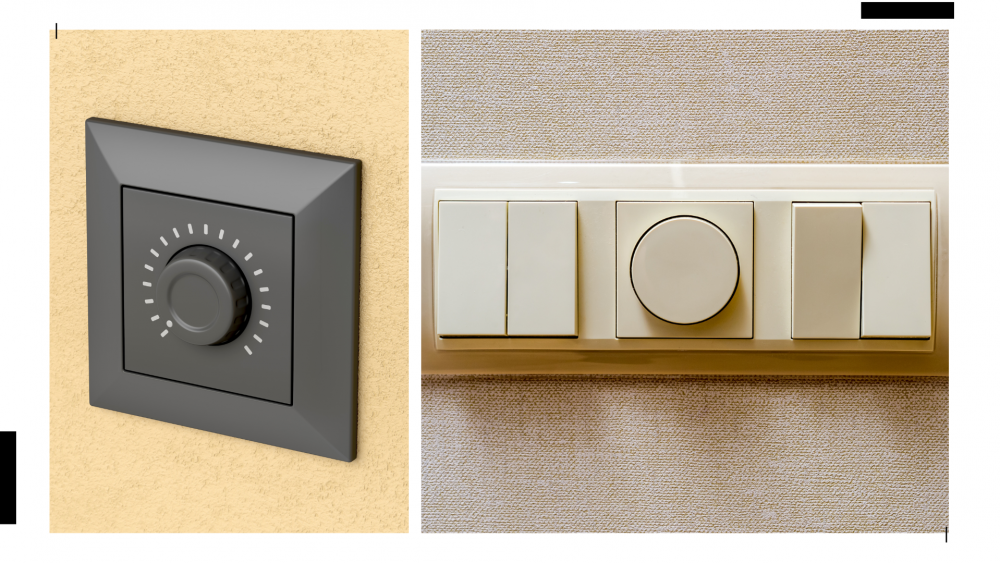
4. The Mood Maker: Rotary & Slide Switch
Suitable for: Home theaters, dining rooms, decorative lighting, ceiling fans
A great-looking home isn't always beautiful because of expensive items, but because of "ambiance." Rotary / Slide Switches are essential tools for controlling the mood of lighting. Dimming lights to perfectly suit the moment is something standard on-off switches simply cannot do.
Design Insight: Gently turning a Rotary Dimmer to soften the chandelier during dinner, or slightly increasing the light in a home theater, are the subtle details that elevate a home's sophistication. Meanwhile, Slide Switches are often concealed within built-in cabinetry to maintain a seamless, uncluttered wall appearance.
Pro Tip: If you have already invested in chandeliers or decorative fixtures, not using a dimmer is considered a "waste of lighting potential." Choosing a dimmer compatible with dimmable bulbs helps extend bulb life and instantly enhances the functional value of your lighting system.
5. The Futuristic Touch: Touch Switch / Glass Panel
Suitable for: Modern homes, condos, smart homes
Touch Switches are the answer for modern homes seeking a sleek, futuristic, and clean look. Control is achieved with just a gentle tap. The tempered glass panel keeps walls looking seamless, resembling a control panel rather than a conventional light switch.
Design Insight: The lightly reflective glass surface adds dimension to the walls, ideal for condos and modern homes seeking a 5-star hotel-style high-tech feel.
Pro Tip: Choosing a Touch Switch designed for Thai residential electrical systems with TIS standards helps reduce issues with power surges and long-term malfunctions.
6. The Smart Brain: Smart & Scene Switch
Suitable for: Full-scale smart homes, modern residences
A Smart Switch transforms a standard light switch into the "brain of the home." You can set scenes, such as turning off all lights in the house before bed with a single button, or instantly turning on lights in specific welcoming areas.
Design Insight: A user-friendly home isn't measured by the number of devices, but by fewer steps. Smart Switches represent good home UX.
Pro Tip: If you plan your system from the start—including neutral wires and the platform you will use—you will have a home that can be upgraded in the future without tearing down walls again.
What Do You Need to Know Before Talking to an Electrician?
Once you've picked a design, don't rush to buy it. A good light switch isn't judged solely by its looks, but must also be "practical and safe for the long haul." Check these 5 points thoroughly before talking to an electrician or electrical supply store.
1. What current (Ampere) does it support?: Standard residential light switches typically handle about 10A–16A, which is sufficient for lighting. However, if used to control ceiling fans or higher-consumption appliances, select a switch rated appropriately to prevent heat buildup and prolong its service life.
2. What type of wiring system is it?: Some imported or designer switches may have wiring diagrams that differ from Thai standards, especially smart switches or touch switches. You should have a technician check on-site before ordering to avoid installation issues or the need for additional electrical modifications.
3. Does it meet safety standards (TIS)?: Beauty must go hand in hand with safety. Choose light switches that comply with TIS standards or equivalent international standards to prevent electrical leakage and electric shock, and to reduce long-term fire risks, especially in homes with children or the elderly.
4. Is it future-proof?: Even if you haven't set up a smart home today, choosing switches that support smart systems or can be upgraded in the future will prevent your home from becoming outdated and eliminate the need to tear into walls later if you want to add functionality.
5. User Experience: Try pressing and touching them in person before deciding. A good switch should feel firm, smooth, wobble-free, and provide a confident feel, because this is a device you use every single day—more than any other home decor item.
Conclusion
Replacing Light Switches It might cost only hundreds to thousands of baht, but the result is a home that looks visibly more premium—in terms of design, feel, and user experience. A light switch is a small detail on the wall that you see and touch every day. If chosen to match your home's style and usage, it can become a detail that elevates your entire house remarkably.
If you're still not sure which switch suits your home, consulting an electrical supply store with experts will help you get the right design, assured safety, and long-term value without wasting money on rework in the future.
Because a great home doesn't just look good in photos, but must also “function well” every day.