


 EN
 ไทย


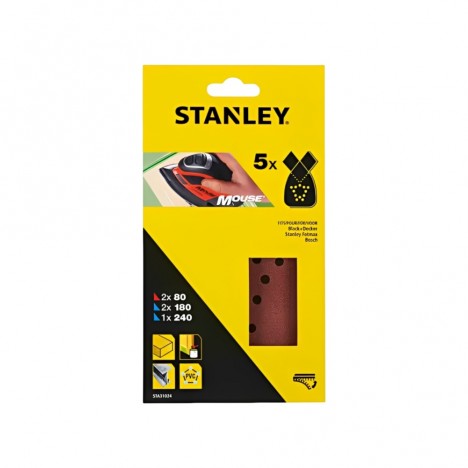
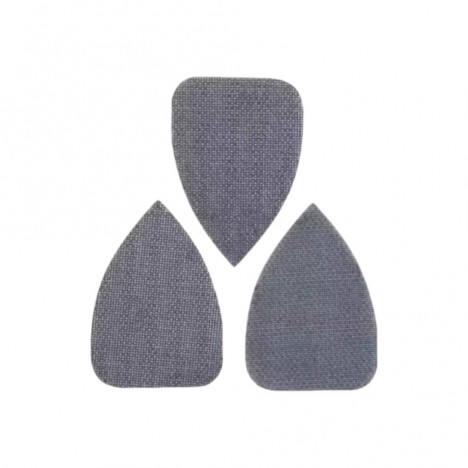
Customers Also Purchased




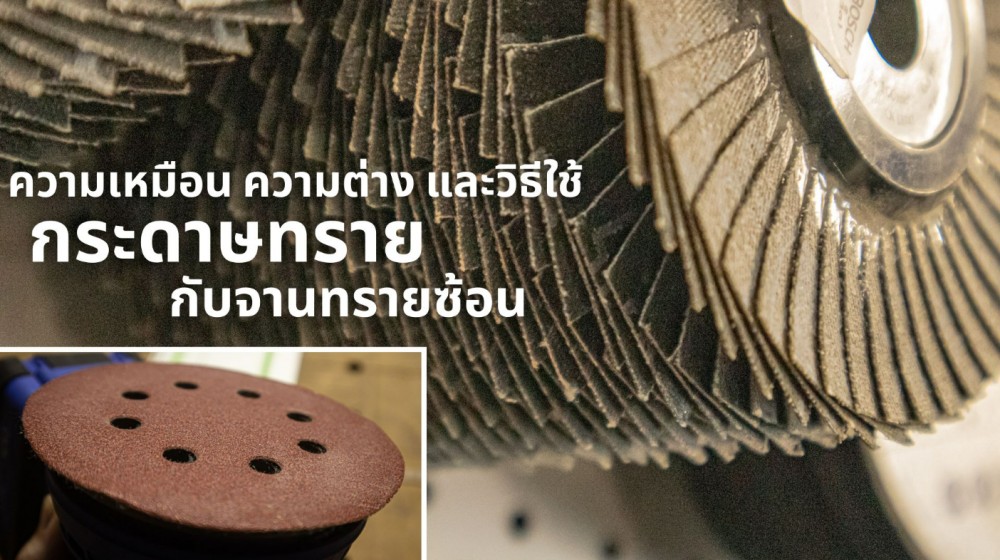
Many people who do craft or trade work are probably quite familiar with Sandpaper right? Whether starting a small or large project, there is no avoiding the "sanding" step. Some jobs begin with raw lumber, some start with heavily rusted steel, and some are just surface preparation before painting. But one common factor is that every job requires sandpaper to some extent.
Why isn't the sanded finish as smooth as expected? Why does sandpaper wear out so fast? Are flap discs more expensive yet truly more cost-effective? The problem is that quite a few people use the same old sanding method for every situation, yet sometimes the consumables wear out so fast that it causes frustration on the job—even though the root cause might stem right from the initial choice.
That's why in this article, I'd like to invite you to take a clear, non-academic look at the comparison between Standard Sandpaper vs. Flap Discs how they are similar and how they differ—from design concepts, working principles, advantages, and limitations, all the way to choosing the right tool for the actual job. This will give you a deeper perspective on abrasives, so they don't just remain consumables you constantly use up, replace, and buy anew without ever stepping back to see if you've been choosing the wrong tool all along.
Sandpaper: The Indispensable Basic Consumable
To put it bluntly, sandpaper is not just an ordinary abrasive sheet; it is the tool used to control surface finish from start to end. Whether a job looks finished and professional often comes down to the sanding stage. No matter how straight you cut the wood or how neatly you weld the steel, if the sanding process is poor, the entire piece can instantly look unrefined and amateurish.
In practical use, sandpaper plays a few very crucial, unskippable roles:
- Deburring edges after cutting, sawing, or welding for safety and neatness
- Smoothing surfaces evenly and reducing ripples or bumps before moving on to the next step
- Preparing surfaces prior to painting, coating, or assembling to ensure strong adhesion
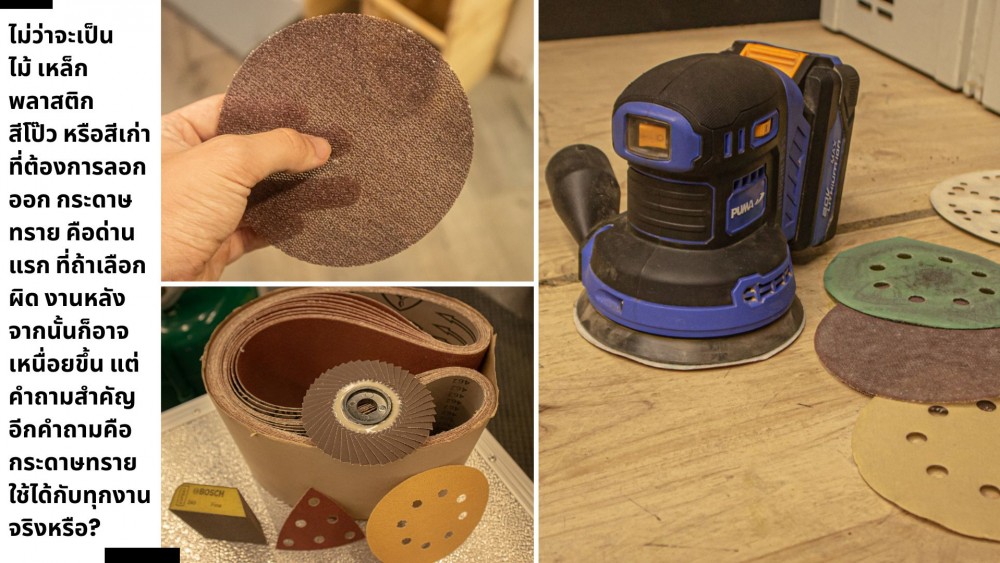
Hand and Machine Sandpaper: Easy to Use, but with Limitations
Standard sandpaper has a very simple structure: a backing material of paper or cloth coated with abrasive grains bonded tightly by adhesive. This construction makes sandpaper thin, flexible, and easy to control in terms of sanding direction—especially on jobs requiring a fine finish.
Because it is flat and flexible, sandpaper is suitable for versatile applications. It can be used for hand sanding, with a sanding block, or on orbital sanders, random orbital sanders, and belt sanders. This versatility makes it an essential basic item that virtually every workshop keeps on hand.
Even though many new sanding tools and formats have emerged today, sandpaper remains a top choice for craftsmen and DIYers alike for simple, understandable reasons, such as:
- Affordable price, allowing frequent replacement without hesitation
- Easy to find and buy, with a wide variety of grits and types available
- Excellent control over fine surfaces, ideal for detail work
- Easy to use, requiring no advanced skills
Sanding for just a short while, yet sandpaper wears out faster than expected
Those who have used sandpaper on steel or rust have probably experienced or asked this question: "When sanding steel pipes, rust, or weld seams, why does sandpaper wear out so fast?"
"Sanding harder will make it faster and smoother" is one of the 5 common sandpaper misconceptions you should stop believing
For woodworking, furniture, painting, decoration, or final surface finishing before job handover, conventional sandpaper still performs exceptionally well. However, whenever faced with truly heavy-duty tasks, its limitations inevitably become clear.
Sandpaper is a consumable: how to use it without wasting it? The answer to this question, in reality, does not just depend on sanding hard or light. Conventional sandpaper is not designed to withstand continuous heavy grinding. Abrasive grains wear down and strip off quickly, and as heat builds up, the bonding adhesive deteriorates, causing the sheet to wear out very quickly.
And right at this point, flap discs clearly step in to take over the role.
What is a flap disc, and why is it different from sandpaper?
If you work with steel, rust removal, or weld seam grinding, you know that using sandpaper sheets just won't cut it—it takes too long, is exhausting, and the grit wears out extremely fast. Wearing out too quickly is usually a sign that you are not using the right tool for the job. And this is exactly where flap discs and angle grinders can help you.
These tools are distinctly designed to handle heavier, faster, and more continuous grinding tasks.
Structure of a Flap Disc
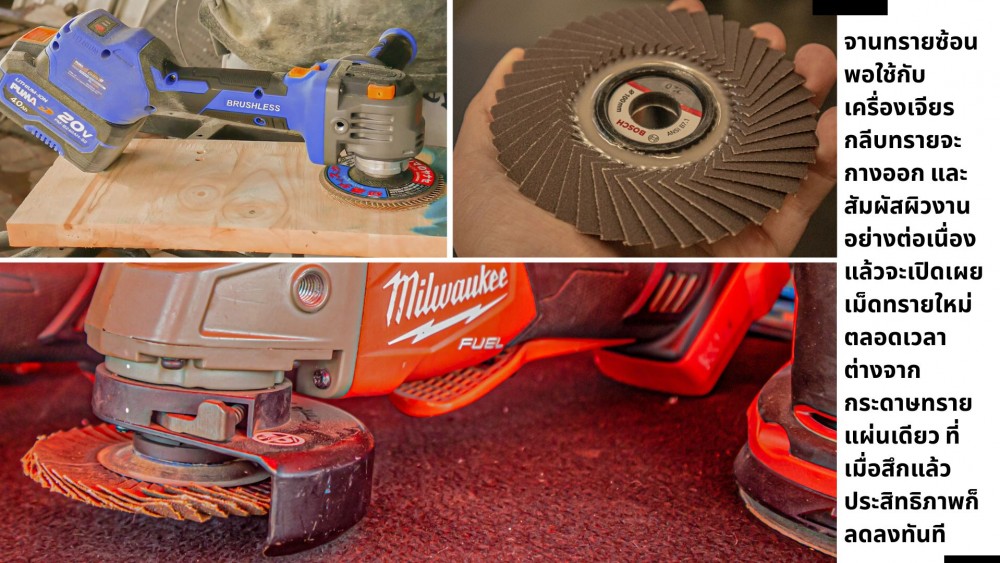
Flap discs are not flat sheets like sandpaper; instead, they use multiple abrasive cloth flaps cut and overlapped around a central hub, mounted on a fiberglass or rigid plastic backing plate. This structure allows each flap to work independently without wearing down all at once.
Why flap discs grind faster and deeper
Flap discs are specifically engineered for heavy-duty work. Their clear advantages in actual use are: multi-layered contact surface for consistent material removal, better heat dissipation reducing the risk of workpiece burning, resistance to clogging, and longer service life. The result is fast, deep, and aggressive material removal—ideal for rust stripping, weld blending, or preparing steel surfaces before painting.
What materials can flap discs grind?
Flap discs are not limited only to steel work as many people believe. They can be used on a wide variety of materials if you select the appropriate grit and technique.
- Steel & Metals: Used for rust removal, weld seam blending, surface finishing before painting, or surface preparation prior to re-welding.
- Stainless Steel: Finishing weld seams and surface conditioning: Choose a grit that is not too coarse to reduce scratches.
- Aluminum: Great for initial stripping or deburring; be careful with heat buildup and overly aggressive material removal.
- Hardwood: Used for rough leveling, chamfering, and deburring when speed is required, but not suitable for final fine finishing.
- Old paint, thick paint layers: Stripping tightly adhered paint before moving on to fine sanding or repainting.
Similarities and Differences between Sandpaper and Flap Discs
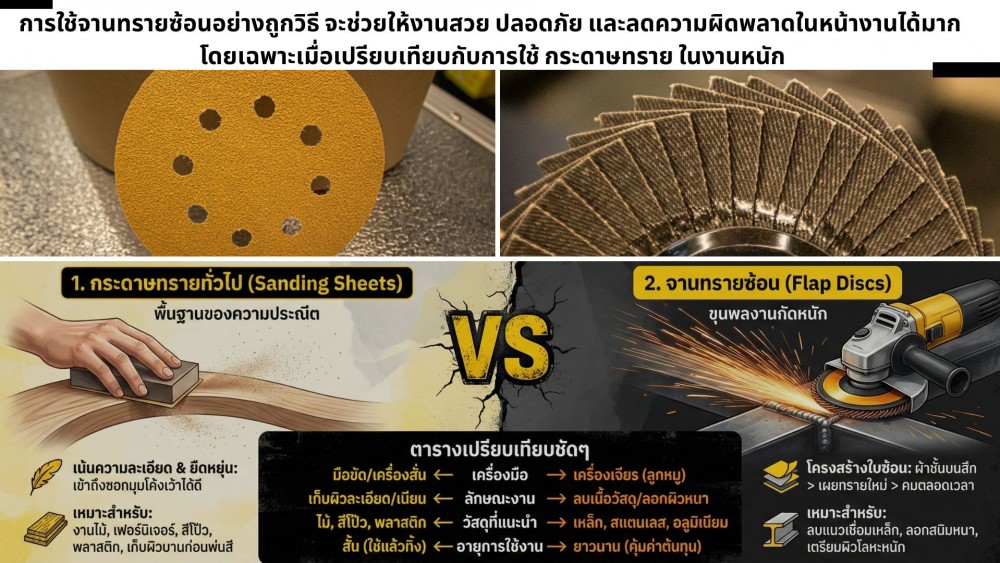
Both sandpaper and flap discs have similar grit gradings, ranging from coarse grits for surface stripping to fine grits for surface finishing. This reflects that both are designed to perform the same function, differing only in application, tools used, and the workload intensity.
Therefore, the key point is not which one is better, but which tool should be used for which type of job. When used for the right application and context, both deliver equally great results.
Distinct Differences That Visibly Impact the Work
In actual use, the difference between sandpaper and flap discs becomes obvious, especially regarding material removal behavior and working speed. Sandpaper cuts the surface at a shallower depth, is easy to control, and is ideal for jobs that require fine detail and precision.
Flap discs, which must be used with an angle grinder, cut deeper and faster, making them suitable for initial surface prep or heavy stock removal.
How to Use Both Types of Abrasives for Best Results
After understanding the differences between regular sandpaper and flap discs, the next important step is using them properly. Improper use can lead to poor surface finishes, fast tool wear, and wasted time. Understanding how to use both types will make your sanding work more efficient, run smoother, and reduce common mistakes that beginners often make on the job.
Sanding Principles That Professionals Should Remember
Getting good results with sandpaper does not depend on grit selection alone, but must be paired with correct on-the-job application techniques.
- Do not press too hard: Applying excessive pressure causes abrasive grains to wear and shed from the backing faster.
- Let the abrasive grains do the cutting evenly, applying just the right amount of pressure.
- Progress grits from coarse to fine logically.
How to Use Flap Discs: Mistakes Beginners Often Make Unknowingly
- Use for sanding, not as a replacement for cutting or grinding discs: Flap discs are designed to handle surface sanding forces, not peeling or gouging surfaces. Forcing them to be used improperly may cause the disc to break or create hazards.
- Control the sanding angle at about 10–15 degrees so the abrasive flaps contact the workpiece surface evenly without digging too deep, helping achieve a smoother surface finish.
- When the abrasive flaps are worn down or heavily abraded, replace them immediately. Continuing to force their use will reduce sanding efficiency, may ruin the surface finish, and risks heat buildup.
Conclusion: How to choose the right sandpaper for the job?
For woodworking, furniture work, surface prep before painting, or workpieces requiring a smooth and even base finish, standard sandpaper remains the most suitable choice. It provides good control over pressure, direction, and surface details, reducing the risk of gouging the surface deeper than necessary.
However, for rust removal, weld seam blending, steel structural work, or tasks requiring aggressive surface removal, flap discs are clearly the better solution. In terms of speed, grinder power, consistency, and material durability, they help get the job done quickly with less effort. In the long run, they may also be a more cost-effective option than repeatedly using individual sandpaper sheets.
Ultimately, tools shouldn't be judged simply by being expensive or cheap; the key is choosing the right tool for the specific task at hand.
Select Sandpaper With the right type, the work goes smoother, the finish looks better, and the craftsman's job is truly much easier.