


 EN
 ไทย



Customers Also Purchased




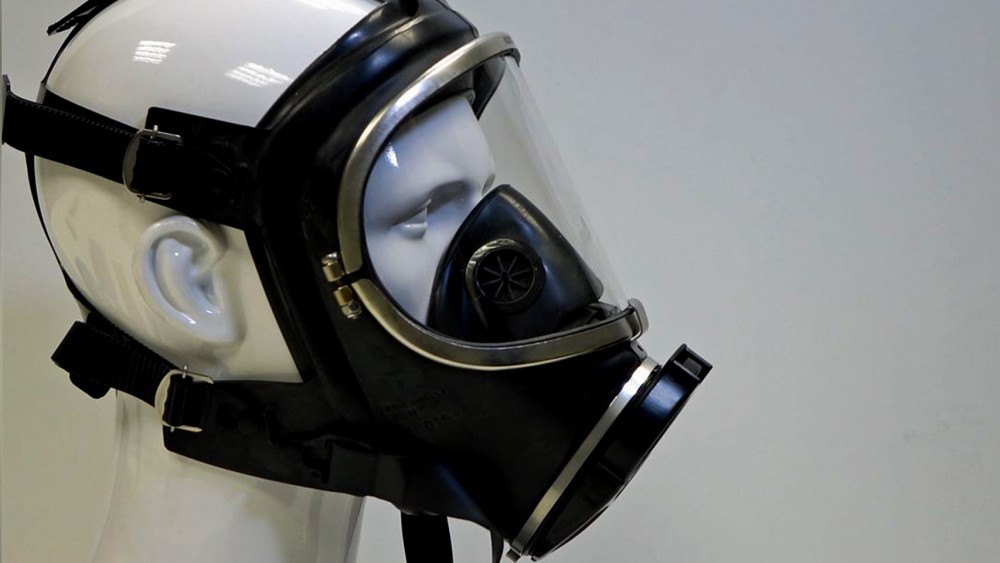
Many people who frequently work with chemicals—whether in paint spraying, industrial work, or even inside laboratories—must be familiar with using chemical respirators, right? Some choose premium-grade chemical respirators because they consider them the best and safest. We wouldn't argue with that thinking, but... what we want you to consider is what happens after taking the chemical respirator off, which is the exact moment many people make the biggest mistakes.
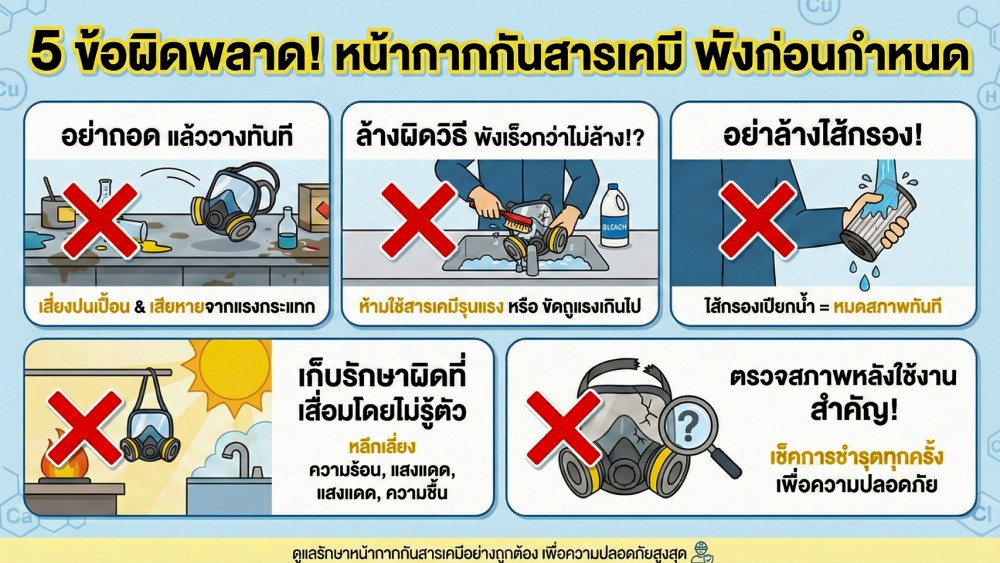
Therefore, in this article, we invite you to go through each step in the maintenance of Safety Masks after use, which, if done correctly starting today, will improve safety, cost-effectiveness, and peace of mind when in use.
Do not take off your chemical respirator and leave it lying around immediately
"Taking off a chemical respirator and leaving it lying around... equals ruined." A truth many technicians overlook. We believe many people finish using their chemical respirators and simply toss them on a desk, or worse, leave them in a car, thinking "I'll wash it later." Little do they know that the moment you remove the mask, the "chemical warfare" on the material's surface is not over. Vapors and residue clinging along the rubber seals and valve flaps continue to silently corrode and penetrate deep into the material without us realizing it.
From our experience, we have found that a critical fatal flaw is leaving a chemical respirator in a stuffy place or a hot car, which acts as a prime catalyst. The rubber will begin to harden, the seal will no longer sit flush, and worst of all is the "entrenched odor." Even if you replace it with brand-new cartridges, that pungent smell will still linger and irritate your nose because the chemicals have already soaked into the mask body itself.
The way out is to let the chemical respirator rest after use: remove the cartridges immediately, wipe off external residue with a damp cloth, and let it rest in a well-ventilated area (away from sunlight) so the chemicals coating the surface can evaporate. Not rushing to stuff it into a sealed, opaque box immediately helps preserve the rubber's elasticity, allowing your trusted mask to protect you for much longer.
Washing a chemical respirator the wrong way ruins it faster than not washing it at all!?
This topic is extremely important because it is a simple blind spot that many people get wrong. "The harder you scrub, the more it breaks? Things that might destroy your mask." Sounds contradictory, doesn't it? Many people are extreme neat freaks, aggressively using concentrated dish soap, alcohol, or even harsh disinfectants to scrub down the chemical respirator until it shines. The result is a mask that looks brand new, but when put on, you feel: "Why isn't it as soft as before?" The rubber edges start hardening, the seal leaks, and that is the beginning of disaster—because a mask that leaks even slightly offers zero protection.
The truth you should know is that silicone and synthetic rubber on masks are vulnerable to harsh chemicals. Repeated corrosion degrades the material's structure many times faster than its actual service life.
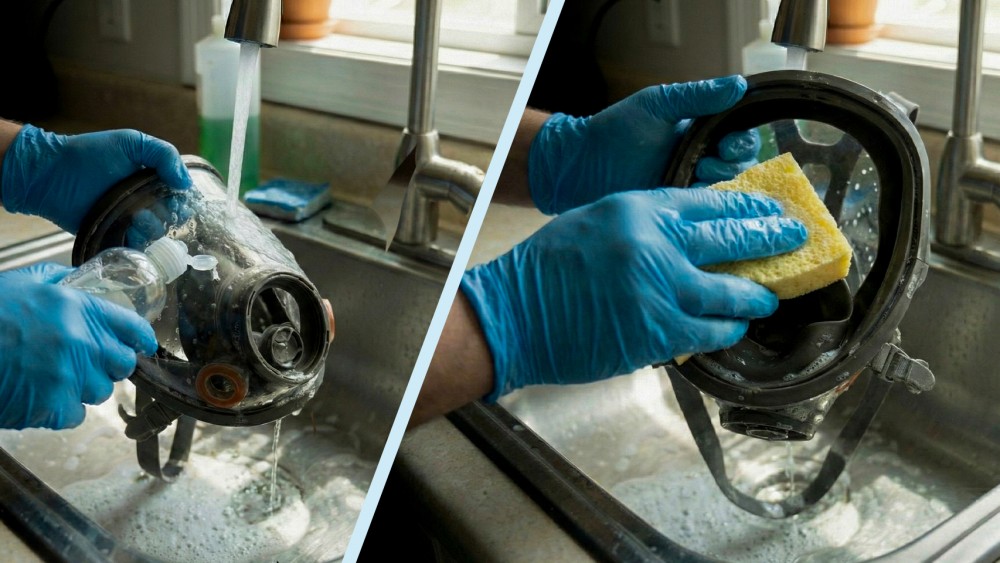
- Stay gentle: Using room-temperature water mixed with baby soap or diluted dishwashing liquid is more than enough.
- Hand touch: Use your hands or a soft sponge to rub gently, focusing on contact areas around the face and chin. Never use abrasive scouring pads.
- Air blow... must be cool air: After washing, air dry in the shade. Never dry in scorching sunlight or use a hot blow dryer, because heat is the fastest catalyst that causes rubber to "die."
Do not wash chemical respirator filter cartridges!
Washing filter cartridges = game over! Stop taking risks for false economy. One of the biggest nationwide misconceptions in the safety industry is the belief that "chemical filters can be washed clean." Let us be clear here: stop that thought! The working principle of the activated carbon in the cartridge is to adsorb toxic substances, trapping them within molecular-level pores. Once full, it's finished. No amount of washing, blowing, or sun-drying can remove those chemicals. Running water through it will only ruin the filter faster.
Warning signs you must heed—don't wait until your lungs are ruined before replacing it! Many people force themselves to keep using it, claiming "I can still breathe." Little do they know that the moment you start smelling faint chemicals or feeling irritation, that is the sign—or the filter has broken through. Your body is unknowingly absorbing toxins instead of the filter.
- Finished using = seal and store. Remove the filter and place it in an airtight ziplock bag immediately to stop the absorption of moisture and ambient air.
- Smell it = throw it away. The golden rule is never hesitate or regret it. If you start smelling chemicals or your nose begins to sting, change it immediately.
Always remember: "A filter costs hundreds, but your lungs are worth millions." Don't trade your long-term health for short-term savings.
Storing it in the wrong place degrades chemical respirators without you even realizing it.
"Unused... yet still ruined" – the silent danger of improper storage. Many people assume a mask only degrades when heavily used. But the harsh reality is that poor storage destroys chemical respirators faster than actual use, especially in our hot and humid climate.
Tossing a chemical respirator together with hand tools is a safety equipment nightmare. Vapors from oil, grease, or even metal dust can easily cause "cross-contamination" to the mask. The result is that when it's time to use it, you get a mask with a rancid oil smell lingering in your nose, or rubber that has swollen and degraded even though you barely touched it.
- To each its own: Strictly separate the respirator from the filters, and keep it away from other hand tools.
- Protective shield: Place it in a ziplock bag or a tightly sealed plastic box to keep out dust and moisture.
- Room temperature: Store in a shaded place at a stable temperature that isn't excessively hot (strictly never leave it in a car).
Trust us, the feeling of picking up a well-maintained mask to wear is like night and day. It's clean, fits snugly, and has no bothersome odors, allowing you to fully focus on the job at hand without worrying about safety.
Post-use inspection is just as important as pre-use inspection.
"Inspect before storing... suffer far less." Most people tend to check their chemical respirator right before putting it on, which I can tell you is the worst time. Rushing on the job might make you overlook small cracks or improperly sealing valves. The golden window for inspection is "immediately after use," because that's when the mask is still flexible and you still remember if it felt unusual anywhere today.
- Hidden cracks: Gently stretch the rubber edges. Small hairline cracks usually reveal themselves when stretched.
- Exhalation valve: Open the cover and check if there are dust particles or hardened deposits stuck to the rubber flap. Is the flap still lying completely flat?
- Straps: Are they stretched out and loose? Are the buckles still tight or beginning to slip?
Finding defects right now is a stroke of luck, because you have time to repair it or order spare parts immediately—much better than being stranded on the job site when you're about to use it, only to find the strap snaps in your hands!
Conclusion
A chemical respirator is not just a piece of equipment; it directly protects our respiratory system and health. Proper post-use care ensures the respirator performs at its best, lasts long, and remains truly safe. To sum it up simply from a real user's perspective: a well-maintained mask leaves no hesitation when putting it on, and leaves no worries about safety every time you work.
Select Safety Masks here