


 EN
 ไทย


Customers Also Purchased


Have you ever faced this problem? The tap water trickles sluggishly as if it has no energy, you have to cross your fingers hoping water will flow when showering on the second floor, or sometimes the tap water just stops running right while you're soaping up... These issues can be solved by "water storage."
Water Pumps It often goes hand in hand with a good plumbing system. A transfer pump, or pumping water from a lower storage tank up to elevated areas, might look like just connecting pipes and plugging it in at a glance. But believe me, "the devil is in the details." In this article today, we will unpack this system point by point, from bottom to top, along with practical tips from real-world experience to make your home's water system "tough, rugged, and durable."
The Starting Point: A Water Pump Must Have a Storage Tank
In theory, a storage tank is the most important "Buffer Zone." It serves to hold municipal tap water before passing it on for the water pump to operate, preventing cavitation (the formation of vapor cavities in the pump) and stopping the water pump from competing with neighbors for water. Competing for water is not only against water utility regulations, but it could also draw contaminants from the main pipe right into your home. From real job site experience, what textbooks rarely tell you is: underground concrete tanks = a breeding ground for problems.
- Cracks and tree roots: When concrete faces moisture and soil pressure over long periods, it often develops micro-cracks. These act as expressways for tree roots to burrow in for water. Even more alarming is that "groundwater runoff" can seep in and contaminate your clean water supply without you even realizing it.
- Modern recommendation: If space permits, I strongly encourage switching to an "Above-ground Tank," whether it's an Elixir polymer that is opaque and prevents algae growth, or food-grade stainless steel, because they are easier to maintain and 100% free from tree root problems.
- A critical point you must never overlook: The "float valve" is suspect #1 behind high water bills. If the float rod rusts or the rubber seal deteriorates, water will continuously overflow from the tank down the drain pipe—and you'll only find out when you see the water bill.
Suction Pipe and Valves
Notice the green pipe submerged in the tank? At the end of that pipe is the device technicians call a "foot valve." It functions as a non-return check valve equipped with a strainer screen. Its primary job is to retain water in the suction pipe so that the water pump can start immediately without needing to be primed each time.
Many people stumble here because they choose a "PVC foot valve" simply because it's cheap... unaware that the internal rubber flapper wears out quickly and the steel spring tends to rust. When leaks occur, water flows back down into the tank, causing the pump to run dry, which can cause the shaft seal and impeller to overheat and melt.
- Material Upgrade: We recommend using a "brass foot valve." Although the price is higher, it is durable, rust-proof, and seals water much tighter over the long run—definitely more worthwhile than repairing a broken pump.
- Installation Clearance: Never submerge the foot valve flush against the bottom of the tank. Maintain a clearance of 10-15 cm above the bottom to prevent the pump from sucking in mud and sediment that could jam the impeller, which is a common cause of motor burnout.
Sediment Trap: The Filter Before Entering the Water Pump
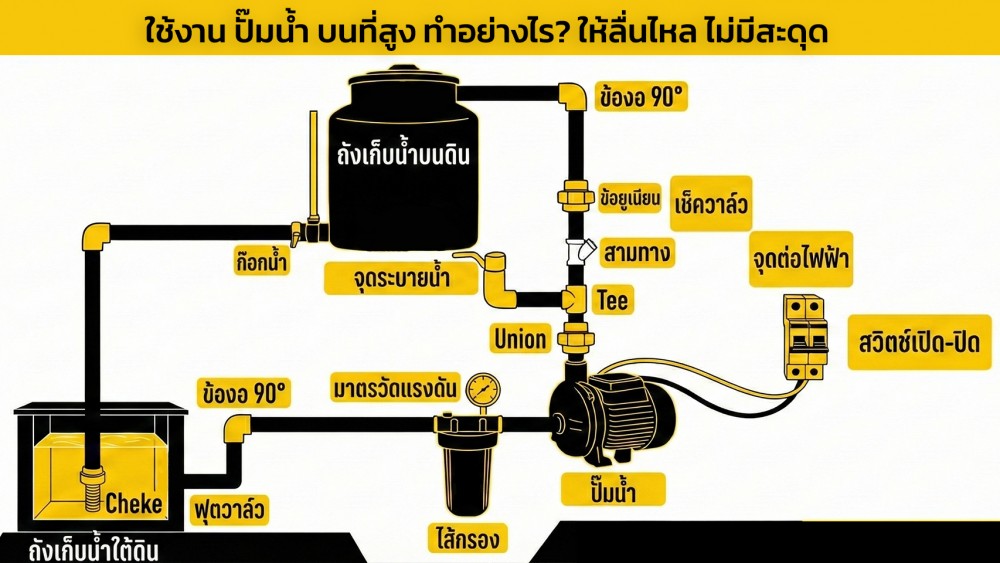
A critical test: Filter and gauge in front of the pump... install them wrong, and your (water pump's) life changes. In the picture, we see a "suction filter" installed between the storage tank and the water pump, along with a pressure gauge.
- Theoretical advantage: It helps catch rock fragments, gravel, and sand, preventing them from damaging the impeller or obstructing motor rotation.
- The often-overlooked risk: Installing a filter element with too fine a rating (such as 5-10 microns) or allowing the filter to clog creates a massive pressure drop. This makes it impossible for the pump to draw water fast enough, resulting in "cavitation" (vapor bubbles).
Symptoms: The water pump will make a loud noise like someone shaking gravel inside, bursting air bubbles that erode the impeller surface and cause premature rubber seal failure.
Expert Recommendations
- Switch to a Strainer: At the pump inlet, simply installing a "Y-strainer" (coarse filter) to block large debris is sufficient.
- Relocate fine filters: If you want sparkling clear water, move the fine filter unit to the "Discharge Side" or "Before entering the storage tank" instead to reduce the suction load on the pump.
- The purpose of a pressure gauge (Manometer) isn't just for looks; it acts as a "Health Monitor." If the suction side pressure reading drops unusually low (higher vacuum), it indicates that the filter is getting clogged and must be removed and cleaned immediately.
The water pump is the core heart
The heart of a transfer system is the centrifugal pump, which is the standard choice for transfer operations or sending water from a ground storage tank up to a rooftop tank. Key selection principle to know: For high-elevation delivery, the golden rule is to primarily look at the total head, not just the horsepower (HP).
- Head > Flow: We need pressure to overcome gravity and friction loss in the pipes to push water all the way to the top of the building. The flow rate is a secondary consideration. If the head is insufficient, the water simply won't make it up—end of story!
Mechanical Advantages: Many people often ask why not use other types of water pumps, such as round-tank or square-type pumps. The answer lies in "Efficiency & Noise." Centrifugal pumps are engineered for continuous operation, making them quieter and more energy-efficient over the long term when pumping large volumes of water in a single run.
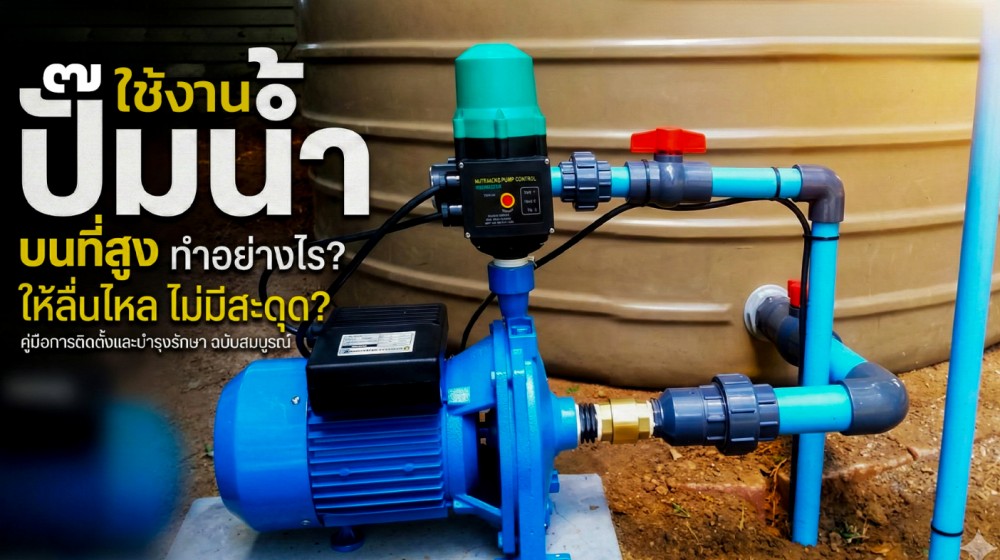
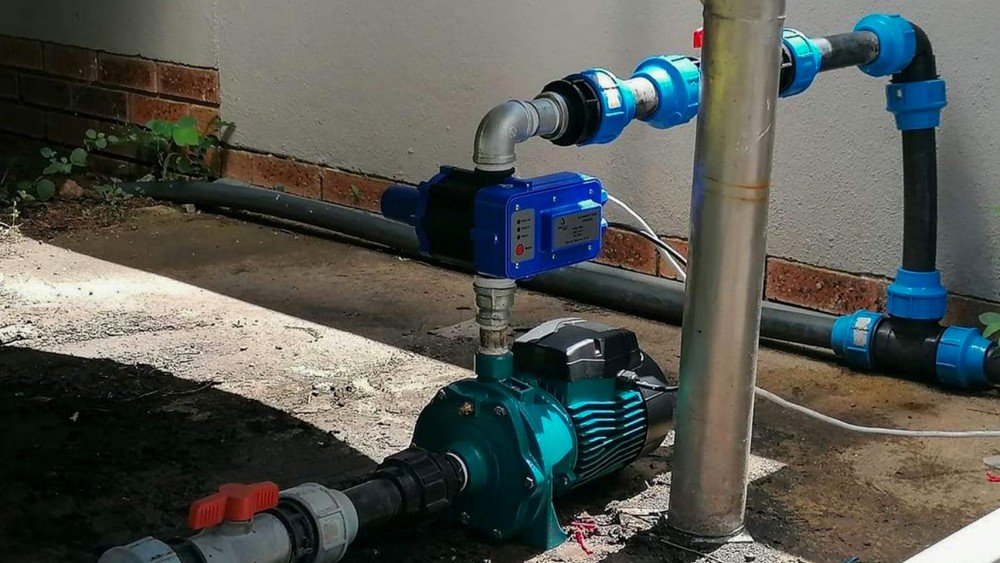
Thermal vulnerabilities: Notice the cooling fins around the motor casing? Those are the lungs of the water pump. Never cover them with plastic bags, sacks, or solid boxes! Cooling depends on the fan at the rear of the motor blowing air across these fins. If blocked, heat will build up in the motor until the insulation melts and it eventually burns out.
Electrical and Safety Systems for Water Pumps
Installing a water pump doesn't end with just plumbing the pipes; the electrical system is what determines the safety of both people and the equipment, especially for pumps placed outdoors or in damp areas.
- Earth Leakage Circuit Breaker (ELCB/RCBO): The first golden rule is "never hardwire directly." Always use a dedicated earth leakage circuit breaker (ELCB). Since water pumps carry the risk of current leaking to the metal frame, lacking grounding and a circuit breaker could result in fatal electric shocks to anyone touching the pump or the water.
- Automatic Control System: For transferring water up to a roof, the real hero is the "electric float switch" or "radar switch" mounted on the rooftop tank. It commands the pump to start when the water level drops and shuts it off when full to prevent overflowing.
- Wiring: Cables entering the motor must be routed through waterproof conduit, and junction points should be rated at least IP55 to prevent rainwater or splashes from entering the terminals and causing a short circuit.
Discharge and Maintenance: Discharge Piping Assembly
Coming out of the water pump, the piping might look a bit complex, but there is a good reason for it.
Union
Notice the threaded fittings marked "Union" on both the inlet and outlet. Many wonder what they are for. They are specialized fittings used to connect the water pump to the plumbing pipes. Without unions, when the pump breaks down or needs to be removed for cleaning, you would have to saw through and discard the PVC pipe! But with unions, you simply unscrew the collar to lift the pump out for servicing and put it right back. Never skimp on unions.
Priming Port
During initial installation, or when the lower tank runs dry and the pump draws in air, it won't be able to lift water. You need to open this cap and pour water in until the impeller chamber is completely full to purge all air before the pump can operate. Pro-tip: Installing an on-off valve here instead of a threaded cap makes the job much easier, eliminating the need to search for a wrench.
Discharge Check Valve
This component is crucial for high-elevation transfer systems. Why is it necessary? Suppose you are pumping water up a 4-story building: the water in the vertical pipe has immense weight. Once the pump shuts off, gravity pulls that entire column of water slamming back down.
- Without a check valve, backflow of water will violently spin the pump impeller in reverse, which may destroy the motor or burst the pipes.
- Installation position: It should be installed slightly above the pump to absorb the impact instead of the pump.
Investing in Water Pumps along with your plumbing system is a long-term investment. Done right once, it will last 10–20 years without the frustration of turning on the tap to brush your teeth and having no water. Hopefully, this article helps you see the whole picture clearly and communicate much better with your plumber!