


 EN
 ไทย


Customers Also Purchased
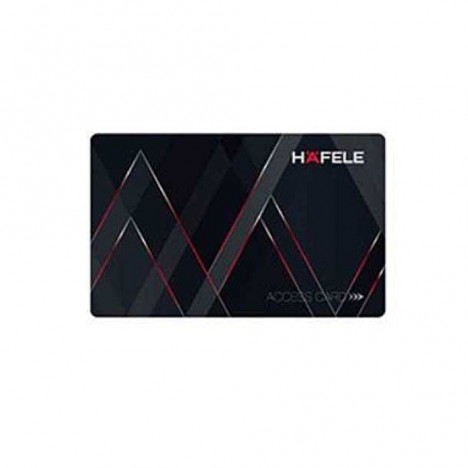
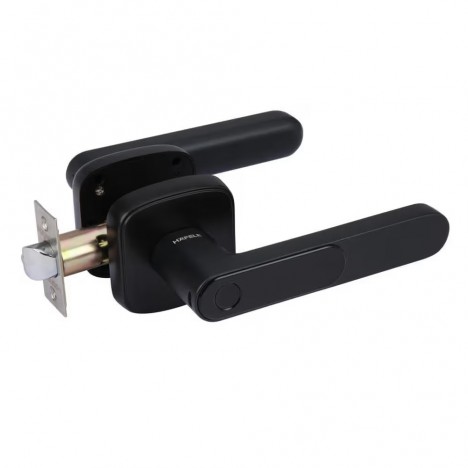
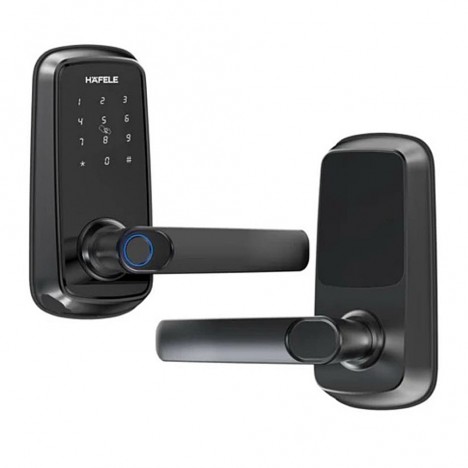
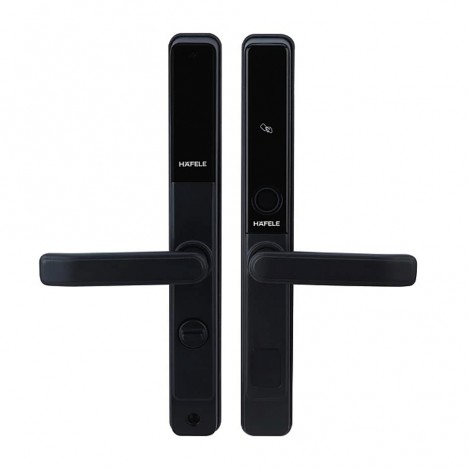
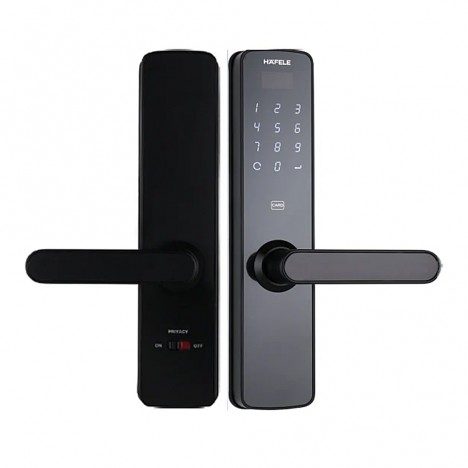
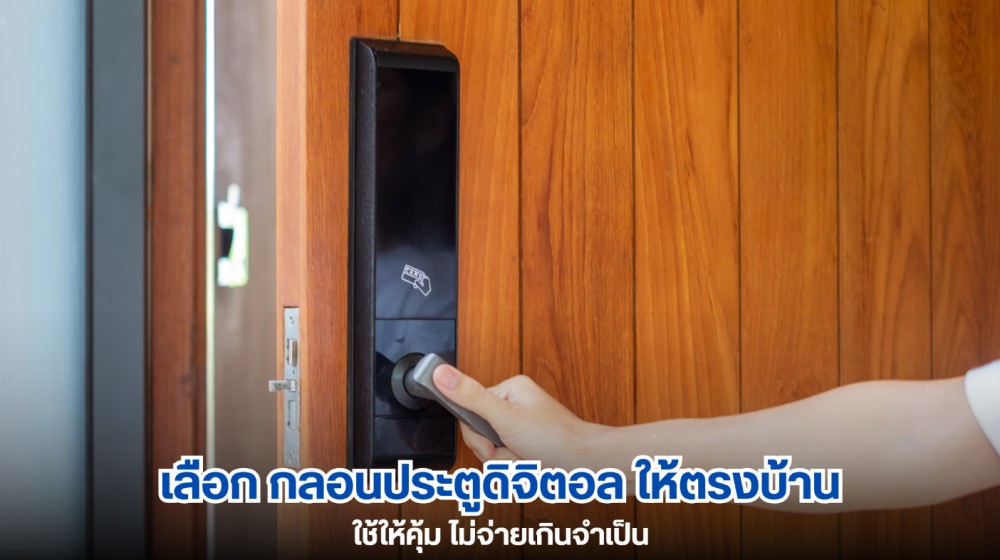
In recent years, whether for detached houses, townhomes, or condominiums, we have seen noticeably more households switching from traditional keyed locks to digital door locks or Digital Door Lock smart door locks.
The main reason inevitably comes down to convenience: no need to carry keys, no worrying about forgetting or losing them, and no wasting time fumbling for keys in front of the house—especially on days when your hands are full or when returning home late at night.
However, when it comes time to actually buy one, many people get confused because there are so many digital door locks on the market, ranging from a few thousand to tens of thousands of baht. Plus, it's packed with confusing technical jargon like Rim Lock, Mortise Lock, Push-Pull, Gateway, Face Recognition, and countless other features that you might not even be sure you really need.
In this article, Nong Chang will walk you through the real basics—from lock types, installation methods, locking systems, access features, and smart home integration to maintenance tips that salespeople rarely tell you. Explained in plain English so that after reading, you can confidently choose the right lock for your home without worrying about being oversold.
1. Categorizing locks by "installation method"
Before looking at cutting-edge features or stylish designs, the very first thing you should check is what type of door does your home have? Because each type of lock has a different installation method, which directly affects strength, aesthetics, and budget.
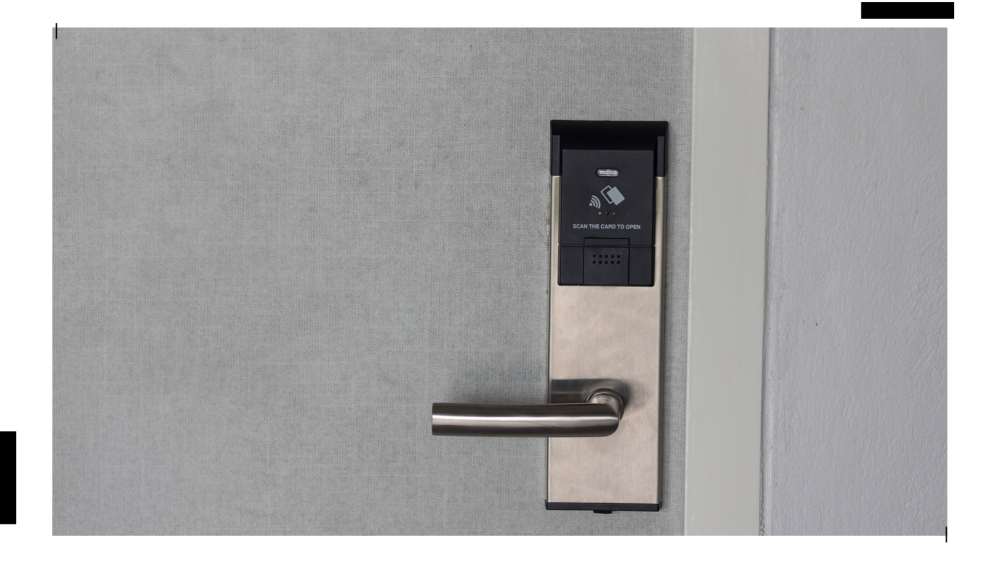
1. Surface-mounted type (Rim Lock)
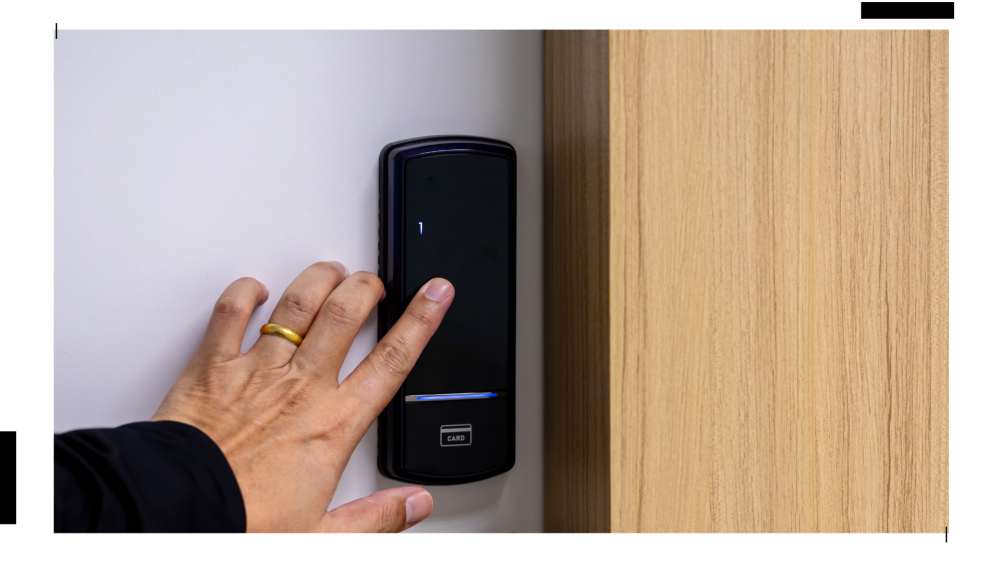
This type of lock is considered a favorite among condo and dormitory residents because it is easy to install without requiring much dismantling of existing hardware.
Body characteristics
The lock body is typically rectangular or vertical, surface-mounted on the door leaf—usually installed above the existing knob or lever handle—without the need to remove the old lock entirely.
Locking system
The latch/bolt assembly is located on the back of the door (interior side). When locked, the bolt extends to engage with the strike on the door frame, preventing the door from being opened from the outside.
Advantages that make it popular
- Minimal drilling, minimal damage Requires drilling a small hole of about 32–35 mm to route the wiring, without requiring extensive mortising of the door leaf.
- Ideal for rental properties If moving out, it can be easily removed and the door restored to its original condition.
- Economical price Mostly in the range of low to mid thousands.
Observations
Because it is an add-on installation, its pry-resistance strength will not match that of a mortise lock, but it is sufficient for general use in condos or dormitories.
2. Main Installation Type (Main Lock / Mortise Lock)
This is the lock that many refer to as the "ultimate solution"—ideal for new homes or front doors that require both strength and aesthetics for the long term.
Overall Characteristics
Comes as an all-in-one set including the main unit, keypad, and handle. Requires removing the original doorknob or lock and installing the entire new system.
The Key Element: Mortise System
The lock features a "mortise lockcase" that must be recessed into the edge of the door leaf. The latch bolt is large, strong, and often includes multiple deadbolts, significantly increasing security and offering much better pry resistance than add-on rim locks.
Subdivided by Handle Design
2.1 Lever Handle
Classic design operated by pressing the lever down and pushing the door. The mechanism is simple, durable, and suitable for the elderly due to familiarity.
2.2 Push–Pull
Modern design with no protruding handle, operated by "push to enter, pull to exit". Ergonomically designed, allowing you to push the door open with your shoulder or hip when your hands are full, offering great daily convenience.
3. Sliding Door Lock
Special care is required for this section because Buying the wrong one means it cannot be used at all.
Why standard locks cannot be used with sliding doors
Standard locks use a deadbolt, which allows the door to slide away from the bolt when used on sliding doors, causing the lock to disengage easily.
Characteristics of a Proper Sliding Door Lock
The lock tongue will be a Hook bolt Once locked, it hooks downward and engages with the strike plate, preventing the door from sliding.
Mounting / Installation
Available in both rim lock and mortise types. The key point is to check the frame width, especially for glass doors, which typically require a width of about 10–12 cm or more.
4. Locks for Frameless Glass Doors (Glass Lock)
Considered to be a challenging installation task because tempered glass doors cannot be drilled.
Installation Guidelines
Use a clip-on lock that clamps onto the edge of the glass and secures with clamping screws or industrial adhesive without drilling the glass.
Things to Check Before Buying
- Whether it is a single door (adjacent to a wall or frame) or double doors (glass-to-glass), which requires an additional strike plate accessory.
Access Systems – The More Features, The Higher The Price
Modern digital door locks rarely have just one way to unlock; a single unit usually supports multiple unlocking methods. The more options provided, the higher the price. Let's look at how each system works and what type of usage it suits.
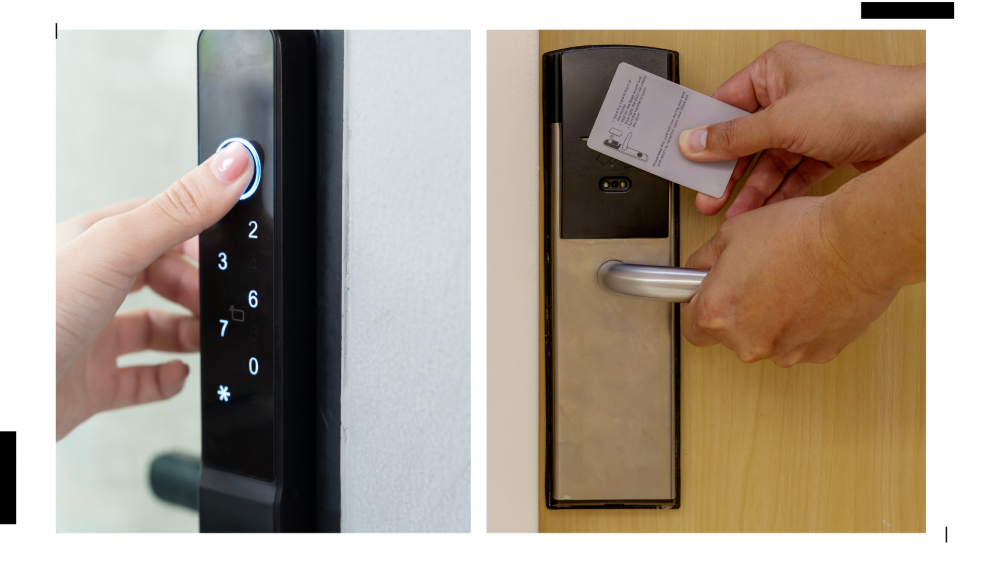
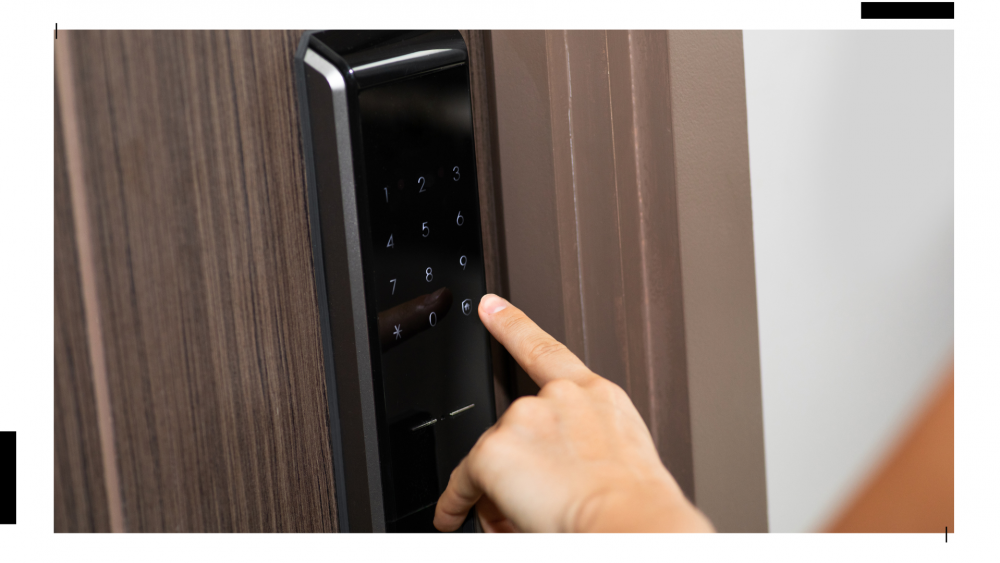
1. PIN Code
Here are A basic function that every digital door lock must have.
Security concerns that many worry about
Fear of someone peeking while entering the code, or burglars checking fingerprints on the keypad to see which numbers are repeatedly pressed.
Must-have features
You should choose a model that supports Fake PIN (Scramble PIN code) For example, if the real PIN is 1234, you can enter random numbers before and after it, such as 8850 + 1234 + 99 the door will unlock normally, which is very effective in preventing PIN guessing or tracing from fingerprint smudges.
2. Fingerprint Scanner
This is the system that is the most convenient because your fingers are always with you. However, the key is choosing the right type of sensor technology.
Older Type (Optical): A red or blue light shines when touched. The downside is that if your hands are wet or peeling, or for children and seniors with faint fingerprints, scanning becomes difficult, slow, and prone to frequent errors.
Newer Type (Capacitive): Works like fingerprint scanners on smartphones, reading the electrical charges on the skin. It scans in a split second, offers high accuracy, and is significantly harder to spoof.
Nong Chang recommends choosing a model with a capacitive fingerprint sensor because it is faster, more accurate, and much better suited for everyday use.
3. RFID Key Card
Ideal for households with members of varying ages, especially seniors who may struggle with fingerprint recognition or remembering PINs. Just a single card—tap and open instantly—very easy to use.
A tip many don't know: Some smart lock models support standard Mifare cards (13.56 MHz frequency), which is the same standard used by transit cards or condo keycards. This means you can register your existing cards to unlock the door, eliminating the hassle of carrying multiple cards.
4. Face Recognition
Here are Top-tier features For those who love cutting-edge tech and ultimate convenience
How it works: Uses a camera combined with infrared sensors to detect faces in 3D, rather than just taking a photo and comparing images
Key advantages: It is a touchless system. When your hands are full of bags, just stand in front of the door; the device scans your face and the door unlocks immediately. Life becomes noticeably more convenient.
Frequently asked question: Can it be fooled with a photograph?
The answer is no for standard models, because the system detects facial depth, such as the bridge of the nose, cheekbones, and facial contours. Flat 2D photos will fail detection.
5. Mechanical Key (Backup Key)
The golden rule of digital door locks: This key is meant strictly for extreme emergencies, such as system glitches, circuit malfunctions, or completely drained batteries.
Important reminder: Never keep backup keys inside the house. You should keep them in your car, at the office, or at your parents' house. If you get locked out and the key is inside the house... it is virtually useless.
IoT system and application (Smart Home)
Nowadays, a home door no longer just opens and closes, but it must also communicate seamlessly with your smartphone.However, before deciding to buy, you need to understand how each digital lock model connects to the app, because the functionality and convenience vary significantly.
Bluetooth connection (short range)
With this type of connection, the door lock communicates directly with your mobile phone via Bluetooth.
Usage characteristics: You need to be near the door within a few meters to control it via the app. It is suitable for configuring device settings, adding/removing users, viewing access history, or unlocking the door for friends waiting in front of the room.
Who it is suitable for: People who do not need remote control from afar, but primarily want an app to manage the system and check usage data.
Wi-Fi / Gateway connection (long range)
This is the true selling point of door locks in the Smart Home era.
Working principle: The door lock connects to the internet. Some models feature built-in Wi-Fi, while others require purchasing an accessory called a Gateway to act as a connection bridge.
Enhanced capabilities:
- Lock or unlock from anywhere via mobile phone
- Check door status in real-time
- Generate temporary passcodes (OTP) or time-limited access permissions
Real-world usage examples:
Suppose a friend comes over while you are still stuck in traffic; you can remotely unlock the door so they can wait inside, or create a temporary passcode to send to the housekeeper for cleaning. Once the set time expires, the code is no longer valid—enhancing both convenience and security simultaneously.
Things to know before choosing an IoT system
- Not every unit has built-in Wi-Fi Some models require purchasing an additional Gateway; don't forget to check the prices and included accessories before deciding.
- Each brand's app works differently; some brands design great, easy-to-use, and stable apps, while others offer many features but are difficult to navigate.
- If you don't really plan on controlling it remotely from outside the home, a Bluetooth-only model is sufficient and more economical.
Maintenance and Common Issues
This topic is something that storefronts rarely talk about, but repair technicians encounter almost every day. With proper care from the beginning, your digital lock will last for many years hassle-free.
1. Batteries — A small detail that causes a lot of damage
Most Digital Door Locks use 4–8 AA batteries as their main power source, and this is where most issues typically begin.
Strictly prohibited: Do not use Rechargeable batteries Whether Ni-MH or any other type, because rechargeable batteries provide only 1.2V while the device is designed for 1.5V batteries. As a result, the device may malfunction, falsely indicate a low battery even when fully charged, or sometimes unexpectedly reset itself.
Should be avoided: Cheap Carbon Zinc batteries (the economical green/red types). Over time, these batteries are prone to leaking chemical electrolyte, which corrodes the battery terminals and internal circuit boards—causing damage that isn't worth repairing. Most importantly, this is not covered under warranty.
Tip from the pros:
- Use high-quality Alkaline batteries ONLY such as Panasonic Evolta, Duracell, Energizer
- Replace the entire set of batteries at once; do not mix old and new batteries.
- Even if the device has not warned you yet, you should replace the batteries once a year for peace of mind.
2. If the battery is completely drained, how do you get inside?
The answer is No need to pry, break, or call an emergency locksmith. . Every digital door lock already comes with a backup system
How to check: On the front panel on the outside, there will be a small port/contact for emergency power supply
- Older models: Will feature 2 metal contact points Buy a 9V battery (rectangular shape) from a convenience store and hold it against the contacts. The unit will power up, allowing you to enter your passcode or scan to enter normally.
- Newer models: Will feature a Micro-USB or USB-C port Plug in a power bank temporarily; the unit will "wake up" so you can enter the house, and then you can replace the batteries from the inside.
A small tip: Keep a 9V battery or a power bank in your car at all times for extra peace of mind.
3. Low battery warning sound — do not ignore it
Many people hear the warning sound and think, "It can still last for many more days." The truth is In households with frequent use, the battery drains faster than you think.
The recommendation is: when the unit starts warning, prepare to replace the batteries within 1–2 weeks. Don't wait until it goes completely silent, because if it dies at night or on a rainy day, it will be much more troublesome than you think.
4. Other maintenance tips to help extend the unit's lifespan
- Avoid spraying water or cleaning sprays directly onto the keypad
- Clean using only a dry cloth or a slightly damp cloth
- If the door starts to stick or doesn't close completely, you should adjust the door panel or hinges first. Don't force the lock to work under strain.
Summary: How to choose the right one for you
If you've read this far and are still hesitating, Nong Chang has briefly summarized it for you as follows:
- Living in a dorm/rental condo or prioritizing economy: A Rim Lock (surface-mounted) is sufficient. It works well, is easy to install, and convenient when moving out.
- New house / Front door: Invest in a Main Lock (mortise type) right away. It's stronger, looks better, and is a complete solution.
- Gadget lovers / Convenience seekers: Look for a Push-Pull model + face scan + Wi-Fi. Your life will be completely changed—so convenient that you'll never want to go back to keys again.
- Sliding doors: Emphasize to the seller that you only want a model for "Sliding" doors, and check that the lock latch is a hook-type bolt.
We hope this article helps everyone get an overview and choose Digital Door Lock the right digital door lock that satisfies your needs and is worth every single baht. If you have any questions or want a review of a specific model, feel free to leave a comment for Nong Chang!