


 EN
 ไทย


Customers Also Purchased
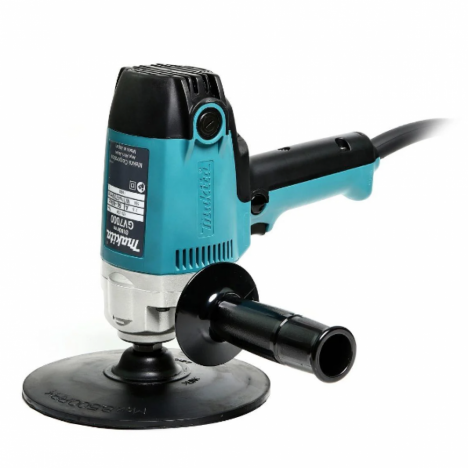

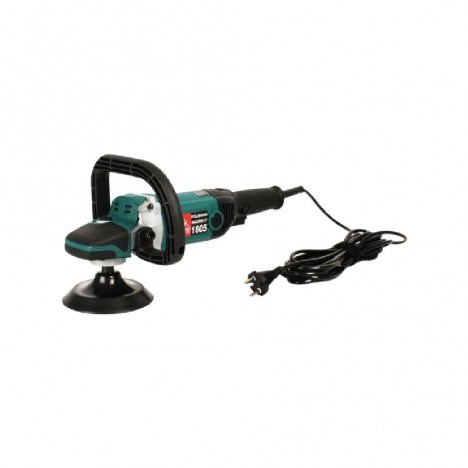
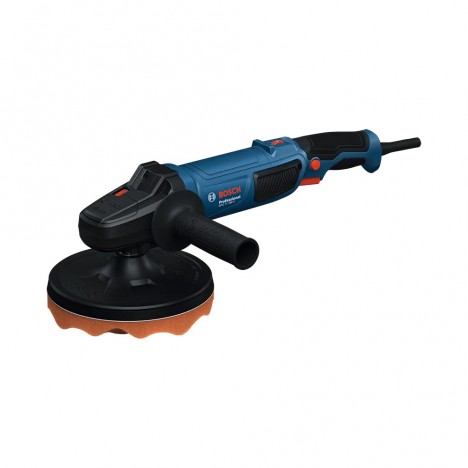
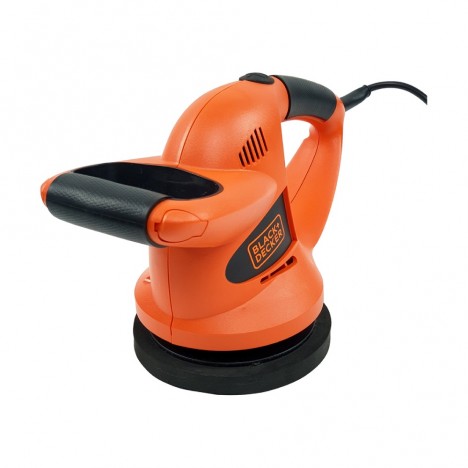
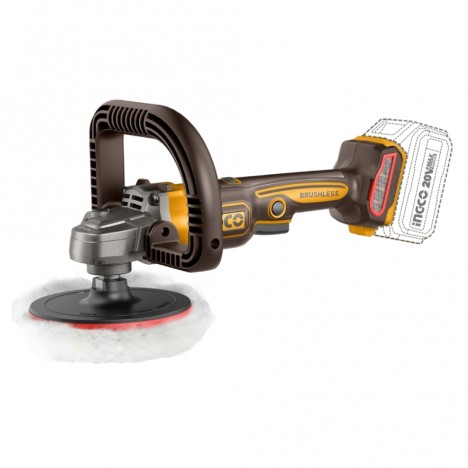
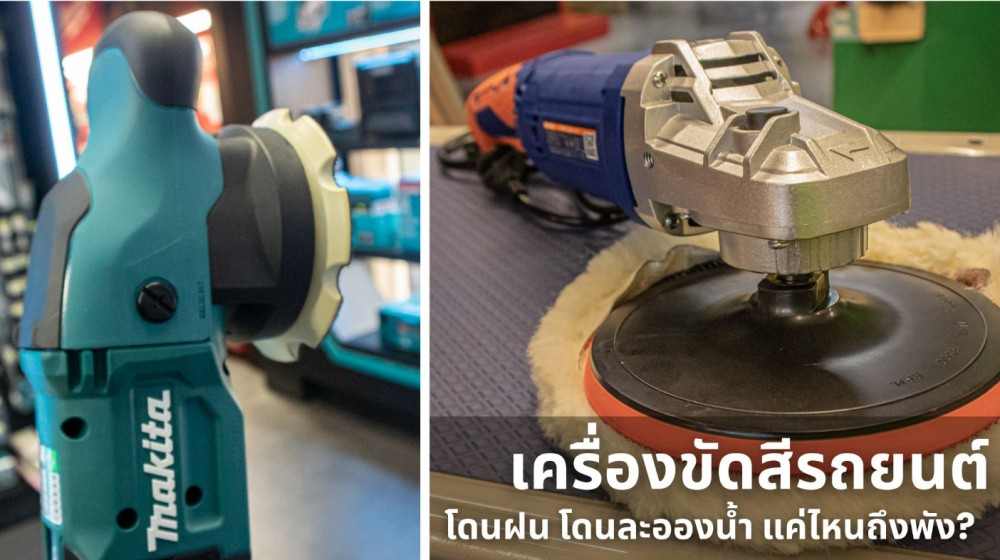
Imagine you are polishing a car with Polisher a new corded electric tool, and suddenly the sky darkens, rain clouds gather, wind picks up, or at least water droplets blow in from washing the floor or the car next to you, making you feel that the surroundings are no longer safe for power tools. From what was once dry and comfortable, a question pops into your head: "Is it dangerous for a car polisher to get wet like this?"
Many might think that a little splash is no big deal; the car polisher keeps running normally with no alarming shocks or shutdowns. But on the other hand, a car polisher is a corded or cordless power tool packed with a motor, circuit boards, speed controls, and moisture-sensitive electrical components. Water damage may not happen instantly, but accumulates quietly until one day the tool breaks down without warning.
Therefore, in this article, we will clearly answer whether corded and cordless car polishers can get wet, what level of water exposure is tolerable, and when you should stop using it immediately, so you won't have to risk trial and error on your own and can make the right decision in real situations when the tool is in your hands, the job is right in front of you, and conditions turn unfavorable.
Can a car polisher get wet?
The short answer is no. However, all risks depend on the amount of water and where it hits, which are the two key variables that determine whether it simply stays safe to use or escalates into long-term damage to the tool.
Car polishers are mainly available as: Dual Action vs. Rotary Car Polishers: What's the Difference? Regardless of whether they are of these two types, corded or cordless, they are all primarily designed for use in dry environments. Inside the tool, the electrical system relies on airflow for heat dissipation, meaning the body They are not designed to be waterproof like outdoor industrial tools such as pressure washers or water pumps, which are specifically built to handle water directly.
A common misconception is that because the machine looks solid, tightly sealed, and has no large gaps, people assume it can handle water. In reality, a car polisher has several openings essential for its operation, and these very spots immediately become points of risk when water or moisture is involved. For example:
- Motor ventilation vents These vents are designed to pull in air for cooling, but they can easily draw in water mist at the same time.
- Switch gaps and mechanisms Although they seem small, once water enters, it often leads to long-term issues such as intermittent switch operation or fluctuating speed.
- Housing seams Especially the mating seams of the casing covers, which are not genuinely sealed against water ingress.
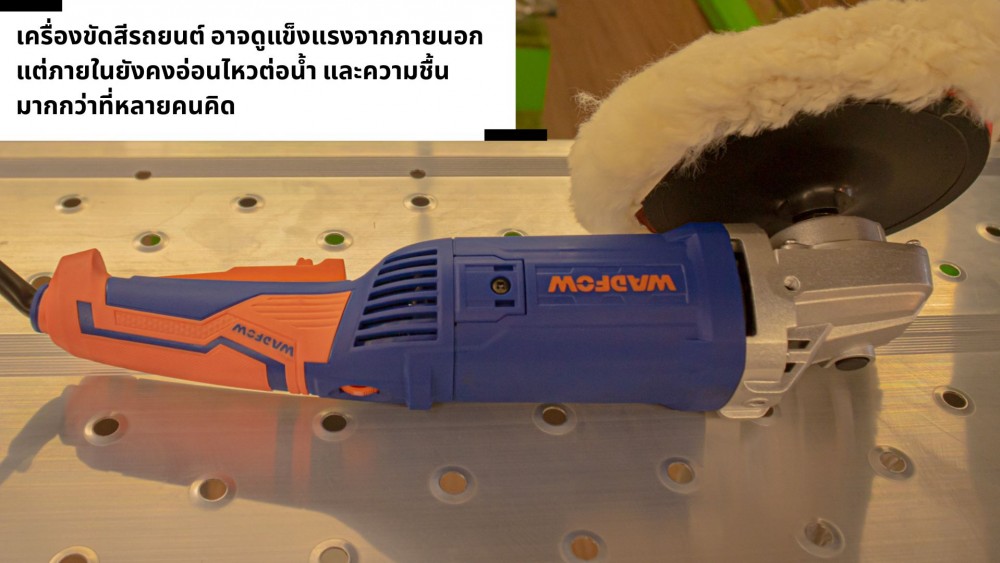
Car Polishers: Water Mist vs. Rain—How Different Are They?
Before deciding whether to keep using a car polisher, store it to dry, or send it to a service center, many people tend to lump it all together, thinking, "Water is water, so the risk should be about the same." In reality, fine water mist and actual rain affect a car polisher quite differently in terms of water volume, impact direction, and duration of contact.
Distinguishing between these two situations will allow you to assess the risk more accurately, without having to decide whether to stop using your car polisher based purely on gut feeling or habit.
Water Mist: Low Risk, but Not Zero
Water mist—such as spray drifting from a garden hose, splashes from the floor, or small droplets from a buffing pad—is an extremely common occurrence during car polishing.
If you ask whether this kind of water mist is dangerous, The answer is it is not immediately dangerous. However, you shouldn't let your guard down, because fine mist can seep into ventilation vents, accumulate on switches or circuit boards, and with continuous use of the car polisher, internal heat can accelerate trapped moisture buildup. Therefore, while a little mist won't break the car polisher immediately, it gradually accumulates risk. .
Actual Rain: Stop Immediately
If it is actual rain, whether heavy or light, I'll be blunt: You should definitely not continue using the car polisher. Because rain is not just water splashes; it is continuous exposure to water and often hits from multiple directions at once. The chance of water reaching the motor, speed control circuit board, and power or battery terminals is very high, and this is where severe damage can begin.
Electric vs. Cordless Car Polisher: Which One Is Riskier?
When working in unfavorable environments where the floor starts getting damp, the air is humid, or there is a chance of exposure to water, many people feel that a cordless car polisher should be safer because there is no mains electricity and no extension cords to worry about. However, the risks with both types of car polishers do not disappear; they are simply hidden in different areas, and the dangers of each type present themselves in distinctly different ways.
Electric Car Polisher (Corded)
With corded tools, the primary risk lies not only in the machine itself, but also in the power cord, plug, and the connection point between the cord and the tool. If the ground is wet, flooded, or it is raining, the chance of electrical leakage and electric shock increases immediately.
Whenever the floor gets wet, there is standing water, or it is raining, the risk increases immediately because water can compromise the performance of electrical insulation. The chance of electrical leakage or electric shock becomes significantly higher, even in situations where the car polisher continues to run normally and shows no visible signs of malfunction.
Cordless Car Polisher
Many people think cordless models are safer because "there is no mains electricity, so no electric shock," but in reality, they are not 100% safe. Lithium-ion batteries and battery management systems (BMS) are extremely vulnerable to water. If water seeps in, it can cause short circuits and rapid battery degradation. In severe cases, abnormal heat buildup may occur. If the terminals become damp, corrosion will form on the metal contacts, permanently ruining the battery or frying the control board—costing more to repair than buying a new tool.
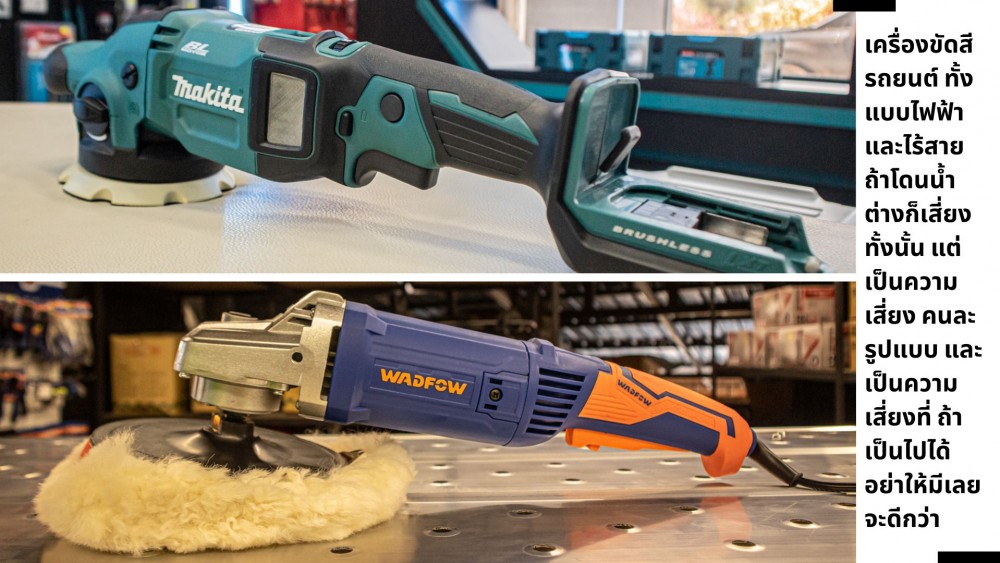
Which Parts of a Car Polisher Are Most Dangerous If Water Enters?
Not every part of a car polisher is equally vulnerable to water. When some areas get wet, you might not notice any symptoms right away and can continue using it as if nothing happened. But if water enters certain critical spots, damage follows silently and is far more severe than you might expect, especially issues involving the electrical system and motor, which are difficult and sometimes not cost-effective to repair. Therefore, knowing "where the real risk points are" is more important than taking a generalized approach to protecting the entire car polisher.
- Ventilation Openings This is the primary gateway where water enters without you realizing it. Fine water mist can be sucked in along with the airflow while the motor is running.
- Power Switch This is a spot where water ingress usually doesn't show immediate symptoms, but it causes long-term problems such as failing to turn on, unstable speeds, or the machine suddenly shutting off on its own.
- Battery Terminals / Power Cord Connections These are spots where, if a short circuit occurs, it will immediately affect the entire system and is usually not worth repairing.
What Level of Water Means You Should Stop Using a Car Polisher Immediately?
The level of moisture that calls for caution with a car polisher is when there is minor water or moisture present—such as light mist, a damp but not dripping polishing pad, or a slightly wet floor without standing water.
These situations are not immediately hazardous to your car polisher, and you can continue working for a short period with caution. Keep an eye on how the tool behaves, keep water away from the vents and switch, and be ready to stop immediately if the environment becomes more humid. Never push through just thinking it "can still handle it."
However, there are several situations that represent a "red line" when using a car polisher, which you should never risk. For example, when it actually starts to rain, water splashes directly onto the tool, there is standing water in the work area, or the machine is visibly wet.
These situations rapidly increase the chance of water seeping into the motor, circuit boards, or electrical connections, and the resulting damage can be severe and difficult to repair.
What should you do if your car polisher has already been exposed to water?
You might think, "It just got a little wet, it'll dry soon," and choose to turn it right back on. But in reality, the moments right after a car polisher gets wet are the most critical. If handled improperly, minor damage can escalate into a major issue.
Staying calm and following the proper steps will give your tool the best chance of returning to safe operation.
- Disconnect power immediately: Unplug it or remove the battery immediately. Never press the switch to test the tool.
- Drain the water: Tilt the machine to allow as much water as possible to drain out of the vents.
- Blow out moisture: Use an air blow gun or blower to blast air into every vent until no water mist comes out (never use hot air, as it will melt the grease).
- Apply chemical aids: Spray a moisture-dispersant spray around the switch and battery terminals (if accessible).
- Let it recover: Place the tool in a dry, well-ventilated area for at least 24 hours before testing it.
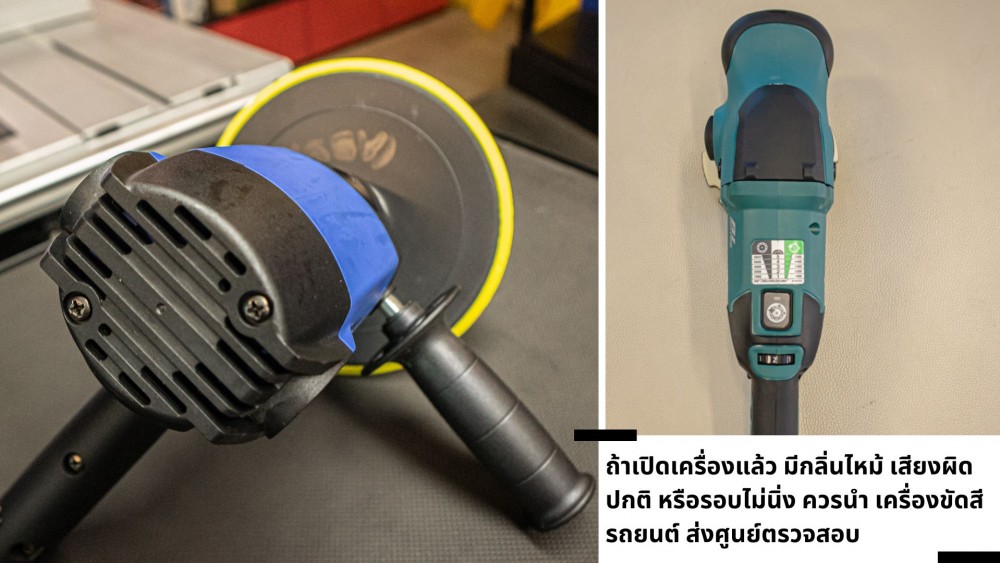
Summary: Using a car polisher must be done safely away from water
Car polishers are not designed to be waterproof. Minor exposure to water might not break the machine right away or show obvious signs of malfunction, but what you must understand is that moisture risks often accumulate quietly inside, gradually affecting electrical components over the long term.
If you want your tool to last a long time, the best and safest approach is: Avoid water as much as possible Use in dry areas, under a roof, or with rain cover, and be prepared to stop working immediately when conditions become unfavorable.
Because ultimately, many good tools don't break down from heavy or frequent use, but from being used in unsuitable environments—and water is often the key factor that causes a car polisher that should last a long time to deteriorate prematurely.
Choose to use Polisher that is well-designed, robust, and properly maintained.