


 EN
 ไทย


Customers Also Purchased


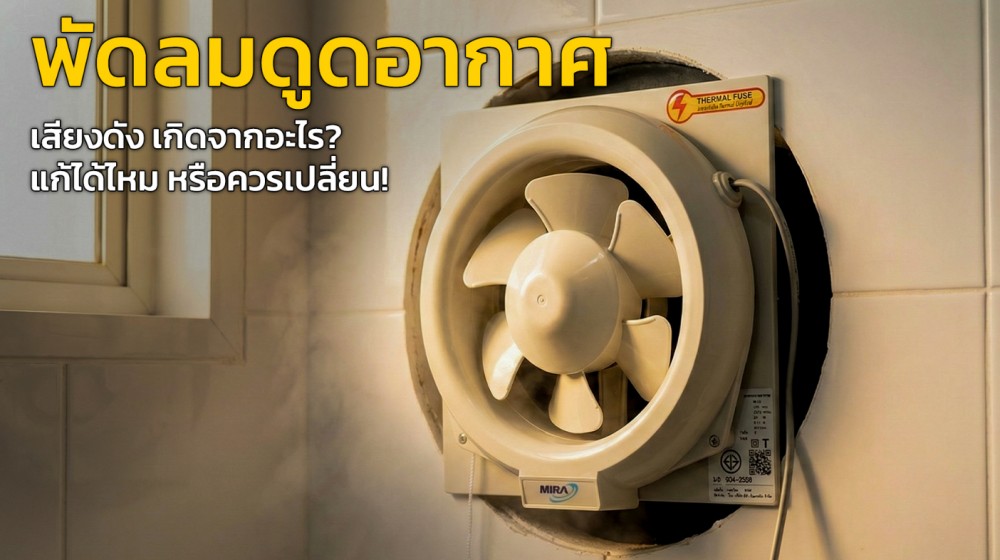
Imagine this... you're using the toilet in the morning, reading a book, but the moment you reach out to flip the light switch, the exhaust fan makes a strange noise. It goes "grrr... clack... screech..." instead of a gentle "whoosh...". It sounds just like an engine starting up right inside the bathroom.
The problem of Duct Fan Loud noise isn't just an annoyance; it is a "warning sign" that is often overlooked. In this article, we'll take you into the mindset of a pro technician to analyze what this "mysterious noise" is telling you, and whether it's time to say goodbye to your old fan.
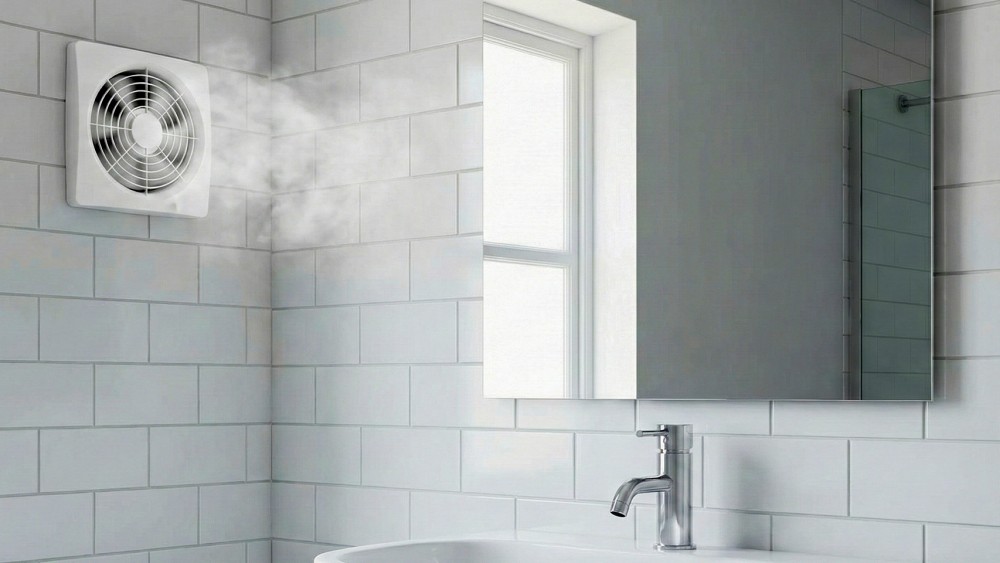
What does this noise from an exhaust fan mean?
Before reaching for a screwdriver or calling a technician, let's play detective first! Different types of noises stem from completely different causes, and an accurate diagnosis will save you both time and money. Try leaving the fan running for about 5 minutes and observe the rhythm of the noise: is it constant, getting louder with rotational speed, or does it only happen right after turning it on?
Exhaust fan rattling noise: "clack-clack-clack", like something is loose
Most often, this is caused by unbalanced "centrifugal force." The exhaust fan isn't securely fastened to the ceiling or wall, or the plastic wall plugs have degraded, widening the mounting holes. This creates a gap between the housing and the wall/ceiling structure. When the motor spins, vibration is transmitted into the ceiling or wall, turning into a resonating noise.
Exhaust fan high-pitched squealing: "screeech... screeech..."
This is a sign of lack of lubrication in the motor's bearings or bushings. When metal rubs against metal without an oil barrier, heat builds up, producing this high-pitched squeak. If left unaddressed, the motor will seize up and eventually burn out.
Exhaust fan grinding noise: "scrape... scrape..."
This is the sound of sharp or hard objects colliding. It's often caused by warped fan blades scraping against the fan casing, or by "uninvited guests" like construction debris, geckos, or large insects trapped inside the fan housing.
Exhaust fan low humming: "hummmm...", much louder than usual
The motor is struggling under stress. This could be due to a deteriorating capacitor, causing the motor to lack starting torque or spin erratically, or it could be due to blockages in the ventilation duct causing air to push back against the blades.
Deep dive into the 5 main causes: "Why is the exhaust fan so loud?"
From our hands-on experience tearing down dozens of exhaust fans in old houses—from antique wall-mounted models to the latest ceiling-recessed units—we found that these strange noises usually revolve around 5 primary factors that we've summarized for you here.

An army of dust and grease buildup
Exhaust fans are designed to vent air out, but they inevitably trap dust along the way—especially kitchen fans that are constantly exposed to grease mist.
- Why it's noisy: When dust combines with moisture or grease, it turns into a sticky sludge on the blades. An uneven weight increase of just a few grams on each blade will throw the fan off balance. The exhaust fan will start wobbling, much like a car tire that hasn't been balanced.
- Impact: Beyond vibration noise, thick layers of dust block airflow, forcing the motor to work harder against air resistance. The sound of air trying to force its way through narrow openings creates a whooshing, storm-like whistle.
Metal friction due to dried-up lubricant
Exhaust fan motors operate in harsh conditions, exposed to accumulated moisture and high heat from continuous operation.
- Why it's noisy: Lubricant inside the bearings gradually evaporates or turns into a sticky residue, causing the motor shaft to rub directly against the bushings. The resulting sound is a piercing, high-pitched squeal.
- Real-world experience: Many people try to fix this by spraying general-purpose penetrating oil, which only provides temporary relief because these oils evaporate very quickly. If heat-resistant grease is not used, the noise will return within a few days.
Unstable Exhaust Fan Base
A common issue that does not stem from the exhaust fan itself, but rather from the surrounding "structure"
- Why it's noisy: If the technician mounts the exhaust fan directly to a gypsum ceiling without reinforcing it with wooden or steel studs, motor vibrations will amplify through the ceiling board, turning the entire ceiling into a giant speaker that hums throughout the room.
- Check point: Try pressing your hand against the edge of the exhaust fan while it is running. If the noise gets quieter, there is definitely an issue with the mounting.
Deformed Blades and Material Degradation
Plastic doesn't last forever, especially the sub-grade plastic found in budget exhaust fans.
- Why it's noisy: Bathroom moisture and fumes from cleaning chemicals gradually erode and degrade the plastic's properties. The blades may begin to warp ever so slightly—invisible to the naked eye—but when spinning at 1,500 RPM, centrifugal force causes the blades to clip the housing, creating a rhythmic "scraping" sound.
- Additionally: Brittle, cracked plastic can also create gaps where air escapes (air leakage), causing an annoying whistling sound as well.
Exhaust Fan Motor and Electrical Circuit Degradation
When an exhaust fan has been in use for more than 5-7 years, the internal motor components begin to wear out.
- Why it's noisy: Copper windings may start losing their insulation, or the starter capacitor may begin to swell. This leads to an uneven magnetic field, causing the motor to spin with slight, constant "jerks" that produce a low humming noise vibrating deep into the wall.
- The risk: This is the most dangerous cause because this humming noise is often accompanied by "extreme heat," which can become a fire hazard over time.
Awaken Your Inner Handyman: Restore Your Exhaust Fan Like New
If you have basic DIY skills, reviving an old exhaust fan isn't difficult. We've done it, and it can extend its lifespan by another year or two while saving you hundreds of THB! Before getting started, let's prepare your "tools."
Must-Have Items on the Checklist
- Phillips bit socket
- Old paintbrush or toothbrush
- Damp microfiber cloth
- Lubricant (choose sewing machine oil or white lithium grease spray only)
- Thick double-sided foam tape (to dampen vibrations)
Step-by-Step Procedure
- Rule Number One: Always turn off the circuit breaker or power switch, and use a test pen screwdriver to check the wire terminals once again, as the capacitor inside the motor may still hold residual charge. Never be careless with electricity in damp areas.
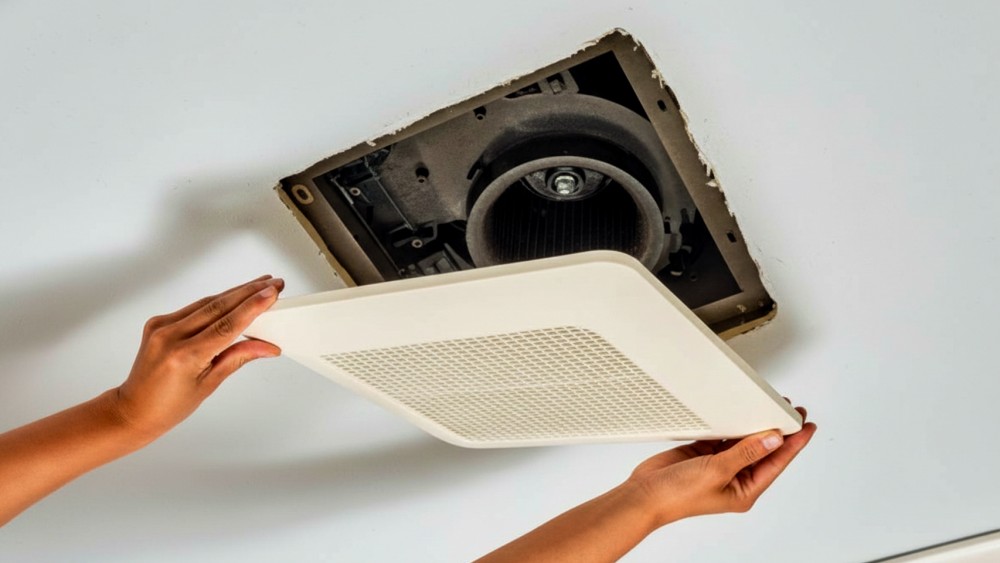
- The War on Dust: Remove the fan grille (usually held by snap clips or a single screw). Wash both the grille and fan blades thoroughly with soapy water. For the motor mounted in the ceiling, use a brush to completely clear away dust accumulated along the cooling vents. Absolutely do not spray water into the motor with a high-pressure washer, as water will become trapped in the coils and cause a short circuit.
- Add Lubricating Power: Locate the steel shaft protruding from the motor. Apply 2-3 drops of sewing machine oil onto it, then gently spin the fan shaft by hand to let the oil penetrate into the bearings or bushings. Do not spray all-purpose blue-can WD-40 and leave it, as it will wash away all the original grease and evaporate very quickly, making the fan even stiffer the following week. Use white grease instead, as it provides better heat resistance.
- Eliminate Vibrations: Before reassembling the unit, check the wall plugs and screws holding it in place. If they are loose, cut small pieces of thin rubber sheets or double-sided foam tape and place them as cushioning between the edge of the fan frame and the drywall/gypsum wall. This helps absorb vibrations and keeps them from echoing through the ceiling.
- Balance Check: Reassemble the fan blade and spin it by hand. If the blade wobbles, try sticking a piece of heavy-duty tape on the back of the blade opposite the centrifugal wobble point to counterweight it and make it spin as smoothly and steadily as possible.
When Should You Say "Replace the Exhaust Fan!"?
From real-world experience, sometimes trying to prolong the life of an exhaust fan that has reached the end of its lifespan is simply not worth the effort, and more importantly, "not worth the risk." If you find that your home's exhaust fan fits any of the following scenarios, we recommend putting down the screwdriver; looking for a new replacement fan is the smartest choice.
- A "screeching" or "grinding" noise that does not go away after lubrication: This indicates that the internal bearing is damaged or the motor shaft is worn out and "loose" beyond what oil can fix. Disassembling the motor to replace the bearing incurs labor costs higher than half the price of a new unit, and finding exact matching spare parts nowadays is very difficult.
- A burning smell or faint smoke: "Stop using it immediately!" This indicates that the coils are melting due to excessive heat buildup. Even if the motor still hums and tries to spin, it is a ticking time bomb waiting to short circuit and cause a fire.
- Heavily yellowed, brittle, and cracked plastic: If the fan grille or blades have turned from white to deep yellow and show hairline cracks, it means the plastic has lost its flexibility. Removing it for cleaning might cause the blades to shatter while running, which is extremely hazardous to users.
- Loss of power: If turning on the unit results in sluggish spinning that takes a while to pick up speed, or if it barely exhausts smoke and odors like it used to, it means the motor torque has dropped significantly. Newer models run much more efficiently and quietly.
- Lacks modern safety systems: Older fans often do not have an automatic thermal cutoff system when overheating. If you are using a fan that is over 10 years old, upgrading to a model with modern standard safety features is an investment in your family's peace of mind.
- The 50% Rule: If technician fees, including travel and spare parts costs (such as a new capacitor or blade), exceed 50% of the price of a brand-new unit, I recommend replacing it. You will get a whisper-quiet fan, a modern design, and most importantly, a manufacturer's warranty to give you peace of mind for years to come.
How to Choose a New Exhaust Fan for Luxury-Level Quietness?
When we recently decided to replace the exhaust fan in our home, we discovered that the world of exhaust fans has evolved far beyond expectations. "Quietness comes at a price, but it's well worth it" in exchange for household peace. Here is the "spec guide" you should keep handy before heading to the home improvement store.
While other electrical appliances use decibels (dB), premium exhaust fans specify a "Sone" rating, which is a unit of loudness directly correlated to human ear perception.
- 0.3 - 0.5 Sones: Library-level quiet. You have to strain your ears to tell that the unit is running.
- 1.0 Sone: Equivalent to the sound of a refrigerator running at night—considered very quiet for an exhaust fan.
- 2.0 - 4.0 Sones: Noise level of a typical standing floor fan. If you truly want peace and quiet, try to avoid models exceeding 1.5 Sones.
DC Motor vs AC Motor: Standard exhaust fans often use AC motors, which commonly produce an electrical "humming" sound and generate high heat.
- Why DC? DC (Direct Current) motors rotate much more smoothly, reduce electromagnetic noise, and save up to 70% more energy. Additionally, DC motors allow for precise speed adjustments, enabling a Soft Start that prevents sudden loud noises when switched on.
Ball Bearings: The Heart of Smooth Operation. Most exhaust fans use a "bushing" system, which is an oil-lubricated metal sleeve. Over prolonged use, the oil dries up and starts to produce a high-pitched whining sound.
- Tip: Look for units specified with "Dual Ball Bearings", which offer many times higher durability, better friction reduction, and most importantly, "consistently quiet operation" even after several years of use.
CFM Matching: Suction power must match room size. CFM (Cubic Feet per Minute) is the volume of air the fan can exhaust in one minute.
- Secret Formula: Width x Length (in feet) = Minimum CFM required (or Width x Length x Height (meters) x 10 = cubic meters/hour).
- Why it matters: If you choose a fan with too low suction power, the air will be trapped and bounce back loudly. Conversely, if it is too powerful while the duct is small, the restricted air flow can cause a high-pitched whistling noise in the duct.
Aerodynamic Blade Design: Notice the blades on higher-end models—they often resemble airplane wings or feature a higher blade count (such as 7–9 blades). This design cuts through the air more smoothly, effectively reducing the "buffeting" sound of air hitting the fan housing.
Conclusion
Ultimately, whether you choose to repair or replace, the key factors are proper installation and "regular cleaning every 6 months." Just doing this ensures quietness and freshness will stay in your home for a very long time!