


 EN
 ไทย



Customers Also Purchased


Has this ever happened to you? You're halfway up the stairs and suddenly realize you forgot to turn off the downstairs light, or you're about to fall asleep but have to sigh and get out of bed just to flip off the switch by the door. This happens so repeatedly that many people think it's a minor thing, a personal habit, or just something to brush off with "whatever."
Look closer, though, and these problems have almost nothing to do with personal habits—it's all about "the design of the Light Switches” right from the start instead. Light switches are devices we use every day, yet they tend to be one of the quickest decisions made during building or renovating a home. In reality, they are small details that continuously and lastingly affect the living experience.
In this article, Nong Chang would like to help you understand the differences between 1-way, 2-way, and intermediate light switches, what areas they are suitable for, and why many homes seem fine on the surface yet feel subtly "clunky" to live in without realizing it.
Light switches are not just on-off buttons, but the rhythm of daily life.
If we see a light switch as just a button on the wall, we tend to choose it casually as long as it works. But in reality, light switches directly connect the behavior of the home's occupants with the space. They dictate whether we stop or keep walking, rest or move, and whether our daily routines feel seamless or slightly disrupted.
In a home with a well-designed switch system, you barely notice their presence. Everything feels natural: turning lights on and off exactly where you should, without a second thought. However, in a poorly planned home, even a tiny oversight—such as the switch placement or type—can cause daily recurring annoyances that accumulate into an indescribable sense of discomfort.
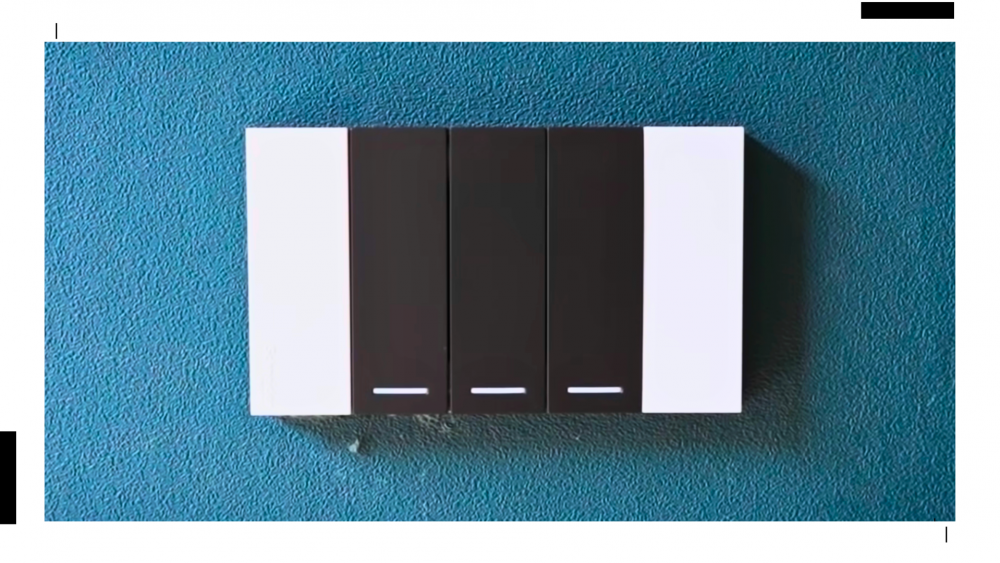
1-Way Light Switch: The basic choice that is "right" for certain spaces
A 1-way light switch controls lights from a single point. It is the most familiar configuration for most people—simple, straightforward, and found in almost every home. It suits spaces with clear usage patterns where you enter and exit from the same spot without repeated movement back and forth, such as bathrooms, storage rooms, or rooms entered and exited through the same doorway.
The issue with 1-way switches isn't the switch itself, but installing it in spaces where "behavior shifts," such as bedrooms or staircases. In everyday use, inconveniences gradually surface: having to backtrack, getting out of bed, or losing your rhythm over trivial things you shouldn't have to think about. Over time, these minor frustrations pile up, making living in the home feel subtly unnatural.
Technician's Picks Imagine using the space at night. If an area frequently forces you to "get up" or "backtrack," a 1-way switch is usually not the ideal solution.
2-Way Light Switch: When a home is designed around real-life usage
A 2-way light switch is designed to solve the limitation of single-point control. It allows a single light fixture to be turned on or off from two different locations. No matter where you start, you can complete the action from the other end without having to walk back.
The clearest example is a staircase—turning on the light at the bottom and switching it off at the top. Another example is a bedroom with switches at both the doorway and bedside, eliminating the need to get out of bed every night to turn off the lights. Having a 2-way switch in these spots might seem like a minor detail, but the result is practical convenience you appreciate every day.
System-wise, a 2-way switch operates differently from a 1-way switch. Instead of simply connecting or breaking the circuit directly, it diverts the path of the electrical current. Therefore, both switch locations must be specifically designed to work in tandem. Understanding this helps avoid the strange glitches many homes encounter, like lights not responding as expected when pressed.
Technician's Picks If a space has a different "starting point" and "ending point," a 2-way switch is almost always the better choice.
Intermediate Light Switch: When two points are not enough for more complex spaces
When a space becomes longer or involves moving through multiple zones, controlling lights from just two spots may no longer be enough. Examples include long hallways, multi-landing staircases, or large homes with multiple traffic flow paths. In these cases, the lighting system is designed with an intermediate switch positioned in between to add control points that match the actual walking paths of the occupants.
The concept behind an intermediate switch is not to make the electrical system more complicated, but to ease behavioral friction for the residents. Instead of having to remember where to turn lights on or off, the system is designed to "be operated right where you actually use it"—no backtracking, no redundant steps, and no need to adjust your habits to the house.
When a home is designed primarily around walking paths and daily rhythms, even a subtle change in light switches results in a noticeably smoother living experience, making the house feel effortlessly intuitive.
Nong Chang's recommendation: If you have to walk through the same area more than twice a day, an intermediate switch often makes life easier than you think.
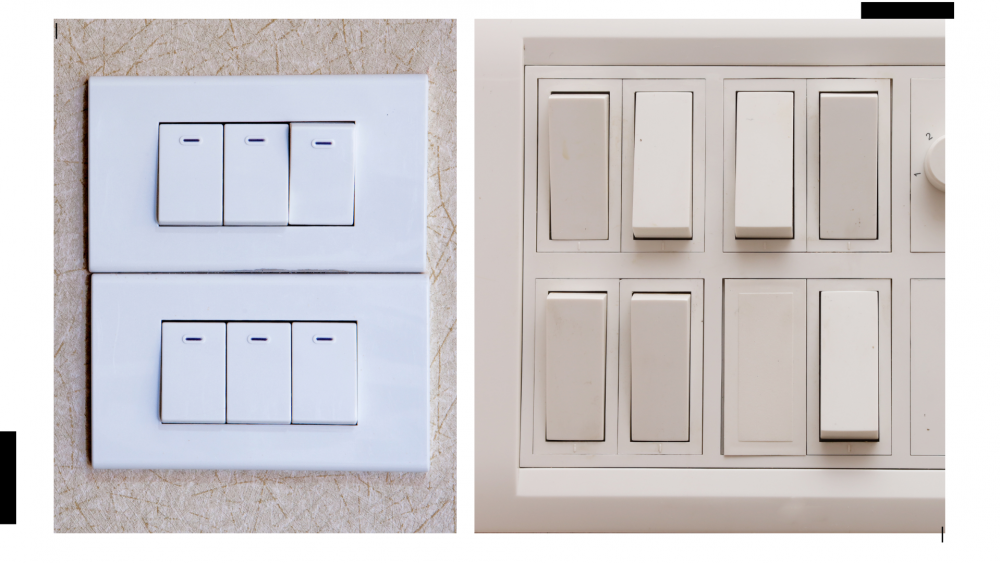
Why many homes are "livable" but not "comfortable to live in"
Many homes have no structural problems: every light works and every switch functions properly, yet everyday use feels inconvenient. The main cause is often design that only considers minimum requirements rather than actual daily habits. Once the house is finished and lived in, inconveniences gradually reveal themselves—only to be difficult and more costly to fix than expected.
Which switch type suits each type of home so you won't regret it in the long run?
Small homes or condos can use 1-way switches in many areas, but in bedrooms or spots frequently used at night, choosing 2-way switches makes life noticeably easier. For two-story homes or higher, staircases should have lighting controlled from at least more than one location. And if there is a long hallway or corridor, setting up intermediate switch systems that match foot traffic will genuinely eliminate daily accumulated annoyances.
Technician's Picks A simple rule of thumb: if a space makes you "think" every time you turn the light on or off, it means the switch system doesn't truly meet your needs.
The right light switches effortlessly make everyday home life more convenient.
Light Switches It may just be a small detail in the home, but it's one we use every single day. Choosing 1-way, 2-way, or intermediate switches suited to each space from the start will help prevent minor daily inconveniences from building up, making life at home flow much more naturally. If you are building, renovating, or starting to feel that certain areas don't function as smoothly as they should, perhaps the answer isn't about adjusting your habits, but rather about the light switches on the wall you press every day.